- Home
- About us
- Products
- News
- Download
- Videos
- Contact us

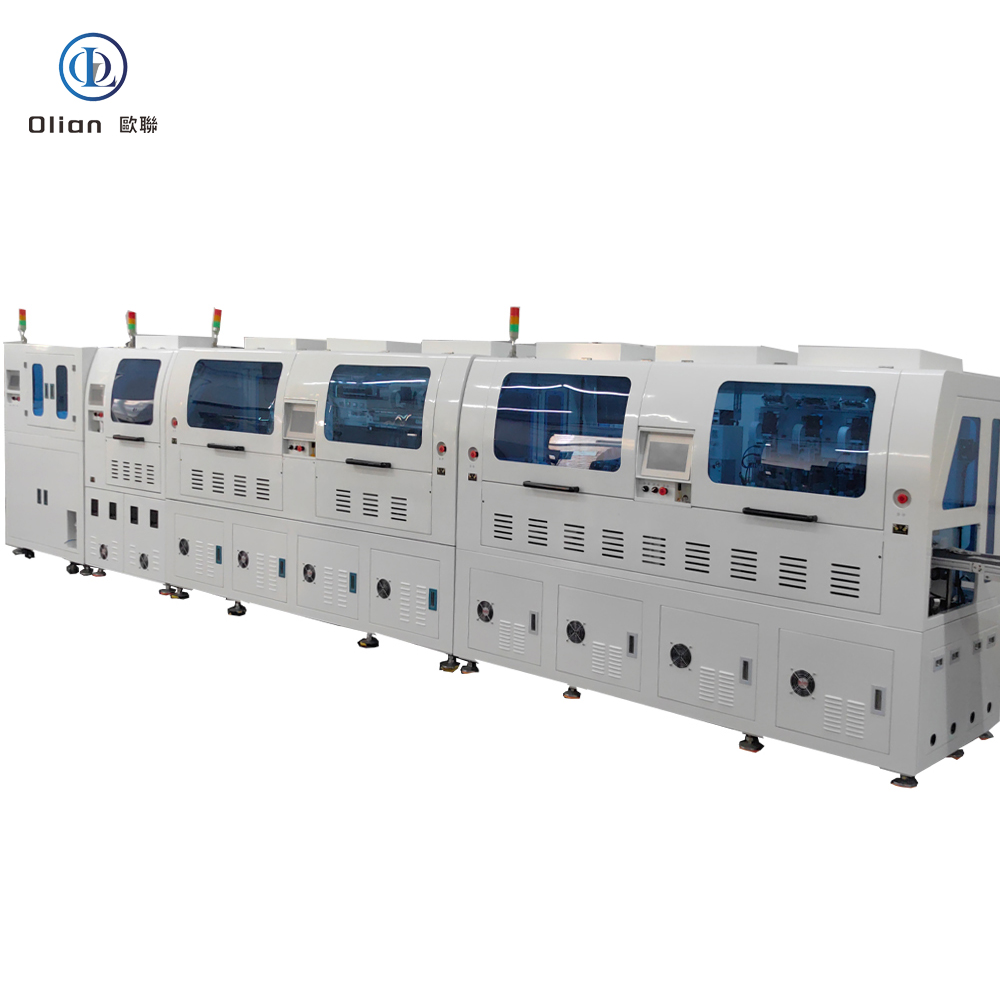
Flexible Display Module Bonding Equipment: Precision Engineering for Next-Gen Wearables and Smart Devices.
As the demand for flexible electronics surges across industries—from smartwatches and foldable smartphones to wearable health monitors and AR/VR devices—the manufacturing of flexible display modules has become a cornerstone of modern electronics production. At the heart of this revolution lies the Flexible Display Module Bonding Equipment, a highly advanced, precision-driven system engineered to deliver reliable, high-yield interconnections between delicate flexible displays and their driving circuitry.
This specialized equipment plays a critical role in the assembly of flexible OLED, micro-LED, and e-paper modules, ensuring robust electrical connections while maintaining the mechanical flexibility and durability essential for next-generation devices. Among the key bonding technologies, COP (Chip on Plastic) and FOP (FPC on Plastic) have emerged as pivotal processes, especially for ultra-compact and curved wearable displays, enabling innovative form factors and enhanced integration.
Module bonding refers to the process of connecting the display panel (typically a flexible substrate) with driver ICs (Integrated Circuits) and Flexible Printed Circuits (FPCs). In flexible displays, this process must accommodate ultra-thin, bendable materials without compromising electrical performance or structural integrity.
The Flexible Display Module Bonding Equipment performs key processes such as Chip-on-Film (COF), Tape Automated Bonding (TAB), and increasingly, COP (Chip on Plastic) and FOP (FPC on Plastic), enabling high-density, fine-pitch interconnections directly onto plastic or flexible substrates—eliminating the need for rigid carriers and enabling true flexibility.
● Definition: COP refers to the direct bonding of a bare Integrated Circuit (IC) onto a plastic-based flexible substrate (such as PI—Polyimide), typically at the edge of the display panel.
● Process Flow: ACF is pre-laminated on the bonding area; the bare IC is precisely aligned and placed; Thermocompression bonding forms the connection.
● Advantages: Enables ultra-narrow bezel design, reduces thickness, and maintains high flexibility.
● Applications: Smartwatches, AR glasses, and ultra-thin fitness bands.
● Definition: FOP involves bonding a Flexible Printed Circuit (FPC) directly onto a plastic substrate of the display module.
● Process Flow: ACF is applied; the FPC tip is aligned and bonded using thermocompression.
● Advantages: Offers enhanced design freedom for 3D shaping and ensures robust mechanical connections resistant to bending fatigue.
● Applications: Foldable phones, curved automotive displays, and wearable medical devices.
● Mounts driver ICs on a flexible polyimide (PI) film carrier, which is then bonded to the display panel using ACF. Offers excellent flexibility for high-end displays.
● Equipped with high-resolution vision systems and nano-positioning stages to achieve alignment accuracy within ±3–5μm, essential for COP and FOP processes.
● Utilizes multi-zone heating heads to ensure uniform temperature distribution and programmable force profiles for different materials.
● Integrated AOI (Automated Optical Inspection) detects misalignment, ACF voids, or IC tilt, ensuring high yield.
● COP & FOP Process Optimization: Dedicated tooling for direct bonding on plastic substrates.
● Ultra-Fine Pitch Capability: Supports pitch down to 20μm.
● Low Thermal Budget: Prevents warping of sensitive plastic substrates.
● 3D Surface Bonding: Adaptive pressure for curved and non-planar surfaces.
● Smart Process Control: Real-time monitoring via MES integration and predictive maintenance.
These processes enable True Flexibility and Miniaturization, which are critical for wearables. By bonding directly on plastic, they eliminate rigid carriers, allowing displays to bend and fold seamlessly.
● Consumer Electronics: Foldable phones, smartwatches.
● Healthcare: Flexible biosensors and monitors.
● Automotive: Curved instrument clusters.
● AR/VR: Ultra-light near-eye displays.
At Olian Automatic, we are at the forefront of developing next-generation COP and FOP bonding equipment tailored for the future of flexible electronics. Our systems integrate advanced vision alignment, adaptive thermocompression, and intelligent process control to deliver unmatched precision and yield.
We understand that COP and FOP are not just processes—they are enablers of innovation. That’s why our equipment is designed with modularity, scalability, and ease of integration in mind, supporting customers from R&D to mass production.
With deep expertise in ACF handling, ultra-fine pitch bonding, and flexible substrate processing, Olian Automatic empowers manufacturers to push the boundaries of what’s possible in wearable and flexible display technology.
Flexible Display, COP Bonding, FOP Bonding, Chip on Plastic, FPC on Plastic, COF Bonding, ACF Lamination, Thermocompression, Flexible OLED, Wearable Display, Smart Manufacturing, AOI, Fine Pitch, Olian Automatic, Display Equipment, Module Line, Flexible Substrate, Micro-LED, Anisotropic Conductive Film, Precision Bonding,COP Equipment, FOP Bonding, Flexible Electronics, Wearables, Foldable Phones, Industry Trends, Olian Automatic, Display Manufacturing,COP Equipment Market, FOP Bonding Market, Flexible Display Trends, Wearable Technology Manufacturing, Foldable Phone Equipment, Chip on Plastic, FPC on Plastic, Display Market Analysis, Olian Automatic, Future of Electronics, Advanced Packaging, FOPLP, Industry 4.0
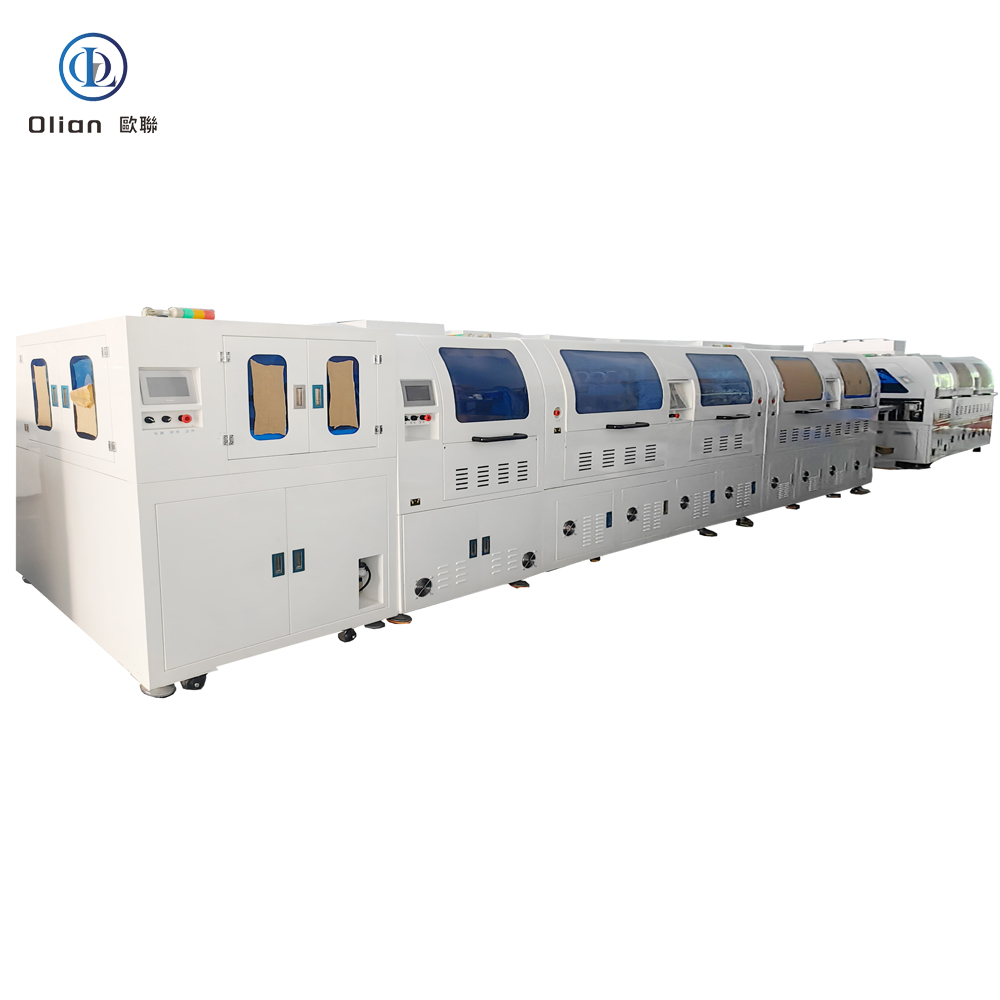
Electronic Paper Module Production Line: Precision Engineering for the Future of Low-Power Displays.
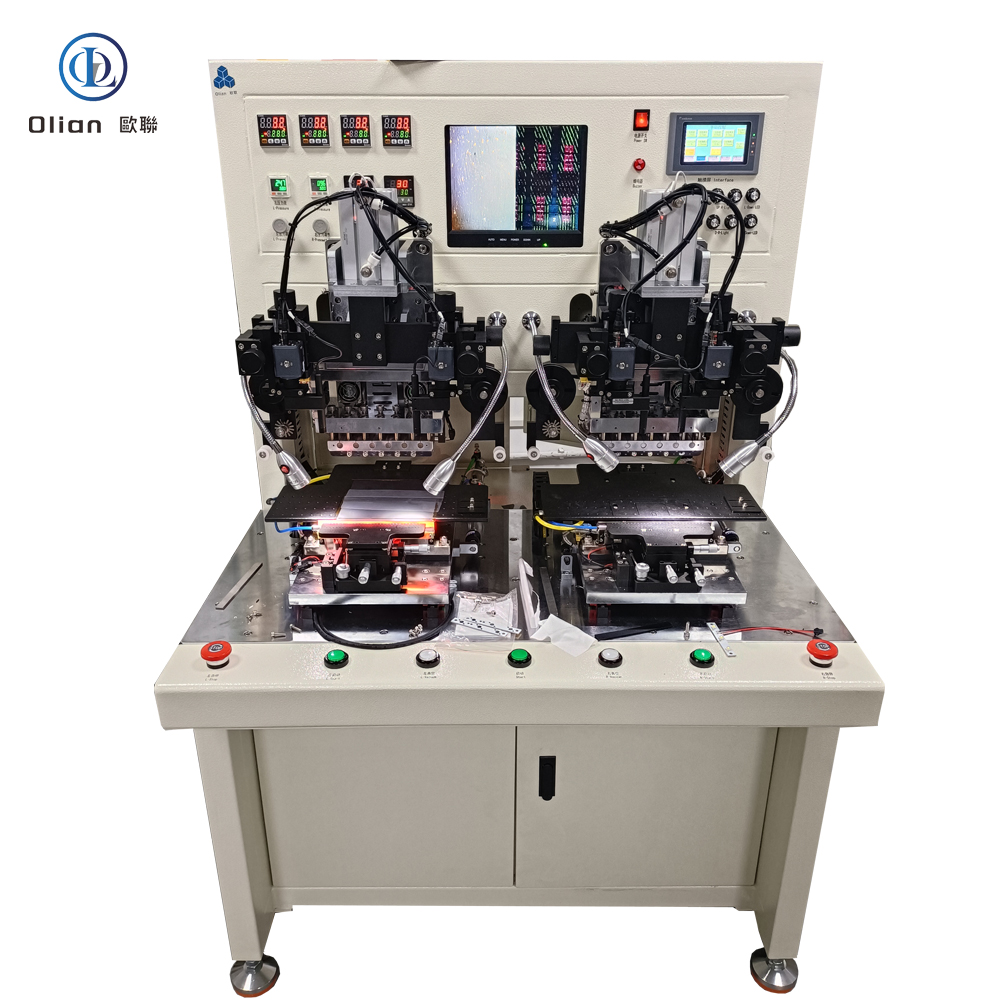
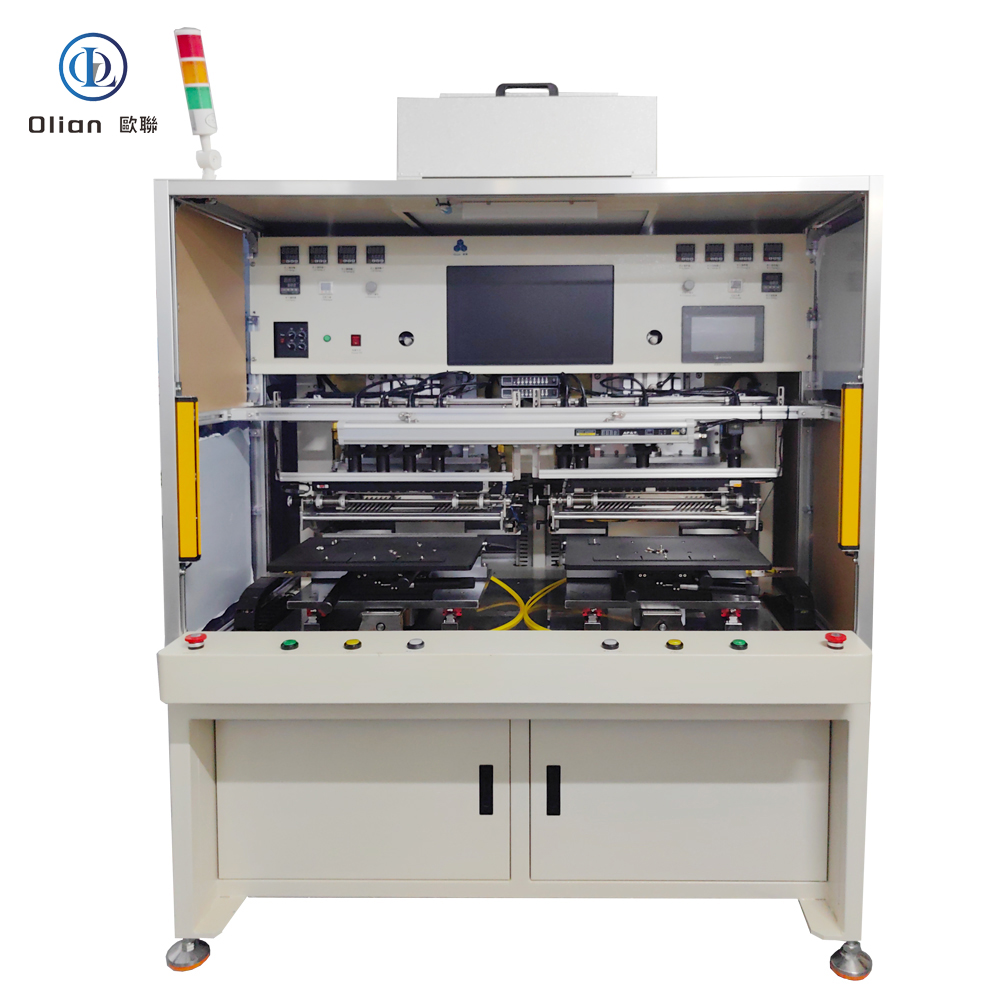

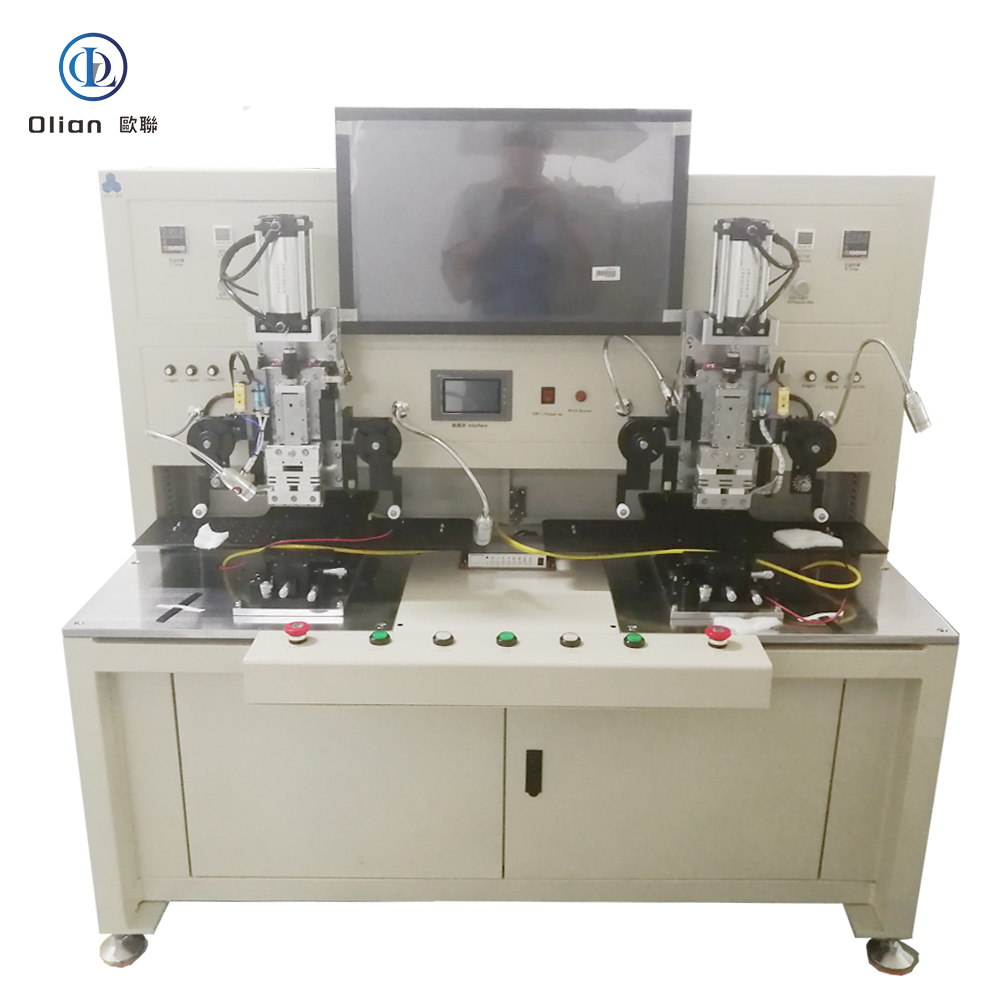
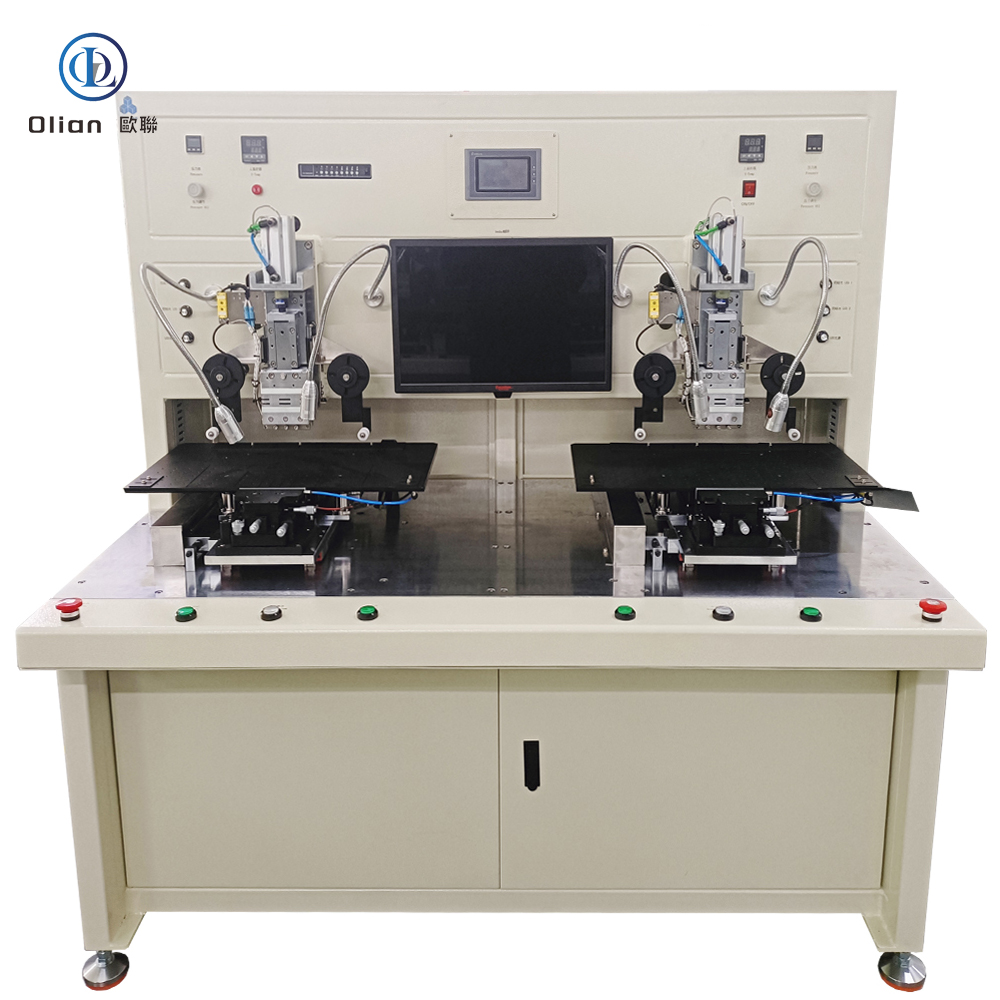
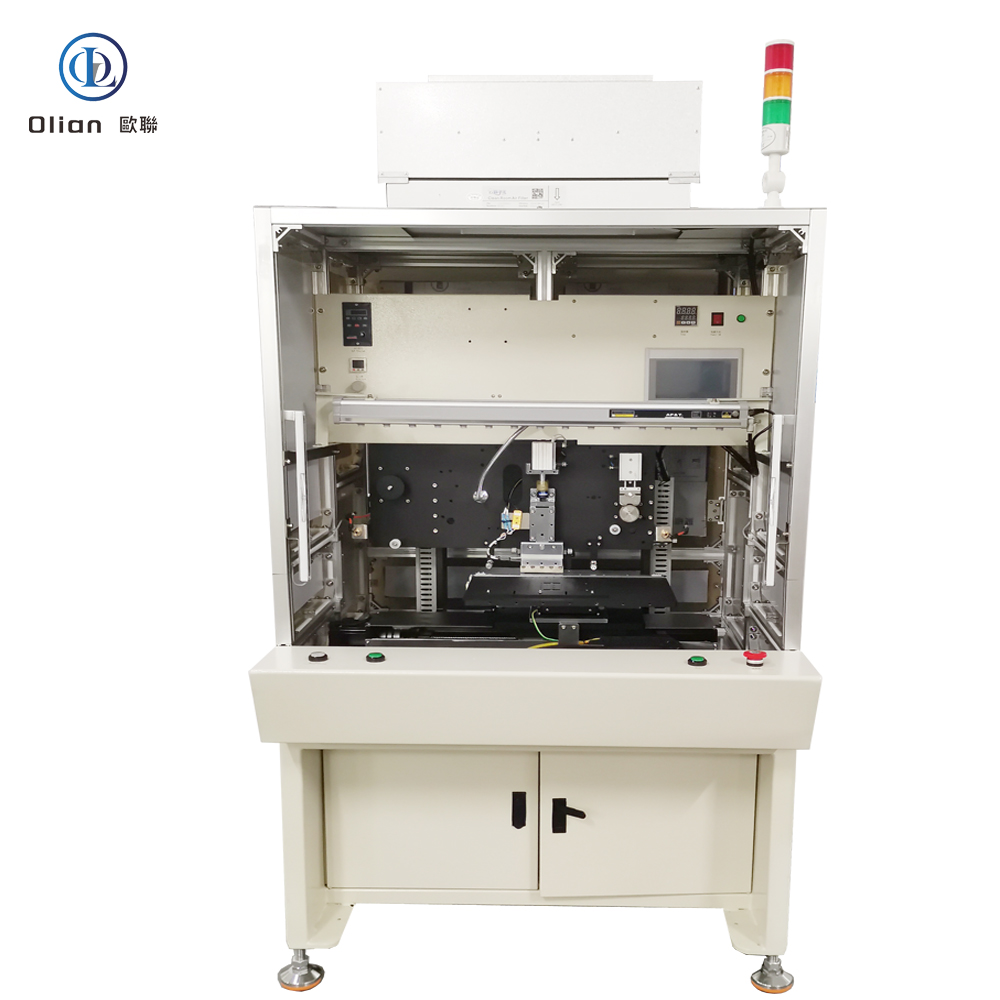
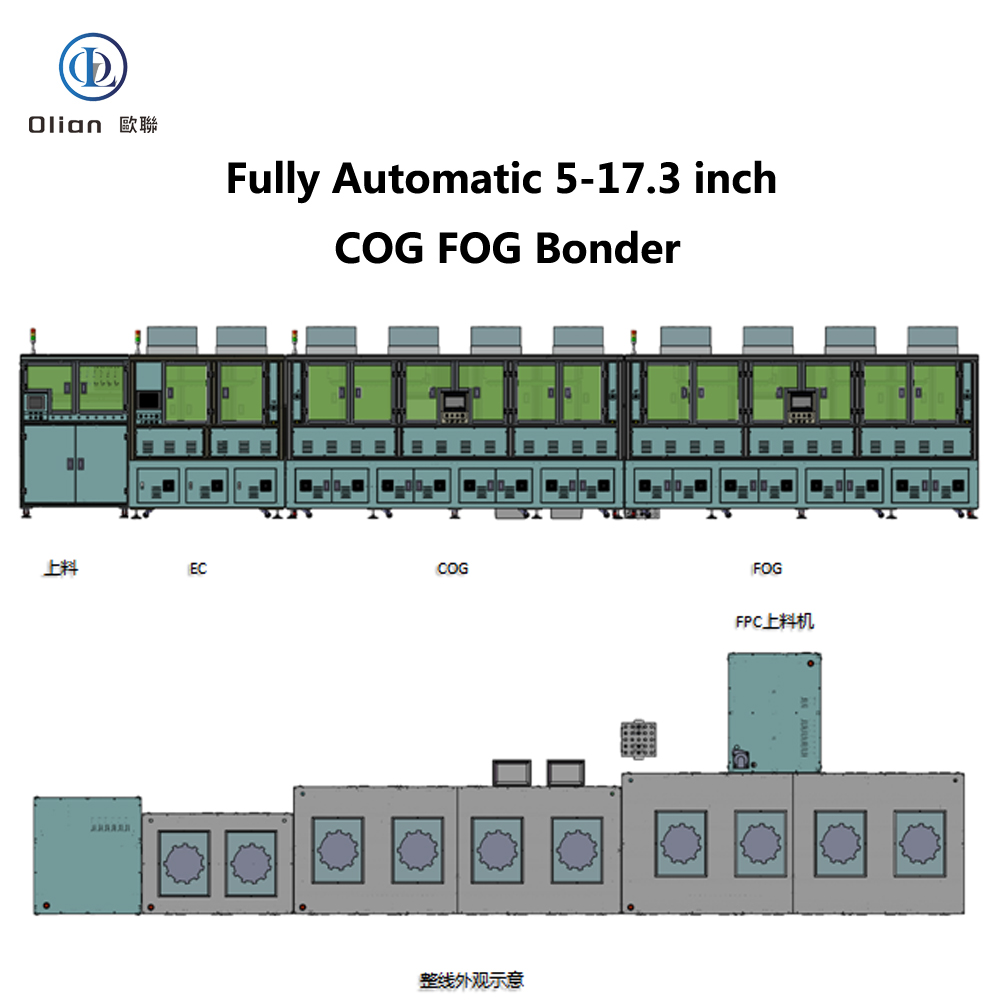
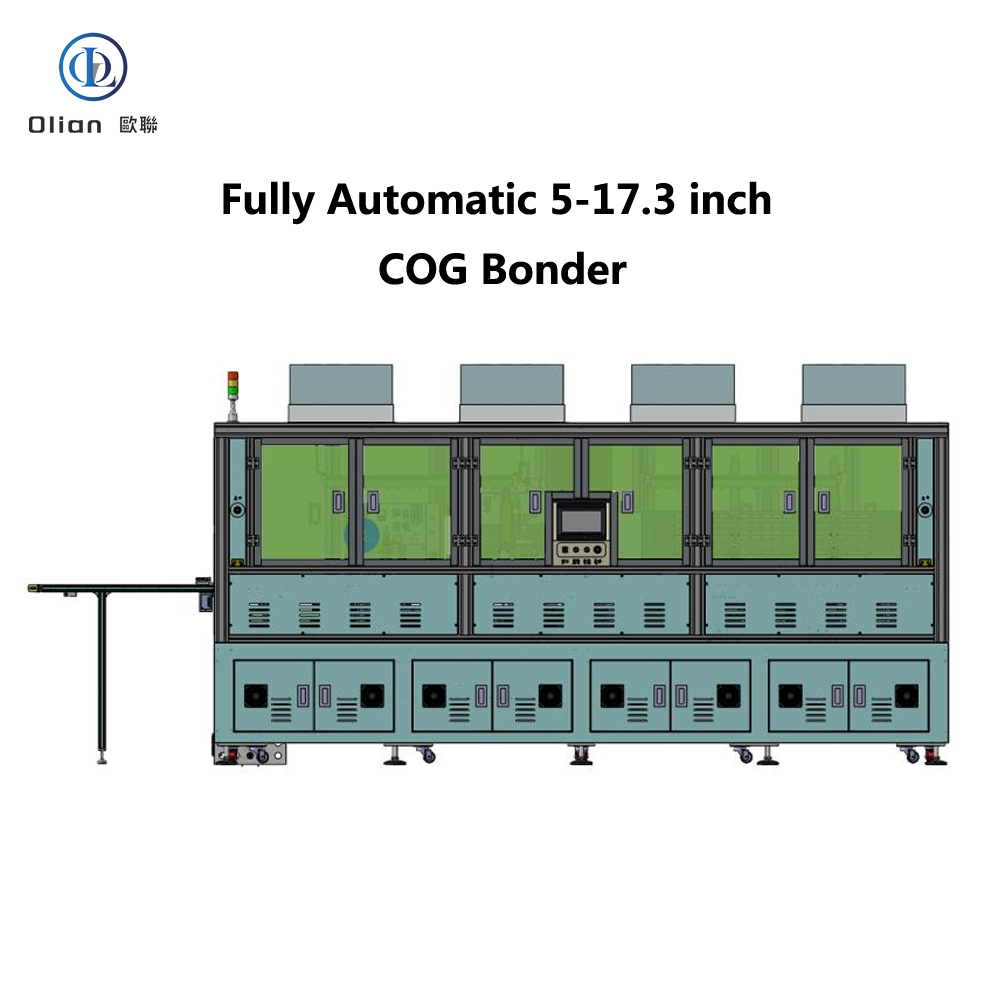
Electronic Paper Module Production Line: Precision Engineering for the Future of Low-Power DisplaysAs the global demand for energy-efficient, eye-friendly, and sustainable display technologies grows, electronic paper (e-Paper) has emerged as a transformative solution—powering devices such as e-readers, smart labels, digital signage, and IoT devices. At the heart of this innovation lies the Electronic Paper Module (EPM) Production Line, a highly specialized, precision-driven manufacturing system that integrates advanced automation, micro-assembly, and inspection technologies to deliver reliable, high-quality e-paper displays at scale.
An Electronic Paper Module (EPM) replicates the appearance of ink on paper by using electrophoretic or other reflective display technologies. Unlike traditional LCD or OLED screens, e-paper consumes power only when changing images, making it ideal for battery-powered and environmentally conscious applications.
The EPM typically consists of:
● Electronic Paper Film (EPD): The core display layer with microcapsules containing charged pigment particles.
● Thin-Film Transistor (TFT) Backplane: Controls pixel activation.
● Driver ICs and FPC (Flexible Printed Circuit): Deliver signals and power.
● Protective Front Film and Adhesive Layers: Ensure durability and optical clarity.
Manufacturing these modules requires a cleanroom-compatible, high-precision module production line capable of handling delicate materials and sub-micron alignment.
The EPM production line is a fully automated system designed to ensure high yield, consistency, and reliability. It integrates multiple advanced process modules, including:
● Automated cleaning removes dust and contaminants using brush, air-knife, and adhesive roller systems.
● Plasma treatment enhances surface adhesion for subsequent lamination processes.
● High-resolution CCD vision systems align the TFT backplane with the electronic paper film with accuracy within ±10μm.
● Active alignment compensates for thermal expansion and material warpage.
● Anisotropic Conductive Film (ACF) is precisely dispensed or laminated onto bonding areas.
● COG (Chip-on-Glass) or COF (Chip-on-Film) bonding connects driver ICs to the TFT array using thermocompression.
● Multi-point temperature and pressure control ensure reliable electrical connections without damaging fragile substrates.
● FPCs are bonded to the panel periphery for external signal routing.
● Robotic arms handle delicate modules to prevent mechanical stress.
● High-magnification cameras scan for defects such as particle contamination, alignment errors, open circuits, or short circuits.
● AI-powered image analysis enables real-time feedback and process correction.
● Modules undergo accelerated aging under controlled temperature and voltage to stabilize performance.
● Electrical testing verifies grayscale response, refresh rate, and power consumption.
● Qualified modules are automatically packed in anti-static, humidity-controlled packaging.
● Traceability systems record production data for quality tracking.
● Ultra-Clean Environment Compatibility: Designed for Class 100–1000 cleanrooms to prevent particle-induced defects.
● High Precision & Repeatability: Sub-pixel alignment ensures uniform image quality.
● Low Particle Generation: Use of non-contact handling and low-outgassing materials.
● Flexible Configuration: Supports various sizes (from 1.5” e-readers to 25” digital signage) and backplane technologies (a-Si, IGZO, LTPS).
● Smart Manufacturing Integration: Equipped with SECS/GEM, MES, and SCADA systems for real-time monitoring, data analytics, and predictive maintenance.
● Energy Efficiency: Optimized thermal management and low-power consumption design align with e-paper’s green philosophy.
● E-Readers (e.g., Kindle, Kobo): High-resolution, glare-free reading experience.
● Retail Smart Labels: Wireless, updateable price tags reducing labor and paper waste.
● Public Information Displays: Bus stops, train stations with sunlight-readable screens.
● Medical Devices: Low-power patient monitors and electronic charts.
● Smart Home & IoT: Battery-operated sensors and control panels.
At Olian Automatic, we specialize in designing and delivering turnkey Electronic Paper Module Production Lines that combine precision, reliability, and intelligence. Our solutions are built on decades of expertise in module assembly, bonding technology, and smart factory integration.
Our EPM production systems feature:
● Proprietary alignment and bonding algorithms
● Modular design for rapid reconfiguration
● Integrated AI-based defect detection
● End-to-end process support—from dispensing to aging
● Global service and technical support network
We partner with leading e-paper manufacturers and material suppliers to ensure compatibility with the latest EPD films, ACF materials, and driver ICs.
As e-paper technology evolves—enabling color displays, faster refresh rates, and flexible form factors—the production line must keep pace. Emerging trends include:
● Roll-to-Roll (R2R) Processing: For high-speed, low-cost manufacturing of flexible e-paper.
● Hybrid Backplanes: Combining IGZO with organic semiconductors for improved performance.
● Miniaturization and Integration: Smaller modules for wearable and medical devices.
● Sustainable Manufacturing: Reduced chemical usage, recyclable materials, and energy-efficient processes.
The Electronic Paper Module Production Line will continue to be a cornerstone of this evolution, bridging innovation and industrialization.
The Electronic Paper Module Production Line represents the convergence of precision engineering, automation, and sustainable technology. As the world shifts toward low-power, human-centric displays, manufacturers need intelligent, flexible, and future-ready solutions.
With Olian Automatic’s comprehensive portfolio of bonding machines, module lines, and smart factory systems, we are committed to empowering the next generation of e-paper innovation—delivering clarity, efficiency, and value to our customers worldwide.
Olian Automatic – Precision. Intelligence. Innovation. Empowering the Future of Displays.
Electronic Paper Module, EPM Production Line, e-Paper Manufacturing, Electrophoretic Display, TFT Backplane, COG Bonding, COF Bonding, ACF Lamination, Automated Optical Inspection, AOI, Flexible Printed Circuit, FPC, Driver IC, Module Assembly, Cleanroom Manufacturing, Precision Alignment, Vision System, Smart Factory, SECS/GEM, MES, SCADA, Low-Power Display, Reflective Display, IoT Devices, Digital Signage, Retail Smart Labels, E-Readers
Tags: e-Paper, Module Production, Display Technology, Automation, Precision Engineering, Manufacturing Line, Semiconductor Packaging, Bonding Process, Quality Control, AOI, Cleanroom, Flexible Electronics, IoT, Digital Transformation, Sustainable Display
Please contact us wechat/whatsapp:+86 18025364779 Zack wu

COF Bonding Machines: Enabling High-Resolution Display Manufacturing with Precision and Efficiency
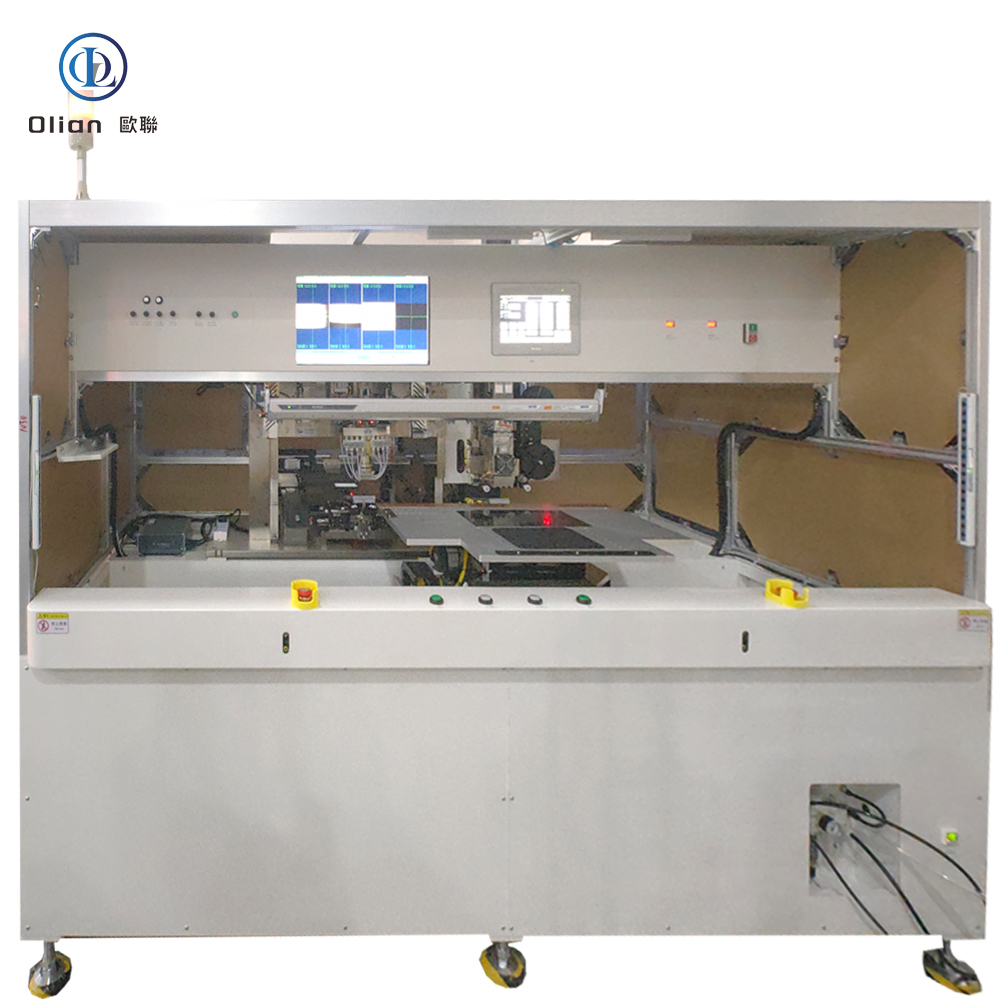
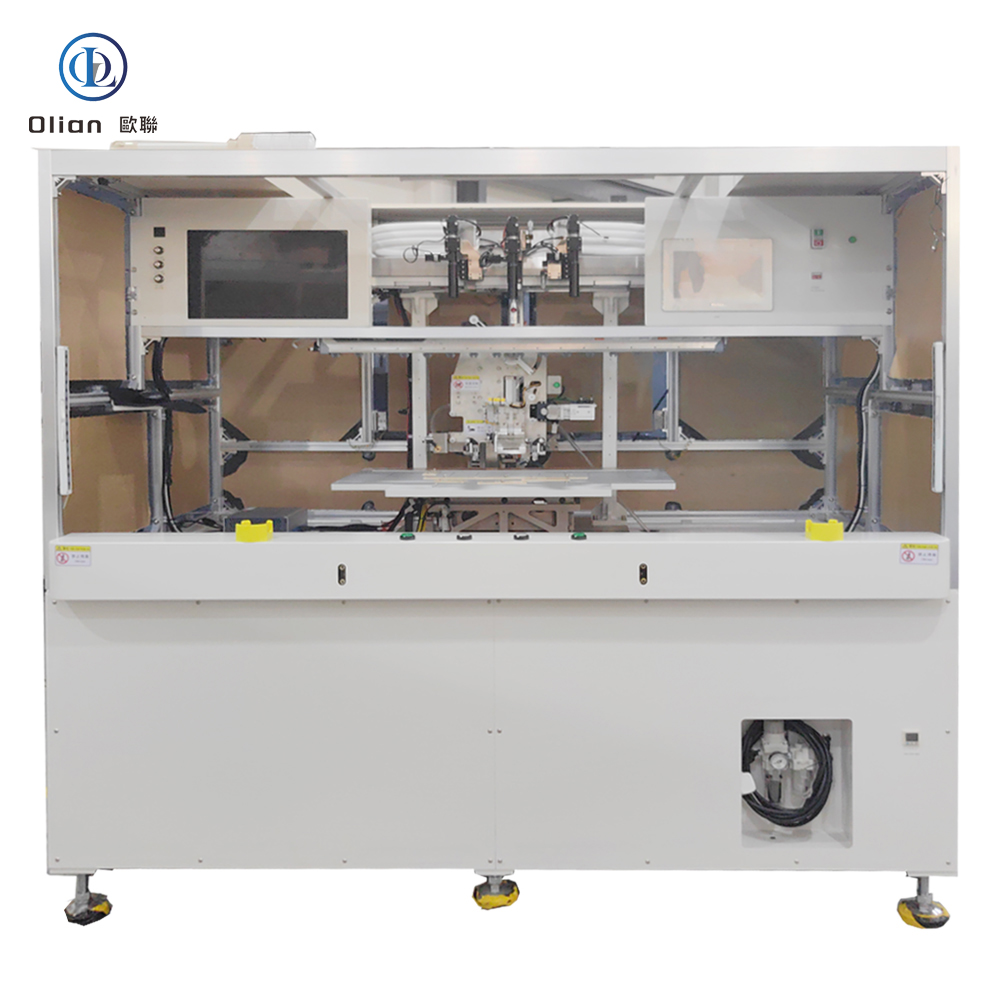
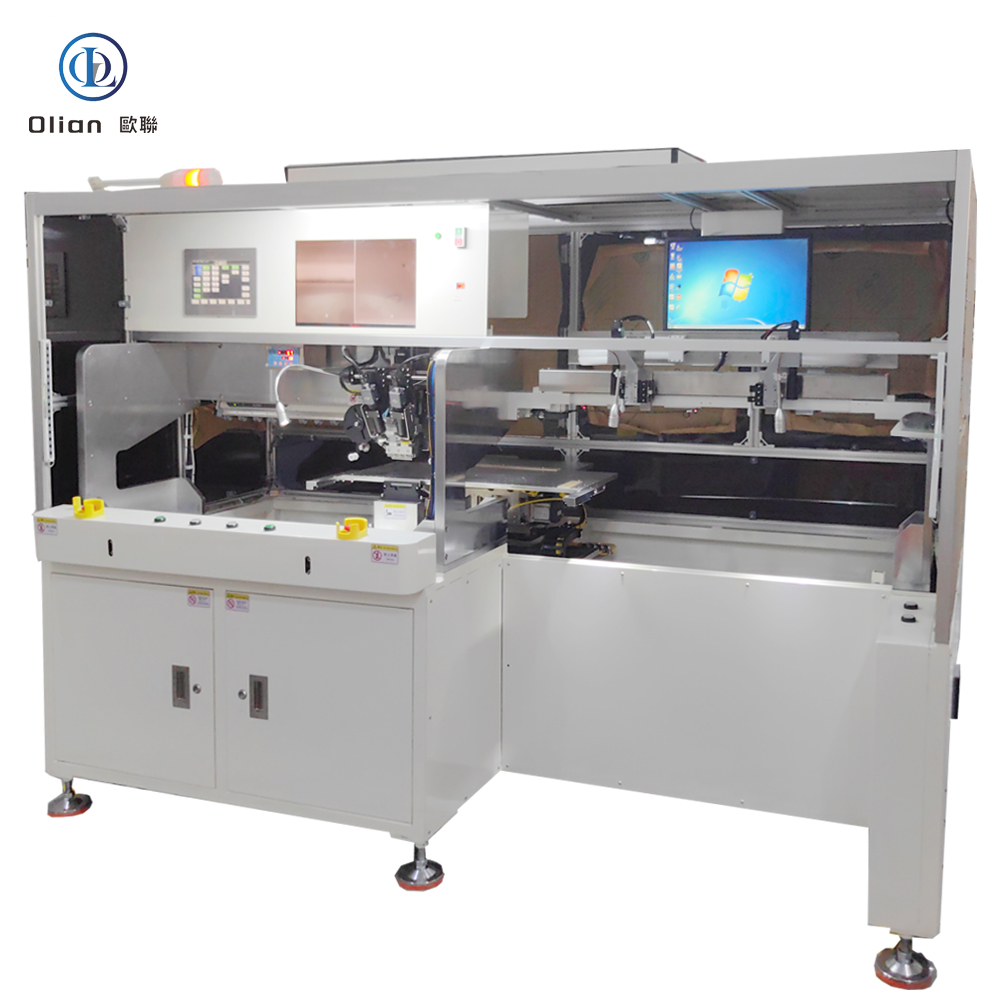
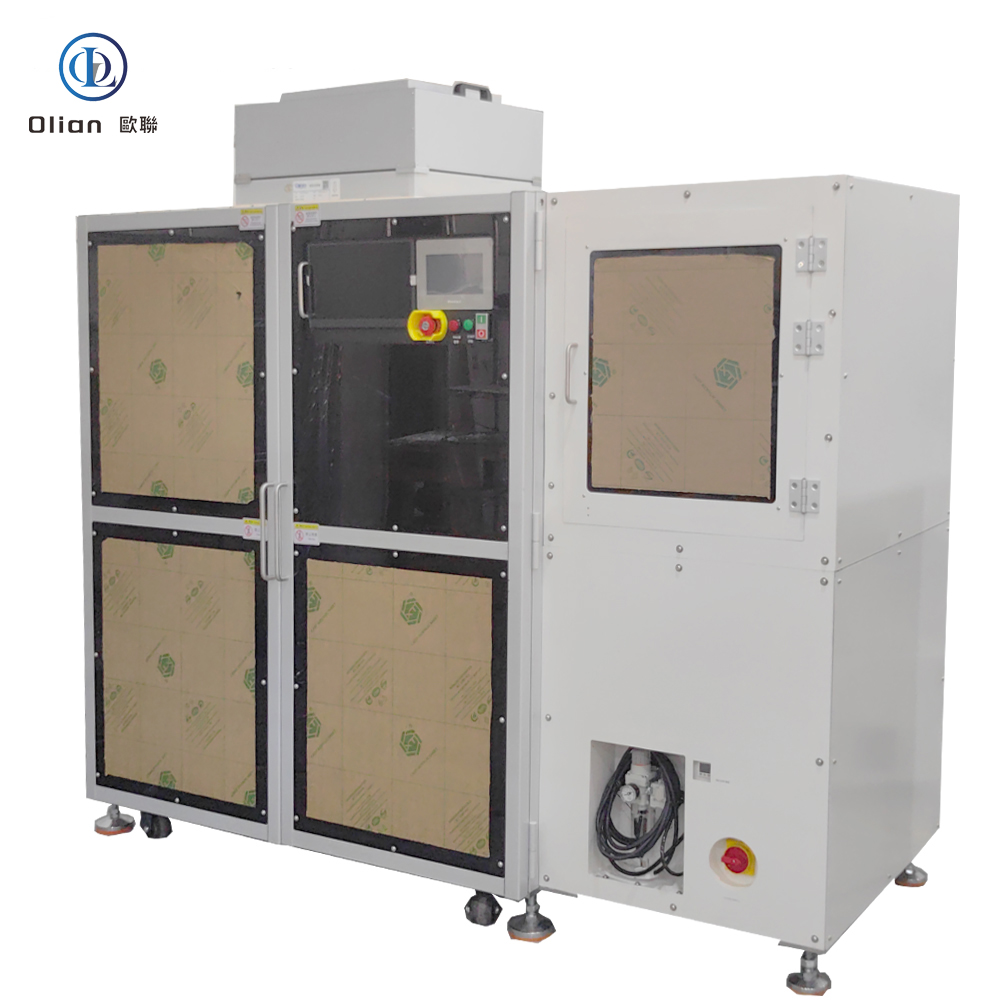
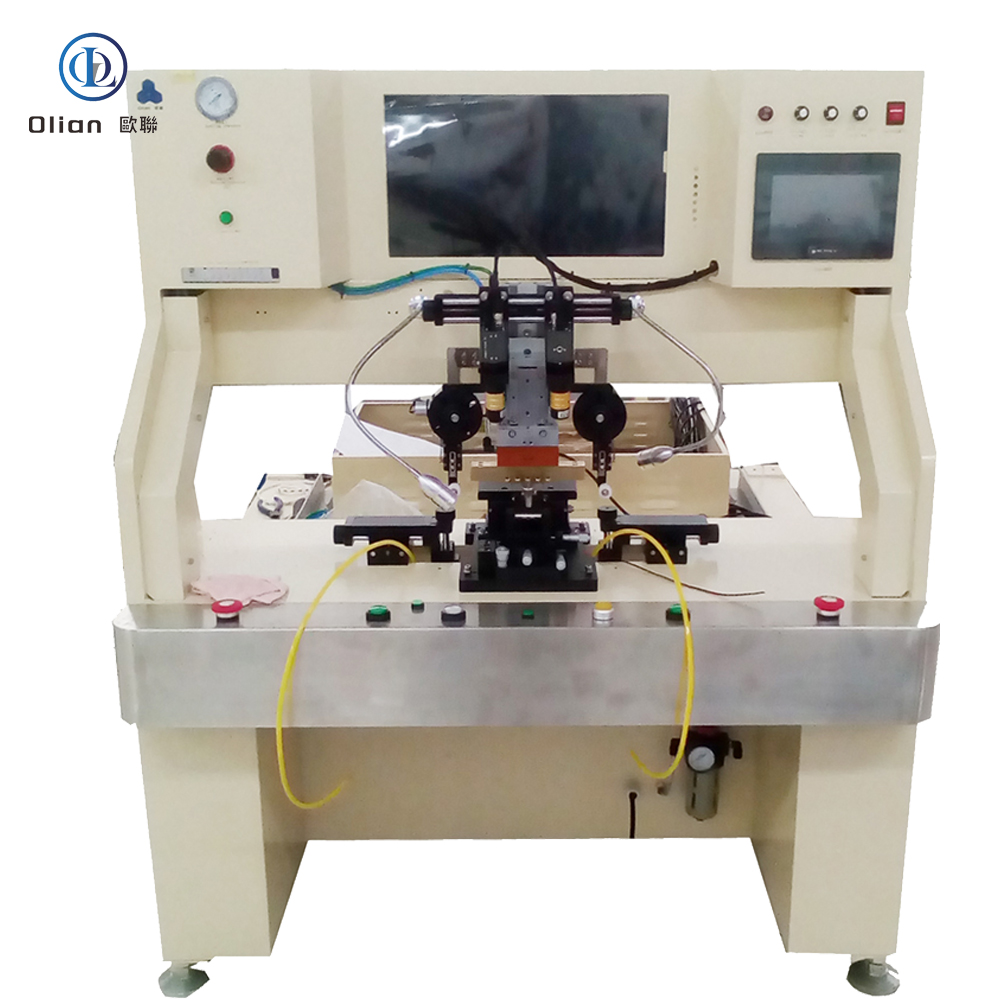
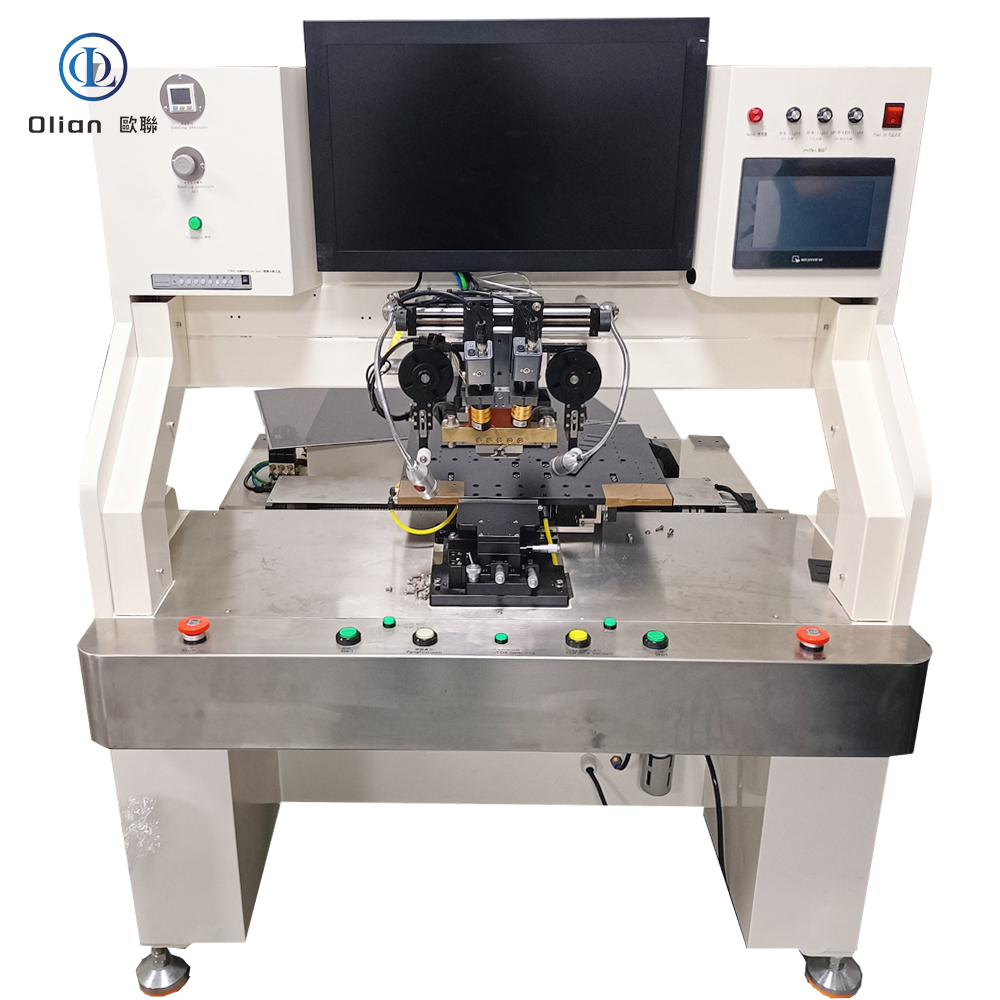
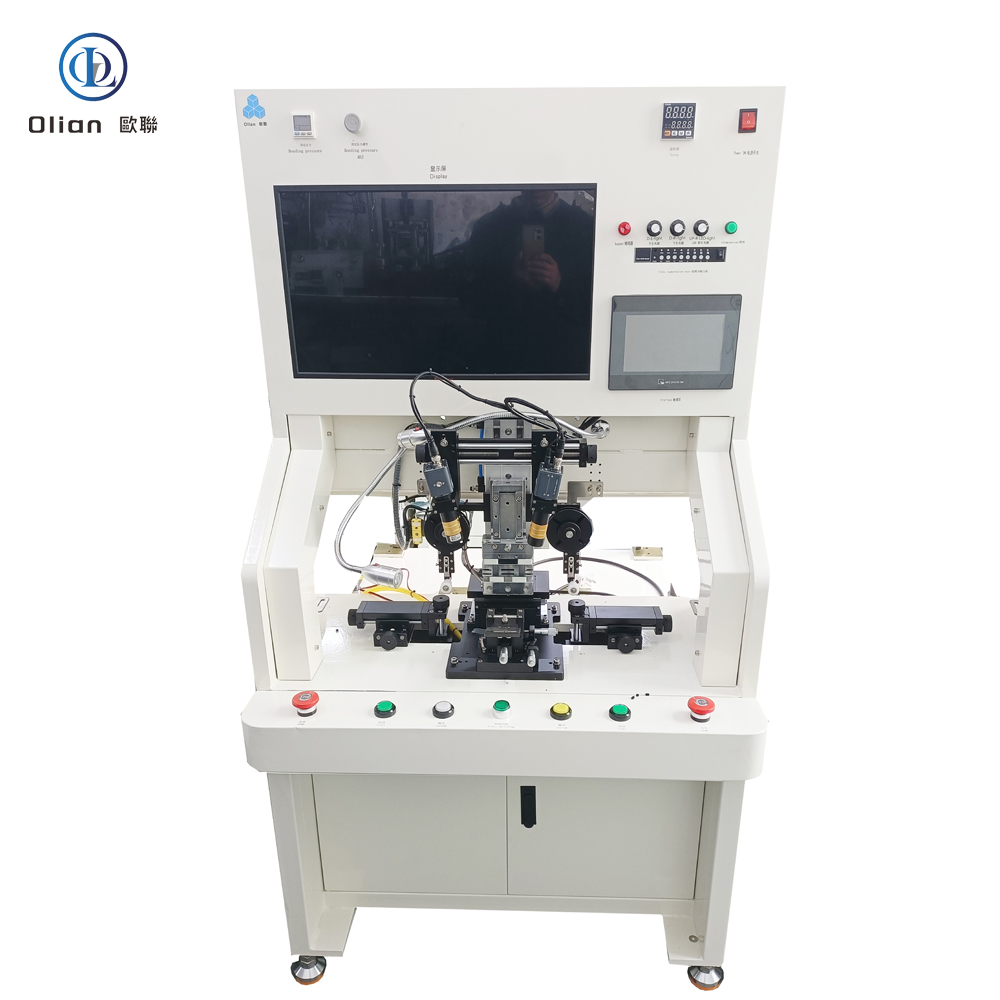
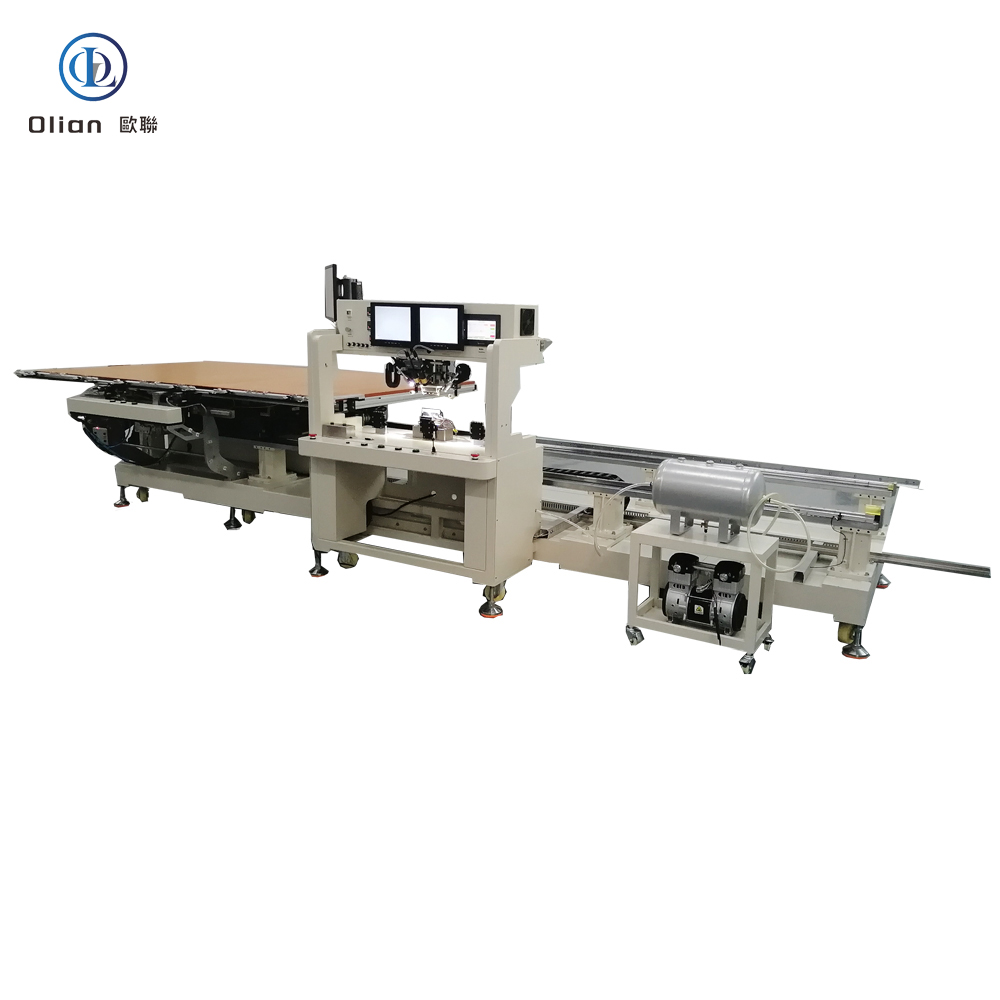
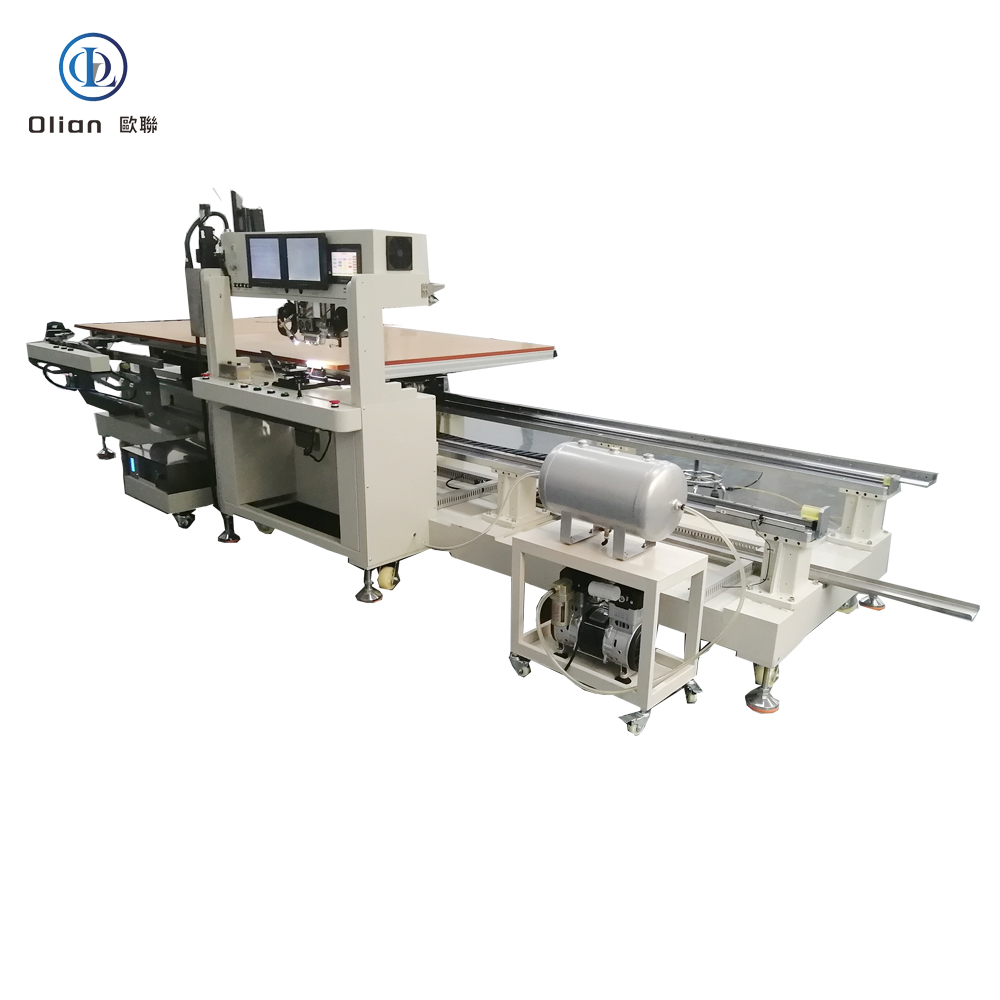
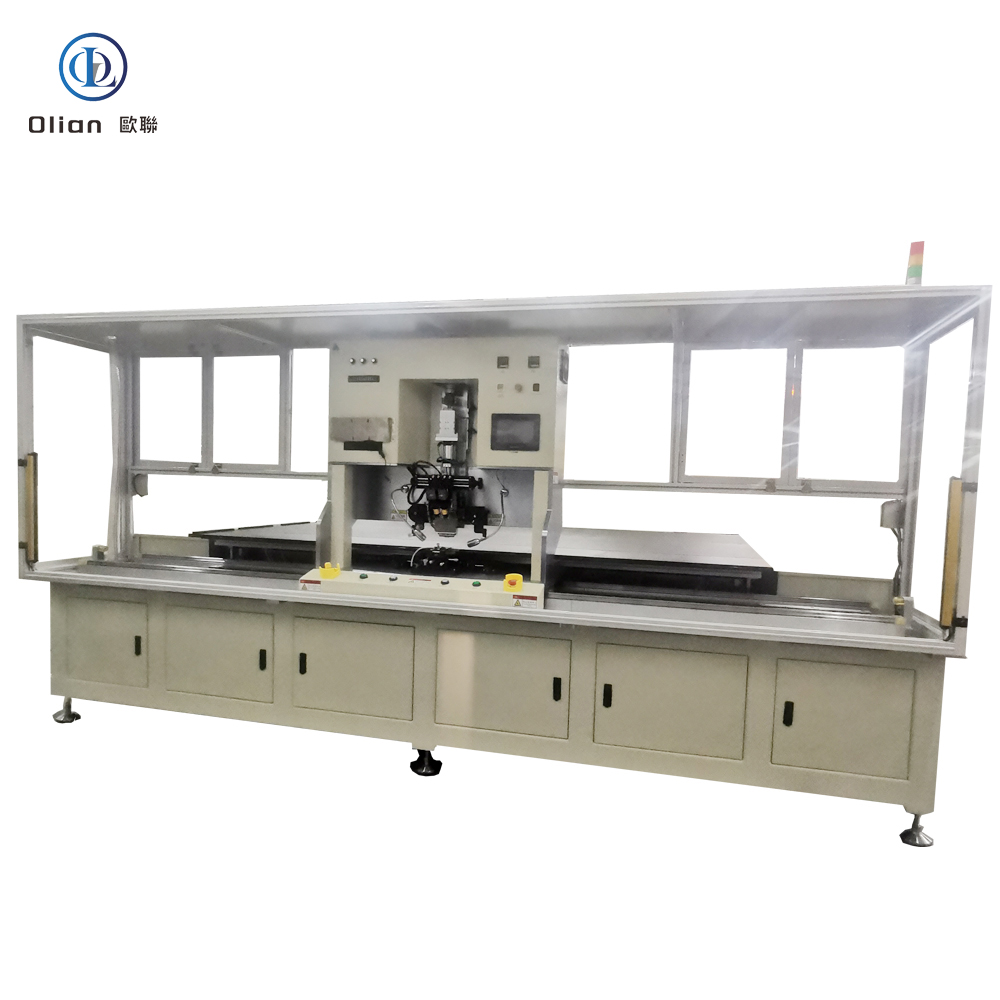
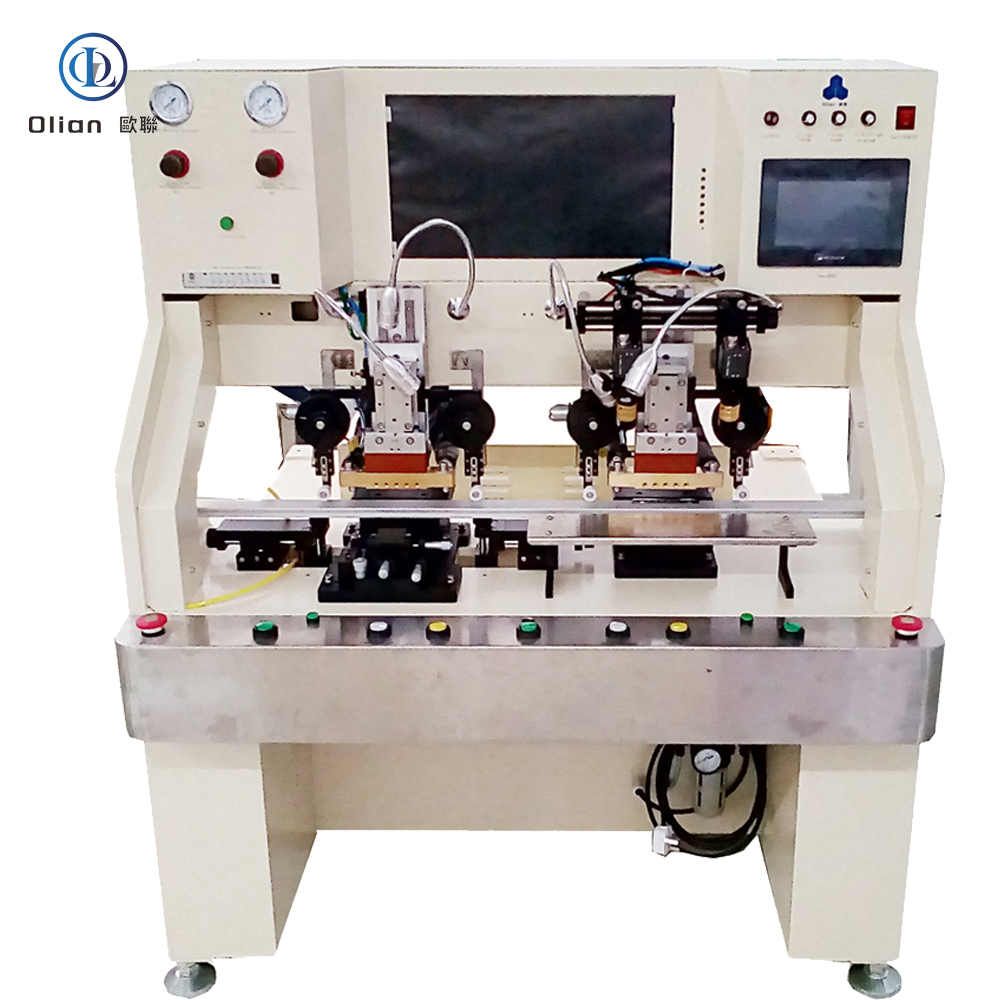
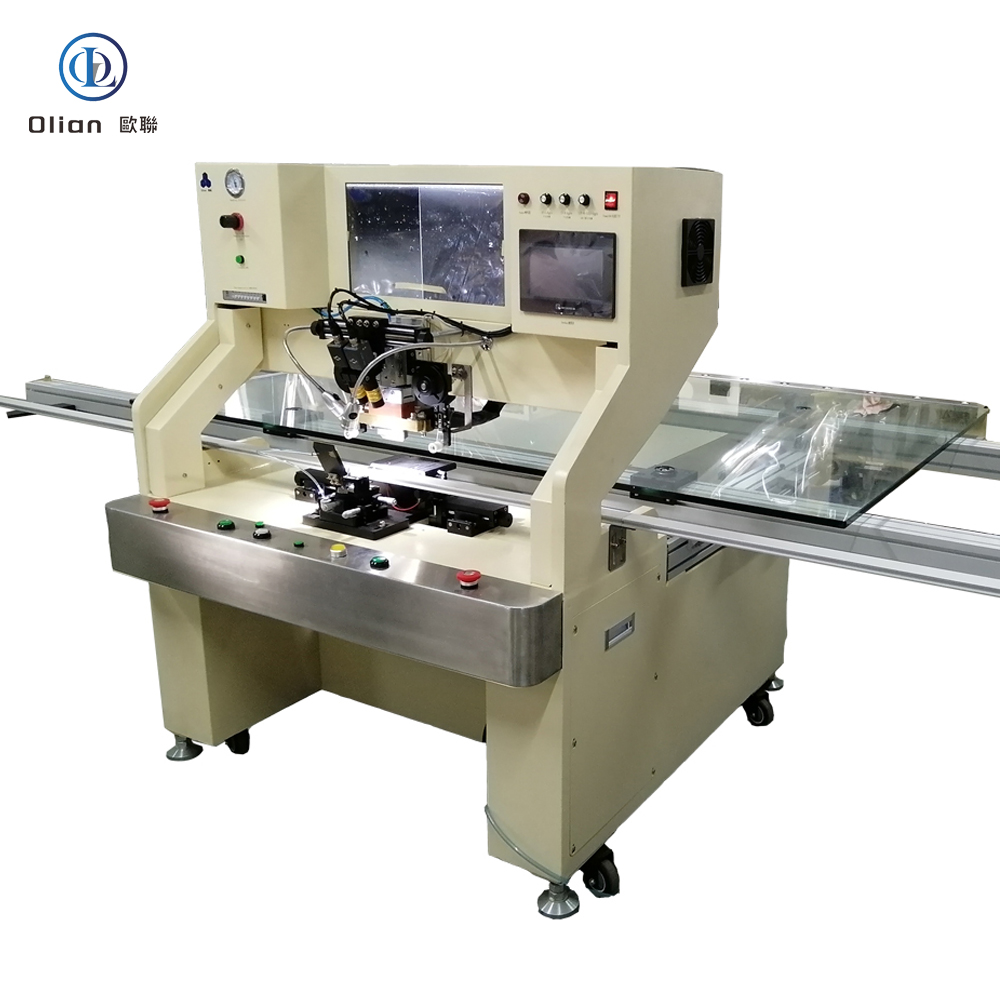
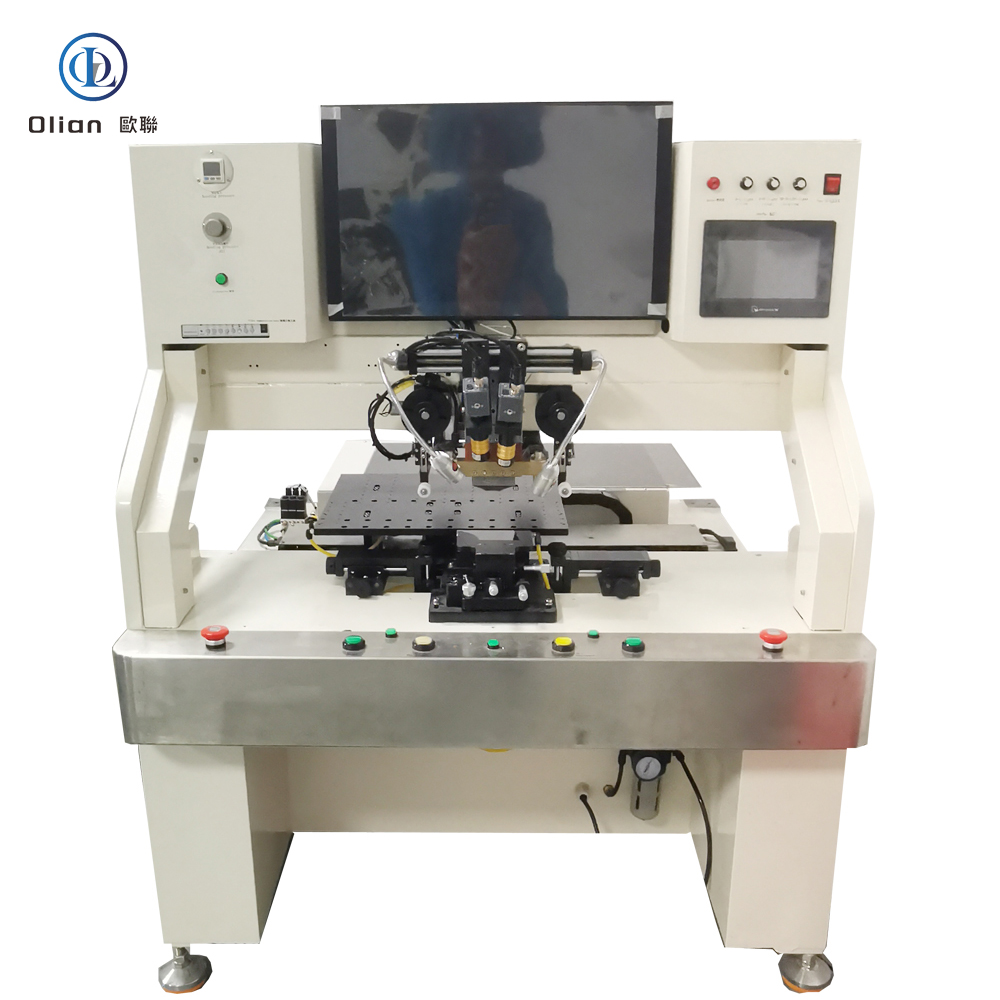
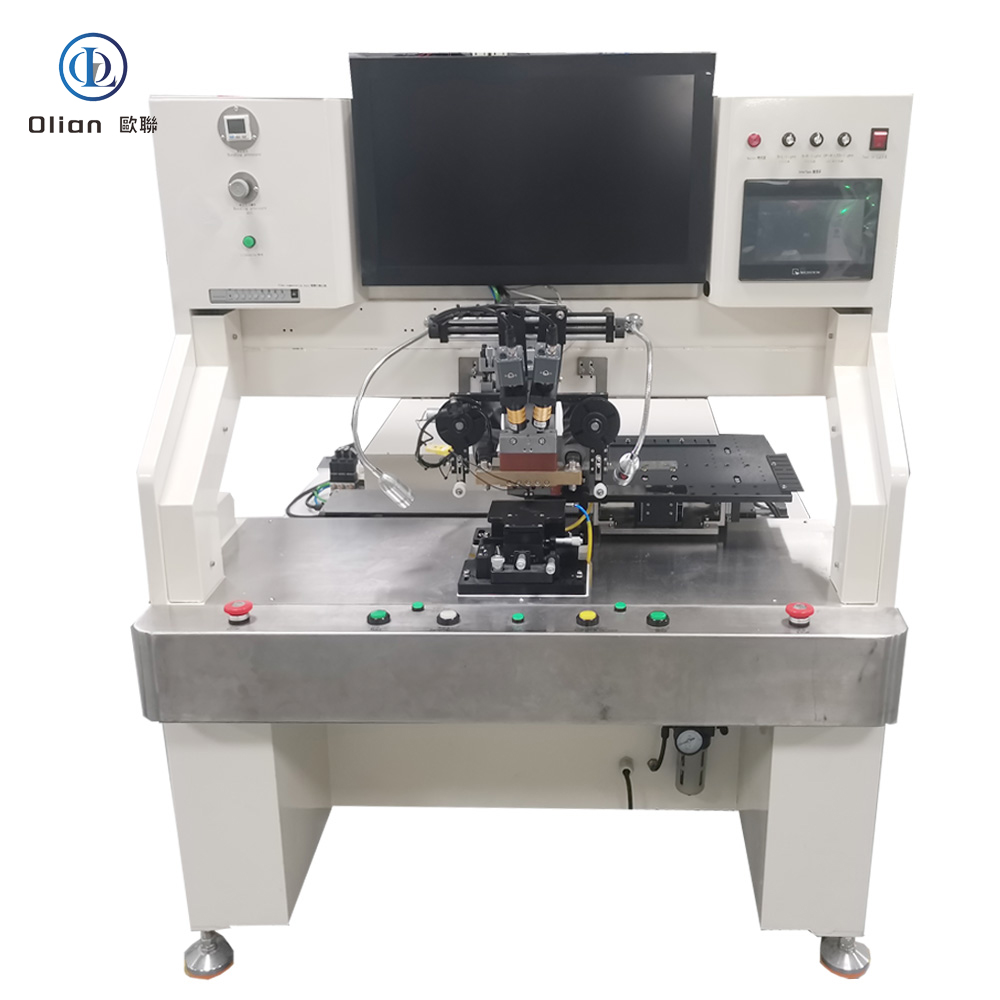
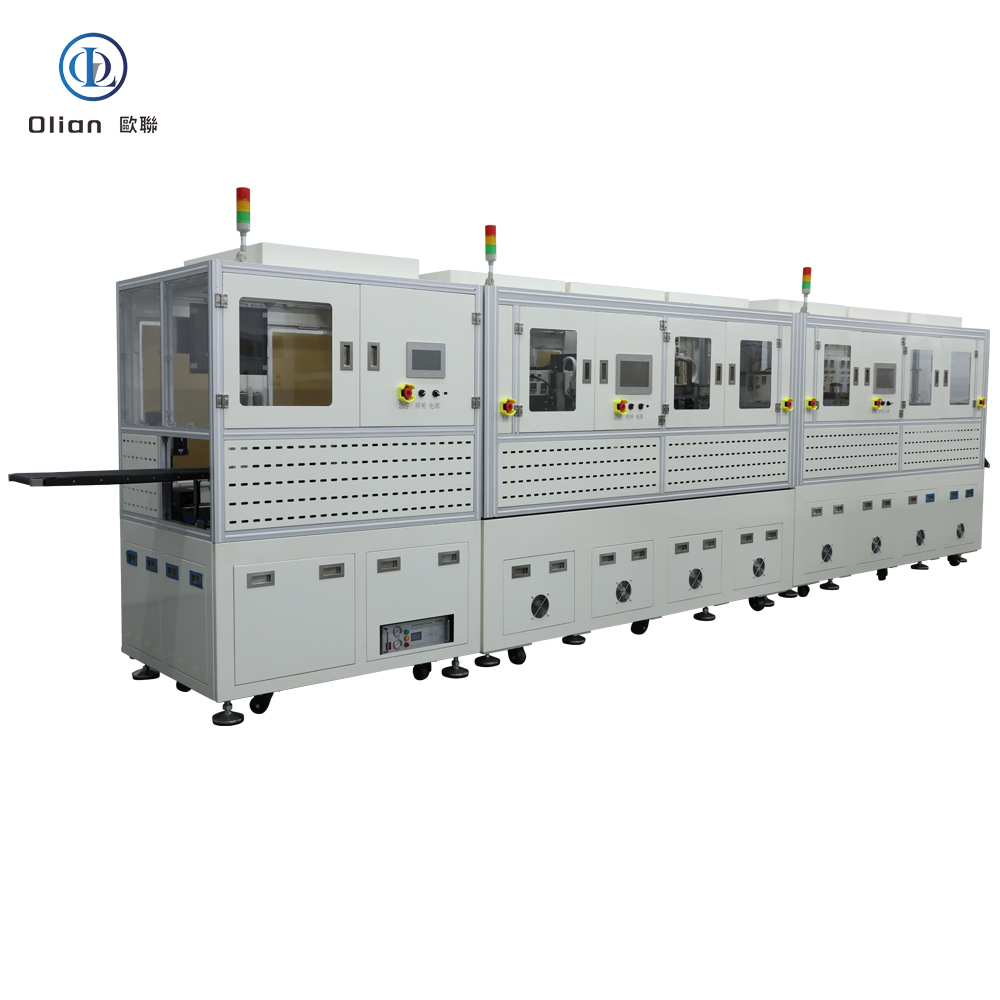
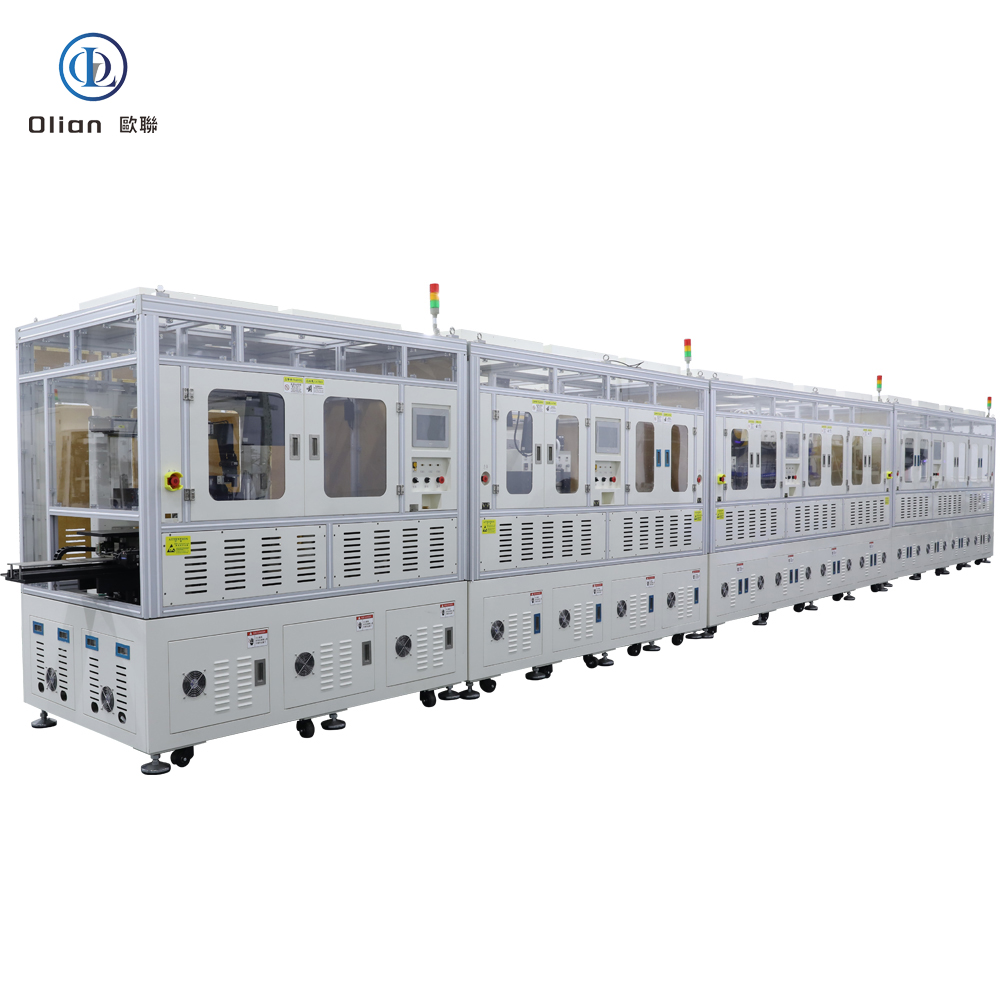
In the rapidly evolving display industry, where consumers demand higher resolution, faster refresh rates, and slimmer form factors, the COF (Chip-on-Film) Bonding Machines has emerged as a pivotal piece of equipment in modern module assembly lines. As a core component of the Module (LCD/OLED) manufacturing process, the COF Bonding Machine enables precise, reliable, and high-throughput interconnection between the display panel and driver ICs via flexible printed circuits (FPCs), playing a critical role in delivering today’s high-performance visual experiences.
A COF Bonding Machines is an automated precision system designed to bond Chip-on-Film (COF) packages—where driver ICs are mounted directly onto thin, flexible polymer substrates—onto the glass display panel. This process, known as COF bonding, is essential for high-resolution displays such as QHD, 4K, and beyond, especially in large-size monitors, TVs, and high-end commercial screens.
The machine integrates advanced technologies including:
● High-accuracy vision alignment systems (CCD/CMOS)
● Thermocompression bonding with precise temperature and pressure control
● ACF (Anisotropic Conductive Film) application and curing
● Real-time misalignment (M/A) inspection and defect detection
It operates primarily in the Module (MOD) stage, following Cell assembly and preceding final aging and packaging.
With the rise of Oxide backplane technology and Dual Gate driving architectures, leading panel manufacturers are reducing the number of COFs required per panel—such as cutting from 8 to 4 COFs on a 27” QHD monitor—thereby simplifying the bonding process and improving yield. However, each remaining COF bond must be flawless, making the precision and reliability of the COF Bonding Machine more critical than ever.
The COF bonding process typically includes:
1. COF Pre-processing: COF reels are loaded and cut into individual units.
2. ACF Lamination: ACF film is precisely attached to the panel’s bonding area.
3. COF Alignment: The COF is picked up, aligned with sub-micron accuracy to the panel’s gold fingers.
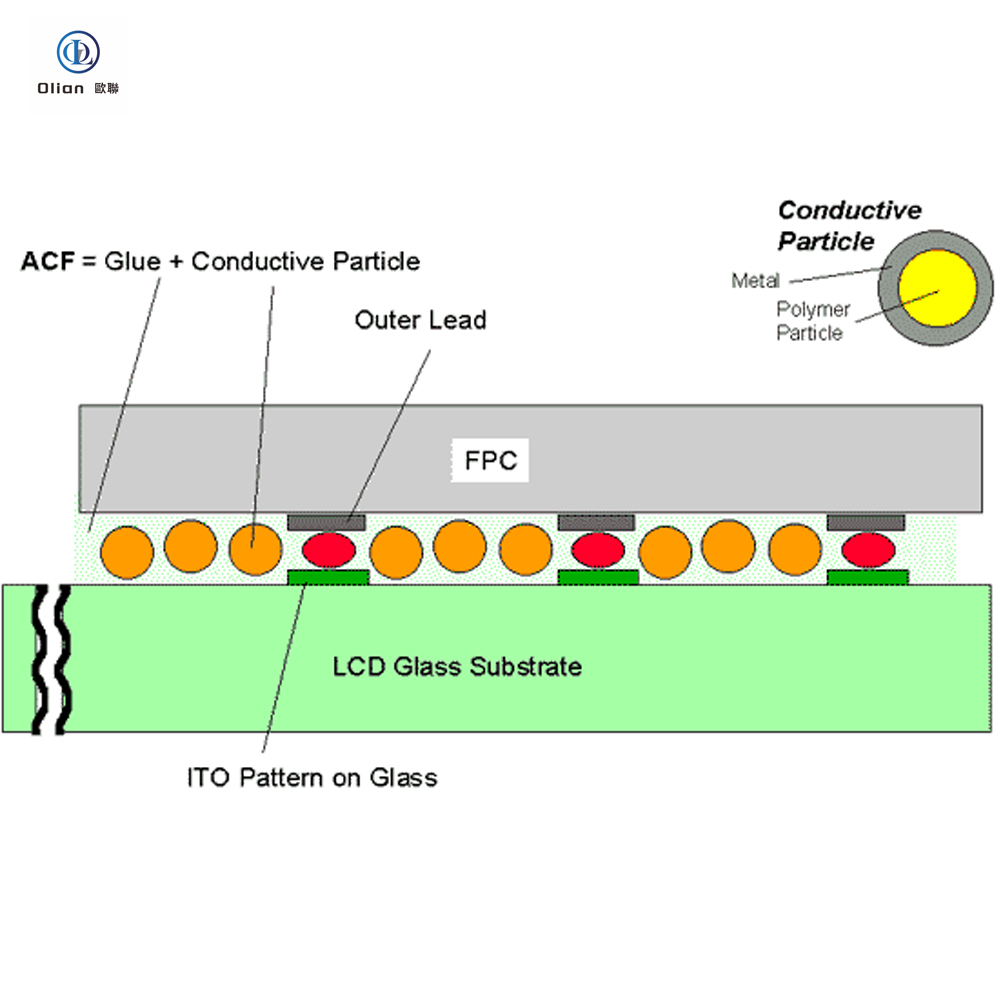
4. Thermocompression Bonding: The COF is pressed onto the panel under heat and pressure, activating the ACF to form conductive pathways.
5. Post-Bond Inspection: Automated vision systems check for misalignment, insufficient adhesion, or short circuits.
● Ultra-High Precision Alignment: Achieves alignment accuracy within ±5μm, essential for fine-pitch ICs in high-PPI displays.
● High Throughput: Modern machines can process up to 1,000+ panels per hour, supporting mass production demands.
● Dual-Side & Multi-COF Capability: Supports complex layouts with multiple COFs on top/bottom or dual-side bonding.
● Low Defect Rate: Integrated AOI and M/A inspection systems detect bonding errors in real time, minimizing downstream failures.
● Process Flexibility: Adaptable to various panel sizes (from 10” to over 75”) and technologies (LCD, OLED, MicroLED).
● Smart Factory Integration: Equipped with SECS/GEM interfaces for seamless connection to MES systems, enabling Industry 4.0 compliance.
As highlighted in recent industry trends, the reduction in COF count—enabled by Oxide + Dual Gate technology—brings significant benefits to the bonding process:
● Simplified Bonding Layout: Fewer COFs reduce complexity in alignment and pressure distribution.
● Reduced Risk of Bonding Defects: Lower COF count decreases the probability of M/A (misalignment) and ACF voids.
● Improved Equipment Uptime: Less frequent tool changes and simpler handling increase overall equipment effectiveness (OEE).
● Lower Material Cost: Reduced COF and PCB usage directly cut BOM costs.
However, this also demands higher precision per bond, as each remaining COF carries more signal load—making the performance of the COF Bonding Machine even more crucial.
● Monitors & TVs: High-resolution desktop and large-format displays benefit from stable, high-yield COF bonding.
● Commercial Displays: Digital signage, kiosks, and interactive whiteboards rely on durable COF interconnections.
● Industrial & Medical Equipment: Requires long-term reliability under varied environmental conditions.
● Automotive Displays: As dashboards adopt larger, curved, or multiple screens, COF bonding ensures signal integrity and space efficiency.
For 27” QHD monitors and above, COF bonding remains the dominant interconnection method, especially where high electron mobility (Oxide TFT) and high refresh rates are required.
At Olian Automation, we are at the forefront of developing intelligent, high-precision COF Bonding Machines tailored for the next generation of display manufacturing. Our machines are designed with:
● Modular architecture for easy integration into existing LCM lines
● AI-enhanced alignment algorithms that adapt to panel variance
● Energy-efficient thermocompression systems that reduce power consumption
● Remote diagnostics and predictive maintenance capabilities
● Full turnkey support, from dispensing and lamination to aging and testing
With deep expertise in bonding, dispensing, and smart factory ecosystems, Olian Automation empowers display manufacturers to achieve higher yield, lower cost, and faster time-to-market.
Looking ahead, COF bonding will continue to evolve alongside display innovation:
● Foldable & Flexible Displays: Require ultra-thin COF designs and low-temperature bonding processes.
● Mini/MicroLED: Will demand even finer pitch bonding and higher reliability.
● AI-Driven Process Optimization: Real-time data analytics will enable self-adjusting bonding parameters.
● Sustainable Manufacturing: Focus on recyclable materials and energy-efficient equipment.
As the line between COG, COF, and COP (Chip-on-Plastic) blurs, the COF Bonding Machine will remain a versatile and indispensable tool in the display fab.
The COF Bonding Machines is more than just a piece of equipment—it is a precision engine driving the future of visual technology. As panel designs become more sophisticated and production standards more rigorous, the need for reliable, intelligent, and scalable COF bonding solutions has never been greater.
At Olian Automatic, we are committed to pushing the boundaries of what’s possible in display assembly. Whether you’re scaling up production, transitioning to Oxide-based panels, or developing next-gen automotive displays, our COF Bonding Machines deliver the performance, precision, and partnership you need to succeed.
Contact Olian Automatic today to learn how our COF Bonding Solutions can transform your manufacturing line. wechat/whatsapp:+86 18025364779 zack wu
Keywords: COF Bonding Machines, Chip-on-Film, LCD/OLED Module Equipment, Display Manufacturing, Oxide Backplane, Dual Gate, ACF Bonding, High-Resolution Display, LCM Production, Olian Automatic
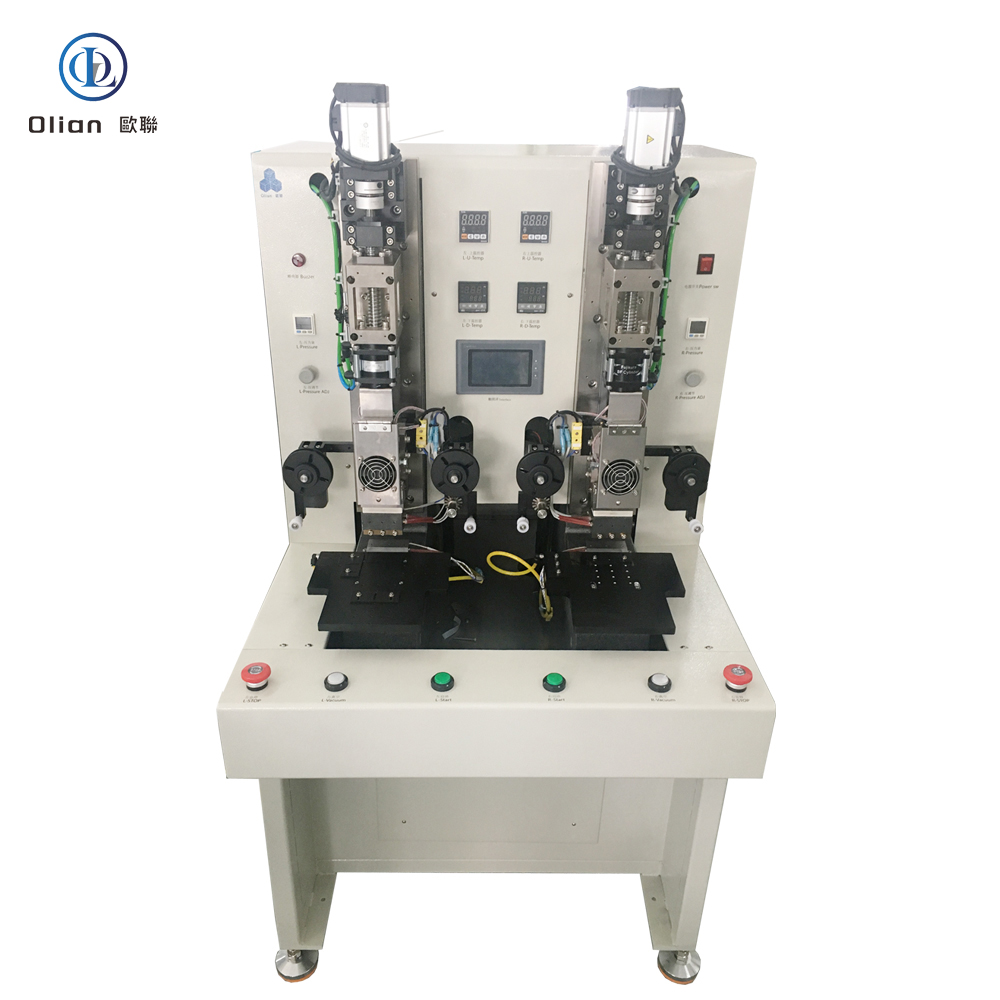
COG Bonding Machine: The Core of High-Precision Display Assembly.
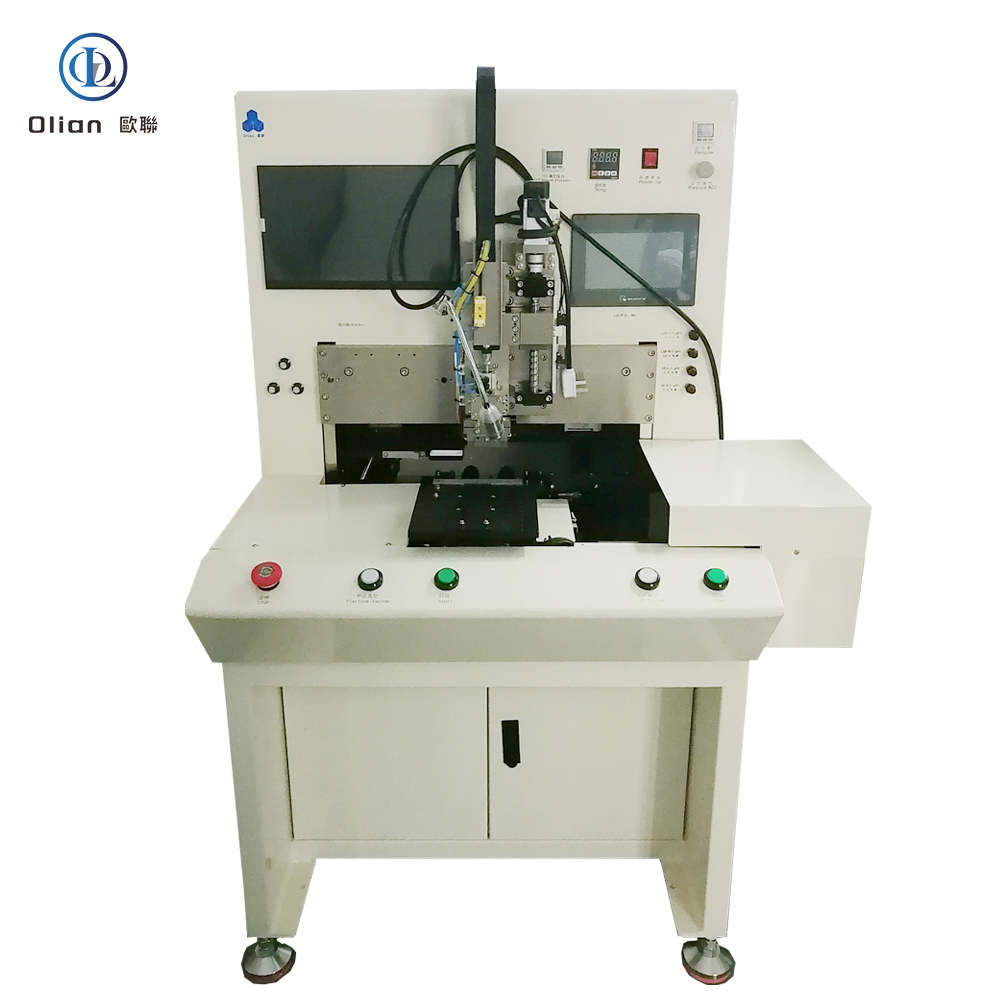
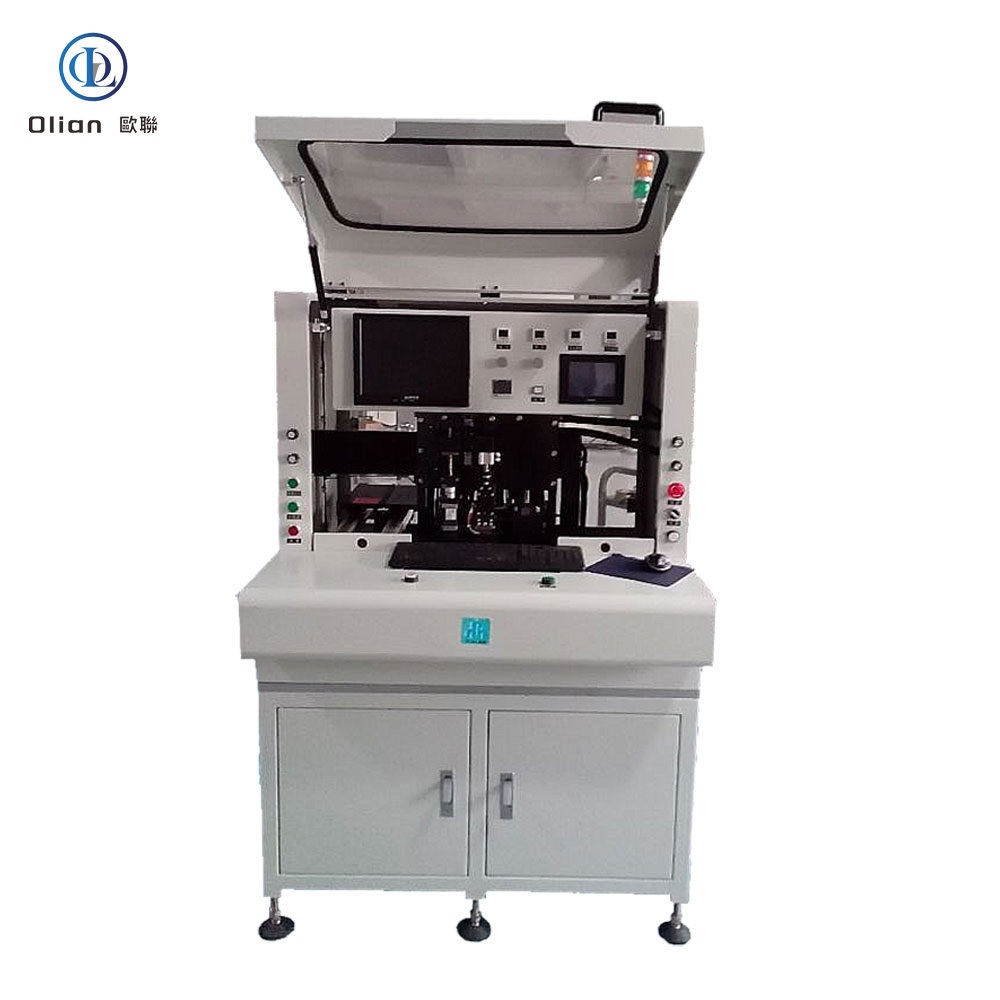
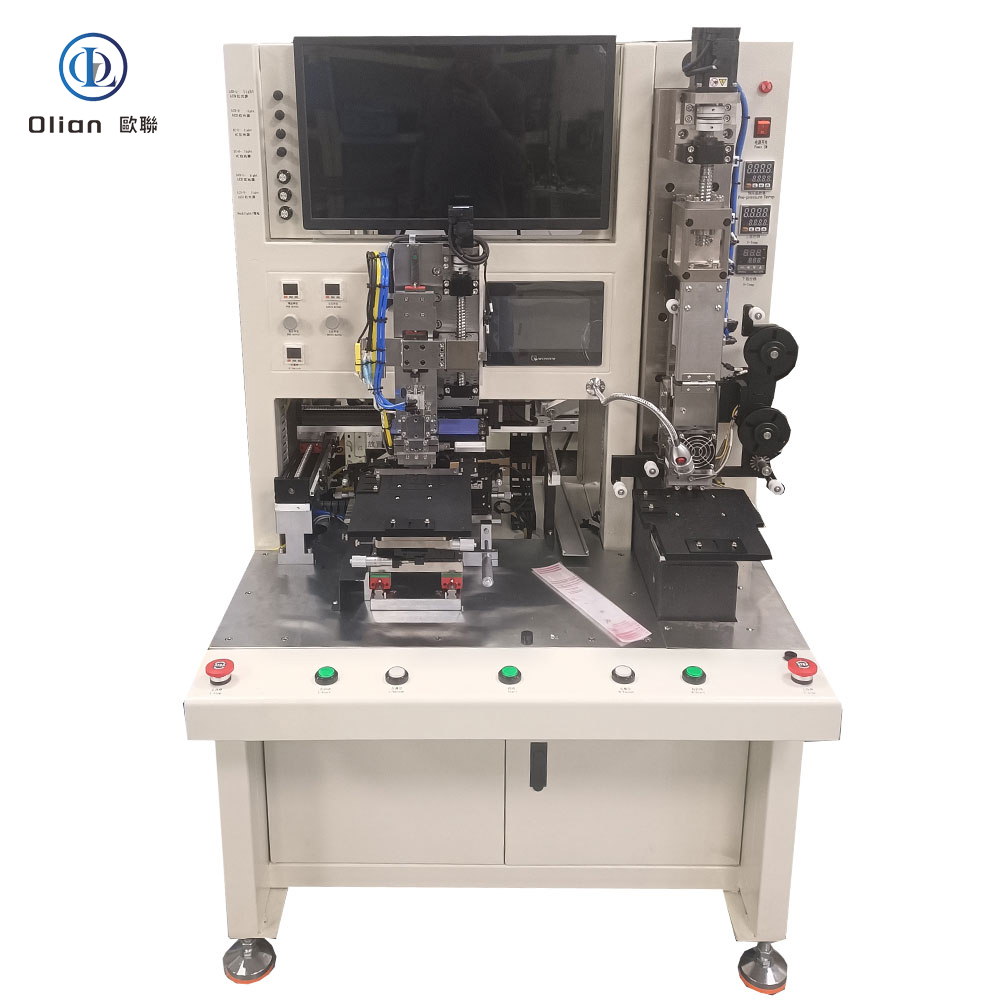
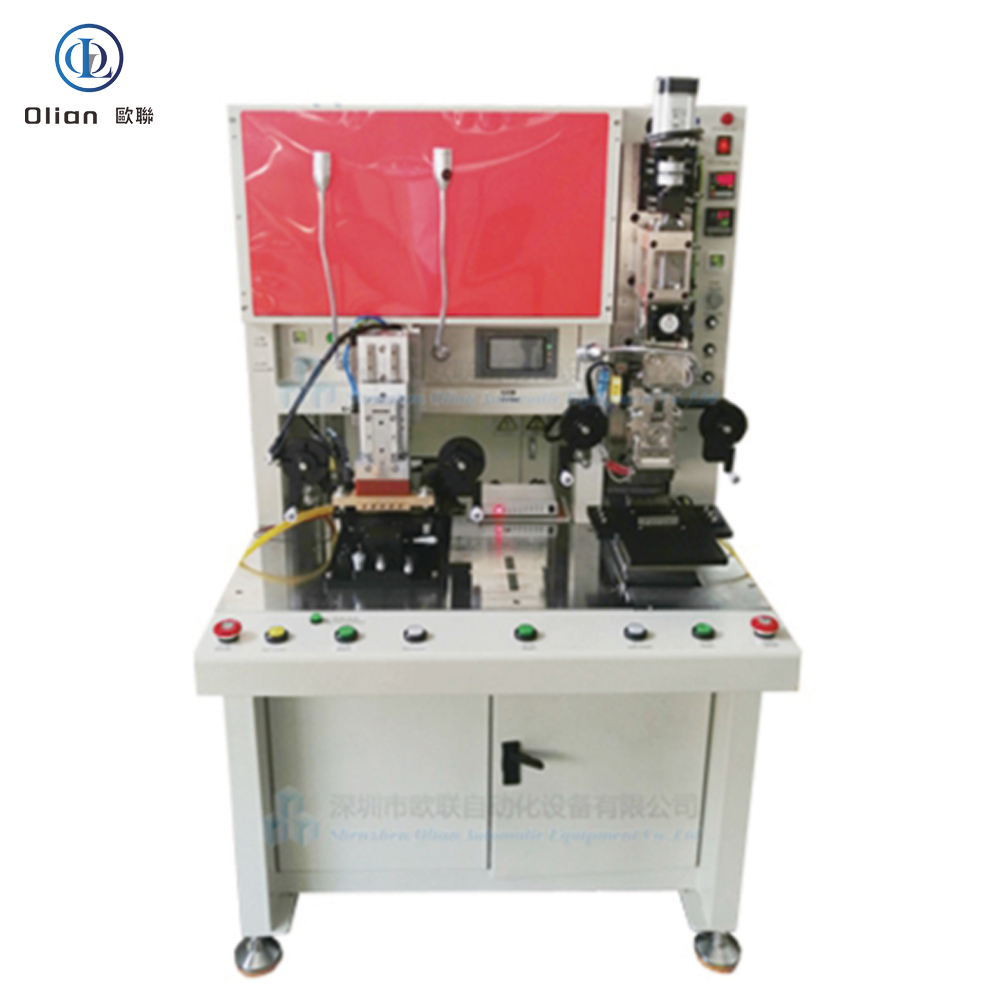
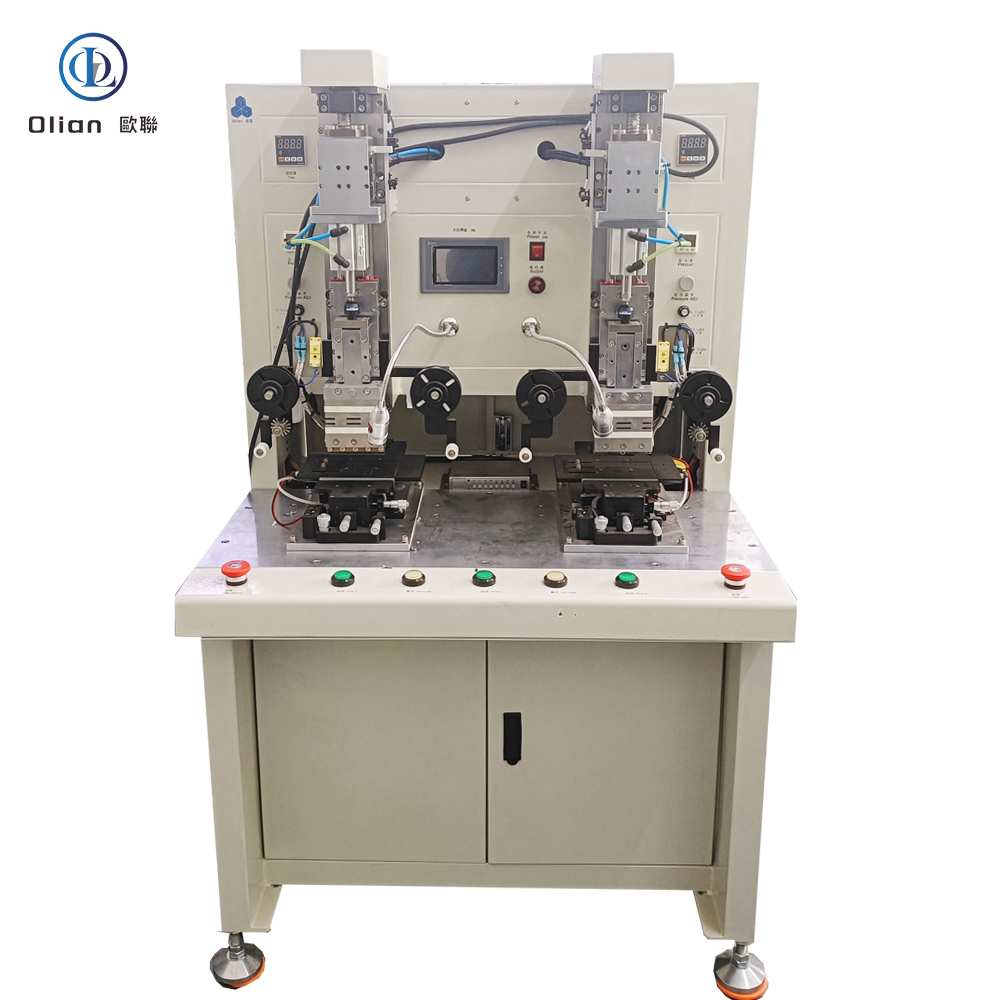
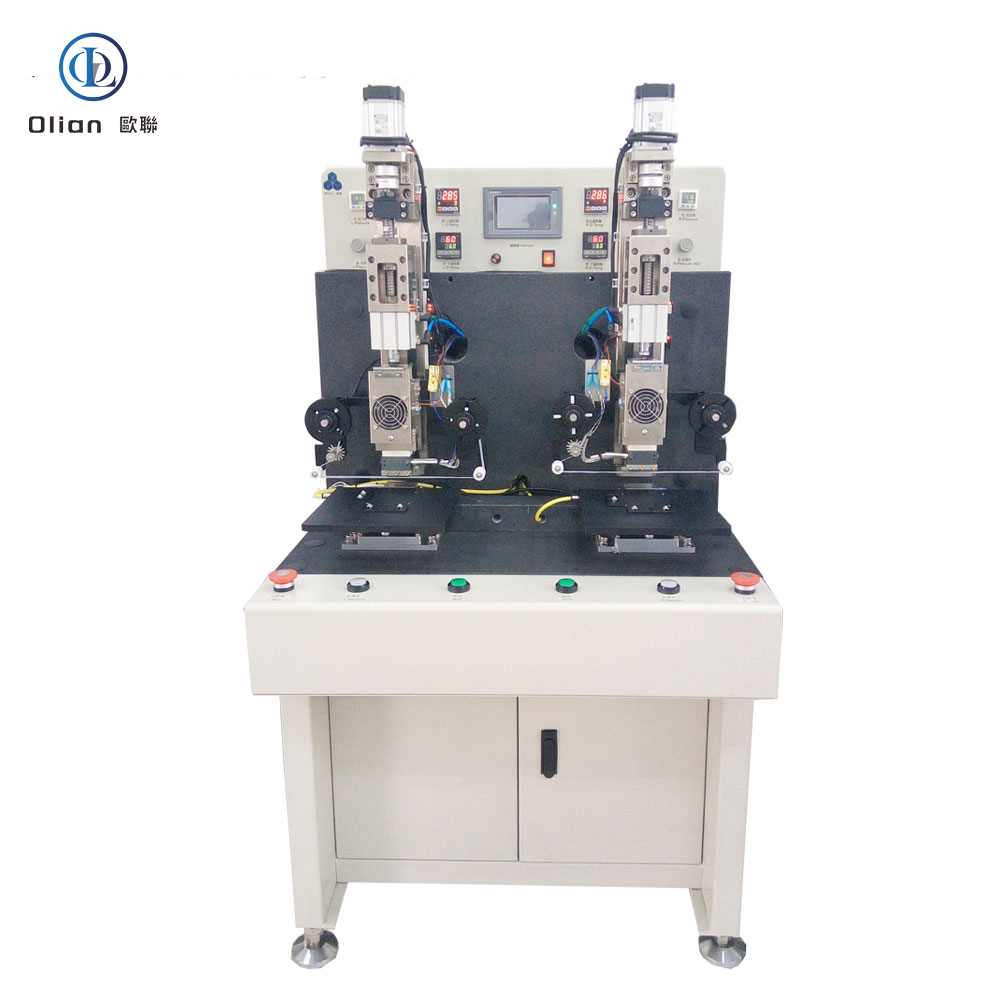
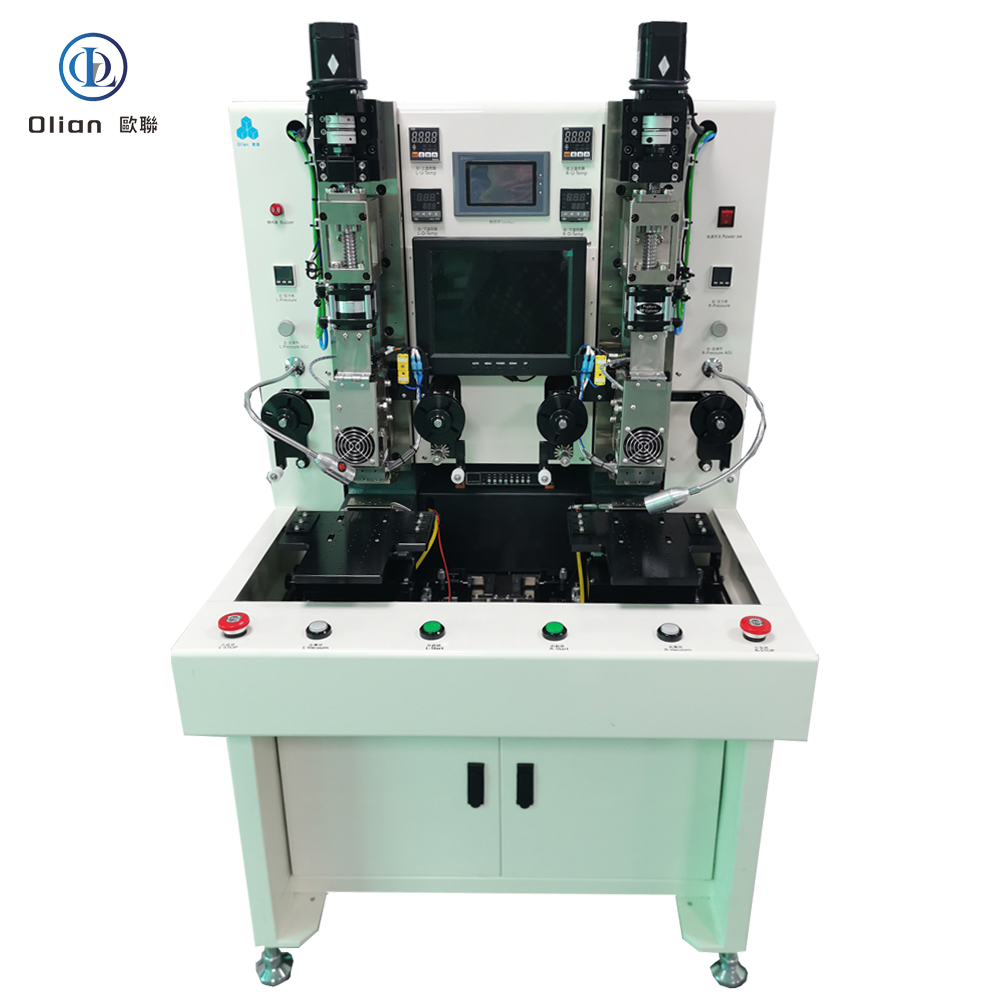
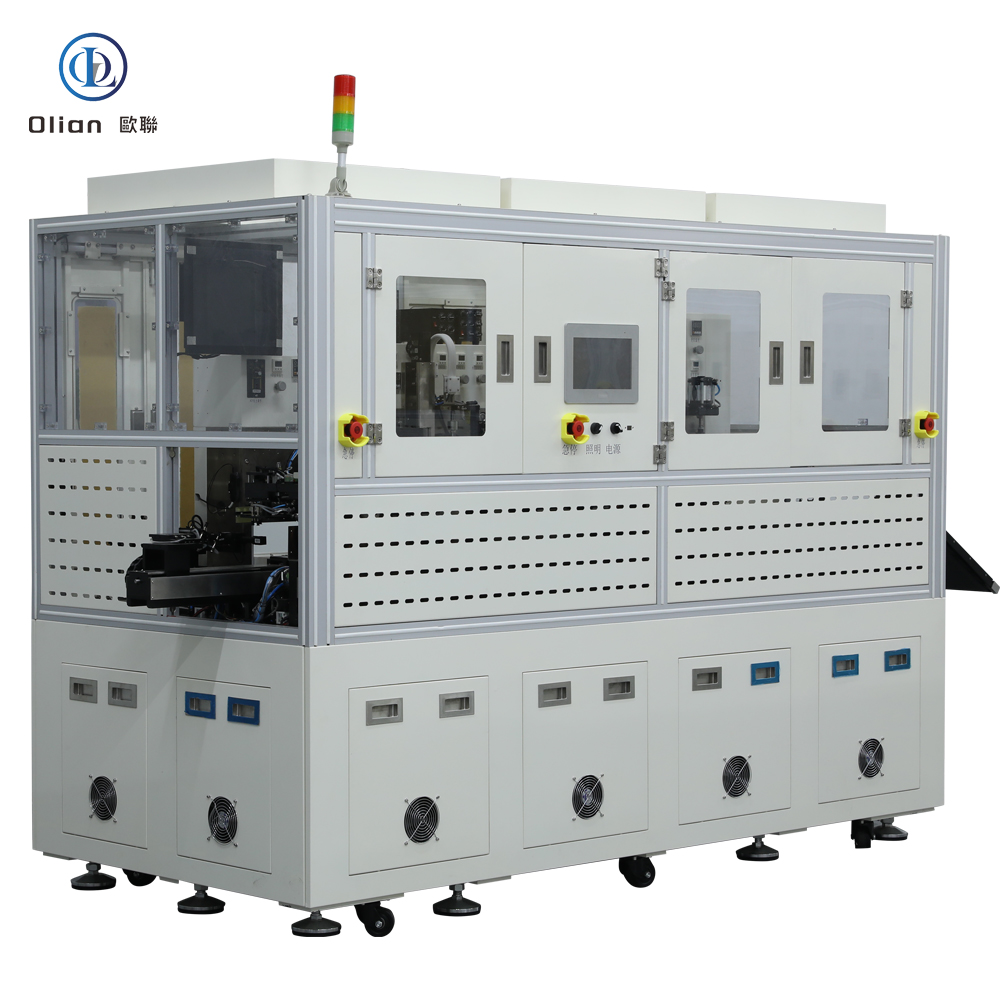
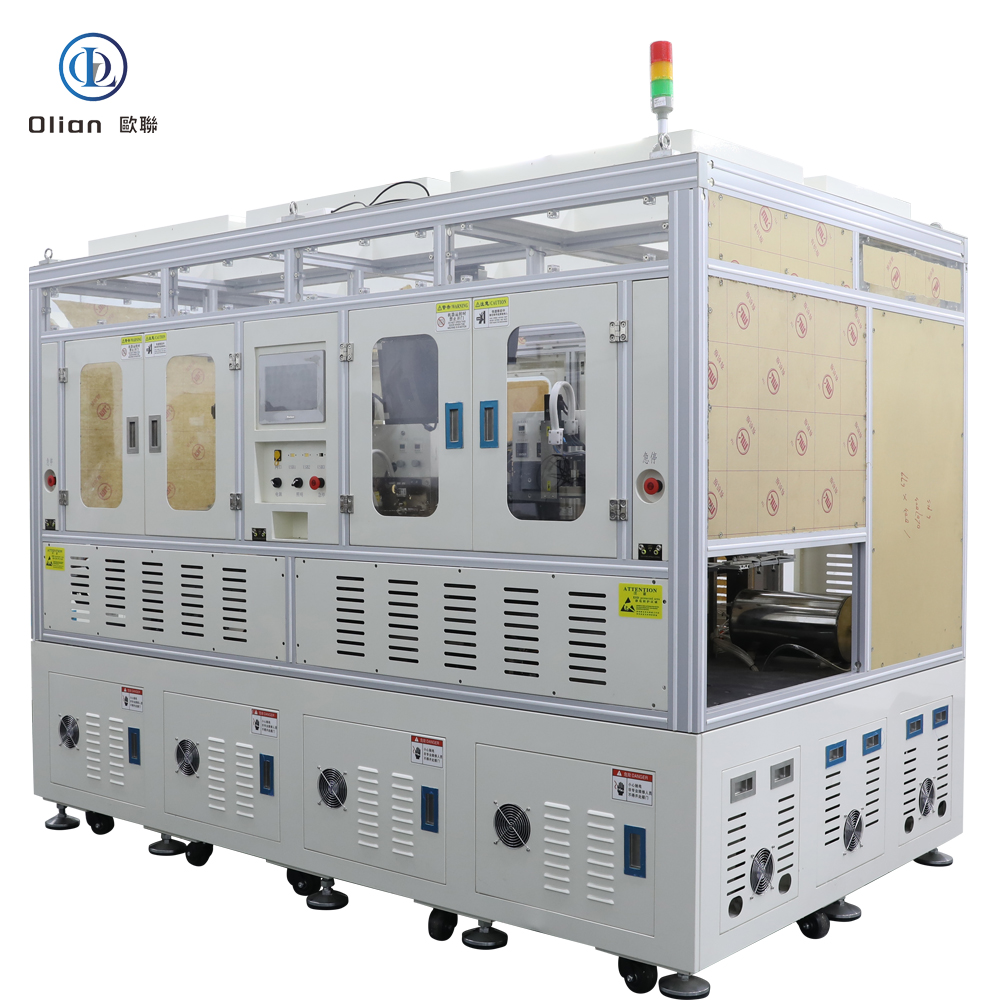
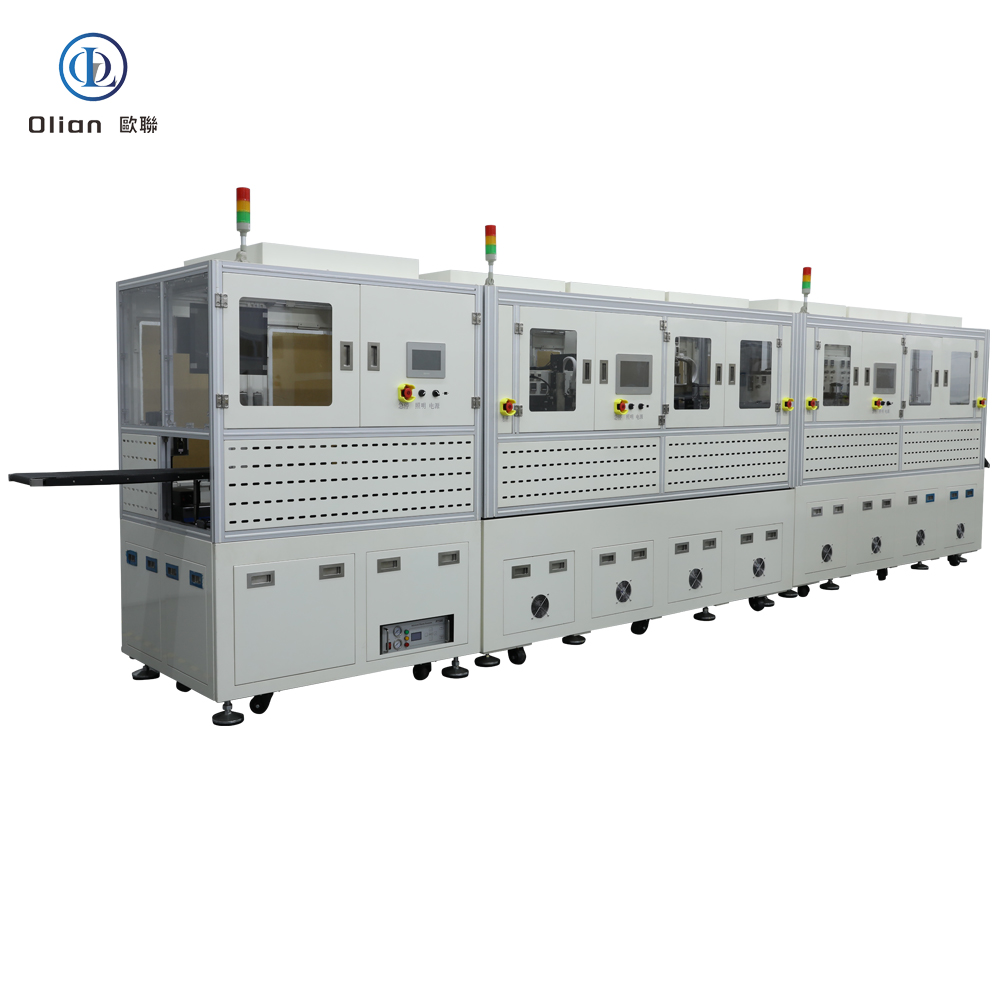
In the intricate world of display module manufacturing, the COG (Chip-on-Glass) Bonding Machine stands as a cornerstone technology. As consumer demand pushes for slimmer, higher-resolution, and more durable electronic devices—from smartwatches and foldable phones to automotive infotainment systems—precision at the micro-level becomes non-negotiable. At the heart of this precision lies the COG Bonding Machine, a critical system that enables reliable, high-yield interconnection between integrated circuits (ICs) and glass substrates.
A COG Bonding Machine is a specialized automated system used in the assembly of liquid crystal modules (LCMs) and touch panels. It precisely mounts and bonds bare semiconductor chips directly onto glass substrates using Anisotropic Conductive Film (ACF). This process, known as Chip-on-Glass (COG), eliminates the need for printed circuit boards in compact displays, reducing thickness and improving signal integrity.
The machine integrates multiple advanced technologies:
● High-precision vision alignment
● Controlled thermocompression bonding
● Automated handling of fragile glass and ICs
● Real-time process monitoring and defect detection
As devices shrink and displays become more complex, traditional packaging methods fall short. The COG Bonding Machine addresses these challenges by:
● Minimizing module size – Ideal for wearables, medical devices, and ultra-narrow bezel displays
● Improving electrical performance – Shorter signal paths reduce resistance and noise
● Enhancing reliability – Direct bonding reduces failure points compared to flex-to-glass methods
● Supporting high-resolution displays – Capable of fine-pitch bonding (down to tens of microns)
This makes COG technology indispensable in smart wearables, automotive instrument clusters, industrial HMIs, and next-gen AR/VR displays.
1. Pre-Bonding Stage The glass substrate is cleaned and pre-heated. ACF film is precisely dispensed or laminated onto the bonding area.
2. IC Pickup and Alignment The machine uses a vacuum pickup head to retrieve the bare die (IC), then aligns it with sub-micron accuracy using a high-resolution vision system.
3. Thermocompression Bonding The IC is pressed onto the ACF-coated glass under controlled temperature (typically 150–200°C) and pressure (a few Newtons), activating the conductive particles in the ACF to form reliable Z-axis connections.
4. Post-Bonding Inspection Integrated AOI (Automated Optical Inspection) checks for misalignment, voids, or bonding defects, ensuring high yield.
● Ultra-High Accuracy: ±5μm alignment precision ensures reliable connections even in high-density layouts
● Multi-Chip & Multi-Side Bonding: Supports complex modules requiring multiple ICs on one or more edges
● High Throughput: Up to 1,200 UPH (Units Per Hour) with robotic automation
● Low Defect Rate: Advanced pressure and temperature control minimize micro-cracks and open circuits
● Scalability: Modular design allows integration into full LCM turnkey lines, including dispensing, lamination, and aging stations
● Wearable Technology: Smartwatches, fitness trackers with small, curved displays
● Automotive Displays: Digital dashboards and center consoles requiring durability and clarity
● Medical Devices: Portable monitors and diagnostic equipment with space-constrained designs
● Consumer Electronics: Smartphones, tablets, and AR glasses
For 7–120 inch modules, especially in wearable COG/COP solutions and automotive display manufacturing, COG bonding is often the preferred method for achieving both performance and miniaturization.
At Olian Automatic, we specialize in designing and manufacturing high-performance COG Bonding Machines tailored to the evolving needs of the display industry. With years of R&D experience and a deep understanding of bonding, dispensing, and smart factory integration, our machines deliver:
● Stable, high-yield performance
● Custom configurations for unique product designs
● Seamless integration with FOG, COP, and OCA lamination processes
● Comprehensive after-sales support and technical training
Our COG bonding solutions are already deployed in production lines across Asia, Europe, and North America, serving leaders in wearables, automotive, and industrial display manufacturing.
As displays evolve toward foldable, rollable, and transparent designs, COG bonding technology must adapt. Future advancements include:
● Lower bonding temperatures for sensitive flexible substrates
● AI-driven predictive maintenance and yield optimization
● Integration with digital twin systems for real-time process simulation
● Eco-friendly ACF materials and reduced energy consumption
The COG Bonding Machine is not just keeping pace with innovation—it’s helping to drive it.
In the high-stakes world of display manufacturing, precision, reliability, and scalability are everything. The COG Bonding Machine delivers on all fronts, serving as the backbone of modern LCM and touch panel production. Whether you’re building the next generation of smart wearables or revolutionizing automotive human-machine interfaces, investing in advanced COG bonding technology is a strategic imperative.
Choose Olian Automatic for cutting-edge COG Bonding Machines and complete turnkey solutions. Contact us today to optimize your production line for the future of display technology. wechat/whatsapp:+86 18025364779 zack wu
Keywords : COG Bonding Machine, Chip-on-Glass, LCM Module, Touch Panel Equipment, ACF Bonding, Display Manufacturing, Precision Bonding, Thermocompression Bonding, Vision Alignment System, Automated Optical Inspection (AOI), Wearable Displays, Automotive Display, COP Packaging, FOG Bonding, OCA Lamination, Smart Manufacturing, Olian Automation, Fine-Pitch Bonding, High-Yield Assembly, Turnkey LCM Line.
Meta Description: Explore the role of the COG Bonding Machine in high-precision display assembly. Learn how it enables miniaturization, reliability, and high yield in wearable, automotive, and consumer electronics manufacturing. Discover advanced solutions from Olian Automatic.
ACF Applicator: Precision Bonding Solution for Advanced LCM and Display Manufacturing
In the rapidly evolving world of display technology, precision, reliability, and efficiency are paramount. As devices become thinner, more flexible, and increasingly complex—from smartphones and wearables to automotive displays and e-paper modules—the for high-accuracy bonding processes has never been greater. At the heart of this precision lies the ACF Applicator, a critical piece of equipment in modern LCM (Liquid Crystal Module) and touch panel manufacturing.
An ACF Applicator (Anisotropic Conductive Film Applicator) is a specialized machine designed to accurately dispense, align, and bond Anisotropic Conductive Film (ACF) onto flexible printed circuits (FPCs), glass substrates, or film-based displays. ACF is a smart adhesive material containing conductive particles that enable electrical connections in one direction (Z-axis) while insulating in others (X-Y axes), making it ideal for COG (Chip-on-Glass), COP (Chip-on-Film), and FOG (Film-on-Glass) packaging processes.
The ACF Applicator ensures:
● Ultra-precise film placement with micron-level accuracy
● Consistent pressure and temperature control during bonding
● Minimal material waste through optimized dispensing
● High throughput in automated production lines
With the rise of foldable screens, wearable devices, and large-format automotive displays, traditional soldering methods are no longer sufficient. The ACF Applicator enables:
–Fine-pitch interconnects for high-resolution displays
–Reliable electrical connections on flexible and curved surfaces
–Improved yield and reliability by reducing defects such as open circuits or shorting
–Scalability for mass production in smart factories
It is a core component in turnkey LCM module lines, especially for wearable COG/COP solutions, automotive display bonding (15–120 inch), and electronic paper modules, where mechanical stress and thermal stability are critical.
1. Vision Alignment System Equipped with high-resolution cameras and AI-assisted image processing, ensuring sub-micron alignment accuracy between ICs, FPCs, and substrates.
2. Multi-Zone Pressure & Temperature Control Enables uniform bonding across large or irregular surfaces, critical for G+G, F+G, and OCA lamination processes.
3. Automated ACF Feeding & Splicing Reduces downtime and material waste, supporting continuous production.
4. Integration with Factory Automation (FA) Compatible with MES systems, robotic handling, and inline AOI (Automated Optical Inspection), making it ideal for smart manufacturing environments.
5. Low-Defect Design Features dust-free chambers, ESD protection, and real-time process monitoring to maintain high yield rates.
Consumer Electronics: Smartwatches, foldable phones, tablets
Automotive: Digital dashboards, center consoles, AR-HUDs
Medical Devices: Portable monitors, diagnostic equipment
Industrial & IoT: HMI displays, control panels
Whether it’s a 7-inch wearable module or a 100-inch TV display, the ACF Applicator plays a vital role in ensuring durable, high-conductivity interconnections.
Not all ACF applicators are created equal. When selecting a solution, look for:
Proven experience in COG/COP/FOG bonding
Customization capability for multi-chip, multi-side bonding
Strong R&D and after-sales support
Compliance with international standards ( ISO)
Olian Automatic, a trusted name in display manufacturing equipment, offers advanced ACF Applicator solutions tailored for high-volume, high-reliability production environments. With deep expertise in bonding, dispensing, lamination, and inspection, we deliver turnkey lines that integrate seamlessly into your smart factory ecosystem.
The ACF Applicator is more than just a bonding machine—it’s a gateway to next-generation display manufacturing. As the industry moves toward thinner, more flexible, and higher-density displays, precision equipment like the ACF Applicator will continue to drive innovation, improve yields, and reduce costs.
Invest in the right technology today to stay ahead in the competitive world of display and touch solutions.
Explore our full range of ACF Applicators and LCM module turnkey lines at [bonding-machine.com]. Contact us for a customized solution. Wechat/whatsapp:+8618025364779. Zack Wu
Keywords (Naturally Integrated): ACF Applicator, Anisotropic Conductive Film, COG Bonding, COP Packaging, FOG Bonding, LCM Module, Display Manufacturing, Touch Panel Equipment, Chip-on-Glass, Chip-on-Film, Fine-Pitch Bonding, Automated Optical Inspection (AOI), Factory Automation, Wearable Displays, Automotive Display, OCA Lamination, Precision Bonding, Smart Manufacturing, Olian Automatic.
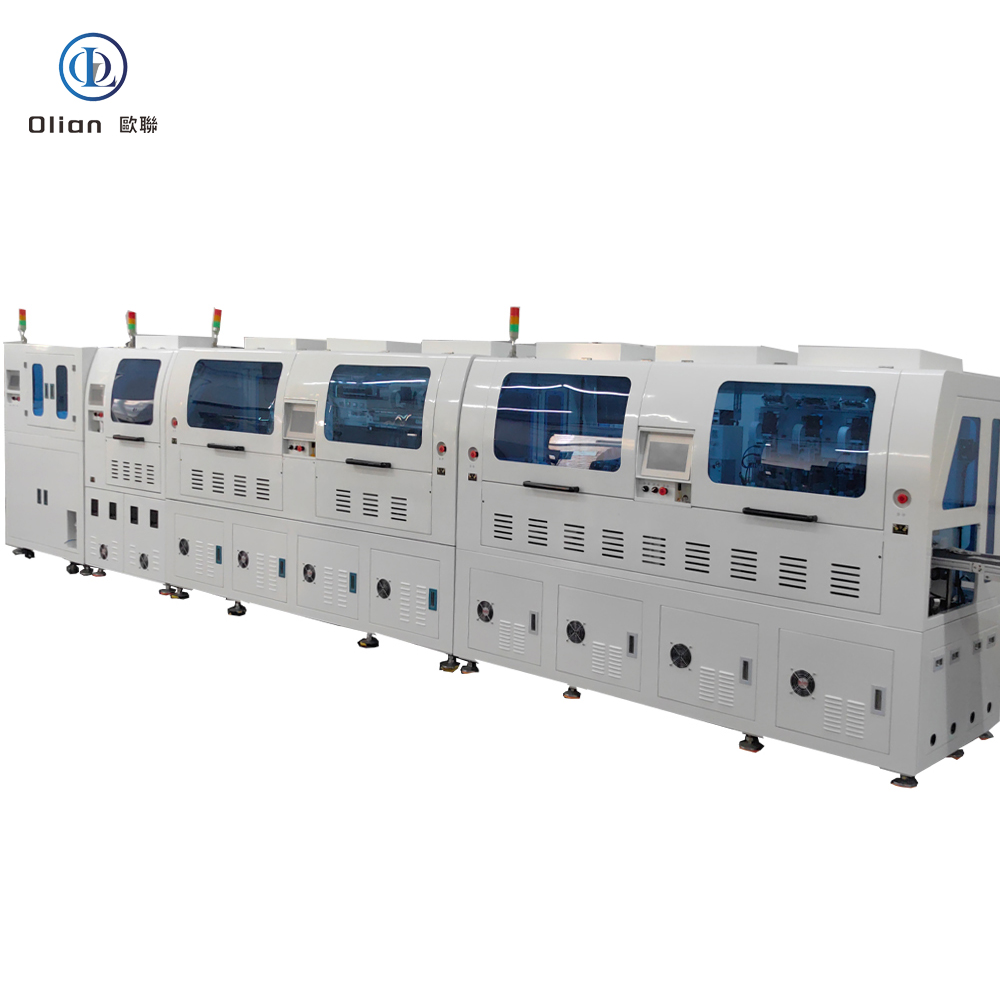
LCM & Touch Module Manufacturing Solutions.
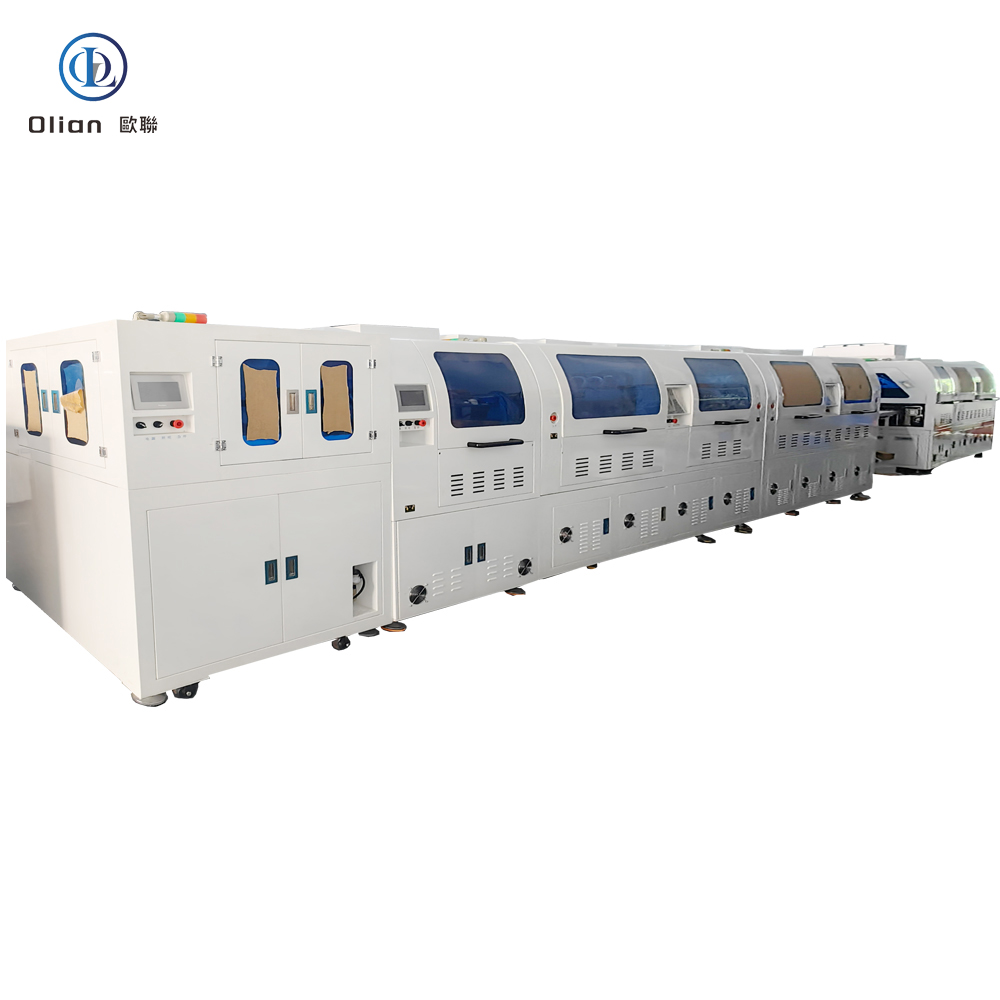
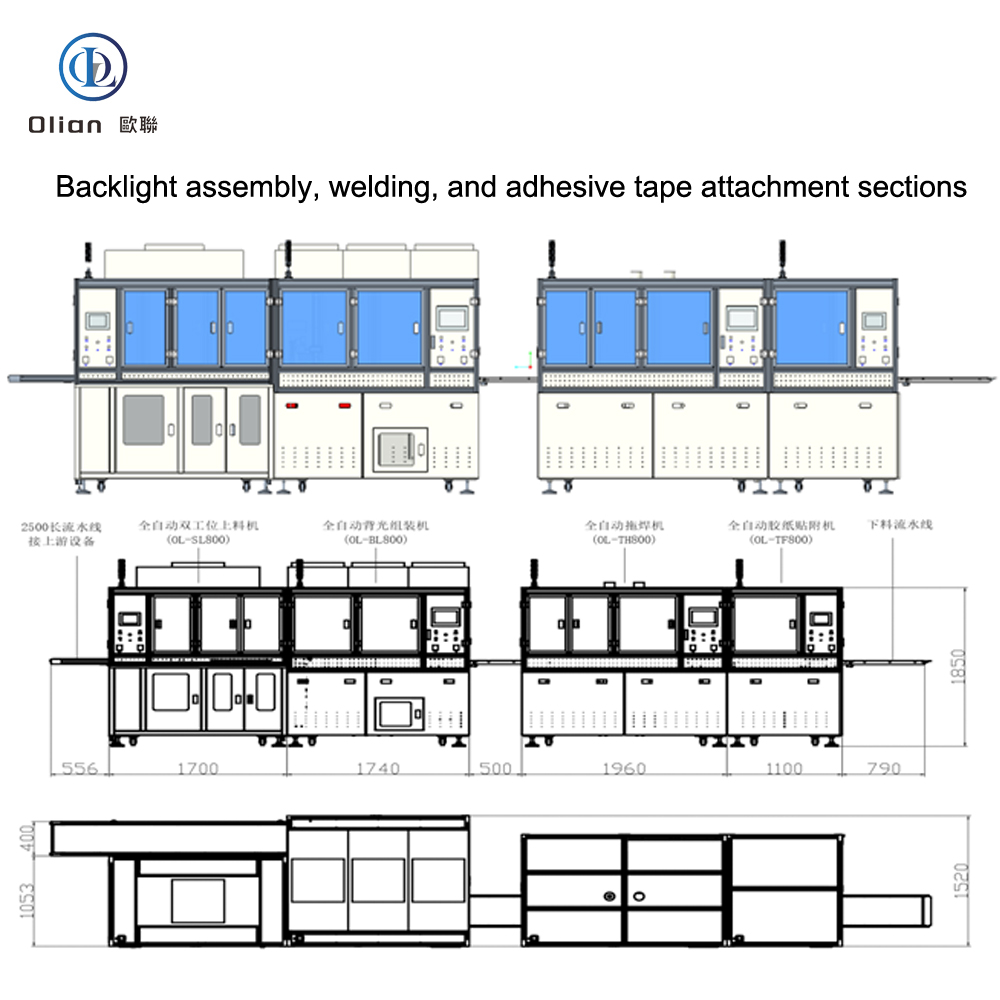
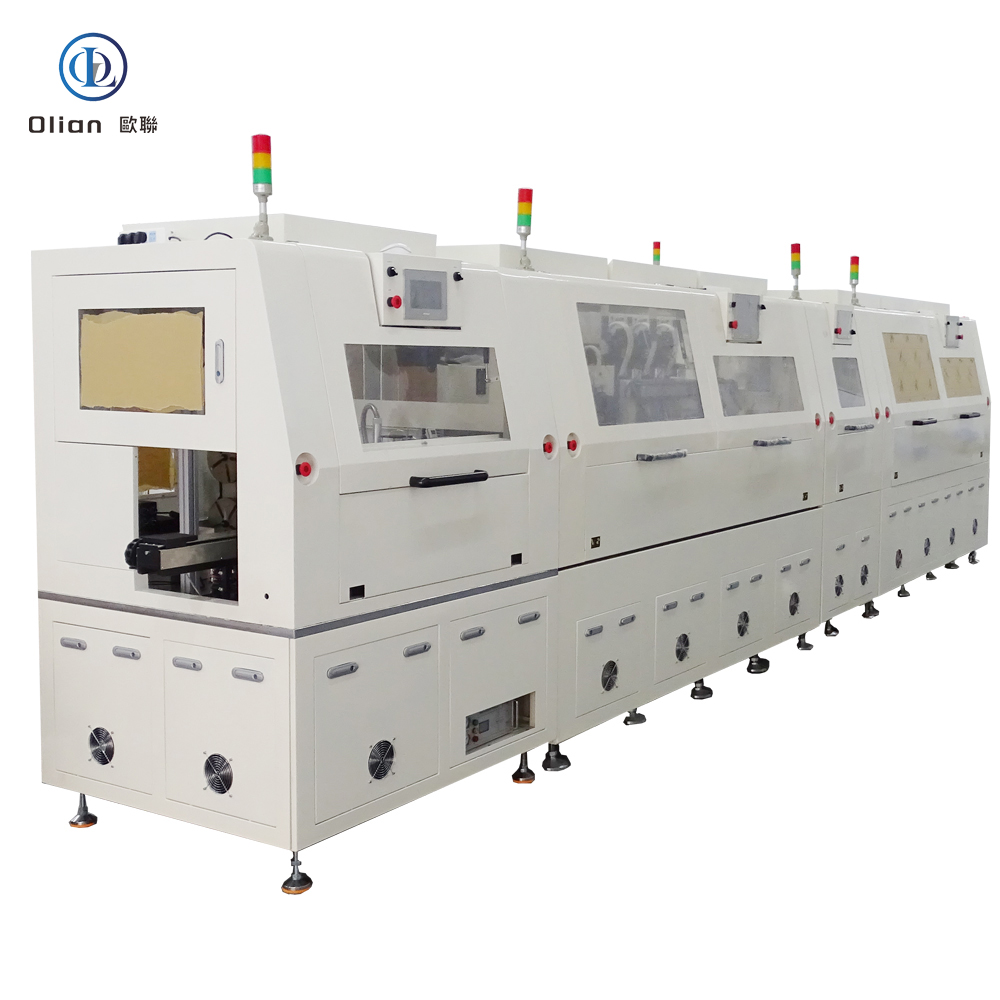
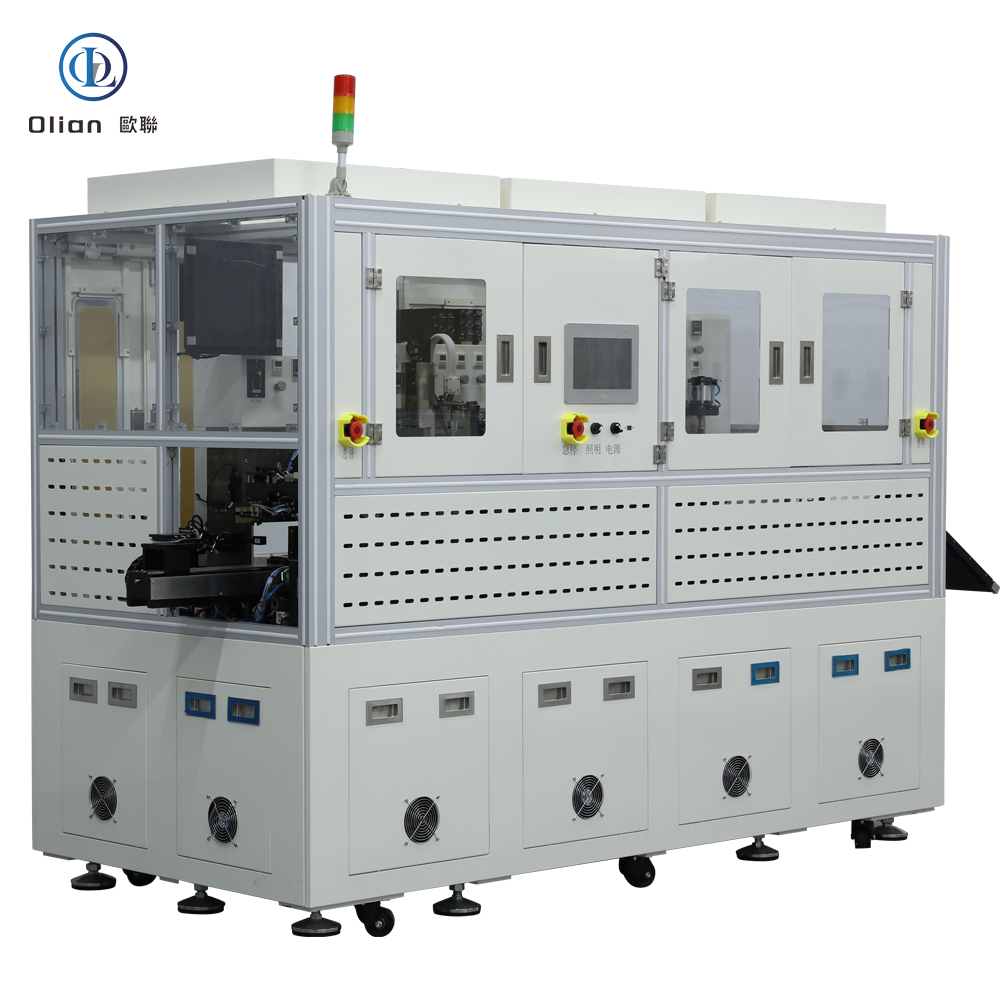
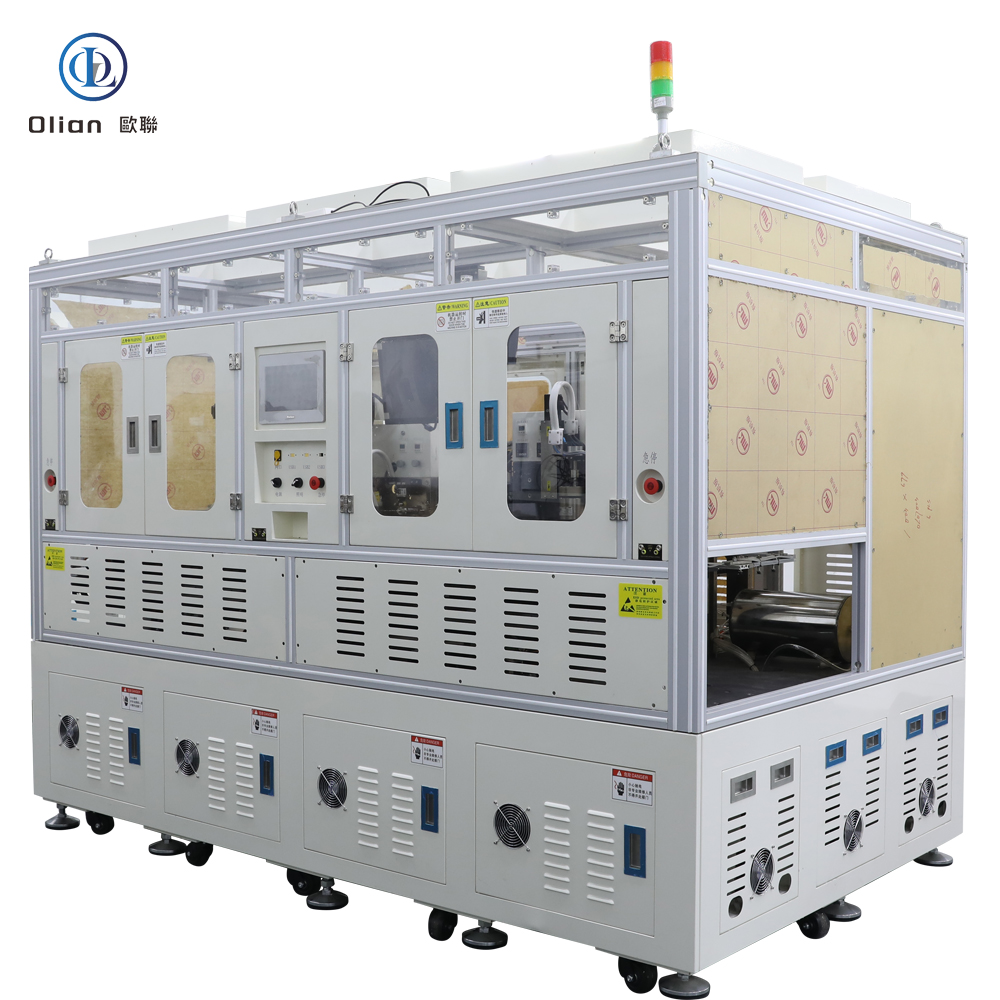
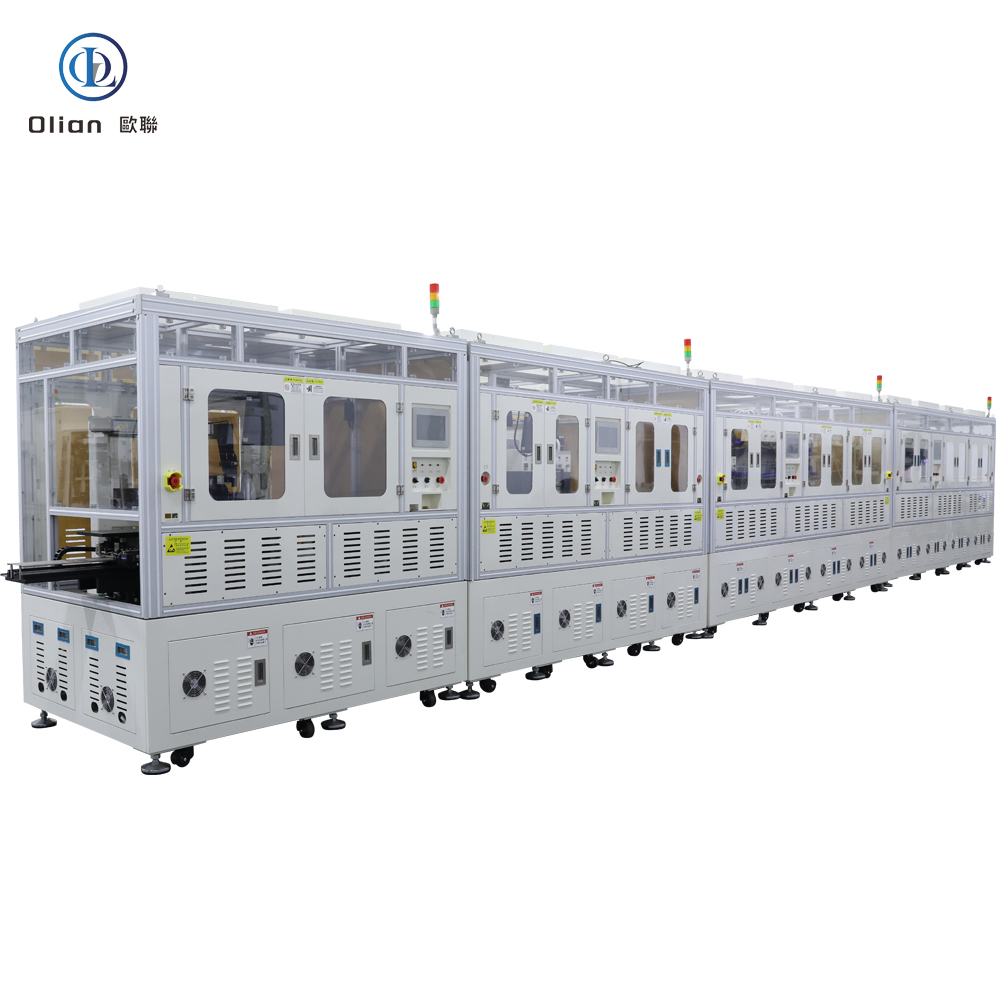
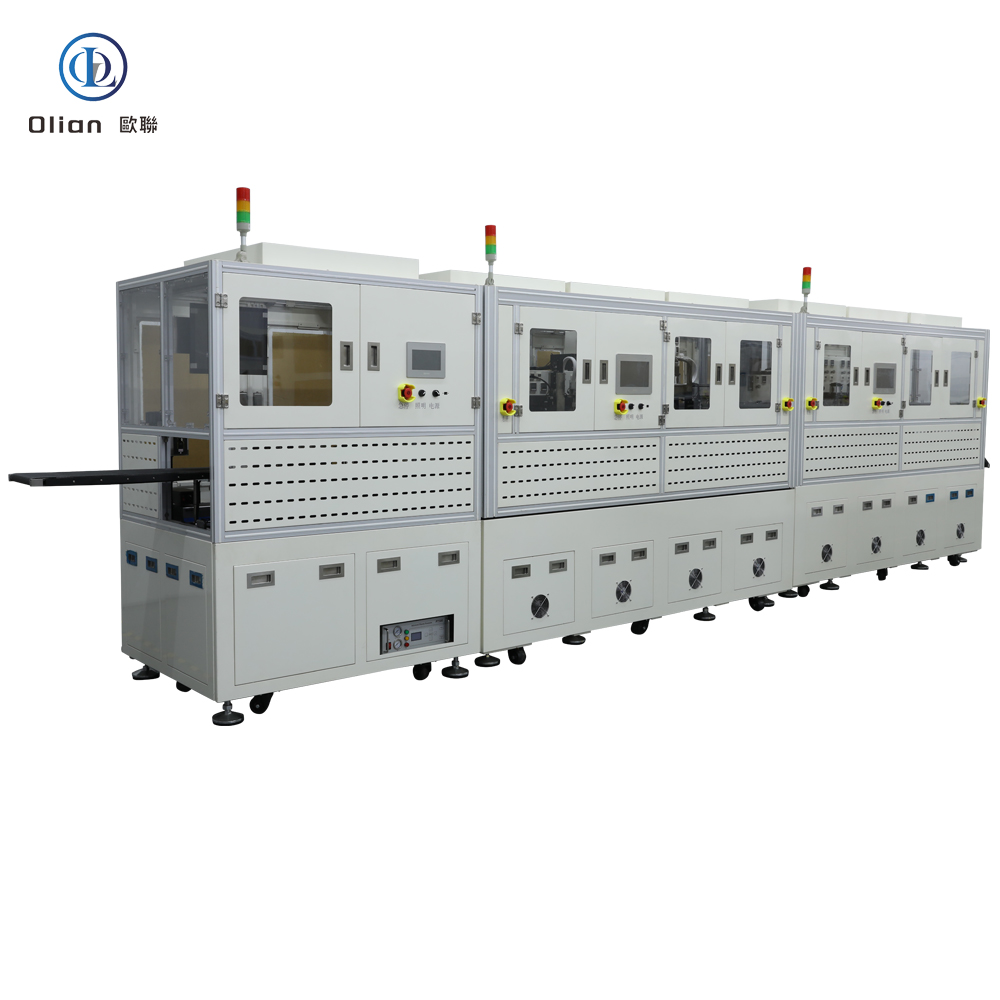
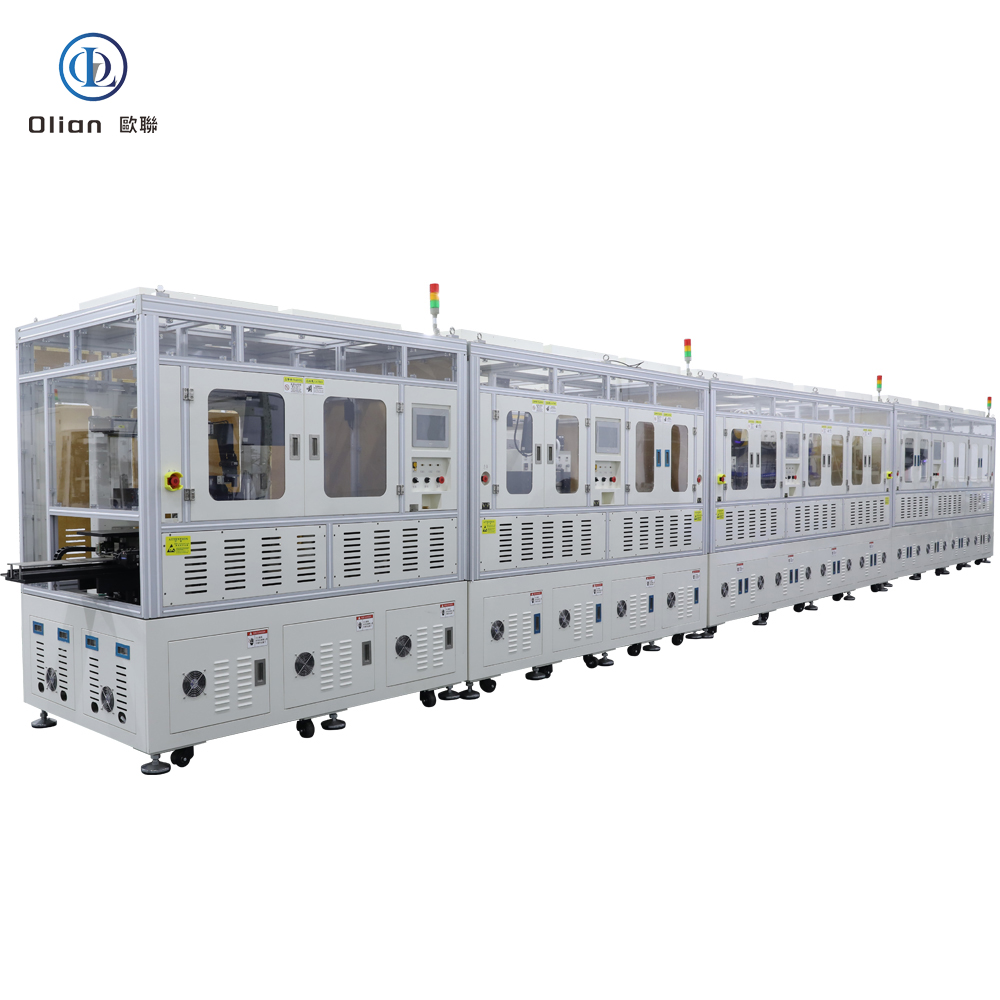
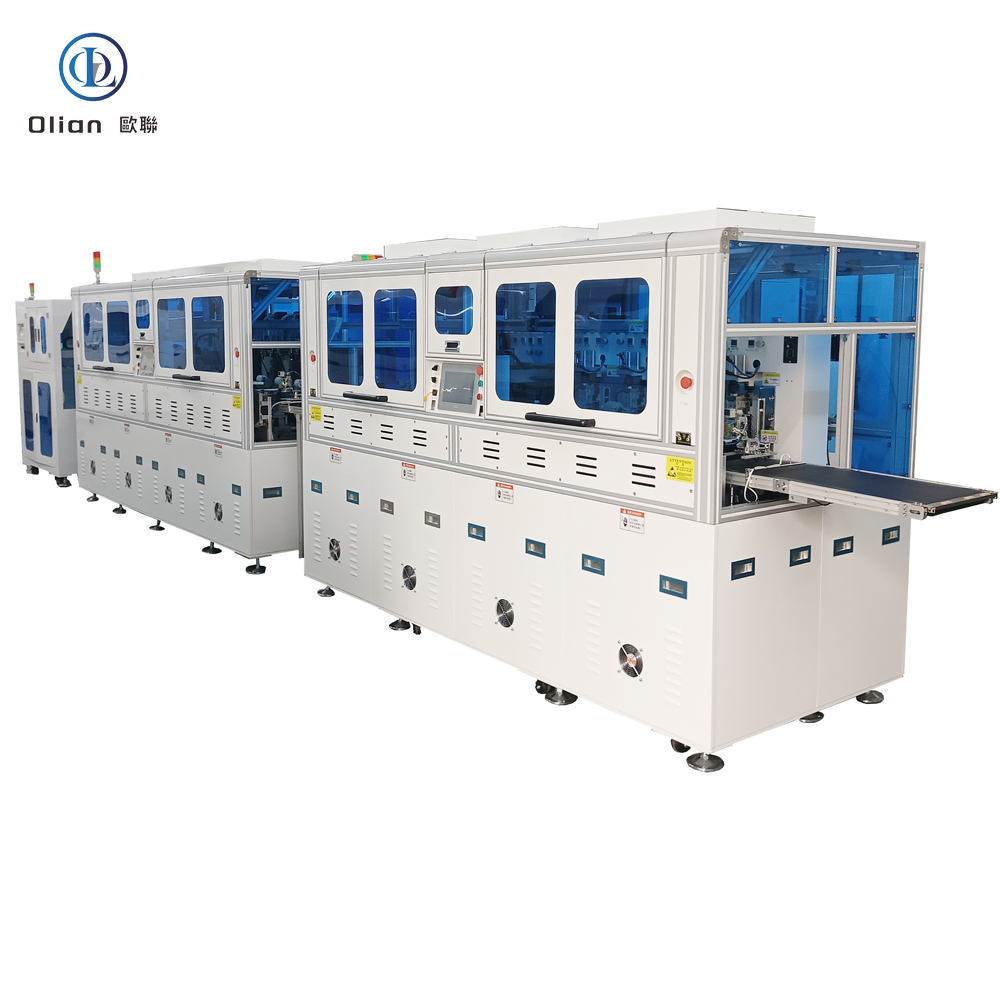
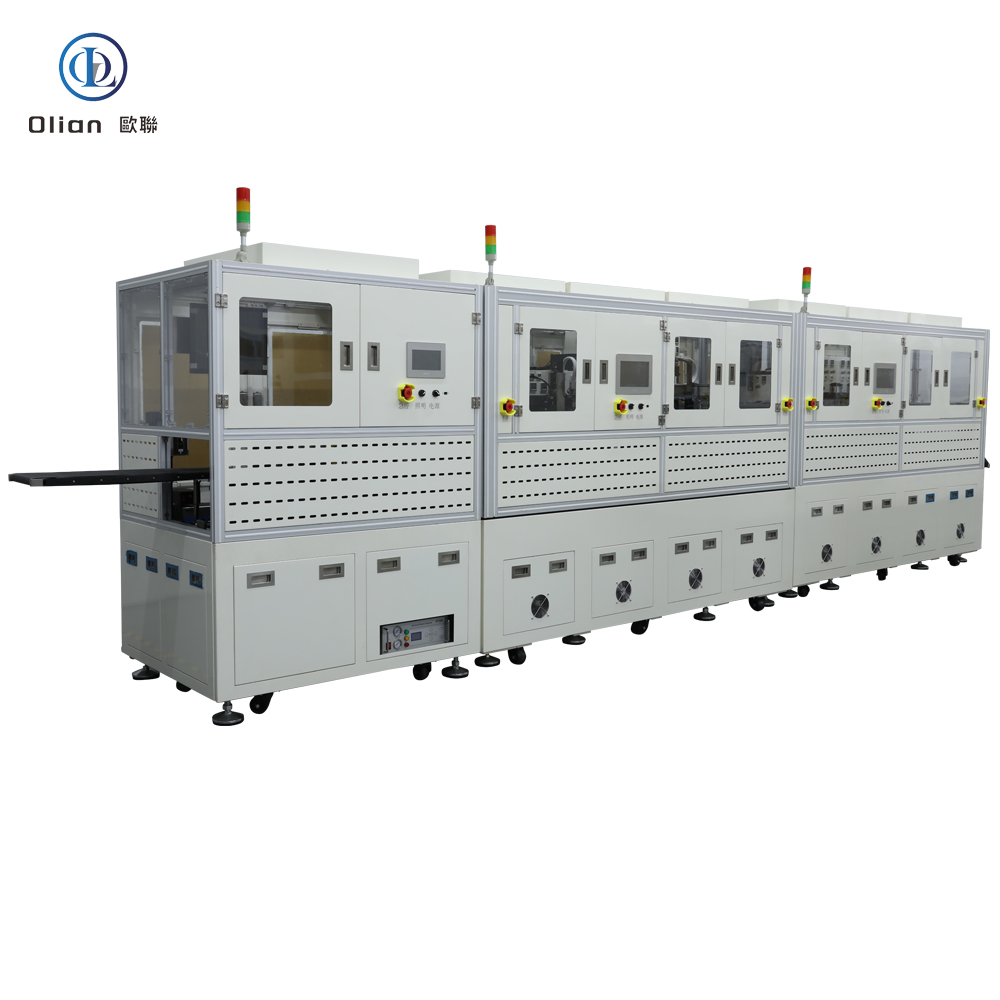
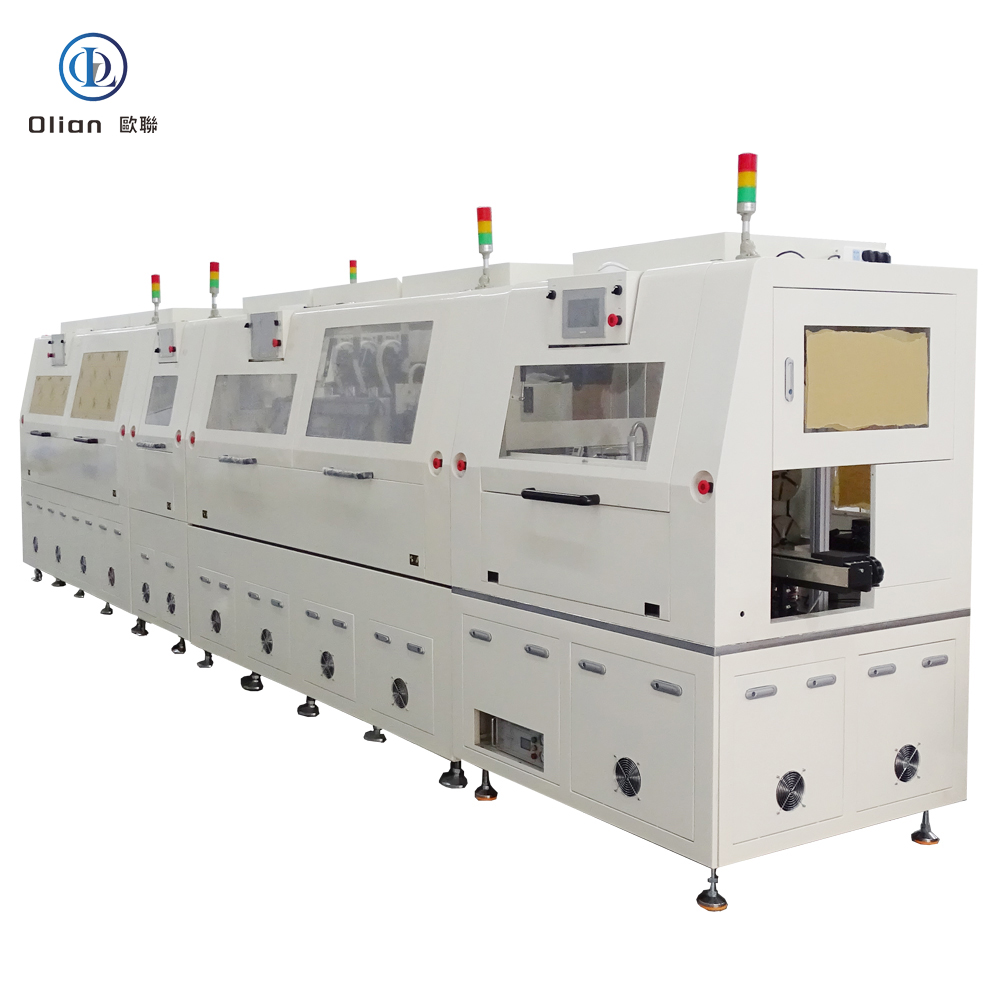
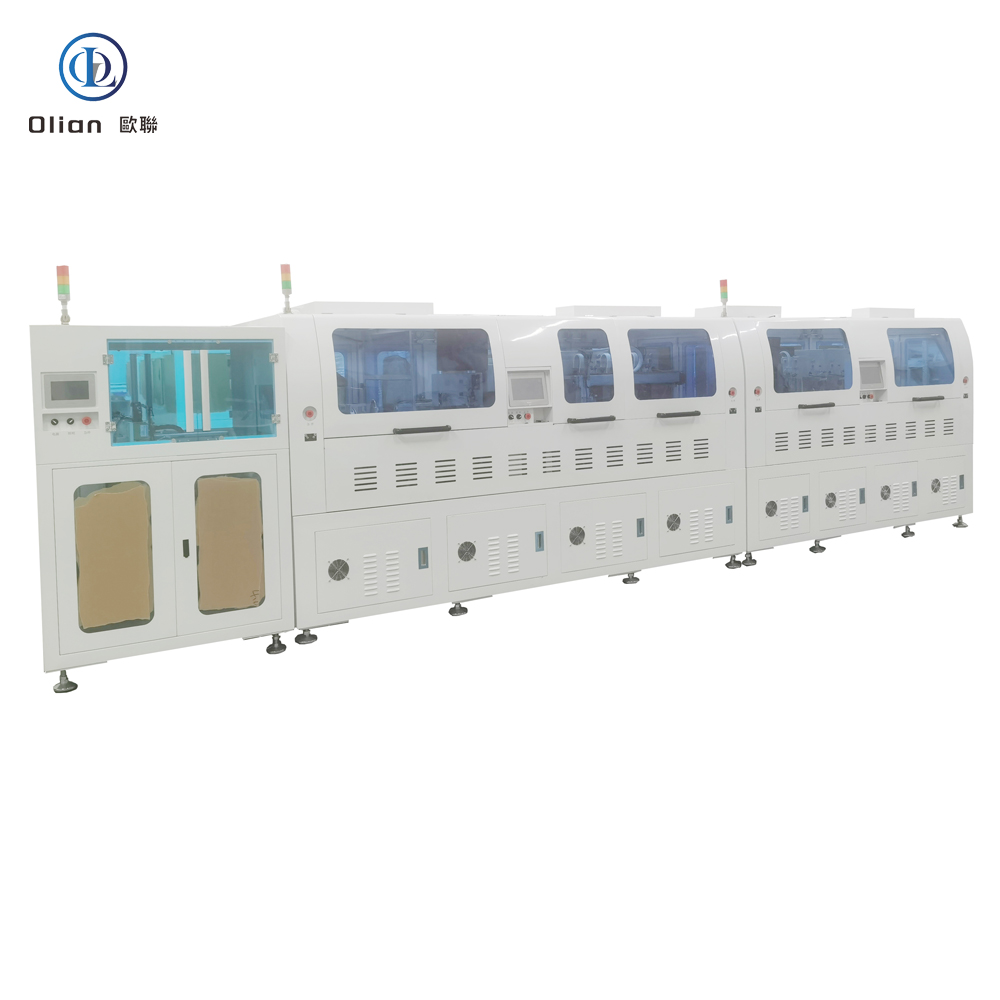
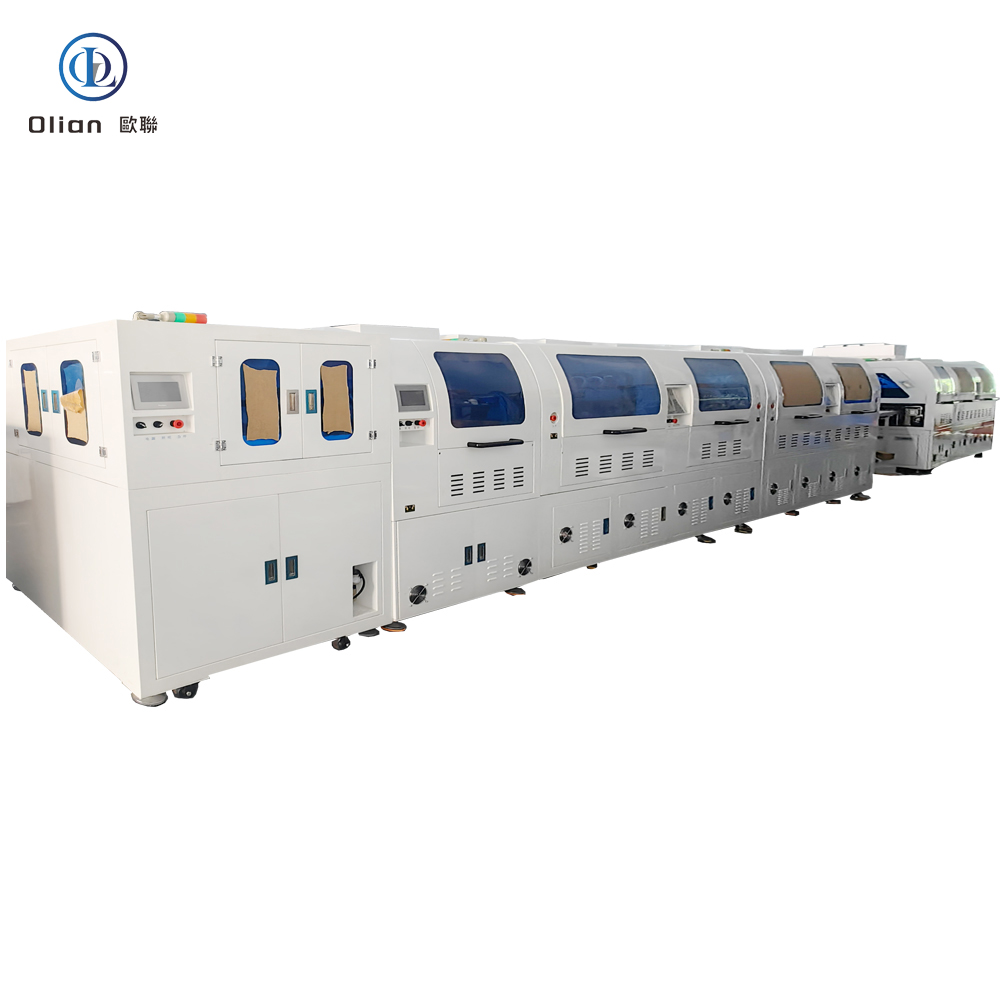
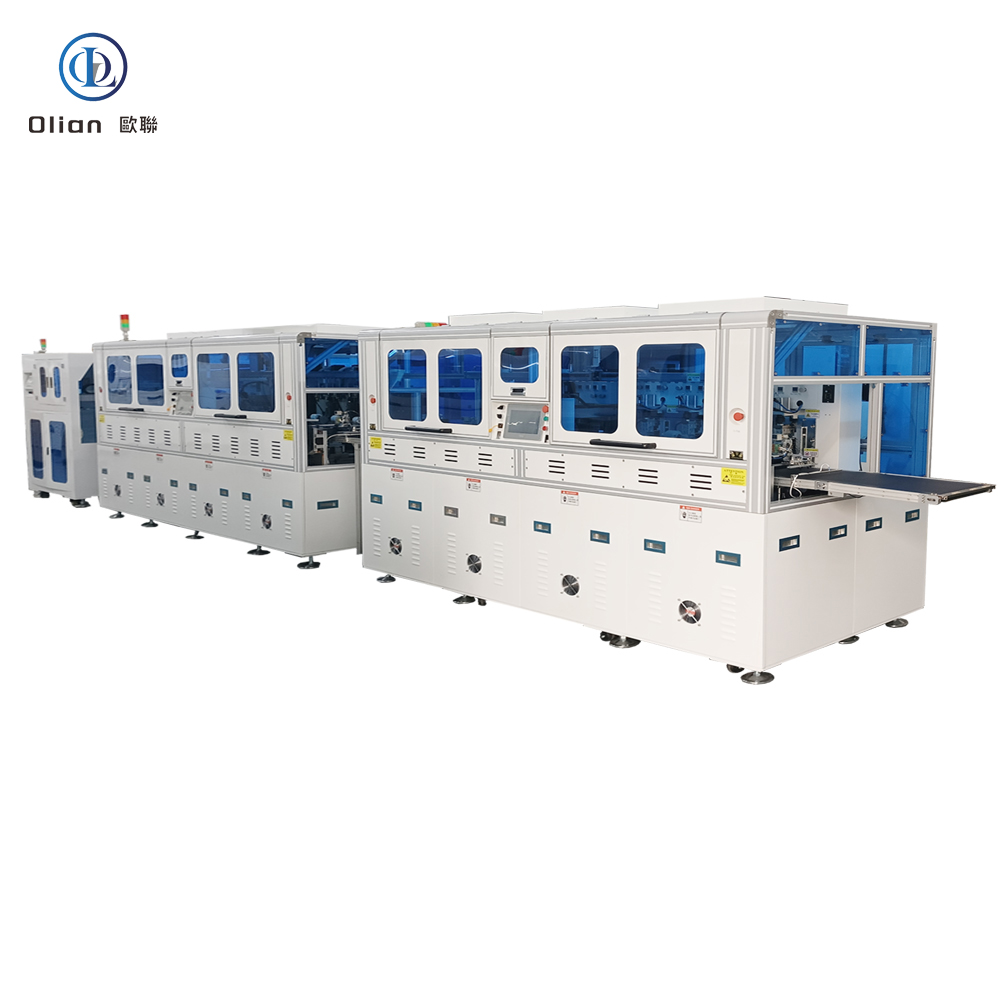

Shenzhen Olian Automatic Equipment Co.,ltd .We are a leading high-tech enterprise dedicated to the research, development, and manufacturing of LCM (Liquid Crystal Module) and Touch Panel assembly equipment. Located in Shenzhen, the innovation capital of China, we provide comprehensive turnkey solutions that transform raw glass and flexible circuits into high-precision, ready-to-use display products.
Our mission is to empower the global display industry through intelligent automation, ensuring high yield rates and efficient production for our clients.
We offer a complete suite of automated equipment designed to handle every critical stage of the LCM and Touch manufacturing process. Our “One-Stop” solution ensures seamless integration from incoming material to final packaging.
This is the core of display functionality. We utilize advanced ACF (Anisotropic Conductive Film) Applicators and Hot Press machines to precisely attach driver ICs and Flexible Printed Circuits (FPC) to the glass substrate.
ACF Handling: Our dedicated ACF application systems feature high-precision micro-adjustment and step-motor-driven feeding mechanisms. This ensures accurate ACF length control (1-100mm) and minimal waste, which is critical for COG (Chip-on-Glass) and COF (Chip-on-Film) processes.
Hot Press Technology: Our bonding machines utilize PID temperature control and precision pressure regulation (0.1-4.0Mpa). Whether it is the main IC bonding or FPC alignment, our equipment guarantees stable electrical connections and prevents defects like line deficiencies.
To create “Display & Touch in one” (Integrated) products, we specialize in high-precision lamination technologies.
Process: We handle the full spectrum of lamination, including OCA (Optically Clear Adhesive) rigid-to-rigid lamination and UV Water Gel lamination processes.
Capability: Our lamination machines feature auto-dispensing, vacuum state pressing, and optical alignment systems. This ensures bubble-free, high-clarity bonding between cover glass (Cover Lens), touch sensors, and LCD panels, meeting the demands of modern smartphones, tablets, and automotive displays.
To protect delicate circuitry and enhance structural integrity, we utilize state-of-the-art dispensing technology.
Function: Our precision dispensers apply sealants (Silicon gule), reinforcement adhesives, and protective coatings.
Control: Utilizing servo-controlled dispensing arms and programmable logic controllers (PLC), we strictly manage the dispensing path, volume, and evenness of the glue. This prevents corrosion of ITO lines and strengthens the bond between the FPC and the LCD, ensuring long-term product reliability.
For modules requiring backlighting, our automated assembly lines ensure perfect optical alignment.
Assembly: This involves the precise stacking of optical films, frame assembly, and the application of hot-melt adhesives.
Packaging: We provide automated solutions for the final stages of production, including protective film application and automated boxing, ensuring the product is protected for shipment.
Quality is our DNA. We integrate AOI systems at critical junctures (post-bonding and post-lamination) to guarantee zero-defect delivery.
Detection: Our vision systems perform rigorous functional and cosmetic testing. They identify microscopic defects such as particles, scratches, bubbles, and Mura defects that are invisible to the naked eye, ensuring only flawless products proceed to the next stage.
Our robust and versatile equipment series is engineered to meet the manufacturing demands of diverse display markets. We support the production of:
Consumer Electronics: Smartphones, Tablets, Laptops, and Televisions.
Automotive Displays: Instrument clusters and infotainment systems.
IoT & Wearables: Smartwatches and AR/VR devices.
Commercial & Industrial: Electronic shelf labels, medical displays, and large-format signage.
We go beyond selling individual machines. We are a pioneer in providing Smart Factory Holistic Solutions.
Integration: Our equipment is fully compatible with MES (Manufacturing Execution Systems) and CIM (Computer-Integrated Manufacturing), enabling digital traceability and data-driven decision making.
Automation: We support AGV (Automated Guided Vehicle) logistics integration and fully automated production lines, reducing human intervention and maximizing production line “uptime” (OEE).
R&D Focus: Drawing on deep expertise in ACF application and precision pressing, we continuously innovate to support the latest trends in flexible OLED packaging and under-screen fingerprint technology.
Join us in shaping the future of display manufacturing. With our “Advanced, Practical, Efficient, and User-Friendly” design philosophy, we are committed to helping our global partners reduce labor costs, improve yield rates, and accelerate their time to market.
Welcome you to be our parnter in your country to shaping the future of display manufacturing.
Wechat/whatsapp:+86 18025364779
Zack wu
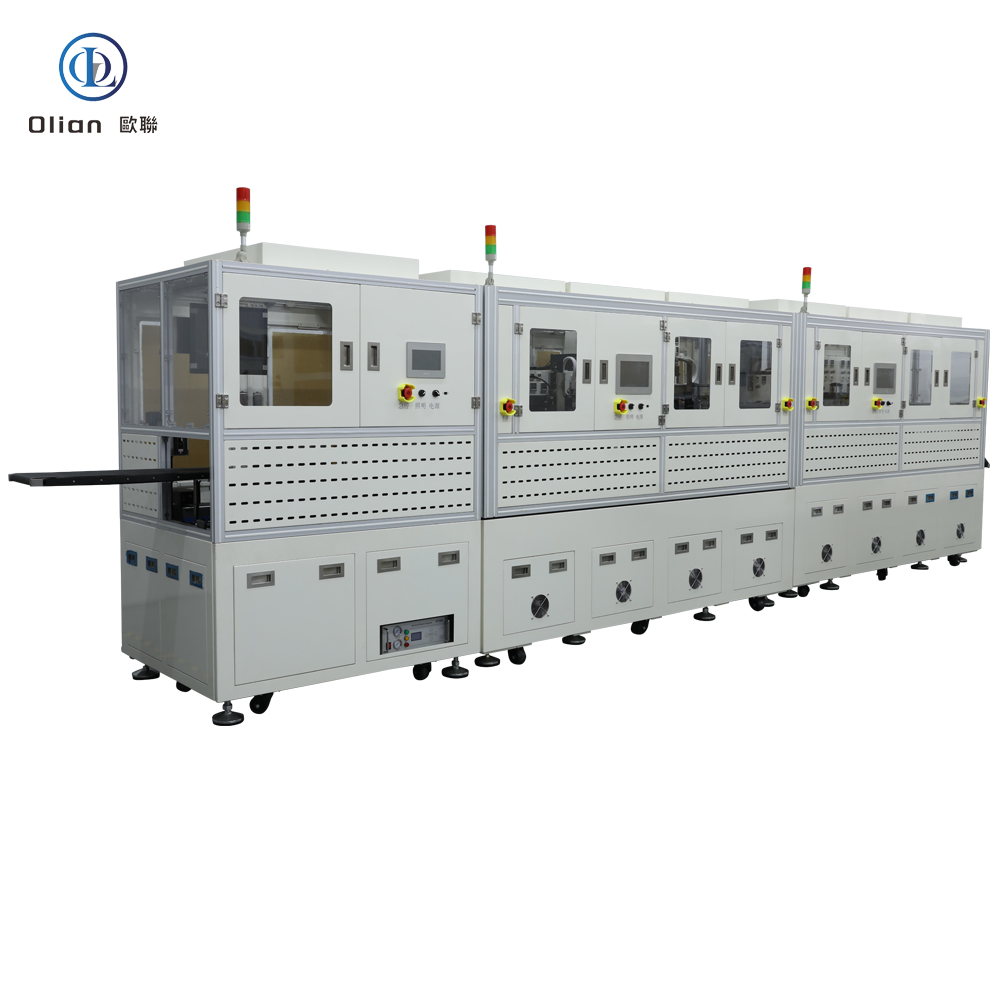
TFT displays manufacturing glass cutting laminating bonding dispensing assembling testing packing processes detailed introduction to each process and equipment situation:
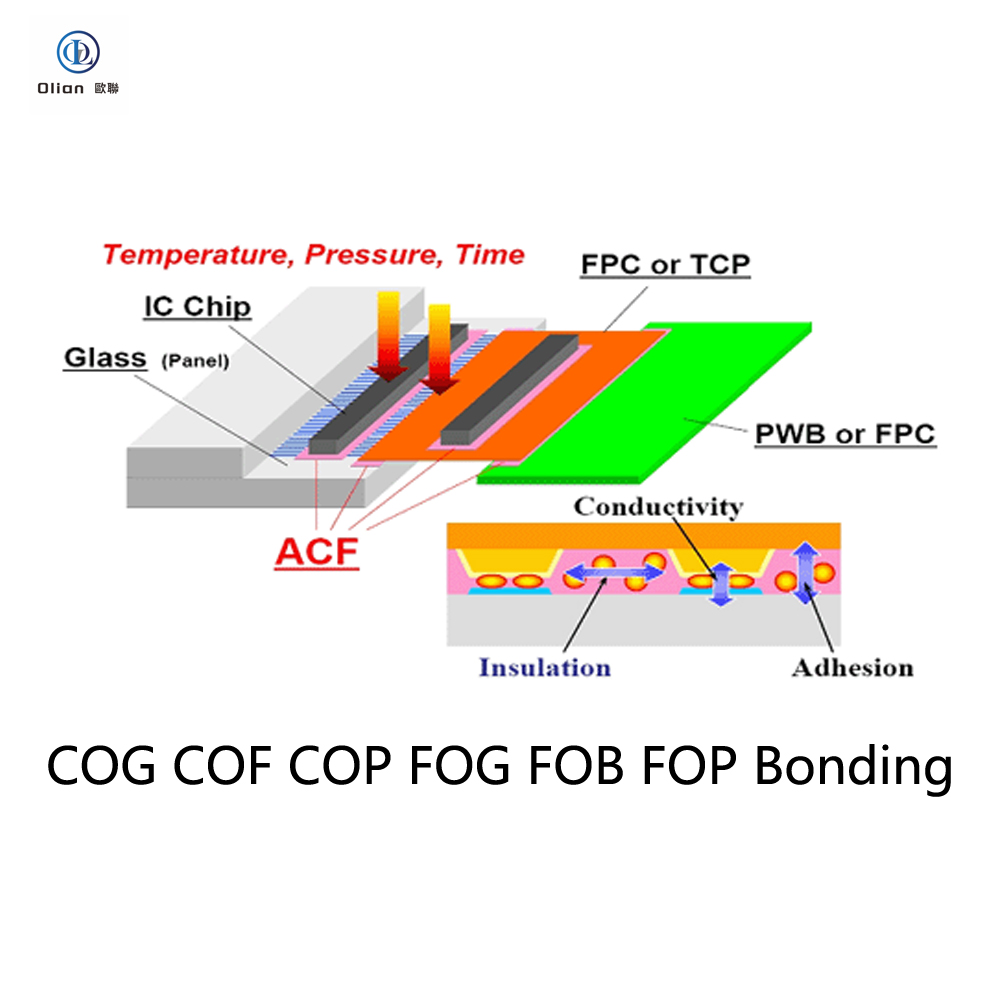
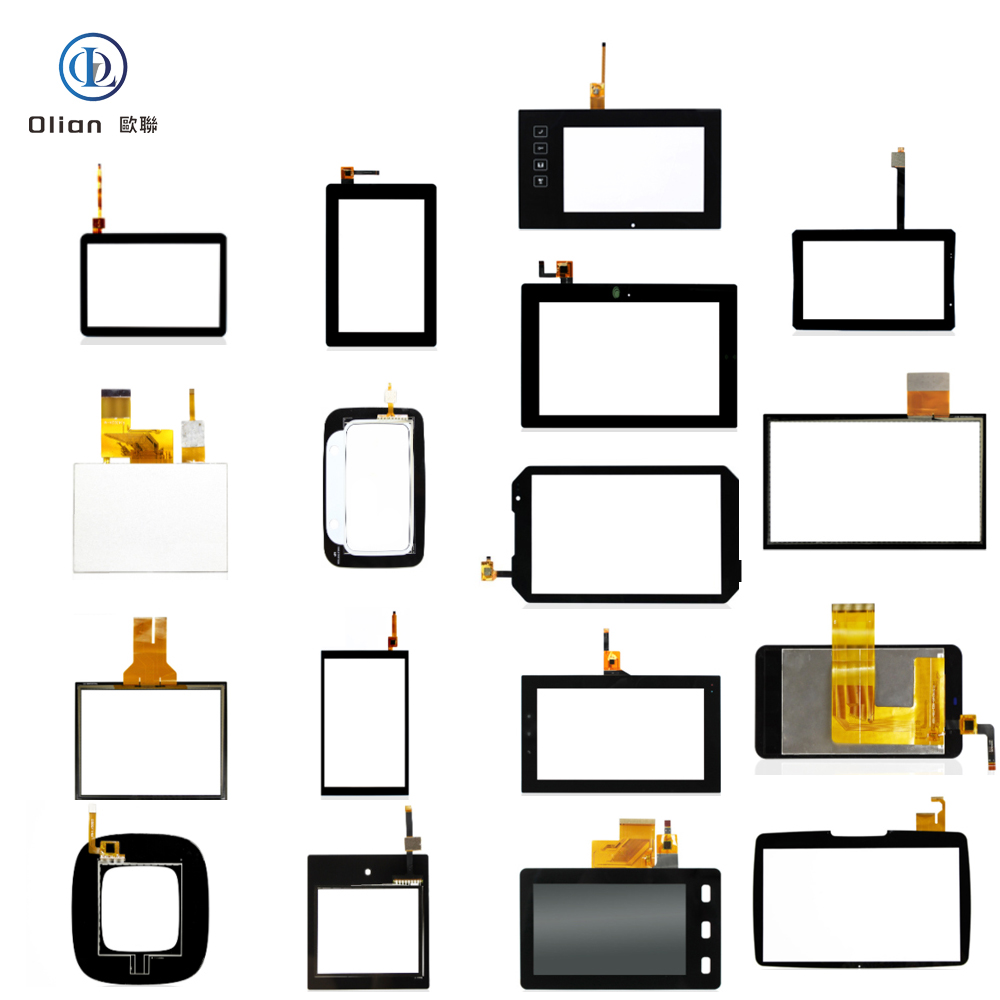
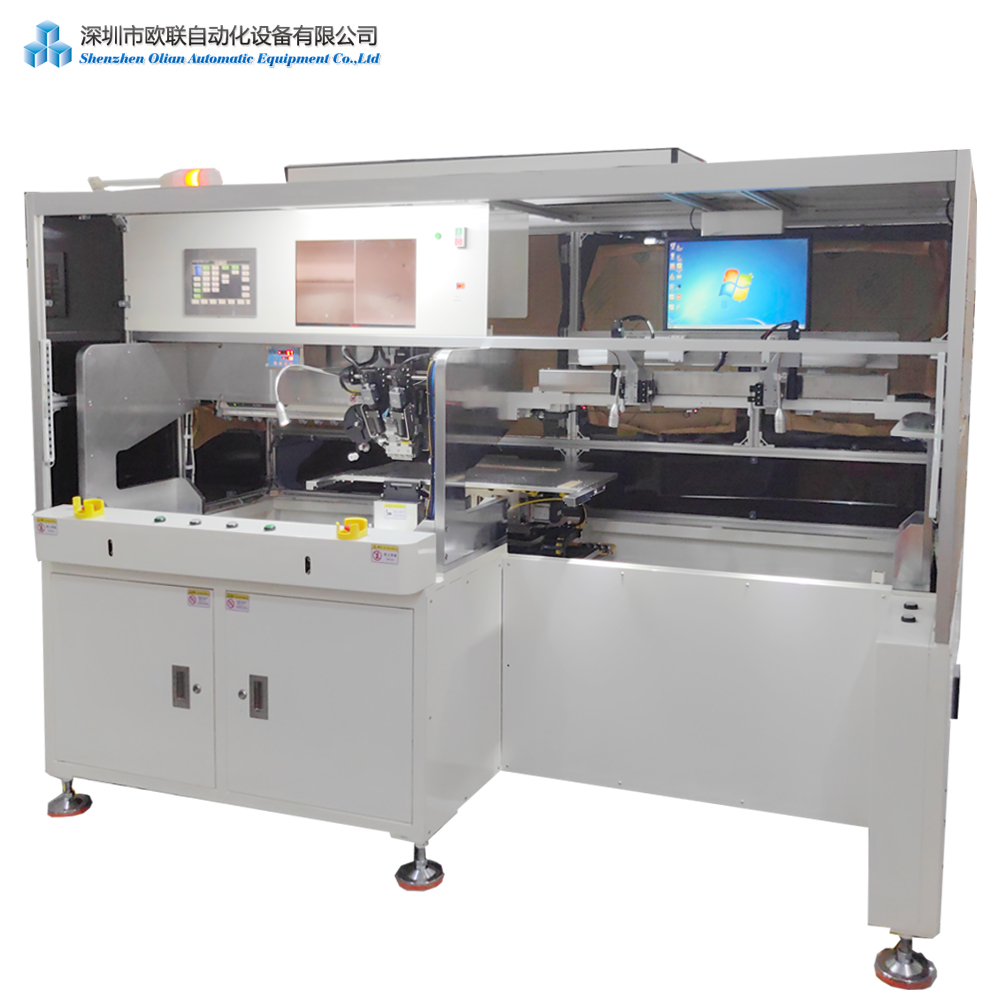

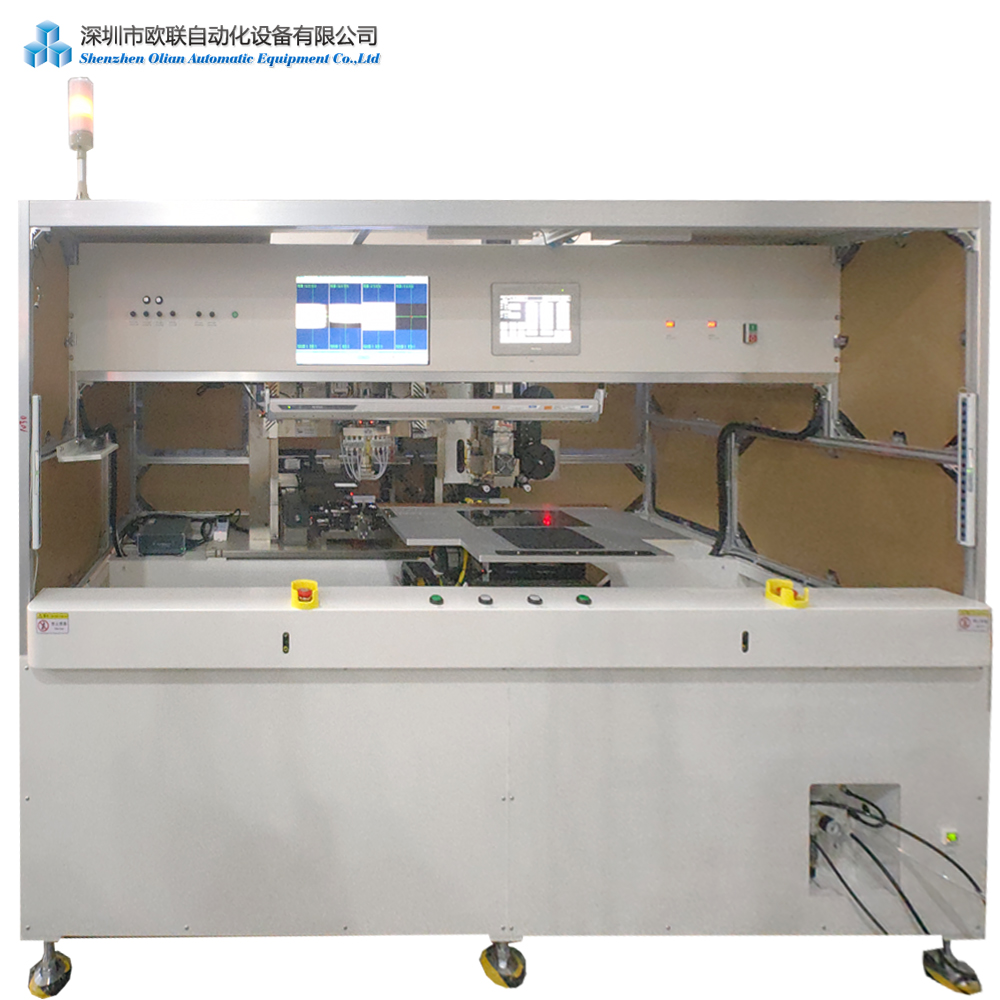
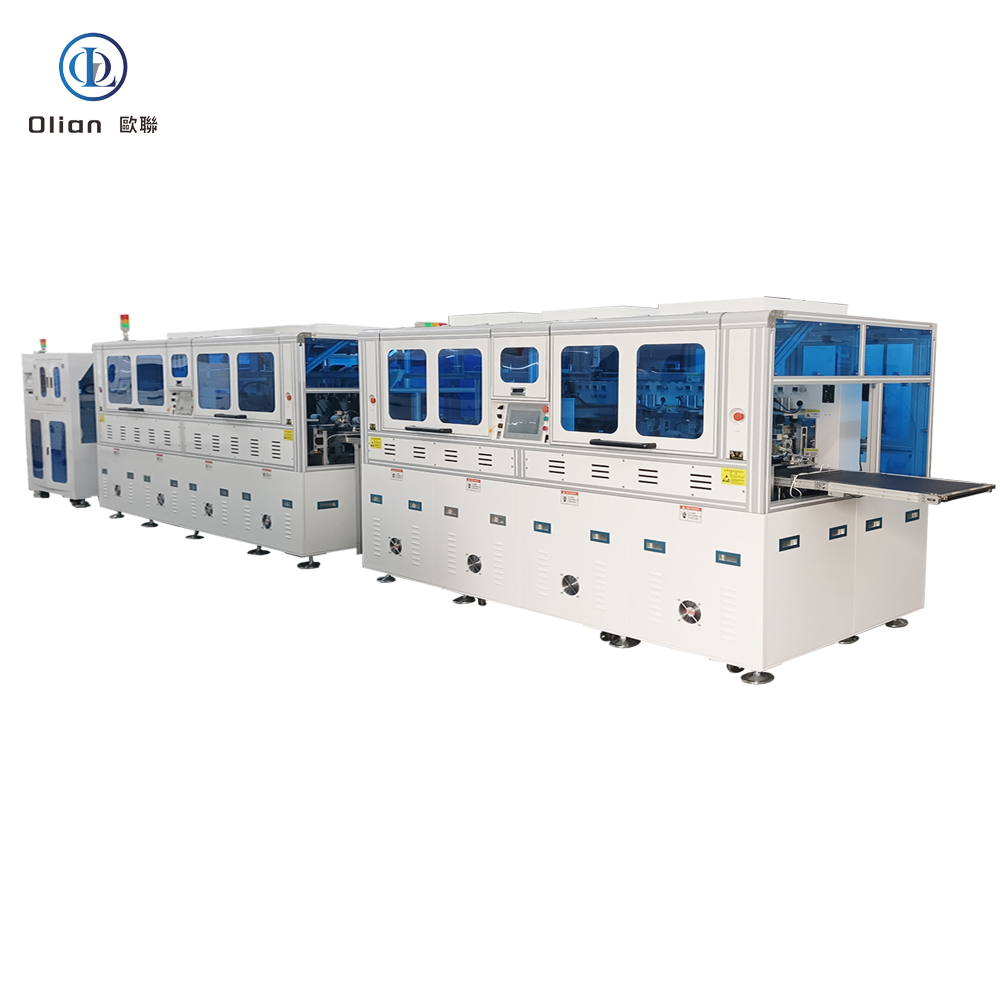
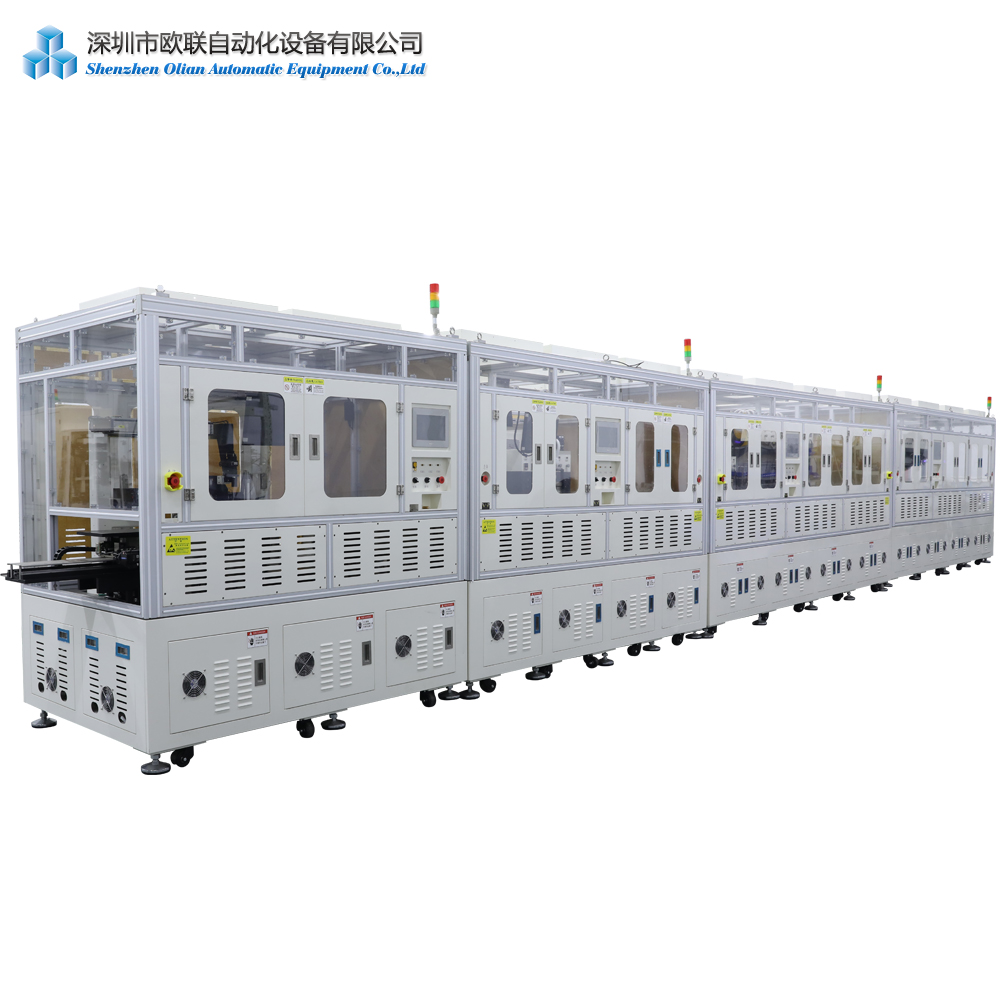
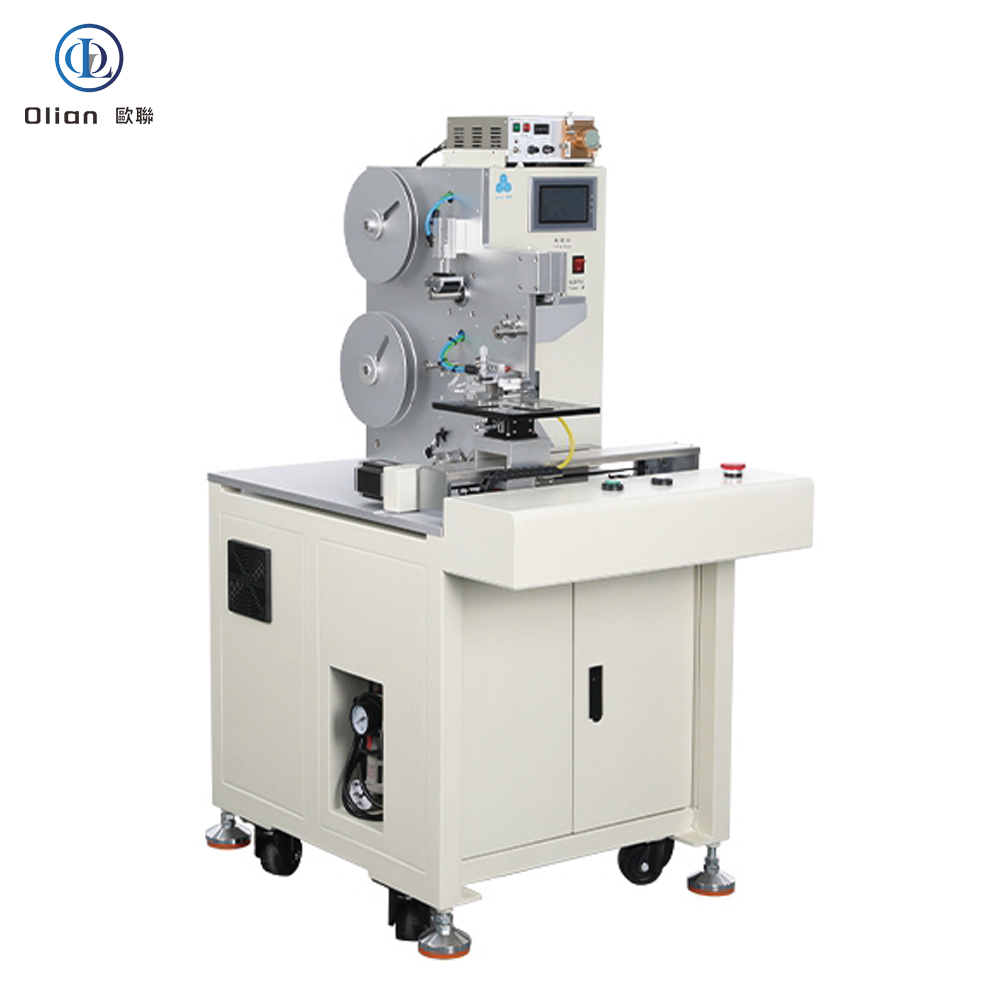
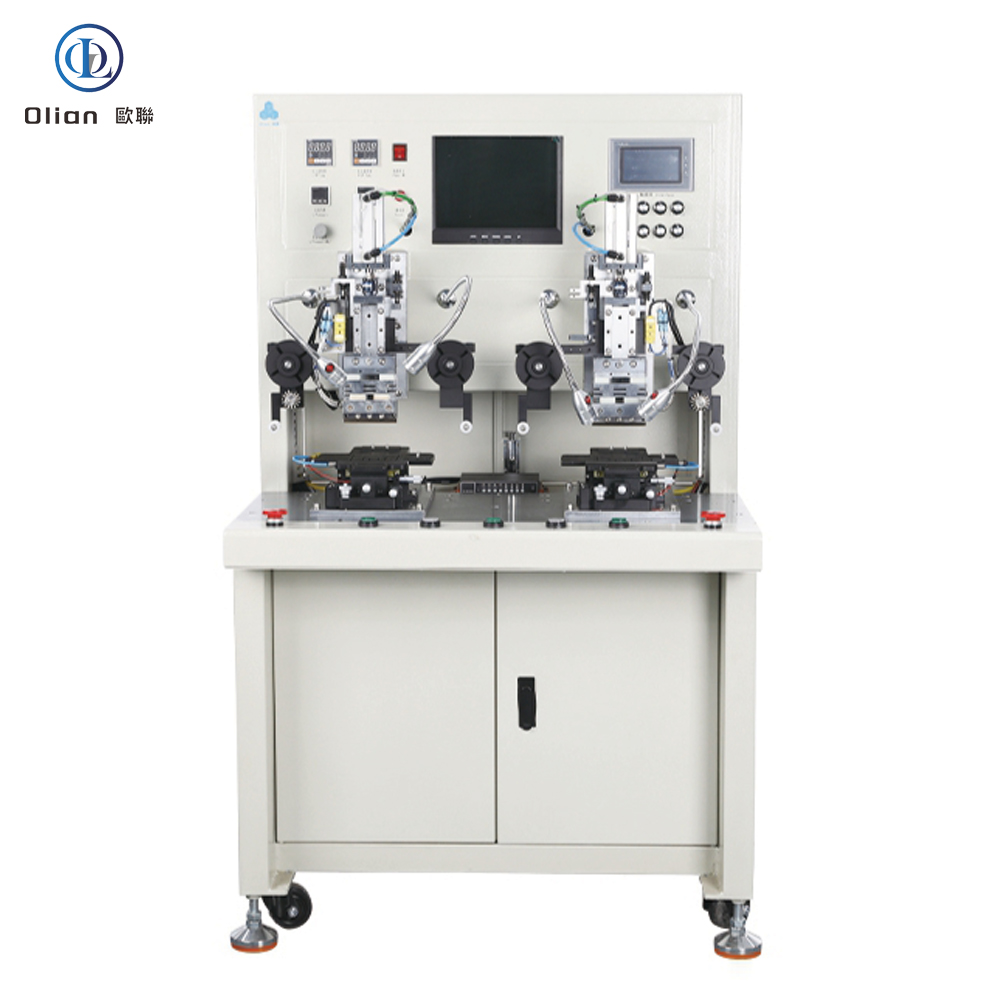
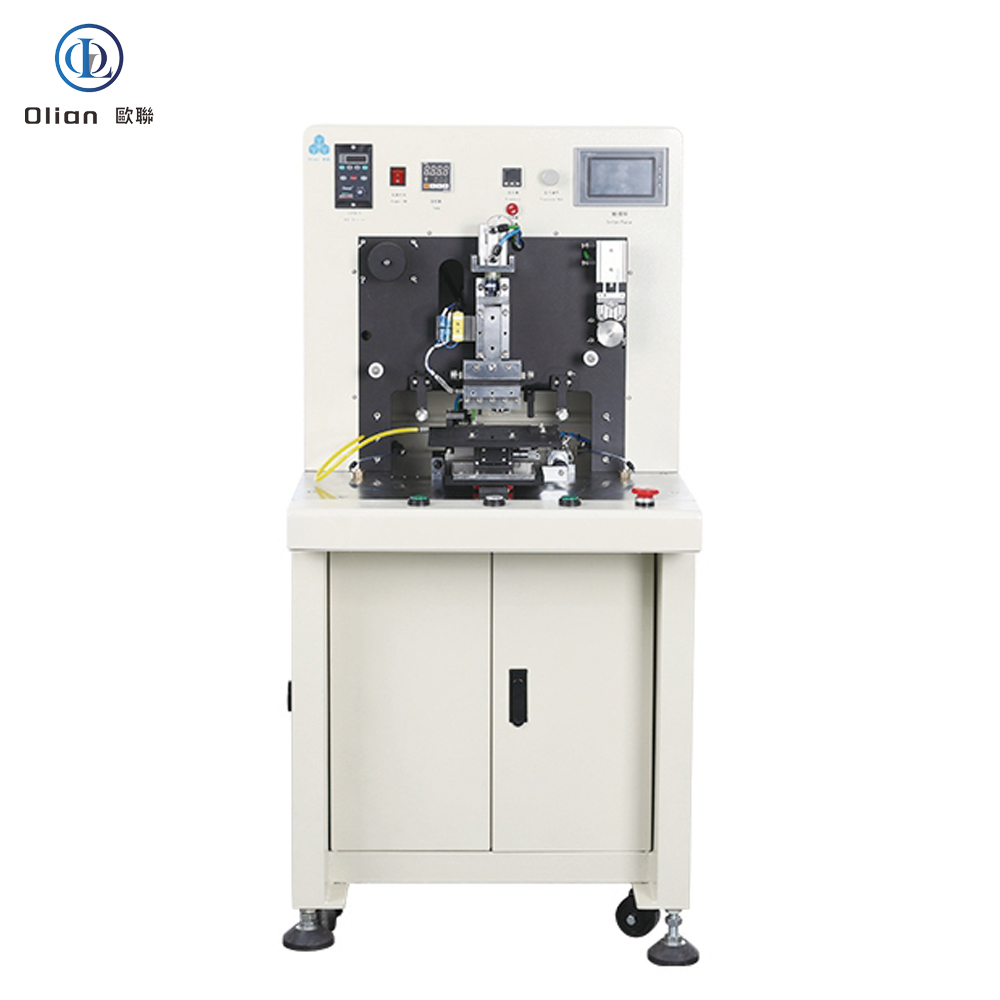
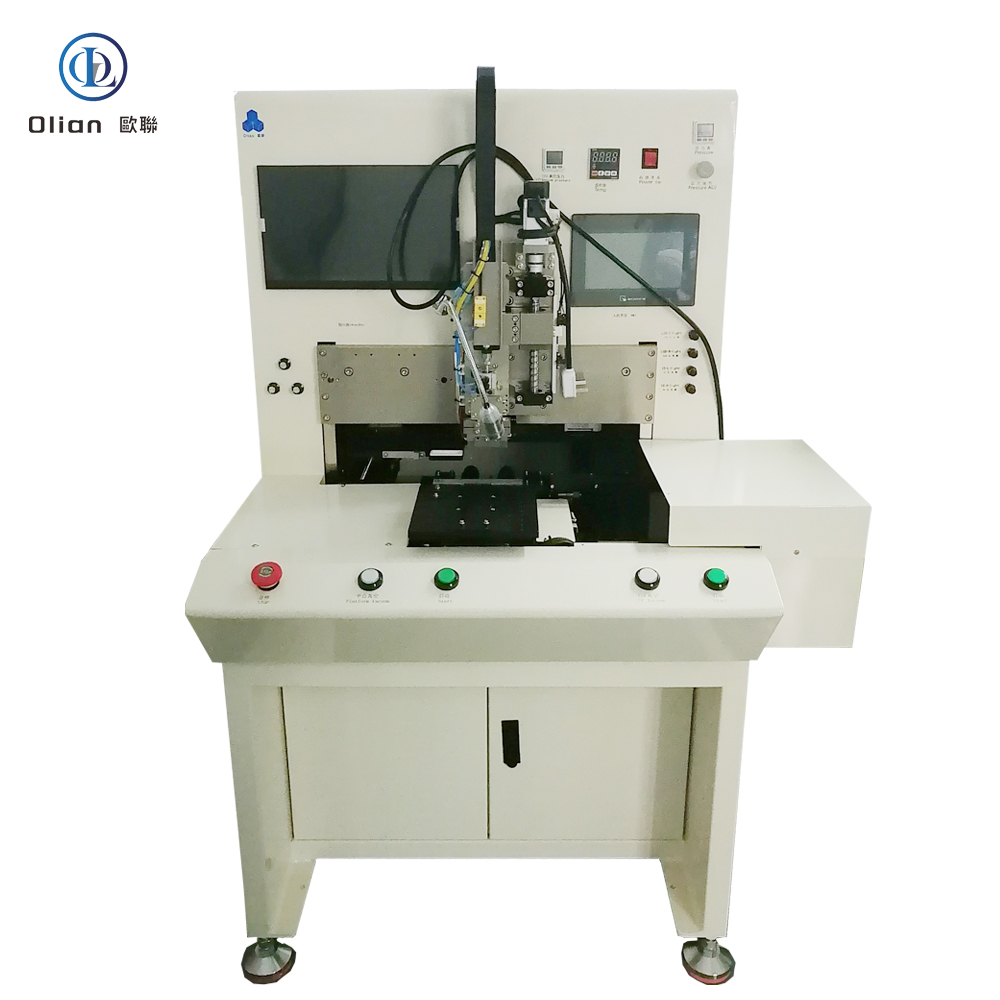
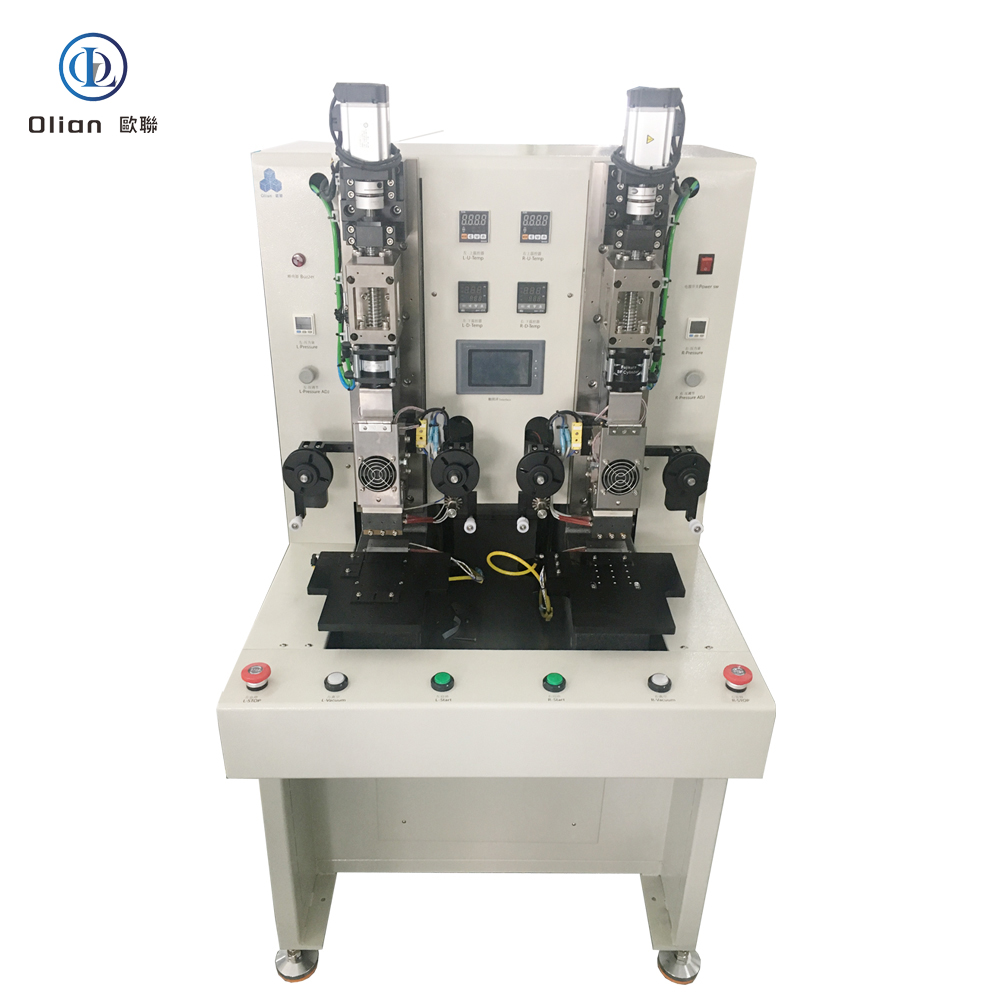
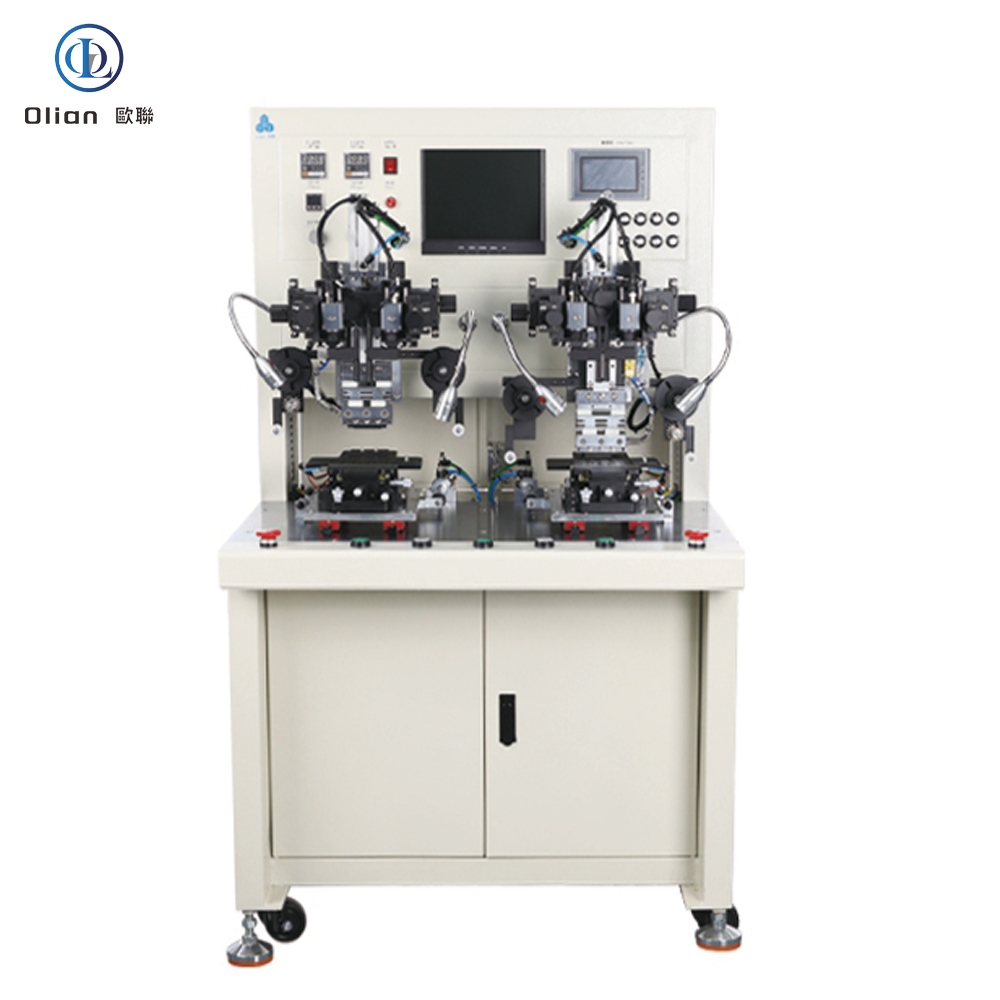
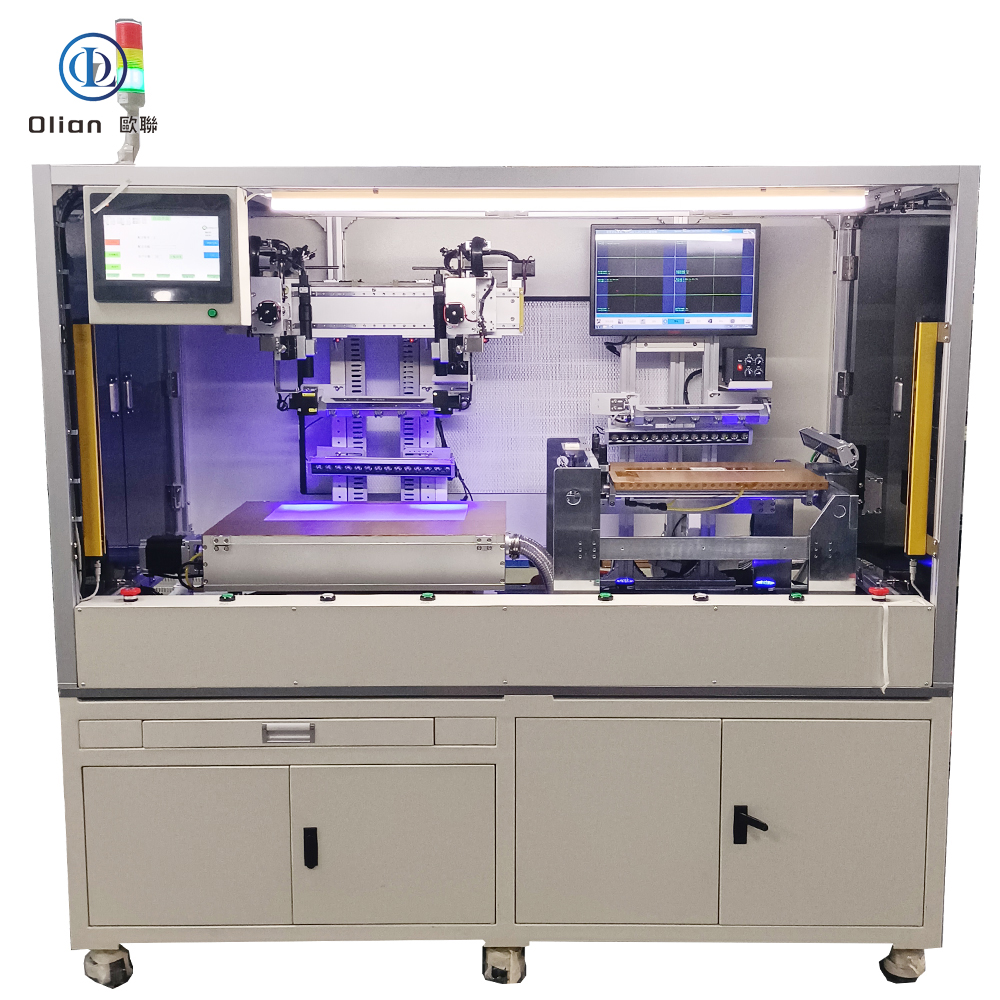
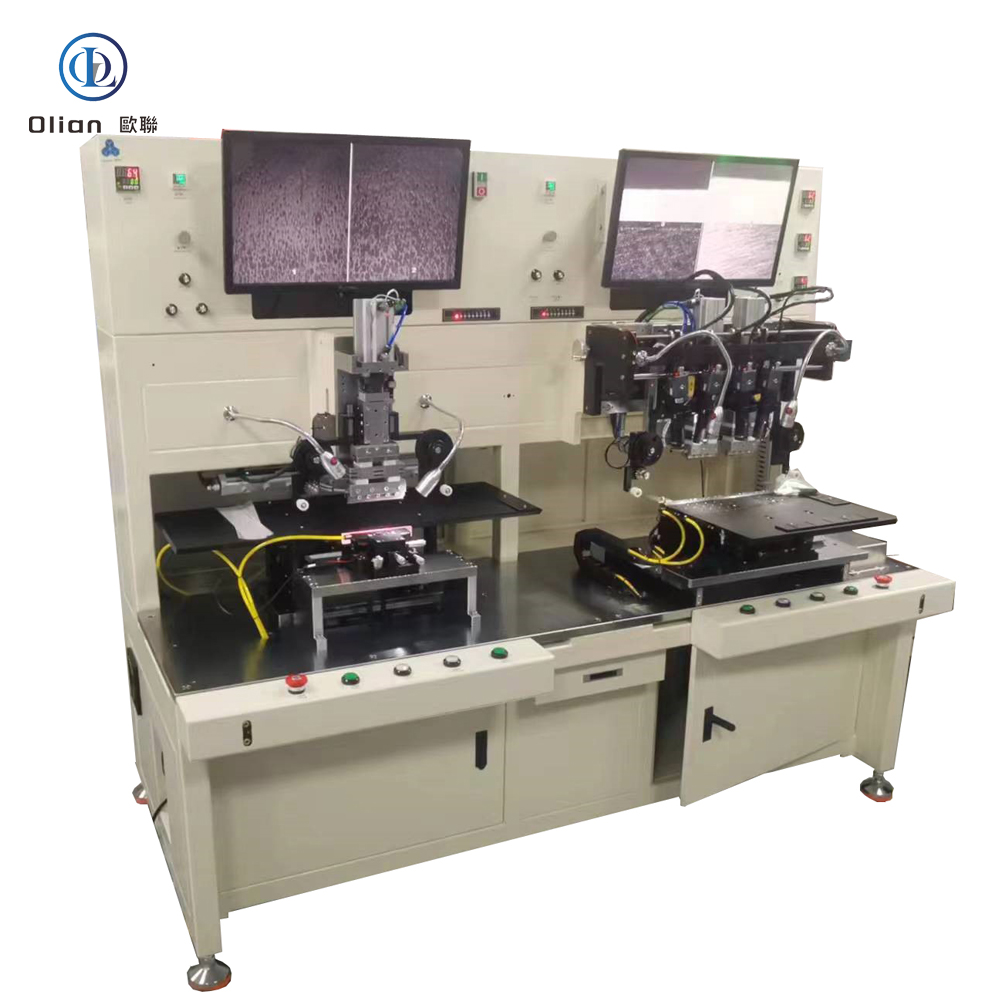
Glass loading is the process of placing the cut glass substrates into designated fixtures or carriers to prepare them for subsequent processes such as electronic cleaning and bonding. It ensures the glass substrates are properly positioned and secured for further processing.
The glass loading machine is designed to handle glass substrates with care. It has a precise positioning system to place the glass substrates into the fixtures accurately. The machine may also feature automated arms or conveyors to transport the glass substrates efficiently while minimizing manual handling and potential damage.
Electronic cleaning is used to remove contaminants such as dust, organic residues, and ions from the surface of the glass substrates or polarizing plates. This helps improve the bonding quality and reliability in subsequent processes, preventing issues like poor adhesion or electrical shorts.
The electronic cleaning machine typically uses a combination of ultrasonic waves, deionized water, and chemical cleaning agents to thoroughly clean the glass substrates or polarizing plates. It has a closed cleaning chamber to prevent re – contamination and a drying system to quickly dry the cleaned substrates after cleaning.
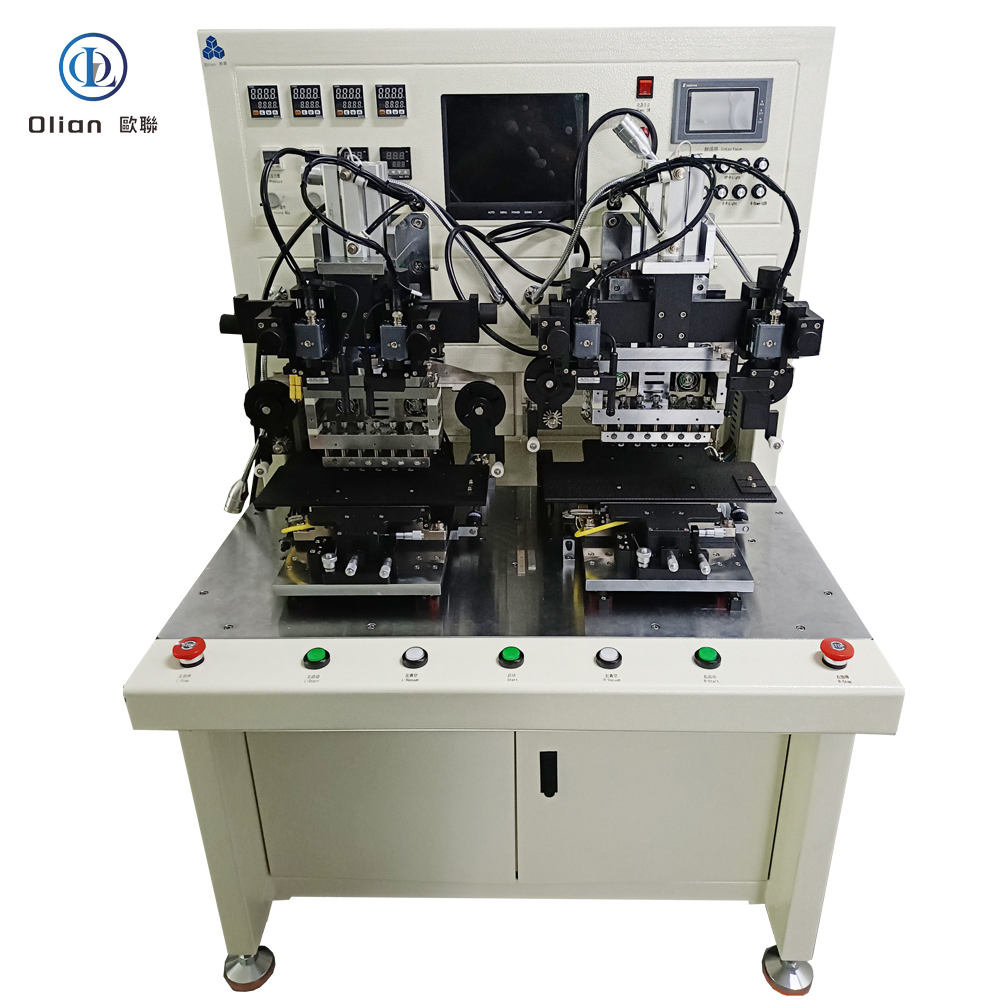
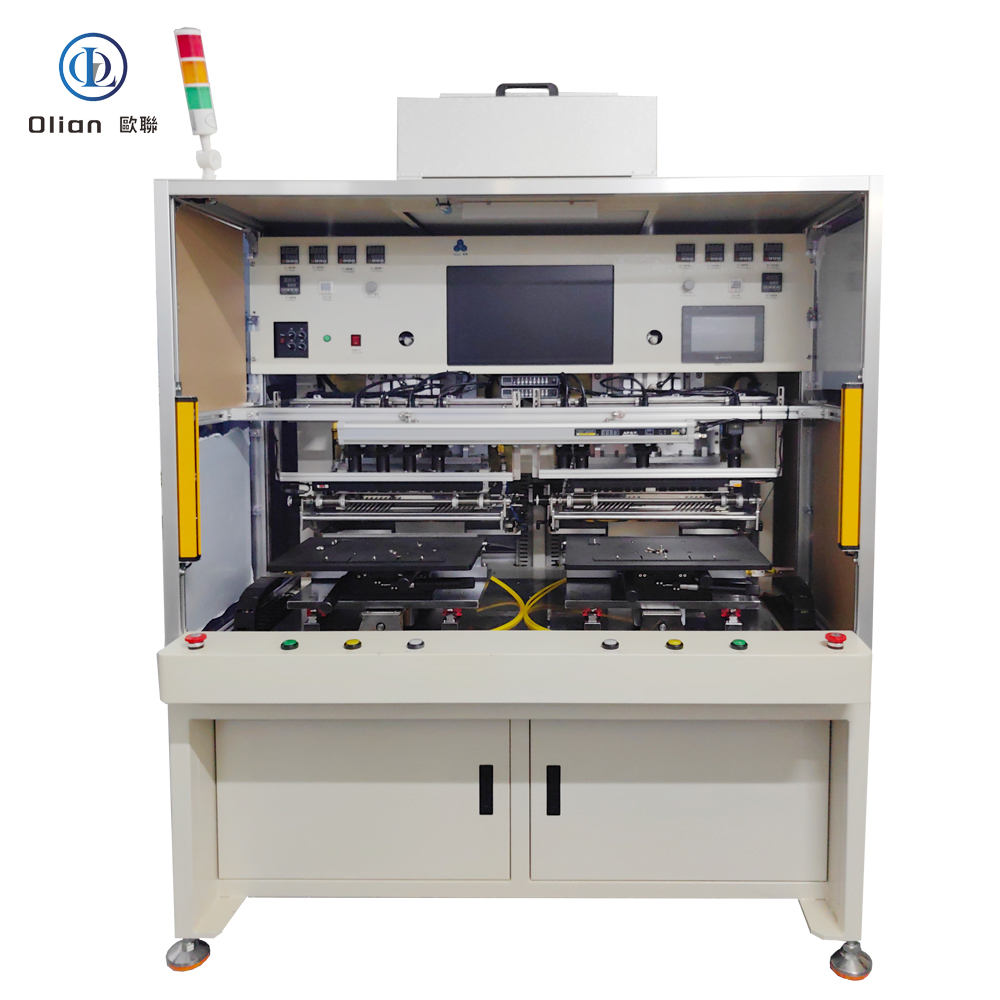
The driver IC is directly bonded to the glass substrate of the TFT – LCD panel. This process is characterized by high precision and small bonding area, offering advantages such as fast production speed and good electrical performance.
Equipment – COG Bonding Machine: The COG bonding machine uses a high – precision alignment system to accurately position the driver IC relative to the glass substrate. Its heating and pressing mechanism ensures a stable connection between the driver IC and the glass substrate. The machine also has a vision system for precise alignment and a temperature – and – pressure control system to ensure bonding quality.
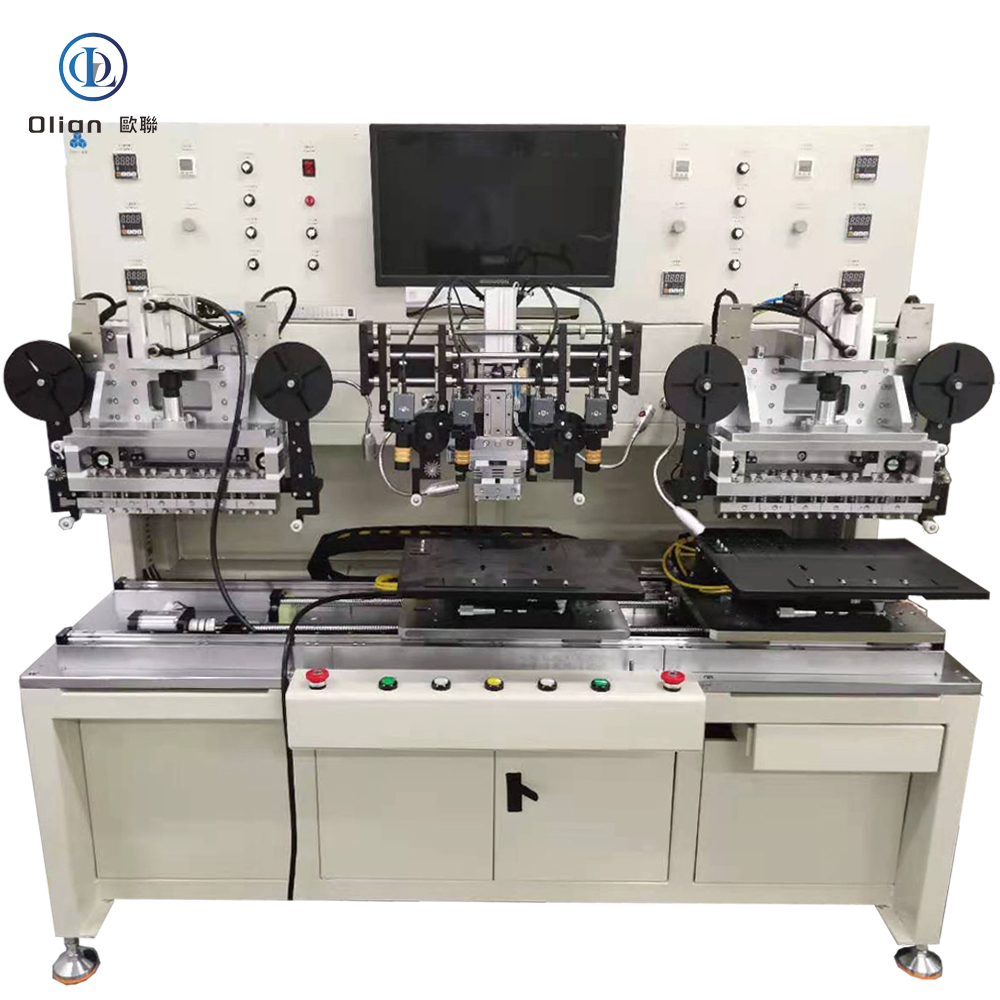
The driver IC is first bonded to a flexible film and then connected to the TFT – LCD panel. It offers better flexibility and reliability, suitable for lightweight and thin display devices.
Equipment – FOG Bonding Machine: The FOG bonding machine is designed to handle flexible films and perform high – precision bonding. It has a complex structure and advanced to technology ensure reliable connections between the driver IC and the panel. Its alignment system accurately positions the flexible film and driver IC on the panel.
After the bonding process, automated optical inspection is used to detect defects in the bonding quality, such as misalignment, missing bonds, and insufficient bonding. This helps to promptly identify and correct bonding issues, improving production yield.
Equipment – Bonding AOI Machine: The bonding AOI machine uses high – resolution cameras and advanced image processing software to capture images of the bonding area and compare them with the standard template. It can accurately detect various bonding defects and has a fast inspection speed, capable of meeting the high – speed production requirements of the production line.
Adhesive is applied to the bonding area to enhance bonding the strength and reliability between the driver IC and the panel. The glue dispenser must ensure precise glue – dispensing quantity and uniform glue – dispensing.
Equipment – Glue Dispensing Machine: The glue dispensing machine has a high – precision dispensing system that can accurately control the glue – dispensing quantity and pattern. Its dispensing nozzle can move precisely to dispense adhesive on the designated bonding area. The machine can also adjust the glue – dispensing parameters according to different adhesives and bonding requirements.
This process applies an under – layer adhesive to the bonding area to further enhance the bonding strength and reliability. It also helps to prevent moisture and impurities from invading the bonding area, improving the product’s stability and reliability.
Equipment – ULD Machine: The ULD machine is similar to the glue dispensing machine in structure but specializes in applying under – layer adhesives. It can accurately dispense under – layer adhesives on the bonding area and has a heating and curing system to rapidly cure the adhesive, improving production efficiency.
Display Screen Production lines,
Display Screen Production lines,In the dynamic world of electronics manufacturing, Shenzhen Olian offers a comprehensive range of solutions designed to meet the high-precision requirements of modern display and electronic component production. From flexible screen glue field production to intelligent locomotive and notebook product lines, our solutions are tailored to enhance efficiency, reliability, and quality.
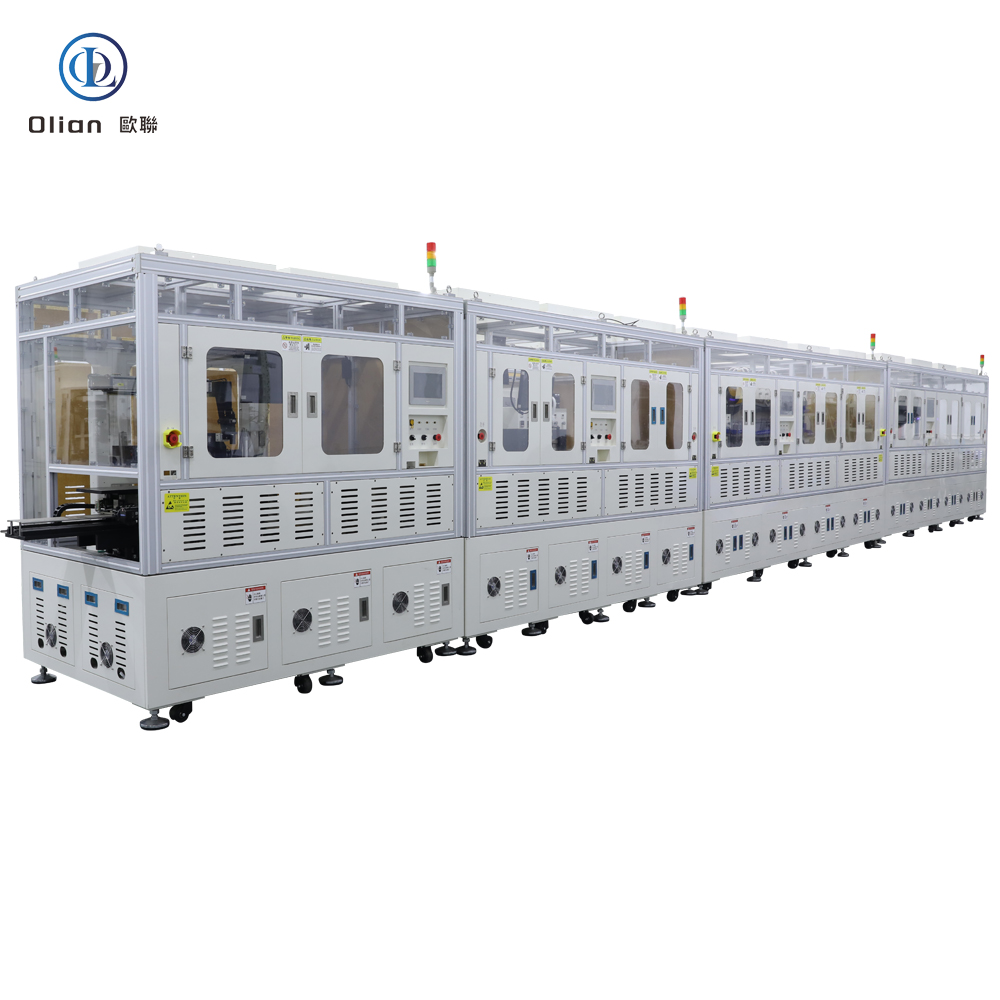
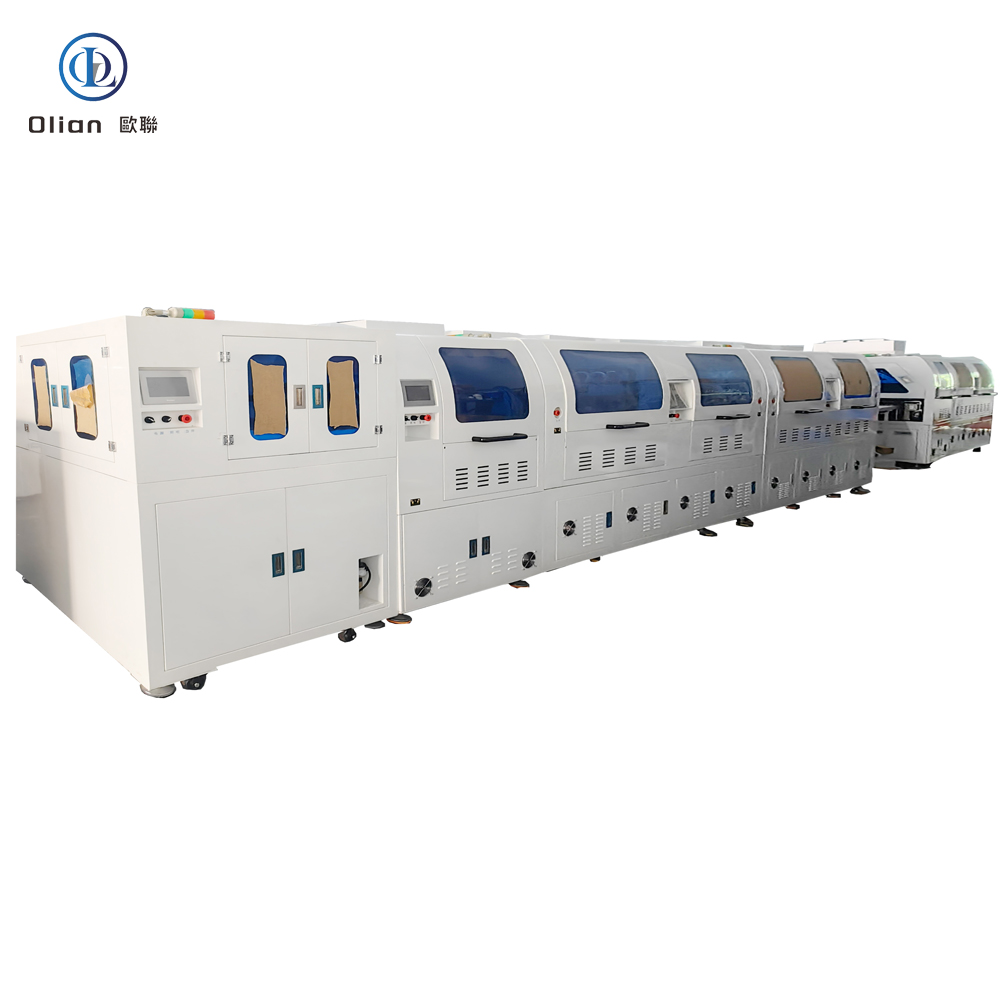
Our high-level flexible screen glue field production solutions are designed for the precise application of adhesives in the production of flexible OLED displays. These solutions support a combination of COG/FOG, COF/FOF, and COP/FOP processes, ensuring high-quality connections and efficient production
For the manufacturing of intelligent locomotive and notebook products, Shenzhen Olian provides advanced production line solutions. These solutions are designed to handle the specific requirements of these products, ensuring high precision and reliability in every step of the manufacturing process
Our display product line solutions cover a wide range of processes, including bonding, laminating, and dispensing. These solutions are suitable for various display technologies such as LCD, OLED, Mini LED, and Micro LED. They are designed to ensure high-quality connections and efficient production, making them ideal for manufacturers of smartphone screens, wearable devices, large TV panels, and advanced OLED displays
For commercial display screens, Shenzhen Olian offers flexible bonding production line solutions. These solutions are designed to handle the specific requirements of large-format displays, ensuring high precision and reliability. They are suitable for a variety of applications, including advertising displays, public information displays, and industrial control systems
Our electronic paper line solutions include laminating, bonding, and dispensing field line solutions. These solutions are designed to meet the high-precision requirements of E-paper displays, ensuring high-quality connections and efficient production. They are suitable for a variety of applications, including e-readers, smart labels, and public information displays
Shenzhen Olian provides comprehensive solutions for backlight leading, laminated film, shading, and wrapping line equipment. These solutions are designed to ensure high precision and reliability in the production of displays, making them ideal for manufacturers of smartphone screens, large TV panels, and other advanced displays
Our fingerprint module under the screen bond spot glue and AOI intelligent detection field solutions are designed to ensure high precision and reliability in the production of fingerprint modules. These solutions support high-precision bonding and intelligent detection, making them ideal for manufacturers of smartphone screens and other advanced displays
For the production of optical clear adhesive (OCA) and optical clear resin (OCR) fits, Shenzhen Olian offers automatic production solutions. These solutions are designed to ensure high precision and reliability, making them ideal for manufacturers of smartphone screens, wearable devices, and other advanced displays
Our FPC covering film, EMI automatic laminating, and FPC exposure special equipment field solutions are designed to meet the high-precision requirements of flexible printed circuit (FPC) production. These solutions ensure high-quality connections and efficient production, making them ideal for manufacturers of smartphone screens, wearable devices, and other advanced displays
Finally, Shenzhen Olian provides comprehensive solutions for 3C product inspection and packaging production lines. These solutions are designed to ensure high precision and reliability in the inspection and packaging of 3C products, making them ideal for manufacturers of smartphones, tablets, and other electronic devices
By choosing Shenzhen Olian, you benefit from:
In conclusion, Shenzhen Olian’s Display Screen Production lines, comprehensive solutions for high-level flexible screen glue field production and beyond offer a reliable and efficient approach to modern display and electronic component manufacturing. Whether you are producing smartphone screens, wearable devices, large TV panels, or advanced OLED displays, Shenzhen Olian’s solutions can help you achieve high-quality, efficient, and reliable production processes.
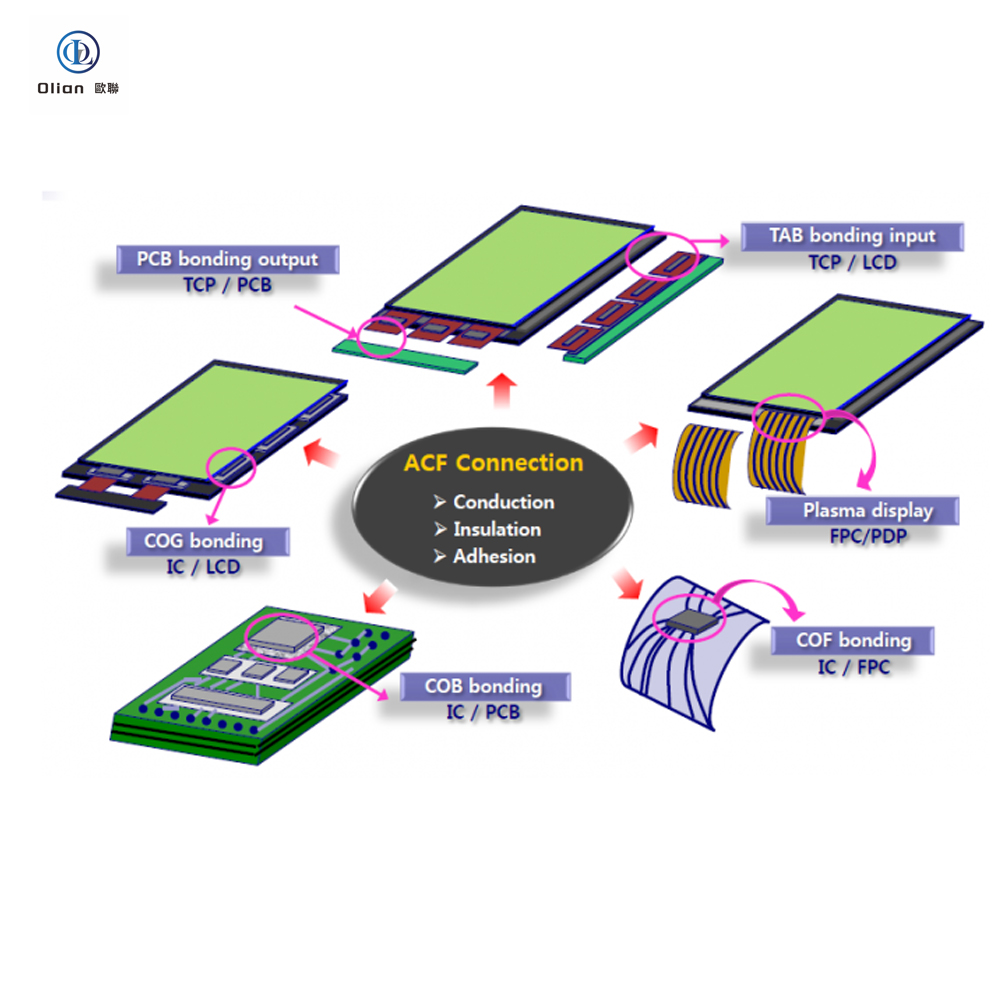
Anisotropic Conductive Films (ACF) have a wide range of applications in modern electronics, including the following key areas:
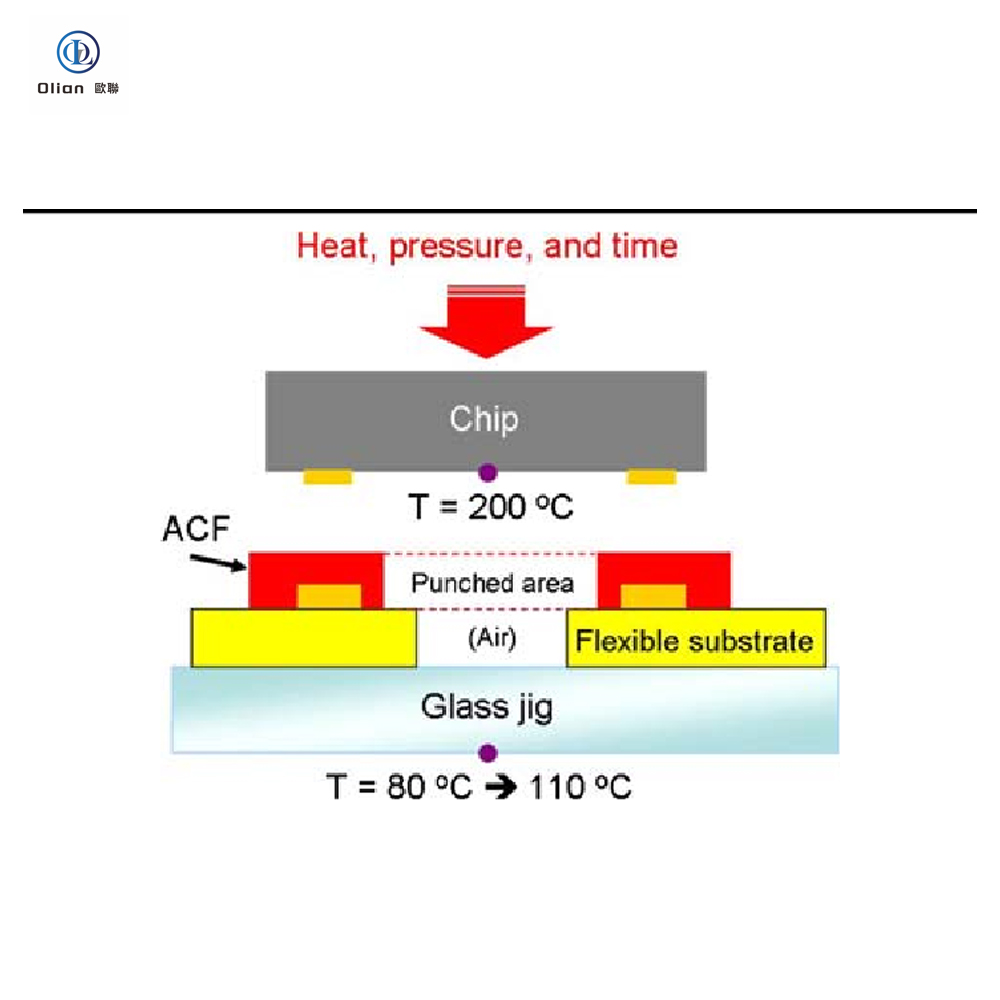
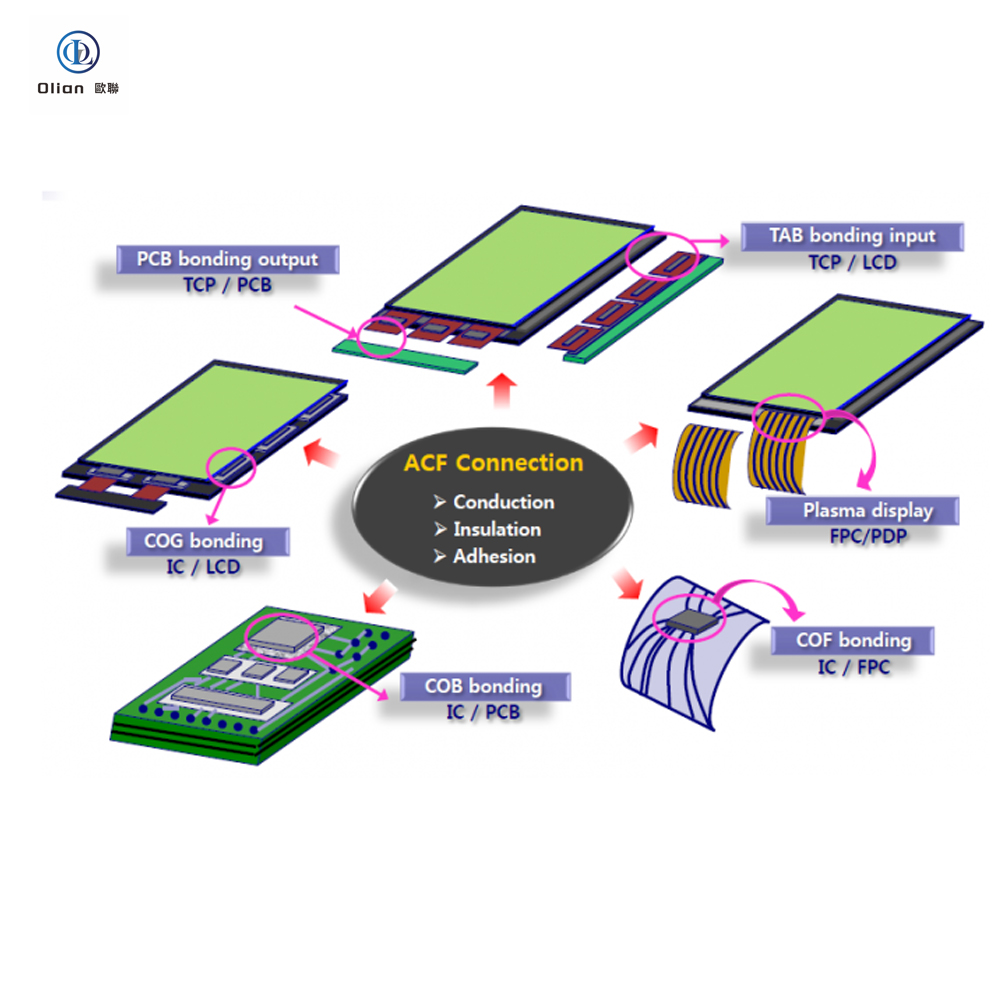
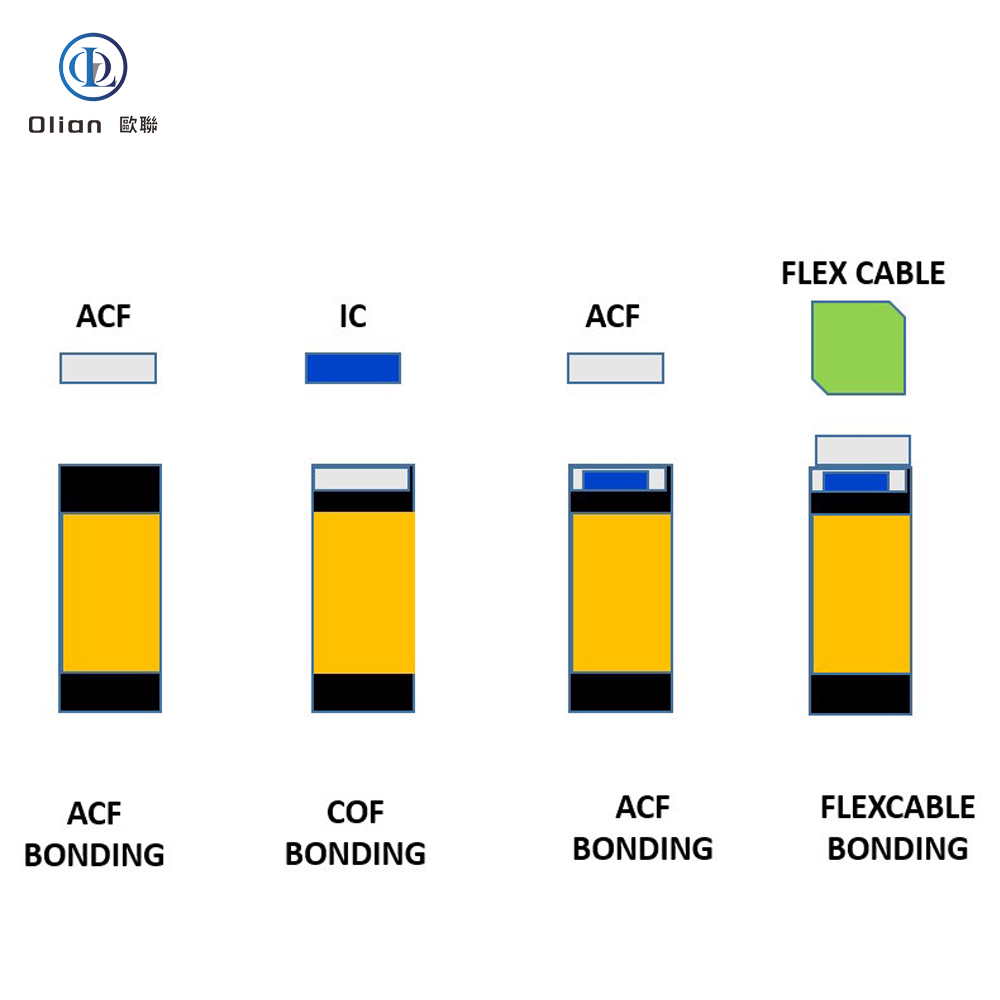
Chip-on-Glass (COG): ACF is used to bond driver ICs directly onto the glass substrate of liquid crystal displays (LCDs), enabling high-resolution and high-quality images.
Chip-on-Flex (COF): ACF facilitates the connection between chips and flexible circuits, allowing for compact and flexible designs in devices such as mobile phones and tablets.
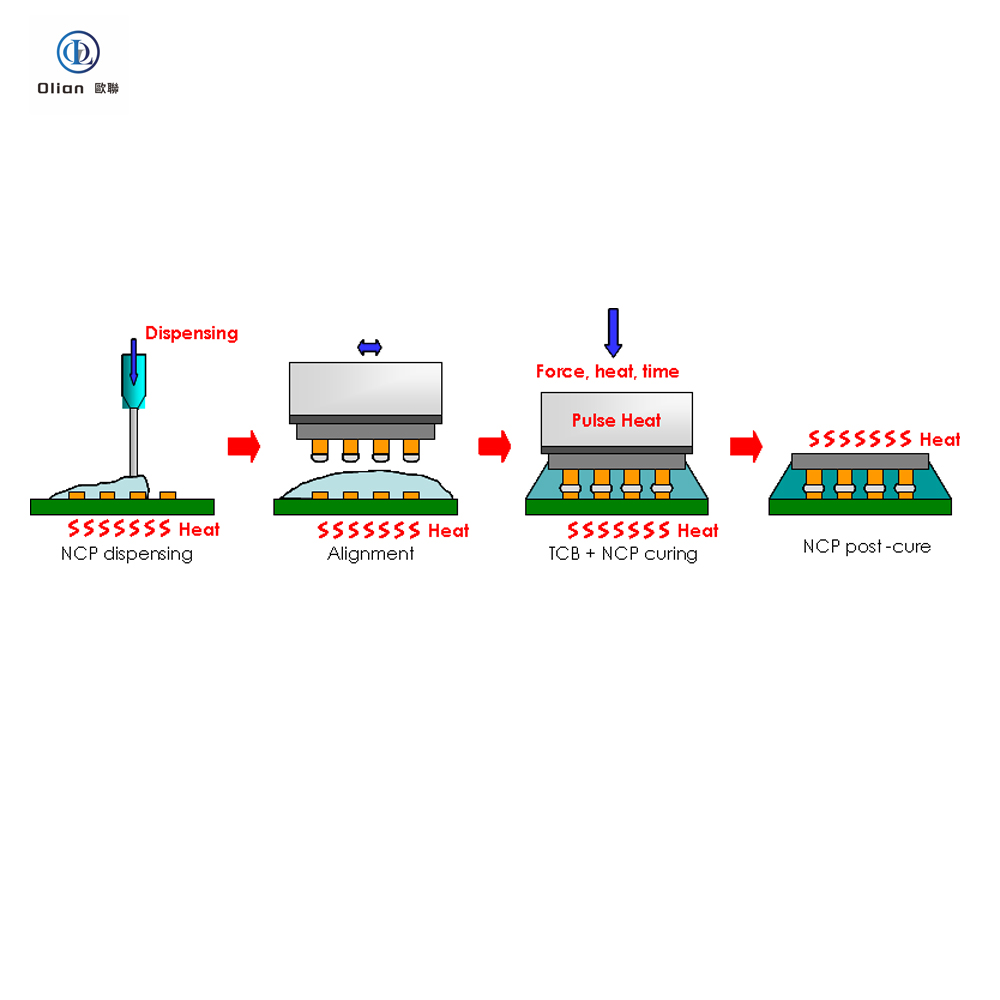
Flip-Chip Bonding: ACF provides reliable electrical connections in flip-chip packaging, where the chip is mounted directly onto the substrate with the active side facing down.
LCDs and OLEDs: ACF is essential for bonding driver ICs to the display panels in both LCDs and organic light-emitting diode (OLED) displays, ensuring stable electrical connections and high image quality.
Micro LED Displays: ACF is used to bond micro LED chips to the display substrate, enabling high-brightness and high-efficiency displays.
Light-Emitting Diodes (LEDs): ACF is used to bond LED chips to the substrate, providing efficient electrical connections and improving the overall performance of the LEDs.
Photovoltaic Cells: ACF can be used to bond photovoltaic cells to the substrate, enhancing the electrical conductivity and reliability of the solar panels.
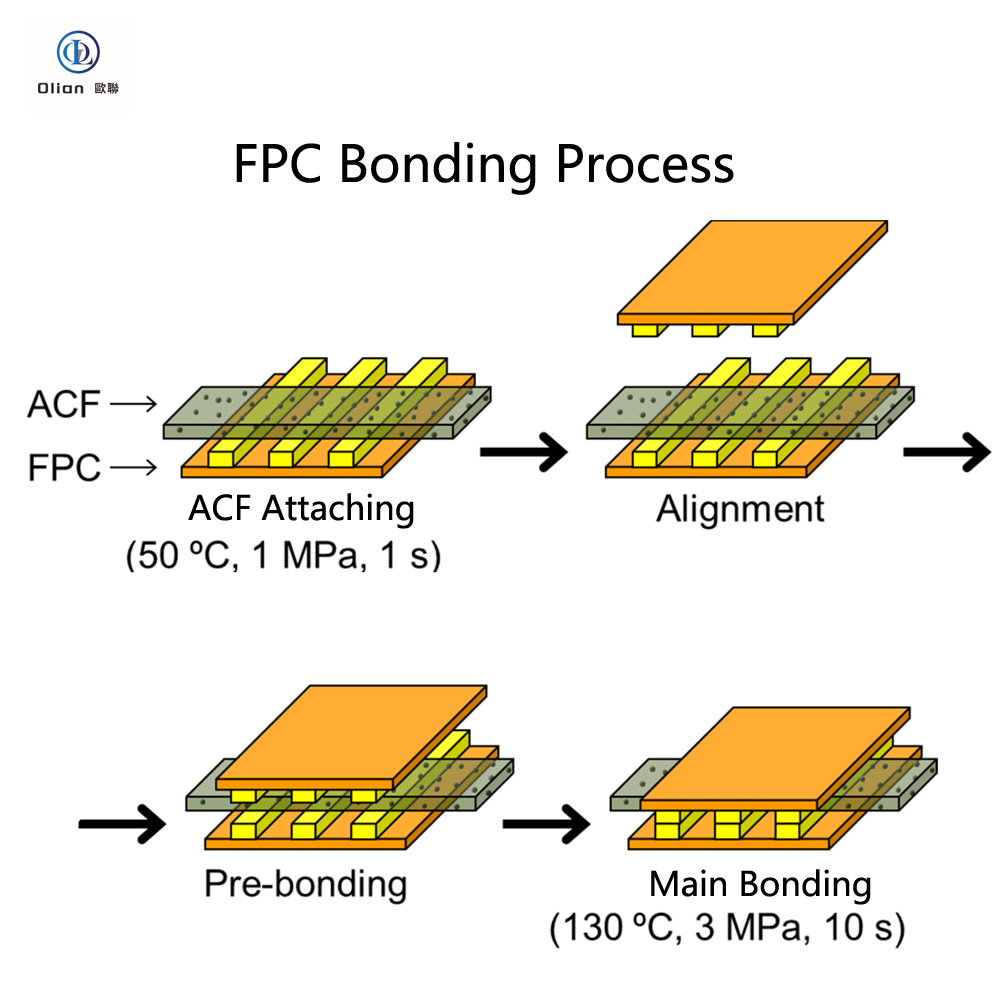
Flexible Printed Circuits (FPCs): ACF is used to bond FPCs to various substrates, such as glass or other flexible materials, enabling the development of flexible and foldable electronic devices.
Wearable Devices: ACF is used in wearable devices such as smartwatches, fitness trackers, and smart clothing, providing reliable and flexible connections .
Sensors: ACF is used to bond sensors to glass or ceramic substrates, enabling high-precision and high-reliability sensor connections.
Smart Cards and RFID: ACF is used in smart cards and RFID tags.
providing secure and reliable electrical connections for data storage and transmission.
Automotive Electronics: ACF is used in automotive applications such as dashboard displays,
infotainment systems, and sensor connections, providing reliable and durable connections under harsh environmental conditions.
Industrial Equipment: ACF is used in industrial equipment for connections between electronic components and substrates,
ensuring high reliability and performance in demanding industrial environments.
Medical Equipment: ACF is used in medical devices such as electrosurgical knives,
endoscopic imagers, and medical packaging, providing reliable and safe electrical connections.
Wearable Medical Devices: ACF is used in wearable medical devices such as health monitoring devices and wearable sensors, enabling comfortable and reliable connections.
These applications demonstrate the versatility and importance of ACF in modern electronics, enabling the development of compact,
high-performance, and reliable electronic devices across various industries.
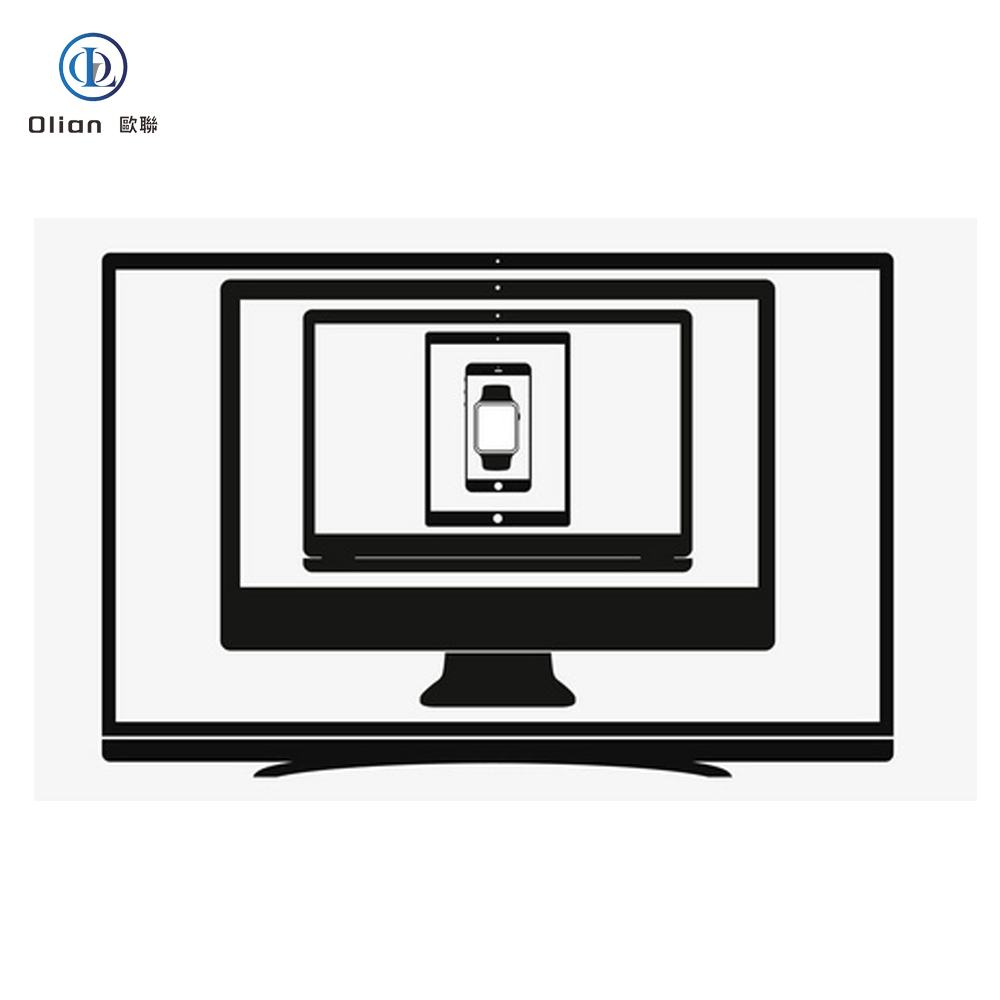
In the rapidly evolving world of electronics and display manufacturing, precision bonding technologies play a crucial role in creating high-quality, reliable, and innovative products. Whether you are producing smartphone screens, wearable devices, large TV panels, or advanced OLED displays, our company offers a comprehensive range of bonding machines and solutions to meet your specific needs. Below is an introduction to our product offerings, covering various bonding technologies and applications.
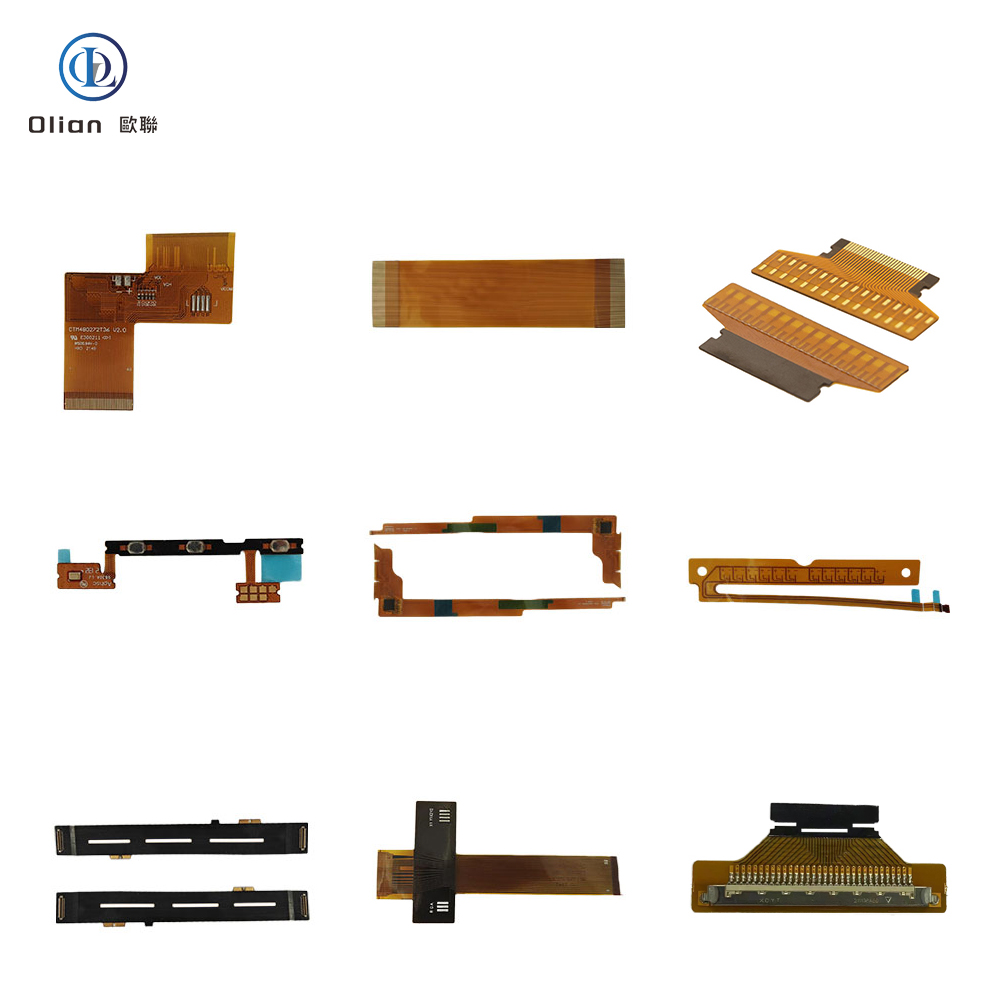
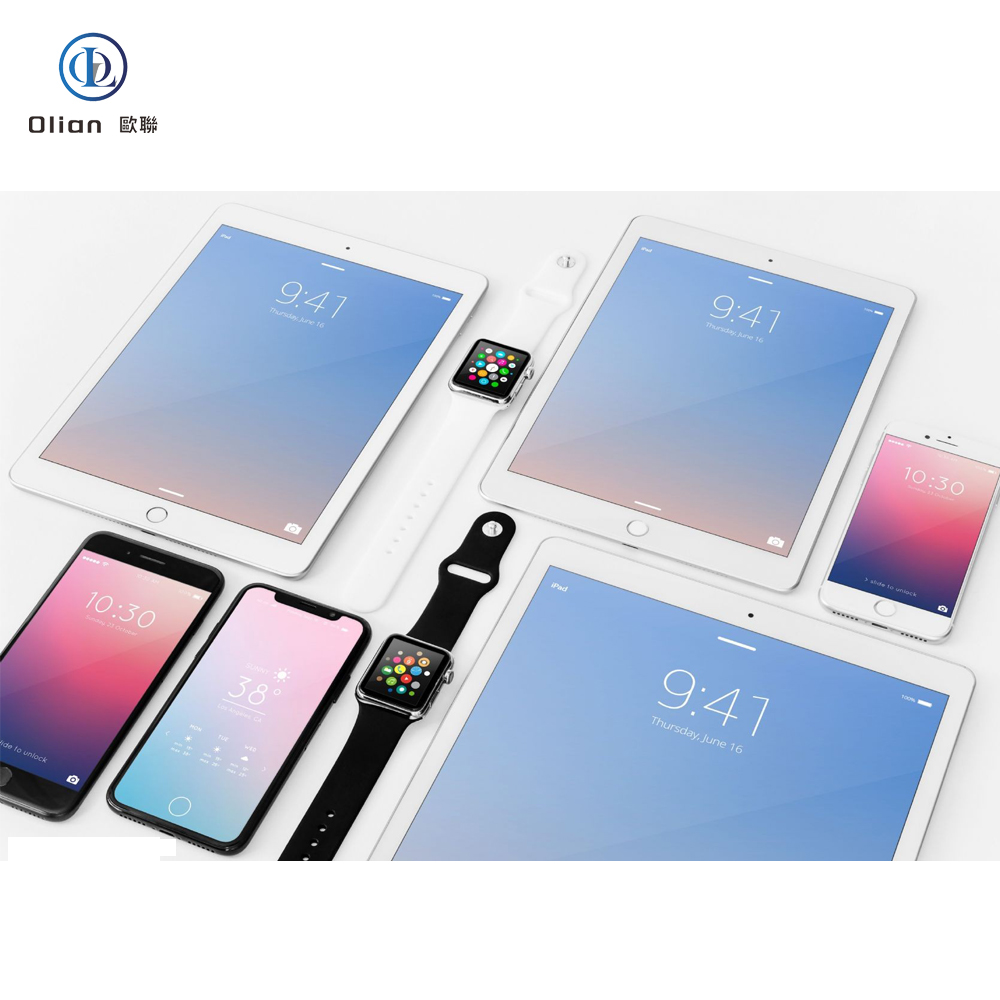
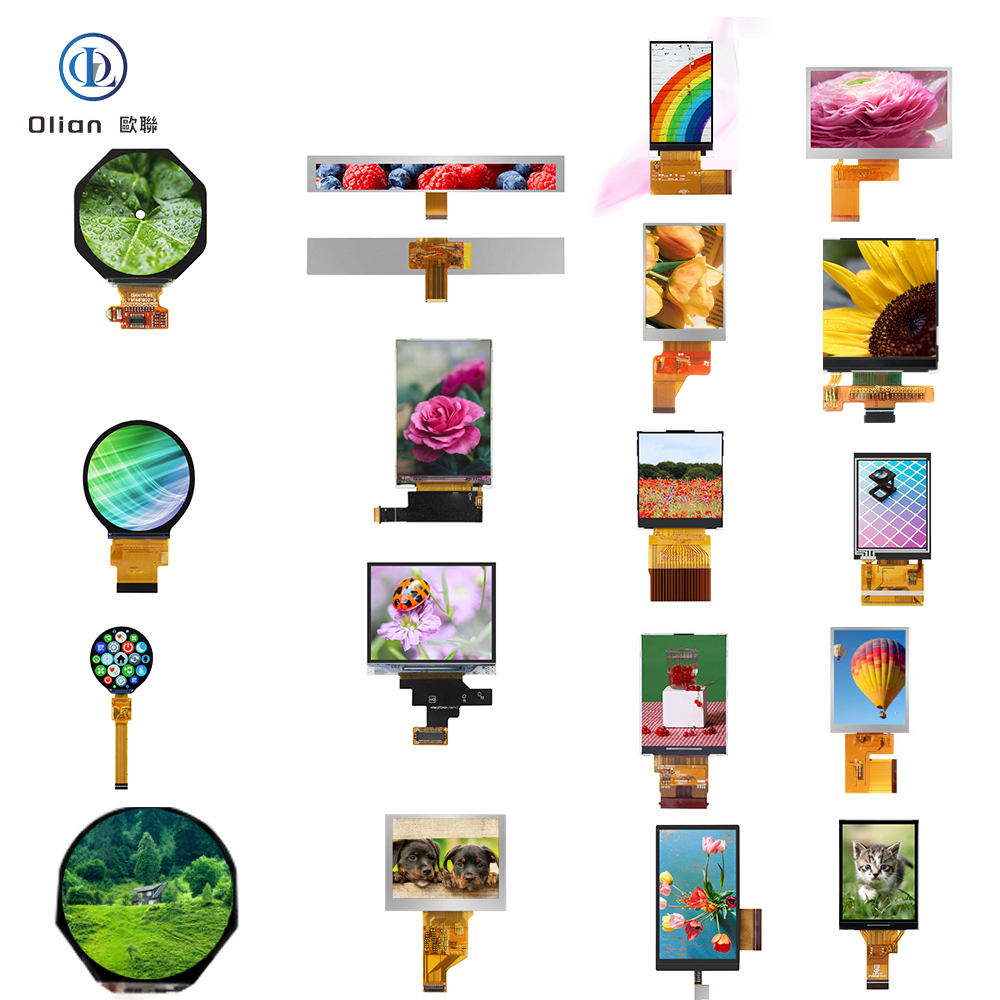
COG (Chip on Glass) technology is a widely used method for mounting LCD driver chips directly onto the glass substrate of a display panel
. This technique is known for its simplicity, cost-effectiveness, and reliability. Our COG bonding machines are designed to provide high precision and efficiency, making them ideal for applications such as smartphone screens, LCD panels, and other display devices
. We offer both pre-bonding and main-bonding machines, ensuring accurate alignment and strong connections.
COF (Chip on Film) technology represents a significant advancement in display manufacturing. It involves mounting integrated circuits (ICs) onto flexible printed circuits (FPCs), which can then be bent and folded to fit compact spaces
. Our COF bonding machines support high-speed production and offer precise temperature and pressure control, ensuring reliable connections for applications such as flexible screens, smartwatches, and other wearable devices
. We provide both COF pre-bonding and main-bonding machines, tailored to meet the demands of modern display manufacturing
.
COP (Chip on Plastic) technology is another innovative approach, where ICs are mounted directly onto plastic substrates. This method is particularly useful for creating lightweight and flexible displays
. Our COP bonding machines are designed to handle the unique challenges of plastic substrates, offering high precision and reliability. These machines are ideal for applications such as flexible OLED displays and wearable devices
.
FOG (FPC on Glass) bonding involves attaching flexible printed circuits to glass substrates. This technique is commonly used in applications requiring flexibility and compact design, such as touch screens and wearable devices
. Our FOG bonding machines feature advanced alignment systems and precise temperature control, ensuring high-quality connections. We offer both hot press and automated bonding solutions for FOG applications
.
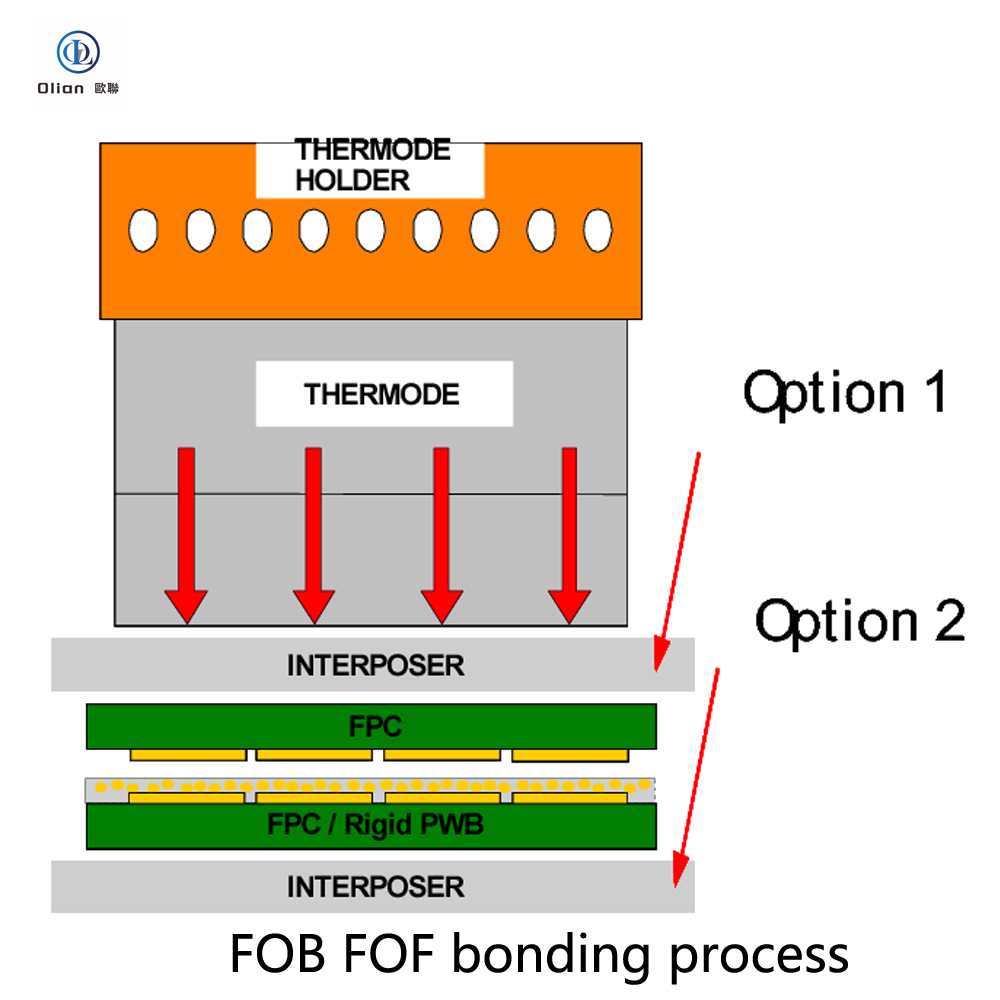
FOB (FPC on PCB) bonding machines are designed for attaching flexible printed circuits to printed circuit boards. These machines are essential for creating compact and reliable electronic assemblies, commonly used in smartphones, tablets, and other consumer electronics
. Our FOB bonding machines provide high precision and flexibility, supporting both manual and automated production processes
.
FOF (FPC on FPC) bonding involves connecting flexible printed circuits to each other. This technique is ideal for applications requiring extreme flexibility and compactness, such as wearable devices and flexible displays
. Our FOF bonding machines offer high precision and reliability, ensuring strong and durable connections.
ACF (Anisotropic Conductive Film) bonding is a versatile technique used in various bonding processes, including COG, COF, and FOG
. Our ACF bonding machines are designed to provide precise temperature, pressure, and alignment control, ensuring reliable and high-quality connections. We offer a range of ACF bonding solutions, including pre-bonding and main-bonding machines
.
TAB (Tape Automated Bonding) is a technique used for bonding integrated circuits to substrates using tape carriers. Our TAB bonding machines are designed for high-speed production and offer precise alignment and bonding capabilities
. These machines are ideal for applications requiring high-density interconnections and compact designs
.
FPC (Flexible Printed Circuit) bonding machines are essential for creating flexible and lightweight electronic assemblies. Our FPC bonding machines offer high precision and reliability, supporting various bonding processes and applications
. These machines are ideal for applications such as wearable devices, flexible displays, and other consumer electronics
.
In addition to the above technologies, we also offer specialized bonding machines for various applications, including:
Our bonding machines are designed with the latest innovations in mind, ensuring high precision, reliability, and efficiency. Key features of our machines include:
Whether you are producing smartphone screens, wearable devices, large TV panels, or advanced OLED displays, our comprehensive range of bonding machines is designed to meet your specific needs. With advanced features such as high precision, versatility, and automation, our machines are ideal for ensuring high-quality connections and efficient production processes. Contact us today to find the perfect bonding machine for your application.