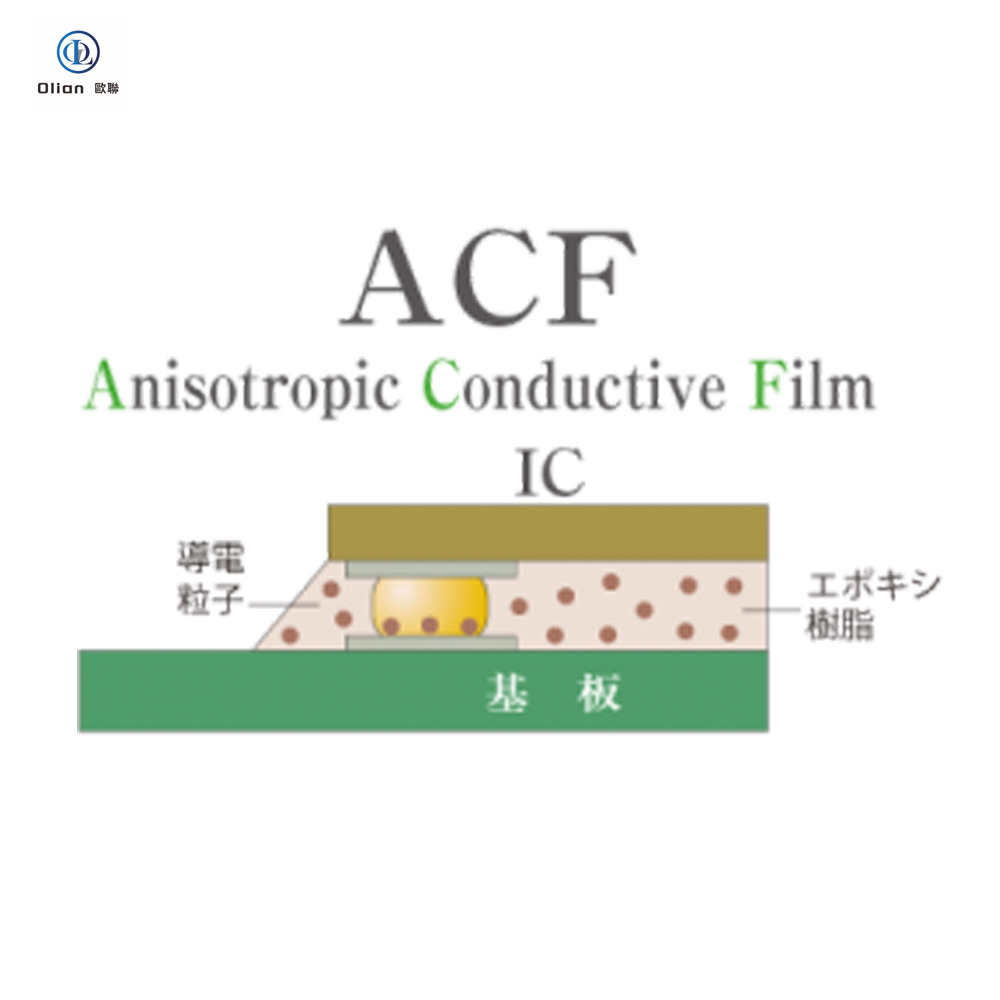
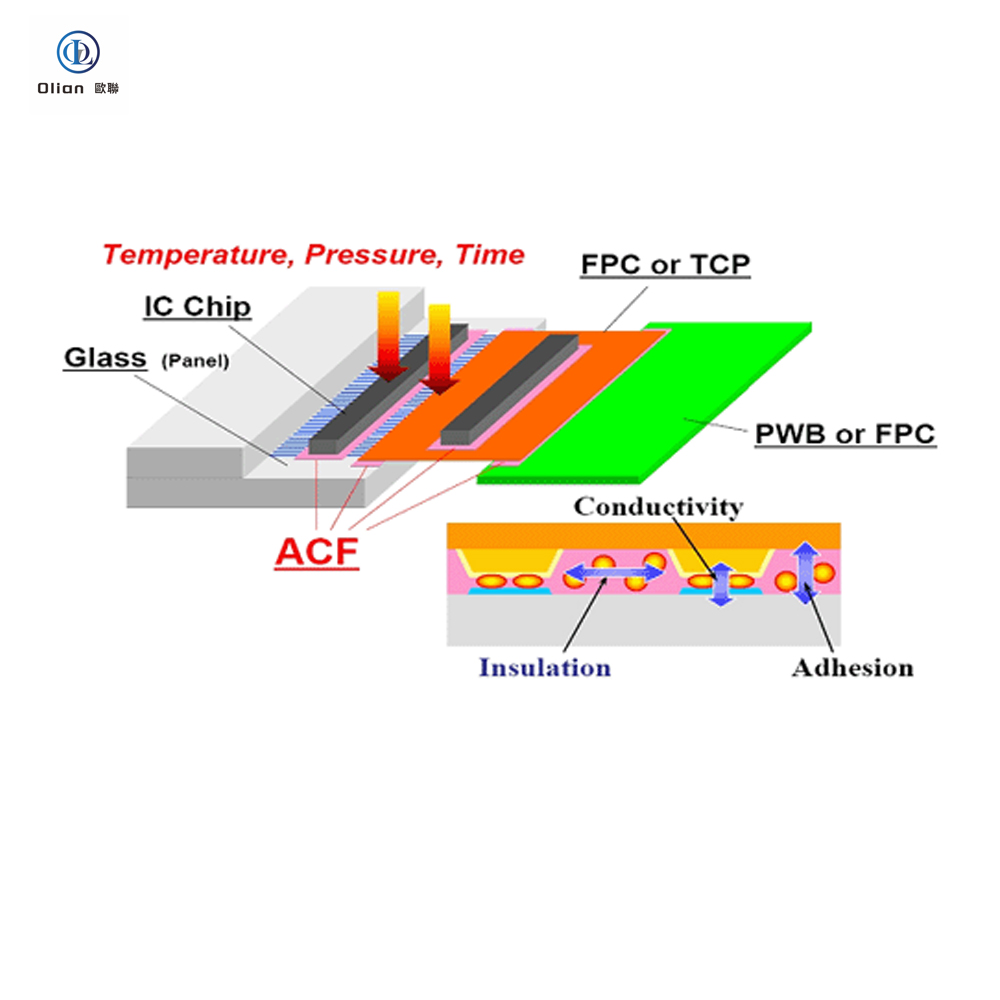
Anisotropic Conductive Film (ACF) is a specialized adhesive material. It contains conductive particles within an insulating resin. This unique structure allows vertical electrical conductivity. Simultaneously, it maintains horizontal insulation between circuits. ACF is essential for modern flat panel displays. It connects delicate components without short circuits. The film provides both adhesion and conduction. This dual function is critical for reliability. Olian Automatic utilizes this advanced material effectively. Our processes optimize the ACF performance. This ensures long-lasting display connections.
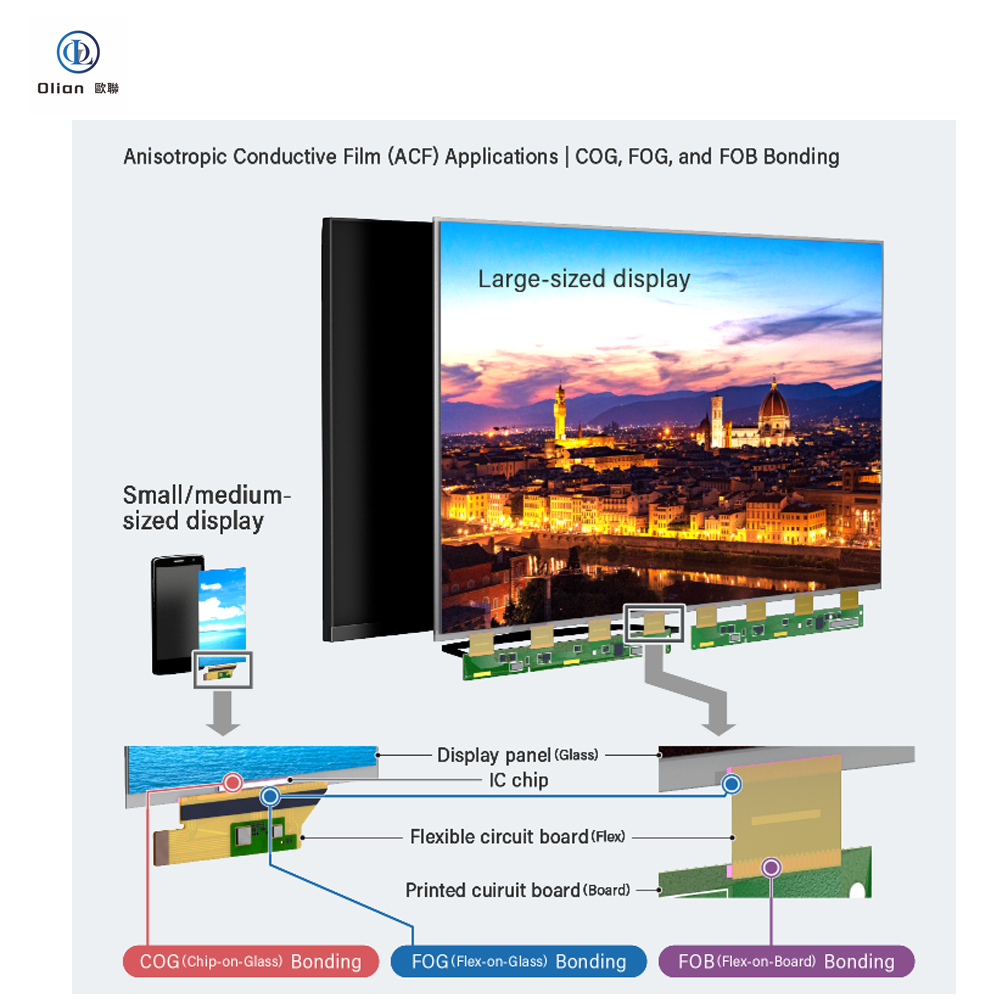
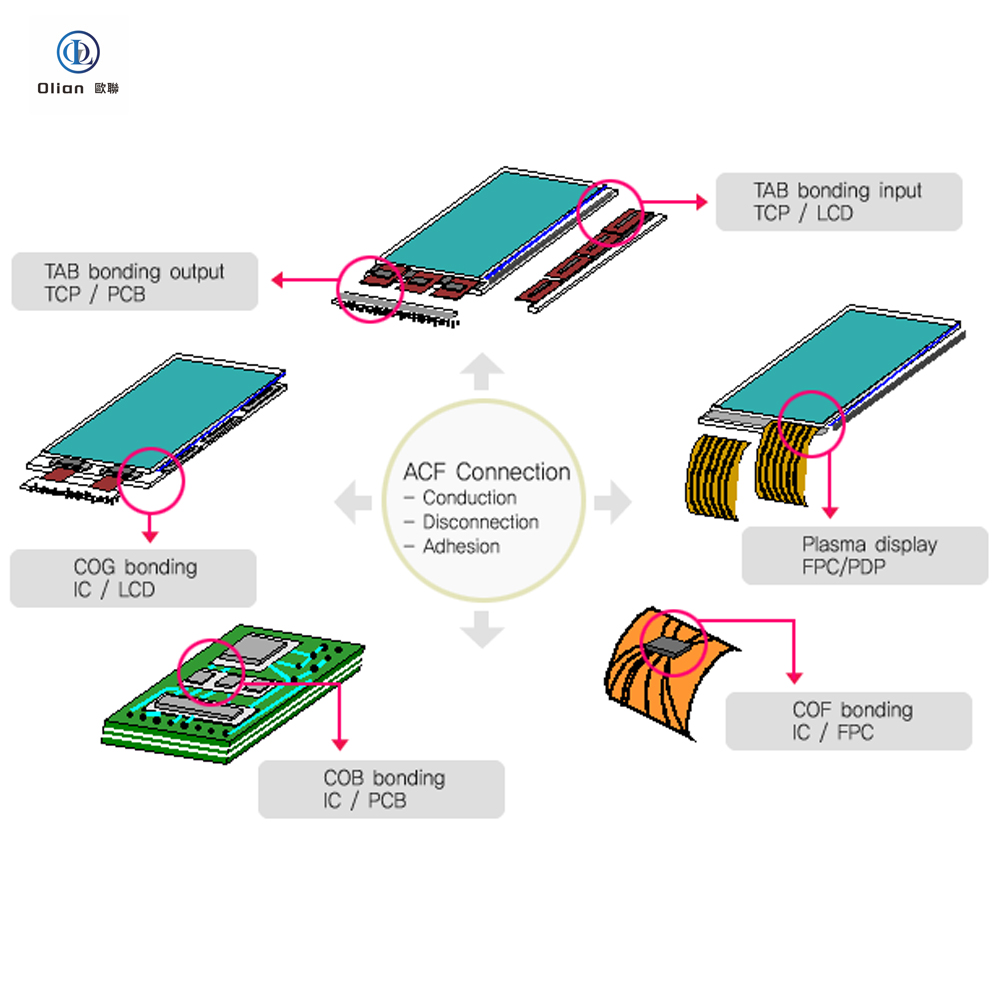
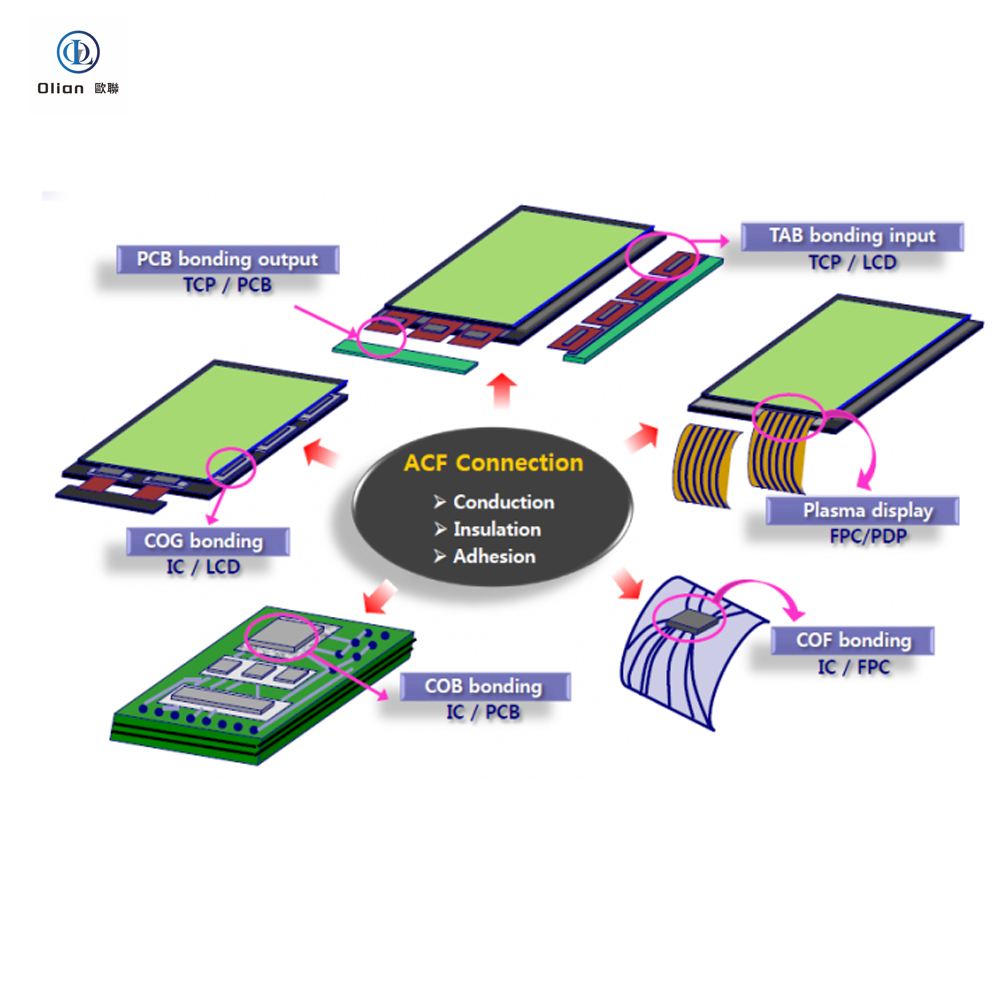
Several key bonding methods use ACF technology. Chip-on-Glass (COG) bonds IC chips directly to glass panels. This is common in LCD manufacturing. Chip-on-Film (COF) connects ICs to flexible circuits. This allows for thinner display bezels. Flex-on-Glass (FOG) attaches flexible boards to glass substrates. Flex-on-Board (FOB) connects flex circuits to rigid PCBs. Tape Automated Bonding (TAB) links TCP tapes to displays. Each process requires specific parameters. Olian Automatic masters all these techniques. We provide versatile solutions for various needs.
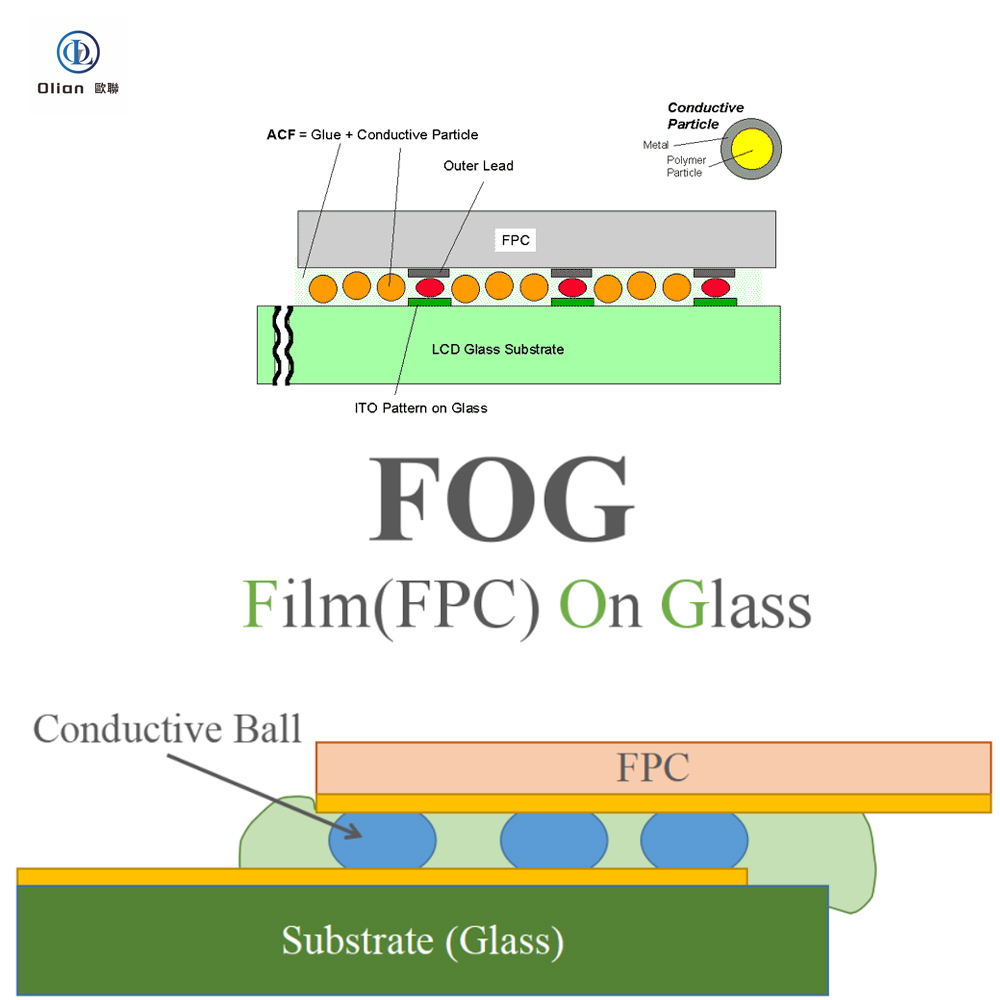
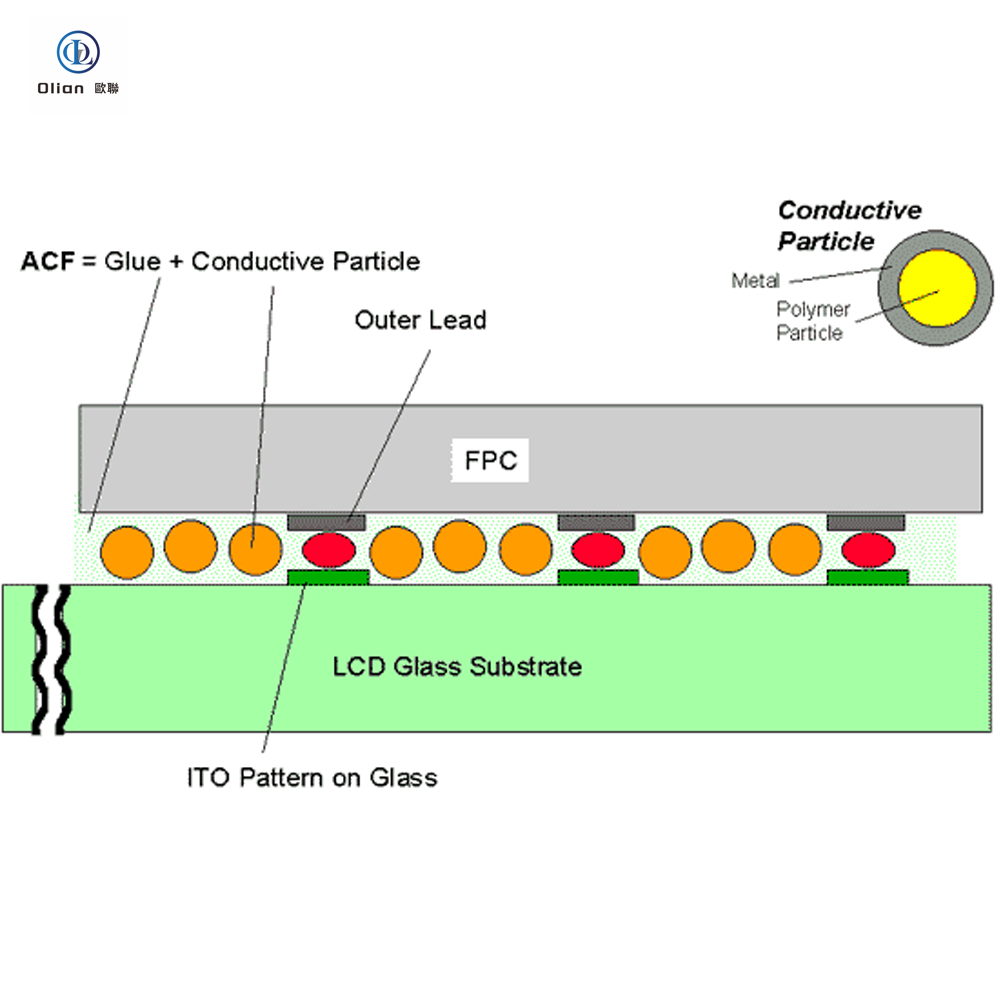
ACF stands for Anisotropic Conductive Film. It is a specialized adhesive material used in display assembly. The film contains conductive particles trapped in an insulating resin. It provides electrical conductivity in the vertical direction only. Simultaneously, it ensures electrical insulation in the horizontal direction. This unique property prevents short circuits between fine pitches. ACF also offers strong adhesion between components. It is the core material for COG, COF, and FOG bonding.
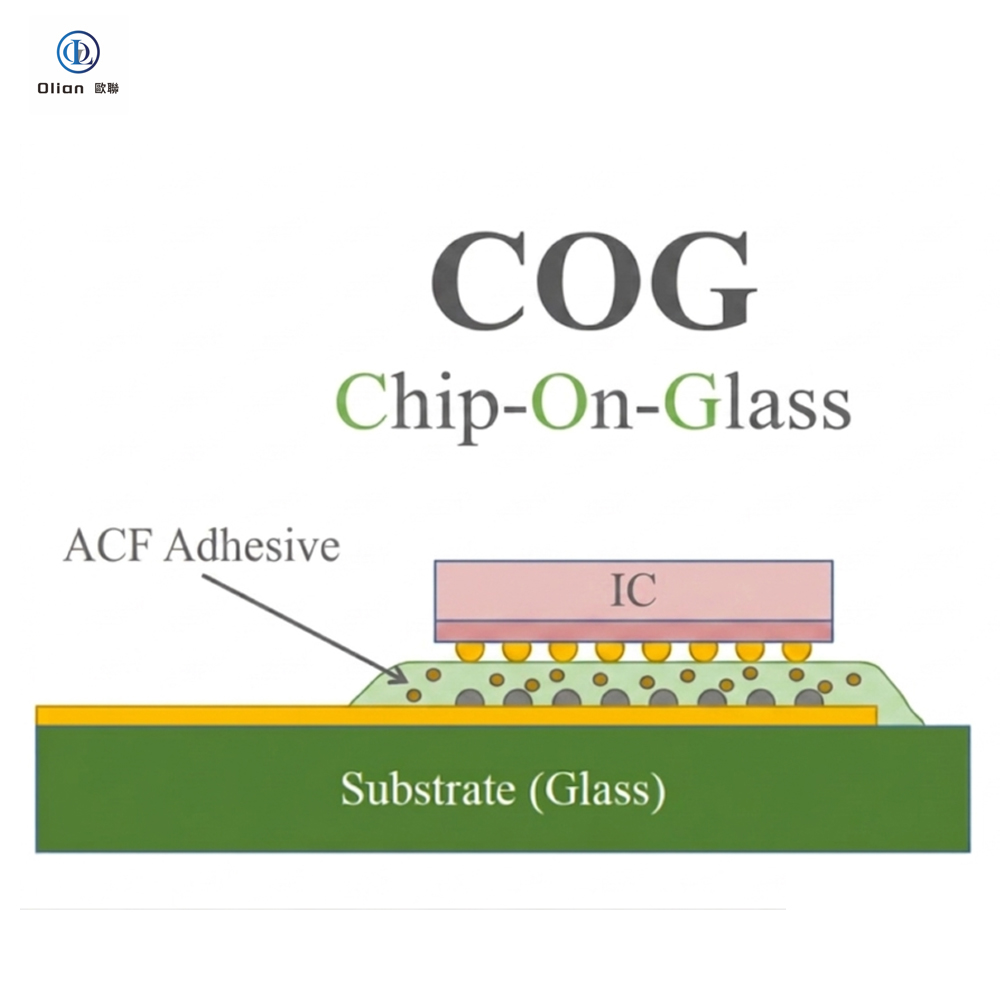
COG stands for Chip-on-Glass bonding. This process connects an IC chip directly onto a glass substrate. It is widely used in LCD and OLED panel manufacturing. The method eliminates the need for intermediate flexible tapes. COG bonding saves space and reduces module thickness. It requires precise alignment and controlled heat pressure. ACF is typically used as the interconnect material. This technique is common for source and gate driver ICs.
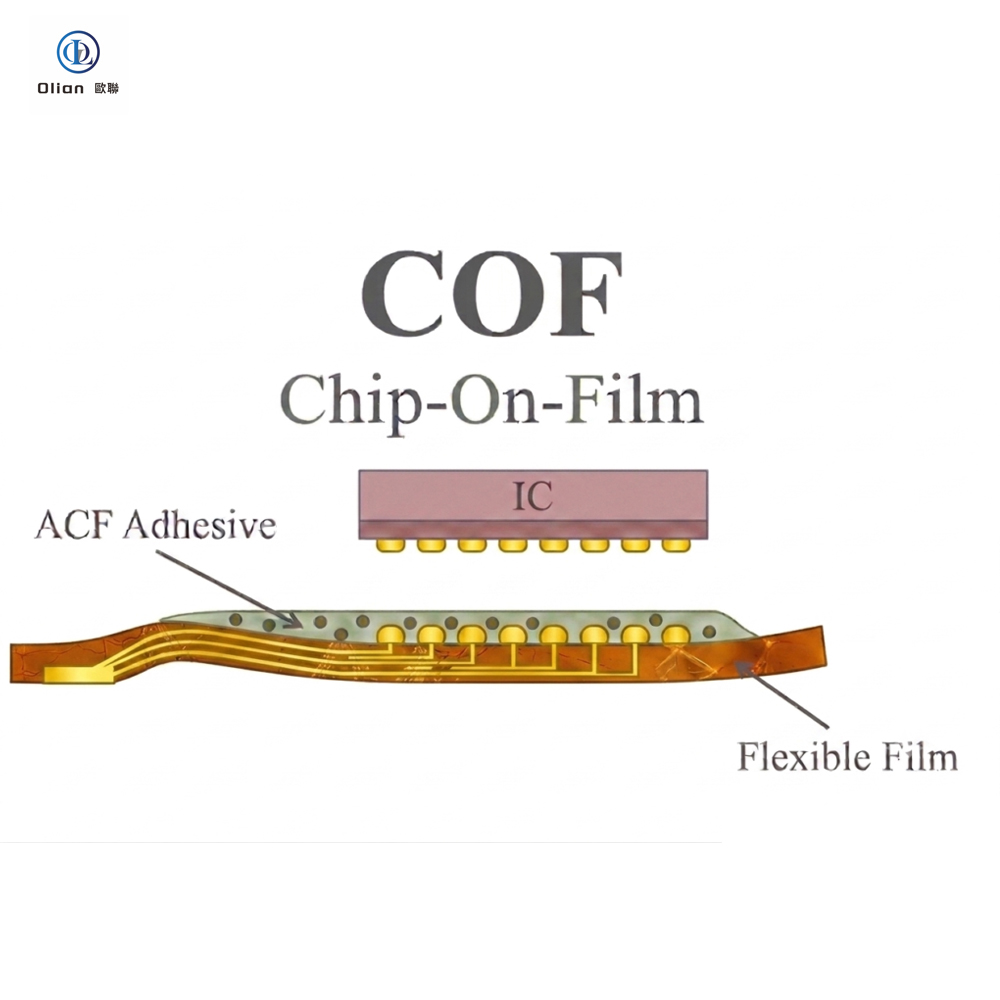
COF stands for Chip-on-Film bonding. This technique mounts IC chips directly onto a flexible film. The film is usually a Tape Carrier Package (TCP). COF allows for very narrow display bezels. It enables the bending of the film under the panel. This creates a “bottom bezel” free design. The flexible circuit connects the glass to the main PCB. It supports high-resolution displays with many signal lines.
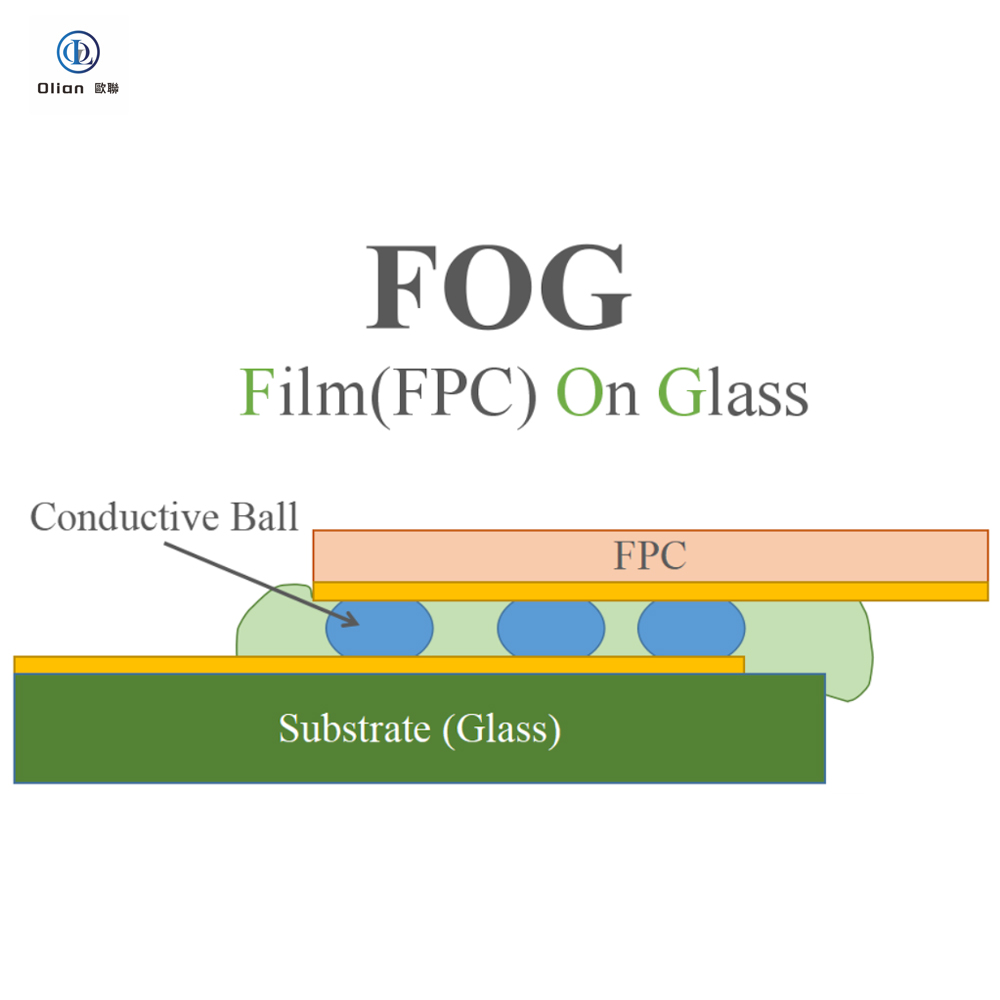
FOG stands for Flex-on-Glass bonding. This process attaches a Flexible Printed Circuit (FPC) to a glass panel. It serves as the interface between the rigid glass and external electronics. FOG bonding is essential for transmitting signals to the display. It uses ACF to ensure reliable electrical connection. The process requires high precision to align fine circuit traces. It is a standard step in LCD module assembly.
FOB stands for Flex-on-Board bonding. This method connects a flexible circuit (FPC) to a rigid Printed Wiring Board (PWB). It bridges the gap between flexible and rigid electronics. FOB is often used in the final assembly stage. It links the display module to the main system board. The connection must withstand mechanical stress and bending. ACF provides both electrical continuity and mechanical strength.
COP stands for Chip-on-Plastic bonding. Although less prominent in the diagrams, it is listed in the text. This technology bonds IC chips directly onto plastic substrates. It is increasingly used in flexible OLED displays. COP allows the entire display to be bendable or foldable. It replaces glass with polyimide or similar plastics. The bonding process requires lower temperatures to protect the plastic.
TCP refers to Tape Carrier Package. It is a type of flexible interconnect technology. TCP carries IC chips on a thin polymer tape. It is the primary component used in COF bonding. The tape has fine metal leads for electrical connections. TCP allows for high-density packaging of driver chips. It acts as the bridge between the glass and the PCB.
FPC stands for Flexible Printed Circuit. It is a lightweight, bendable electronic circuit board. FPCs are used in FOG and FOB bonding processes. They replace rigid cables to save space and weight. The circuit pattern is etched onto a flexible substrate. FPCs can route signals through tight spaces in devices. They are crucial for connecting moving or folded parts.
PWB stands for Printed Wiring Board. It is commonly known as a rigid PCB. PWBs serve as the main backbone for electronic components. In display modules, PWBs receive signals from the FPC. FOB bonding connects the flexible display output to this board. PWBs provide mechanical support and complex circuit routing. They are essential for the final electronic assembly.
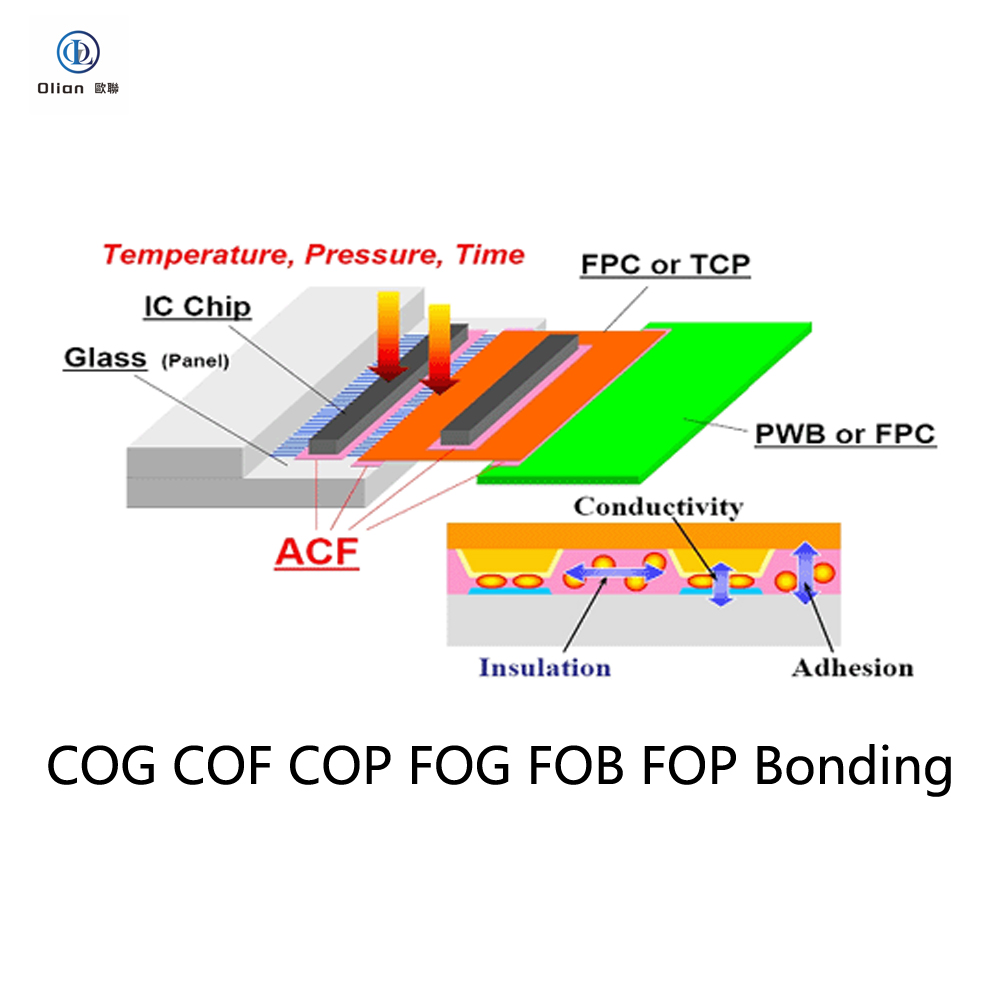
IC Chip stands for Integrated Circuit Chip. In display bonding, these are typically driver ICs. They control the pixels on the screen to create images. The chip contains thousands of microscopic connection points. These points must align perfectly with the substrate pads. The IC is the “brain” of the display panel. Proper bonding is critical for its functionality.
Glass refers to the display panel substrate. It is the base material for LCD and OLED screens. The glass surface holds the pixel matrix and electrodes. COG and FOG bonding happen directly on this surface. The glass is fragile and requires careful handling. Cleanliness is vital before applying ACF. It provides a flat, stable platform for components.
Conductivity refers to the flow of electrical current. In ACF bonding, this happens vertically through the film. Conductive particles create the path between the chip and substrate. This ensures the signal reaches the display pixels. High conductivity is necessary for clear image quality. The resistance must be low and stable.
Insulation prevents unwanted electrical flow. In ACF, the resin insulates adjacent signal lines horizontally. This prevents short circuits between neighboring traces. High insulation resistance is critical for fine-pitch connections. It ensures that signals do not cross paths. Reliable insulation guarantees the display functions correctly.
Adhesion is the mechanical sticking force of the bond. The ACF resin cures to hold components together firmly. Strong adhesion protects against moisture and dust ingress. It withstands thermal expansion and mechanical shock. Good adhesion ensures the long-term reliability of the device. It prevents the chip or film from peeling off.
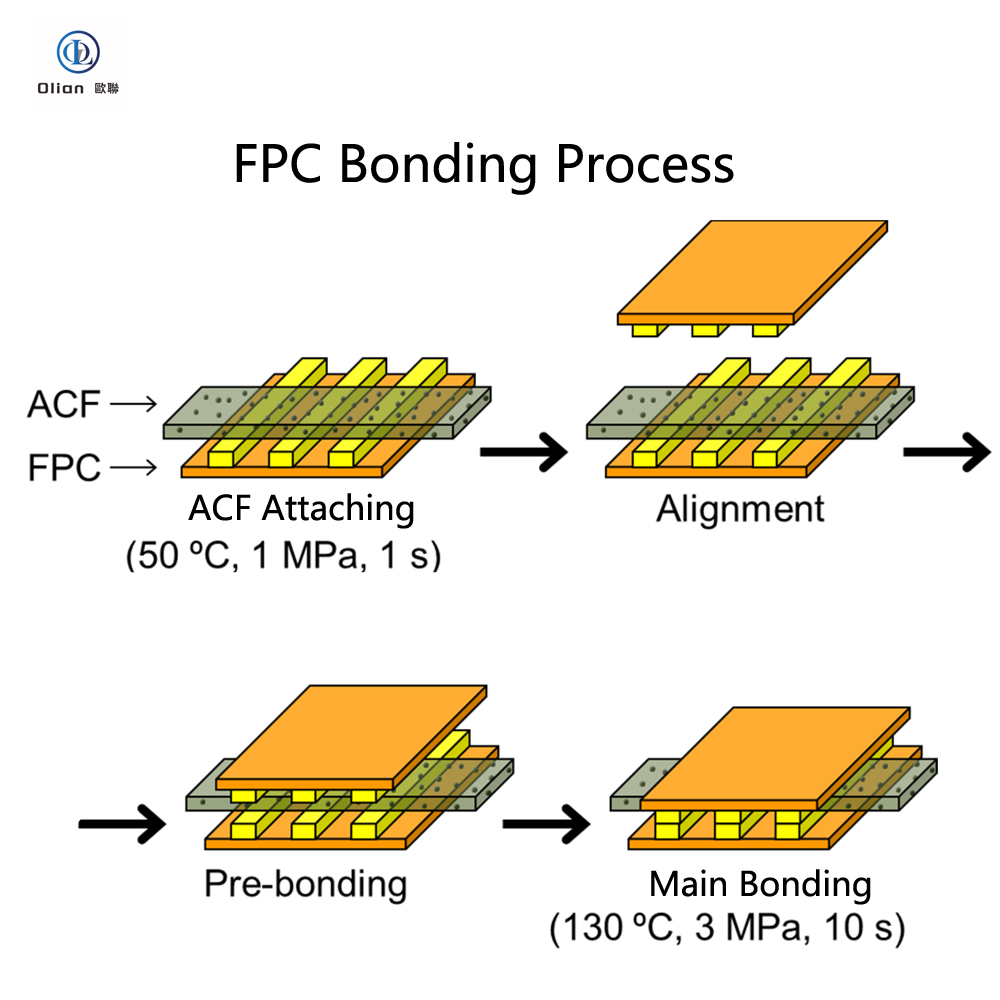
These are the three critical process parameters. Temperature activates the chemical curing of the ACF. Pressure forces the conductive particles into contact. Time determines the duration of the heat application. All three must be precisely controlled for a good bond. Incorrect settings lead to open circuits or weak joints. Olian Automatic systems optimize these variables perfectly.
TAB stands for Tape Automated Bonding. It is an older term often associated with TCP input. It refers to bonding the tape carrier to the LCD glass. The process uses heat and pressure to connect leads. TAB enables high-speed automated manufacturing. It is the precursor to modern COF technology.
Plasma Display refers to PDP (Plasma Display Panel) technology. The images show FPC bonding for plasma displays. This indicates ACF’s versatility across different display types. Plasma panels also require reliable flex-to-glass connections. The bonding principles remain similar to LCDs. It demonstrates the broad application of Olian’s technology.
The ACF bonding process follows strict steps. First, technicians clean the glass substrate thoroughly. Next, they apply the ACF material carefully. Then, they peel off the protective release film. Precise alignment of the IC chip follows. Finally, heat and pressure are applied simultaneously. This activates the adhesive and conductive particles. The bonding tool ensures uniform pressure distribution. Temperature and time are strictly controlled. This five-step process guarantees perfect connections. Olian Automatic automates this workflow for consistency.
Our ACF bonding solutions serve diverse markets. Small and medium-sized displays utilize COG technology. Smartphones and tablets benefit from this method. Large-sized displays often require FOG and FOB bonding. Television screens use these robust connections. Plasma displays also rely on ACF technology. The flexibility of ACF supports curved screens. Olian Automatic adapts to all form factors. We support the entire display industry spectrum. Our equipment handles various panel sizes efficiently.
Olian Automatic delivers superior bonding performance. Our systems ensure precise parameter control. Temperature, pressure, and time are optimized. This minimizes defects and maximizes yield. We understand the complexities of ACF materials. Our expertise prevents common bonding issues. Reliable connections reduce product failure rates. We support high-volume manufacturing environments. Our technology meets strict industry standards. Partner with us for display assembly success.
What is the primary function of ACF?
ACF provides vertical electrical conductivity and horizontal insulation. It bonds components while preventing short circuits. This dual action is vital for displays.
Which displays use COG bonding?
COG bonding is standard for LCD panels. It connects driver ICs directly to glass. This method is common in monitors and TVs.
How does heat affect the bonding process?
Heat activates the thermosetting resin in ACF. It melts the adhesive for proper flow. Correct temperature ensures strong mechanical adhesion.
Can ACF connect flexible circuits?
Yes, ACF is ideal for flexible connections. It supports COF and FOG applications. The film accommodates bending without breaking.
What parameters are critical for bonding?
Temperature, pressure, and time are essential. Incorrect settings cause poor conductivity or adhesion. Olian Automatic controls these variables precisely.