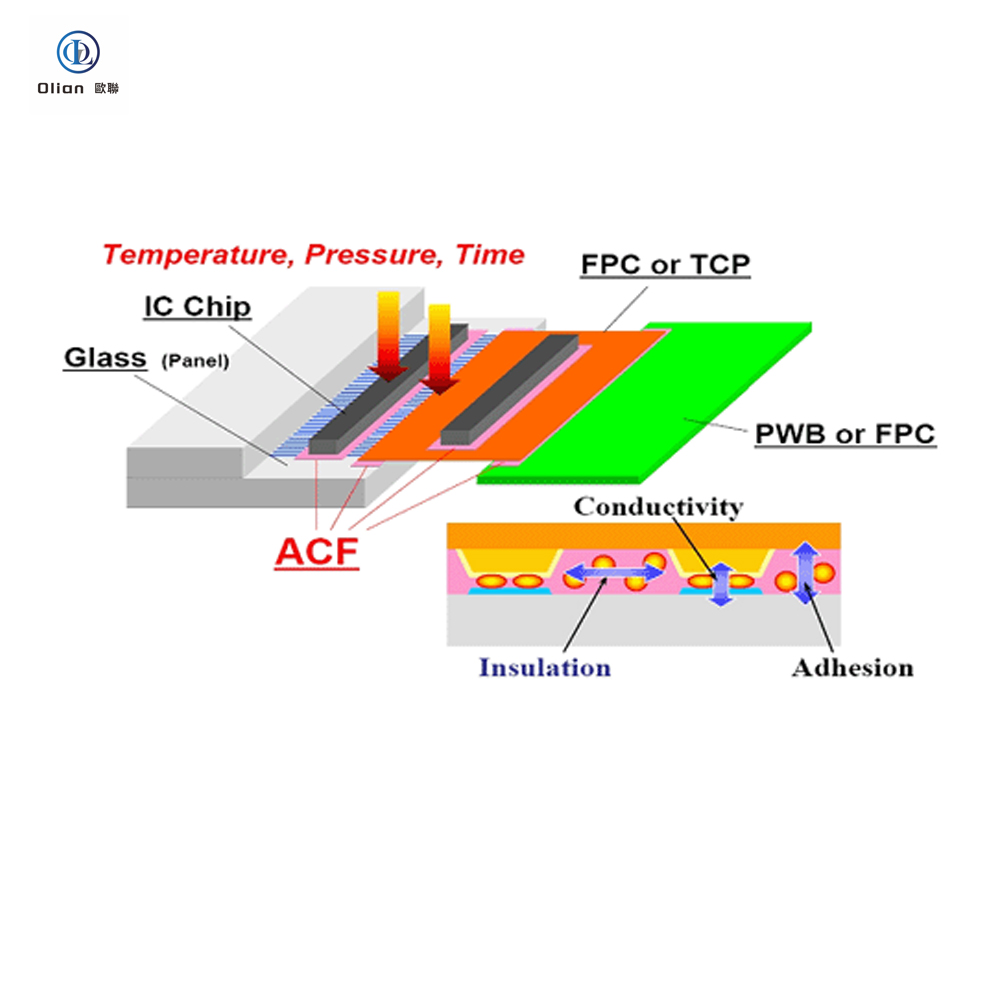
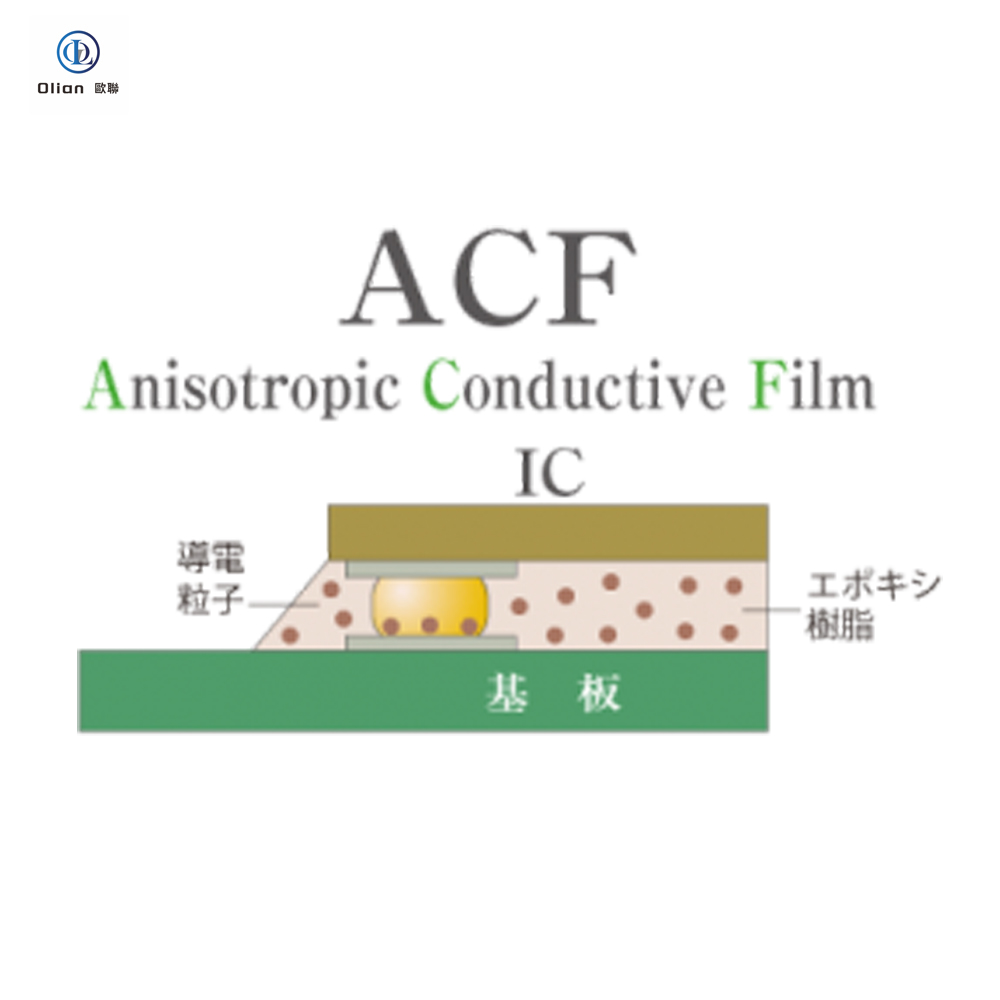
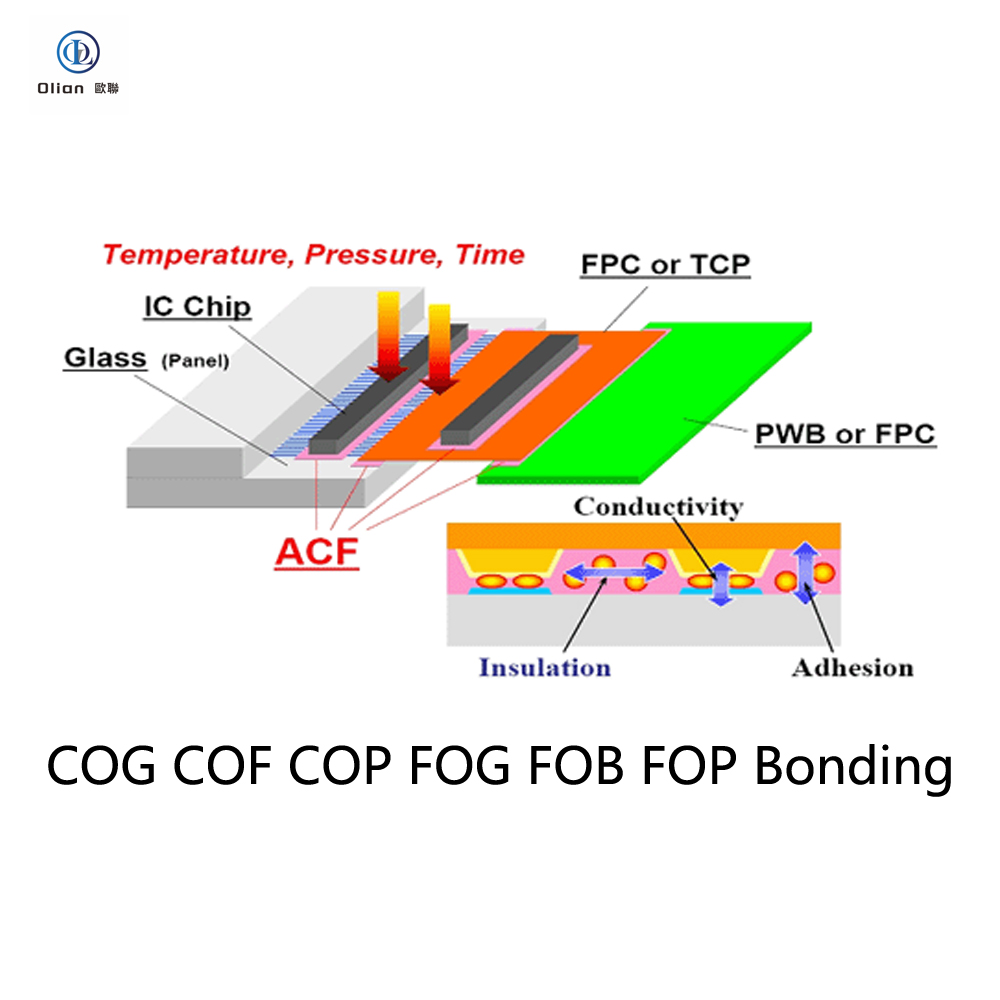
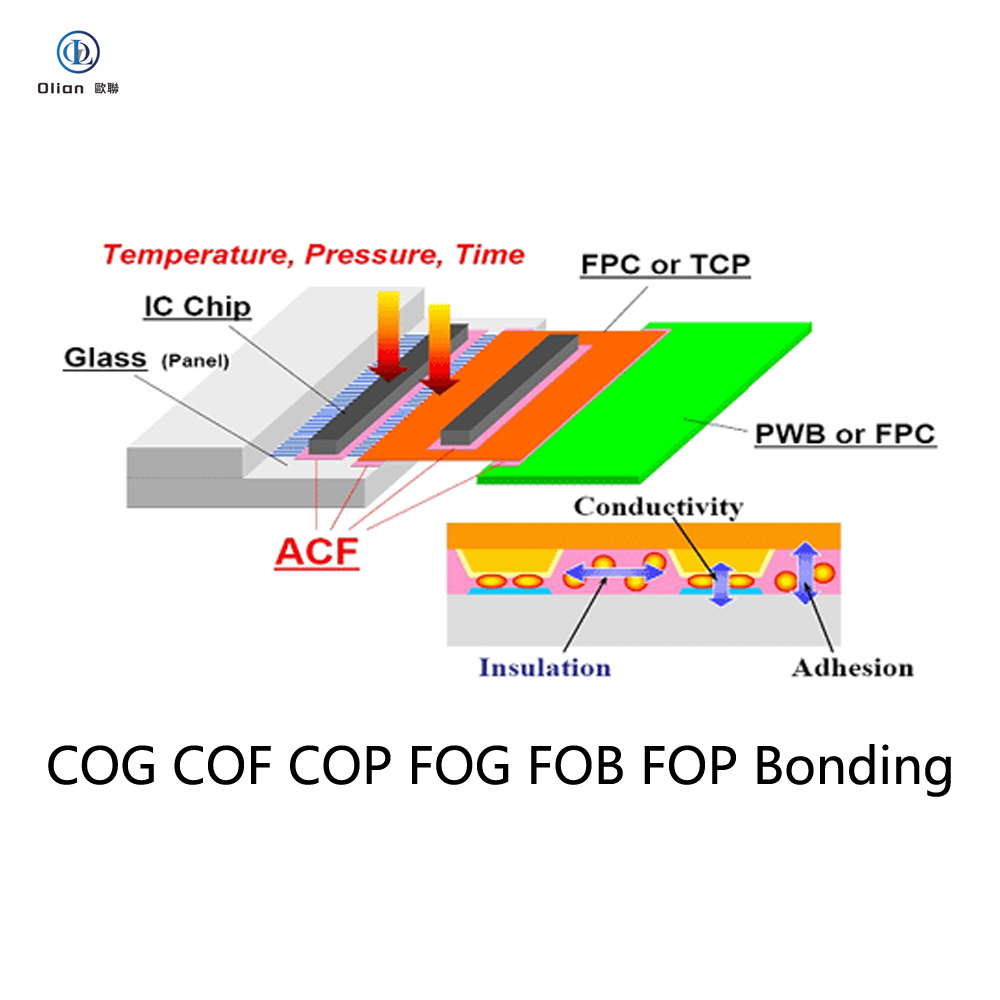
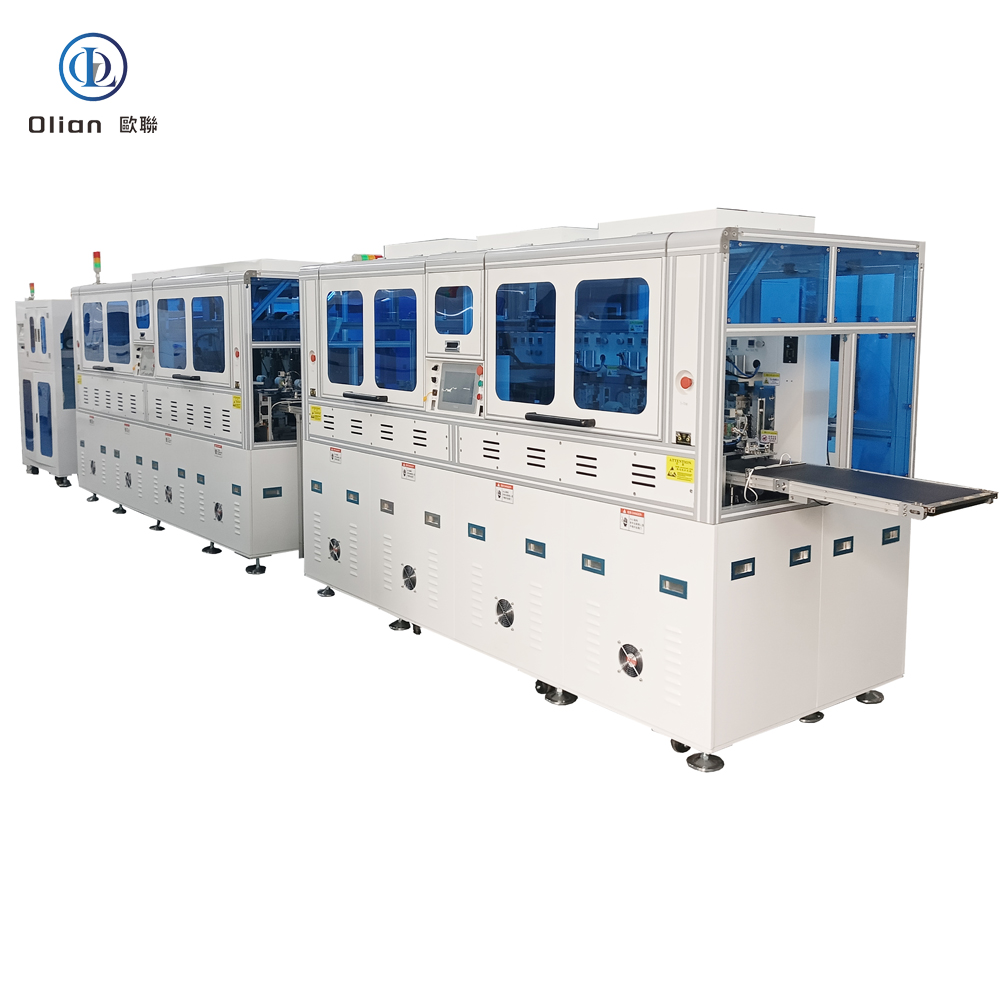
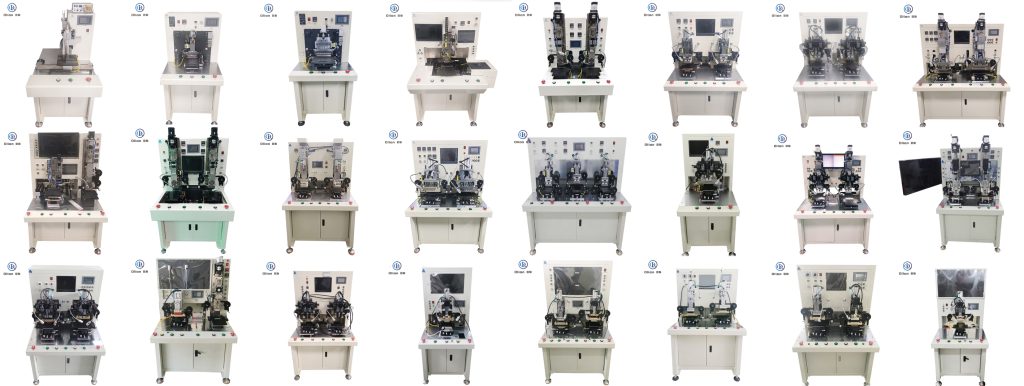
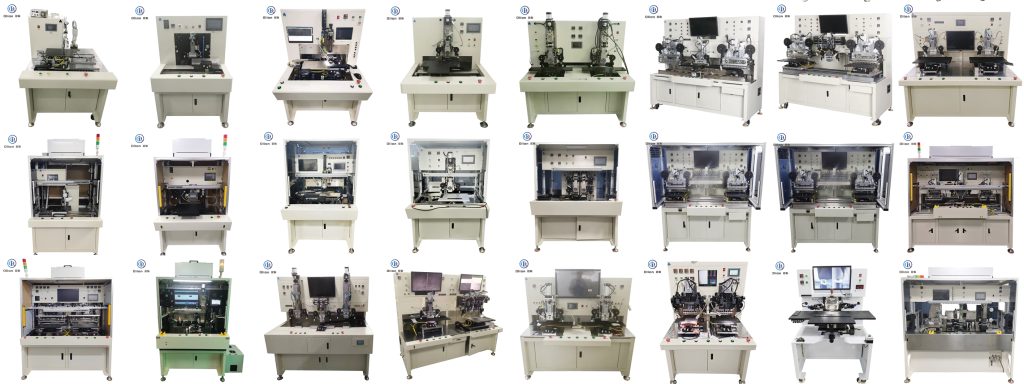
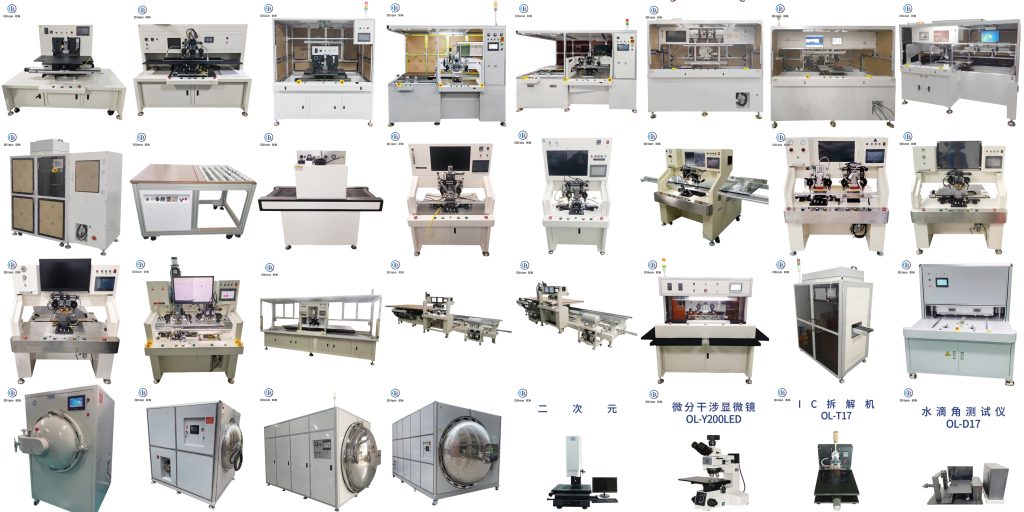
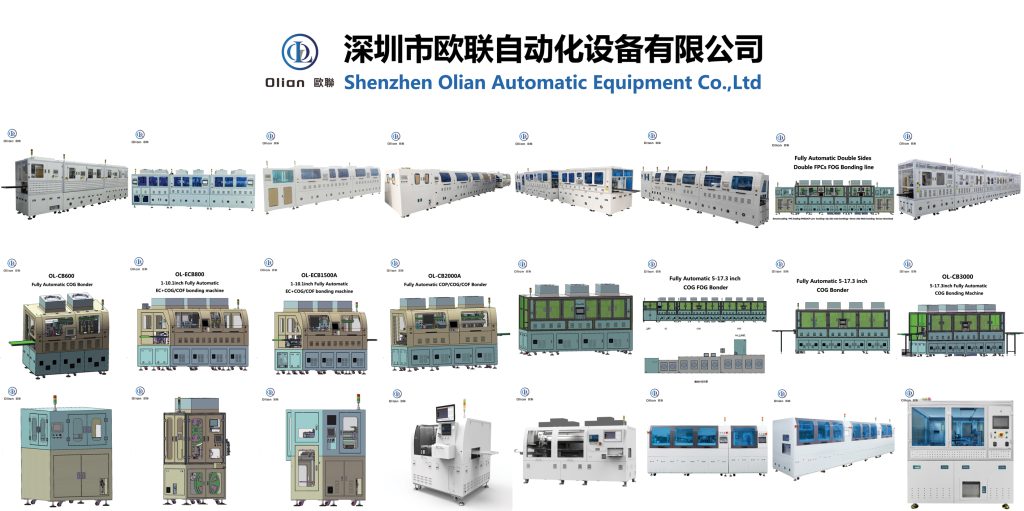
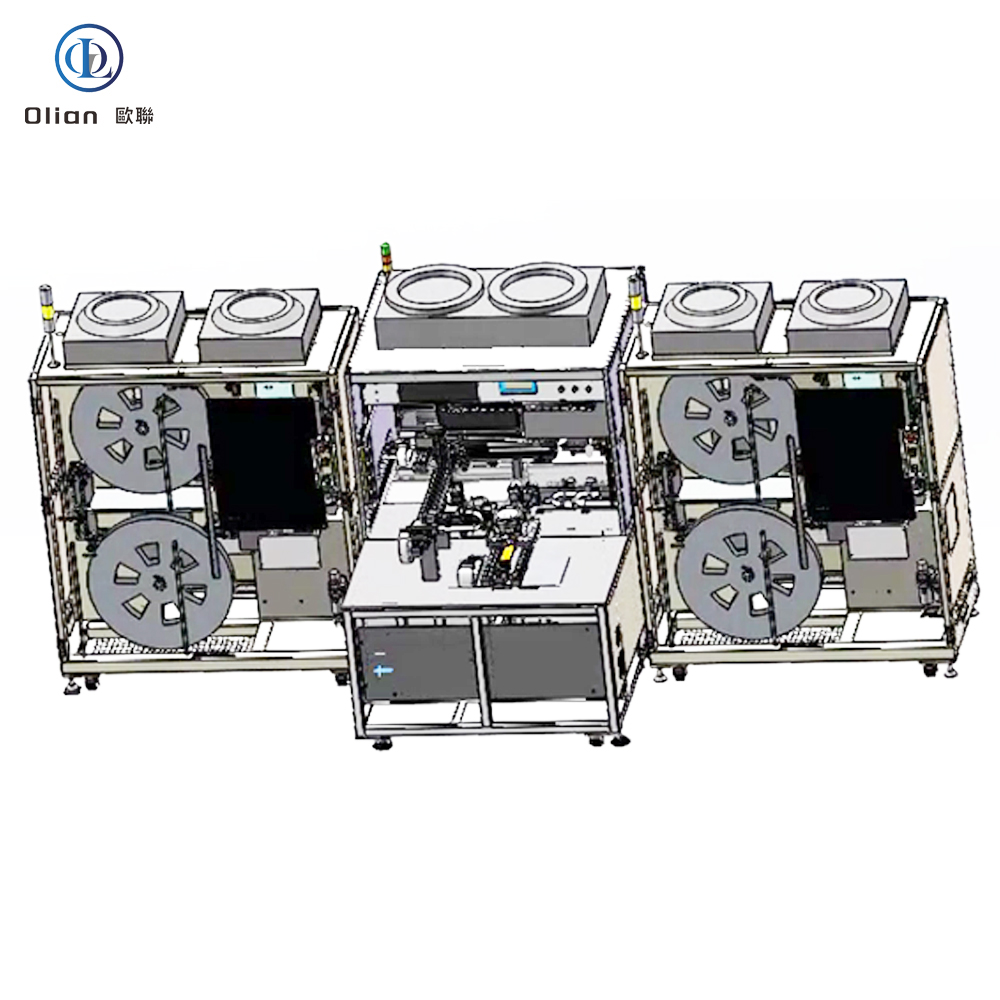
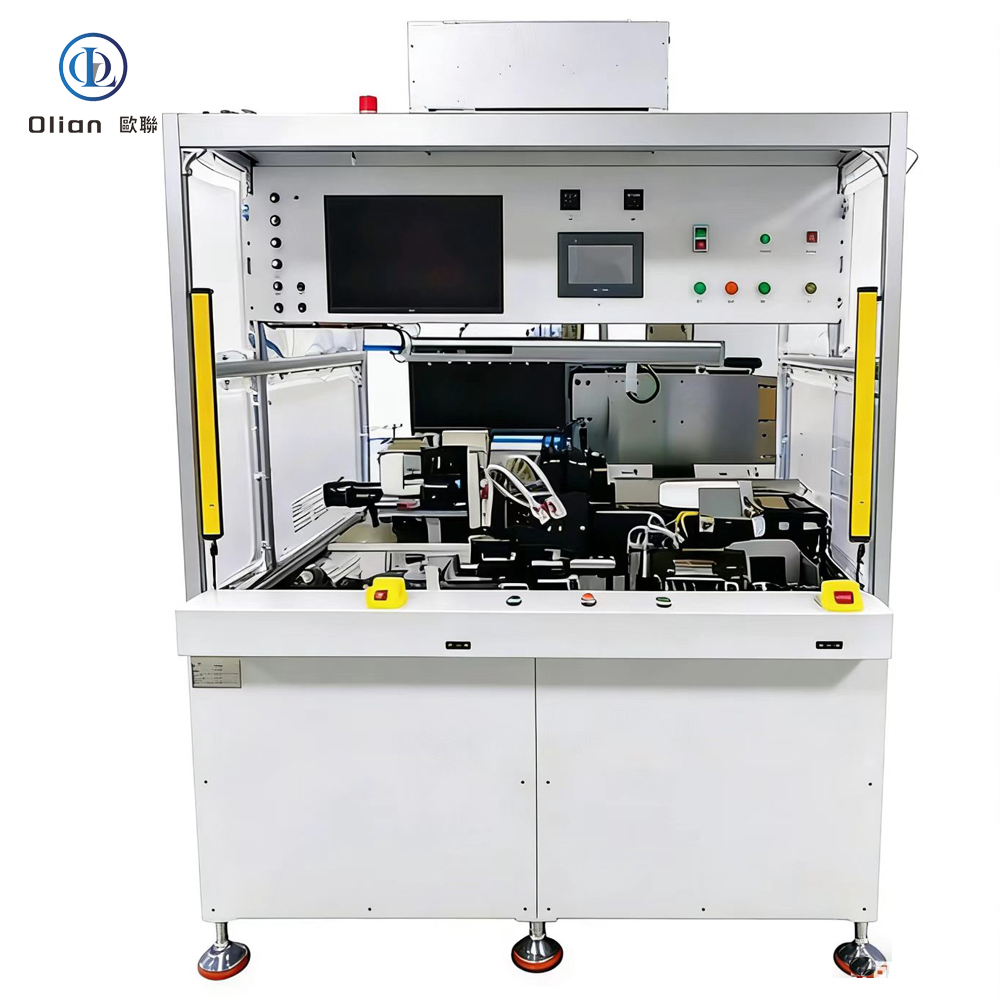
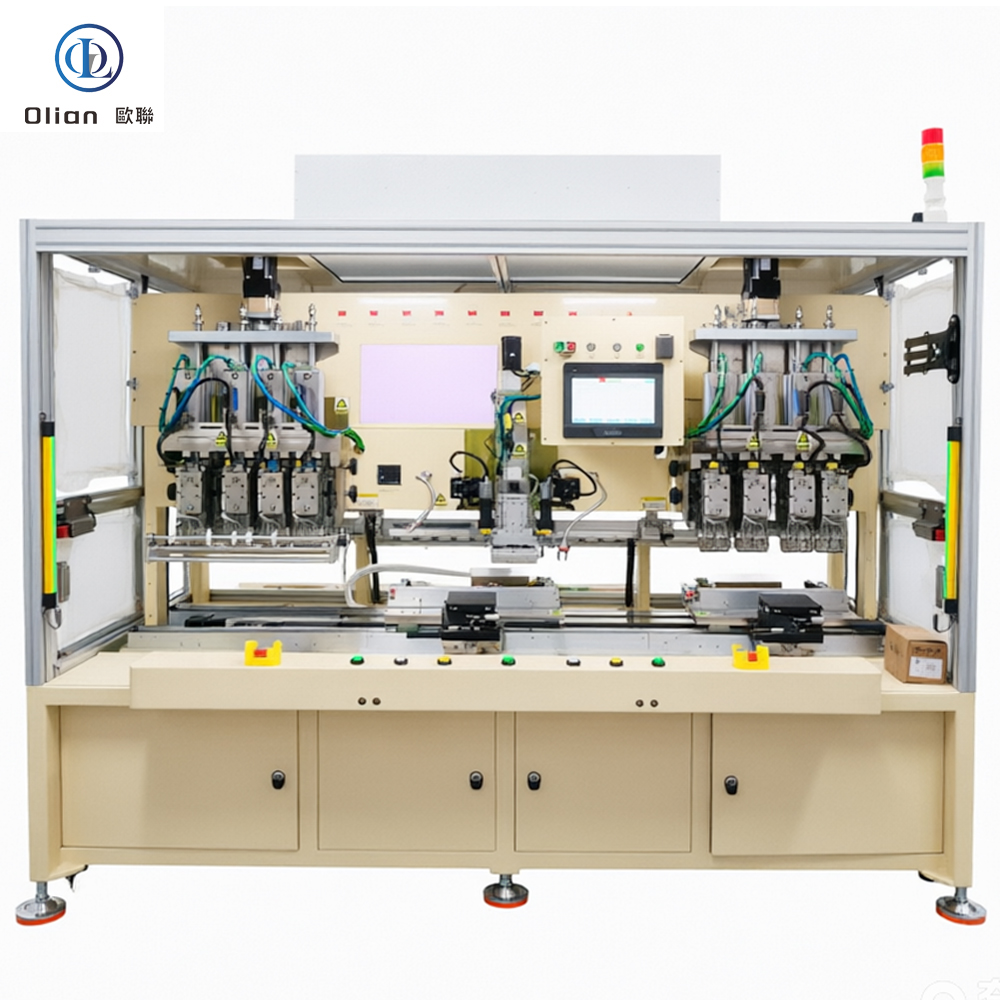
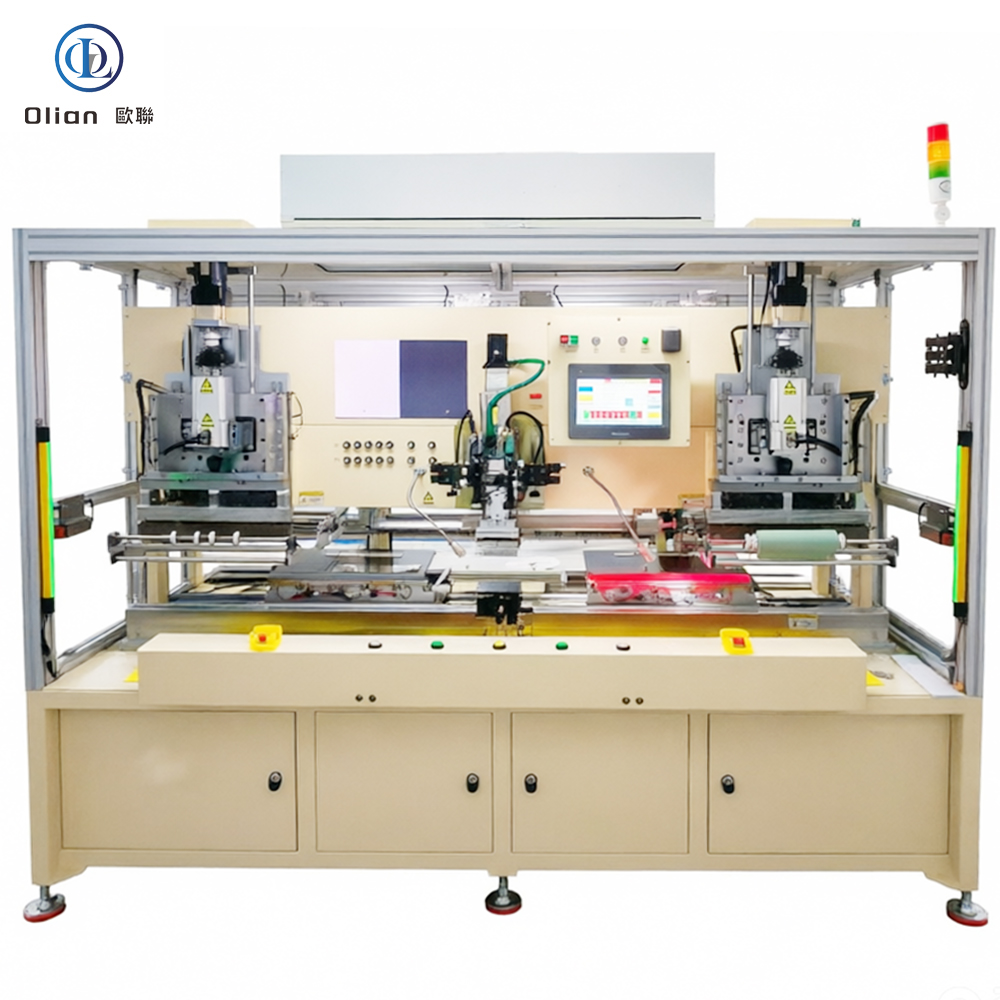
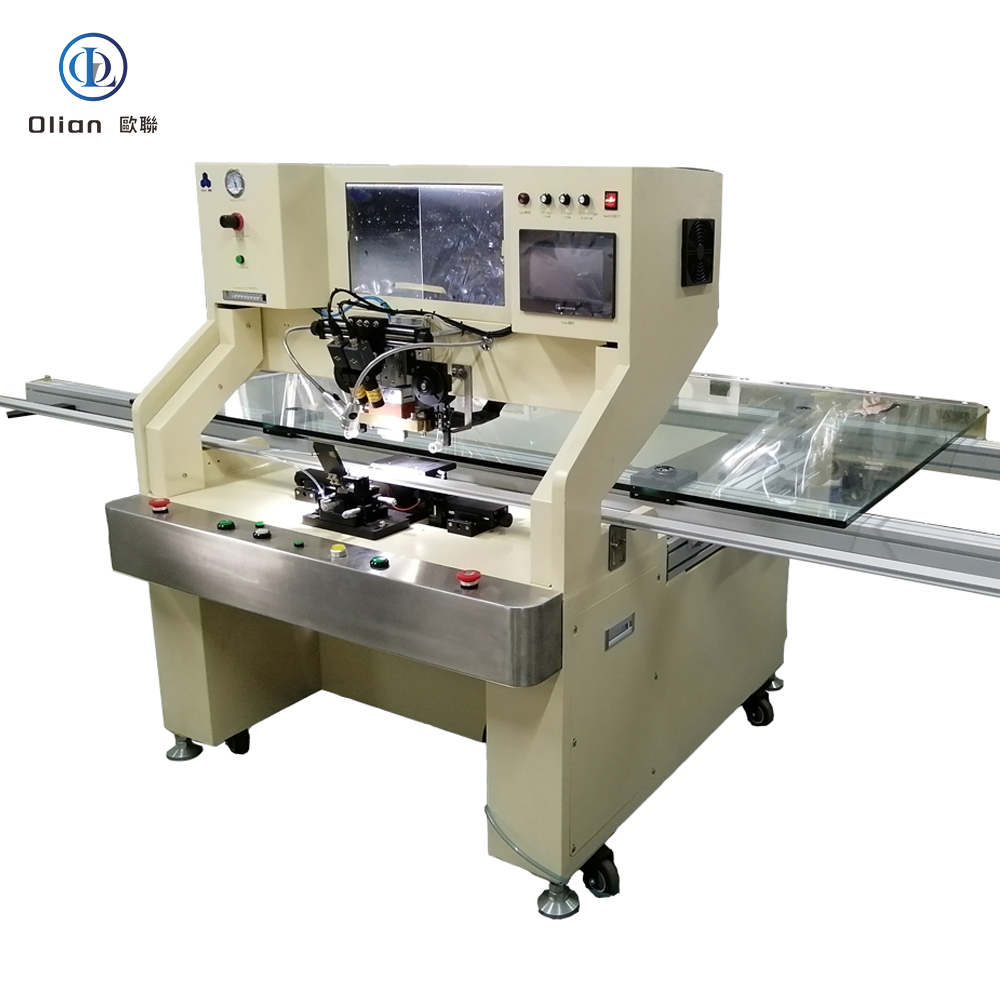
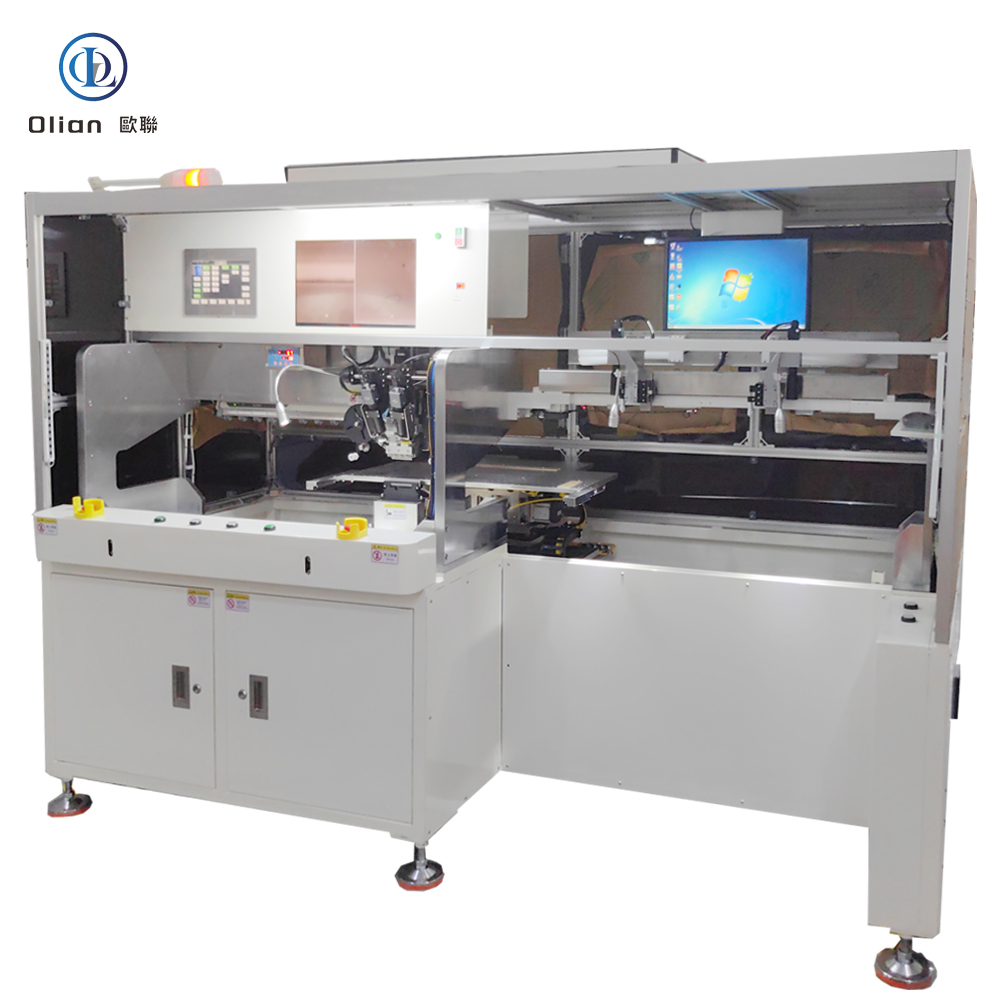
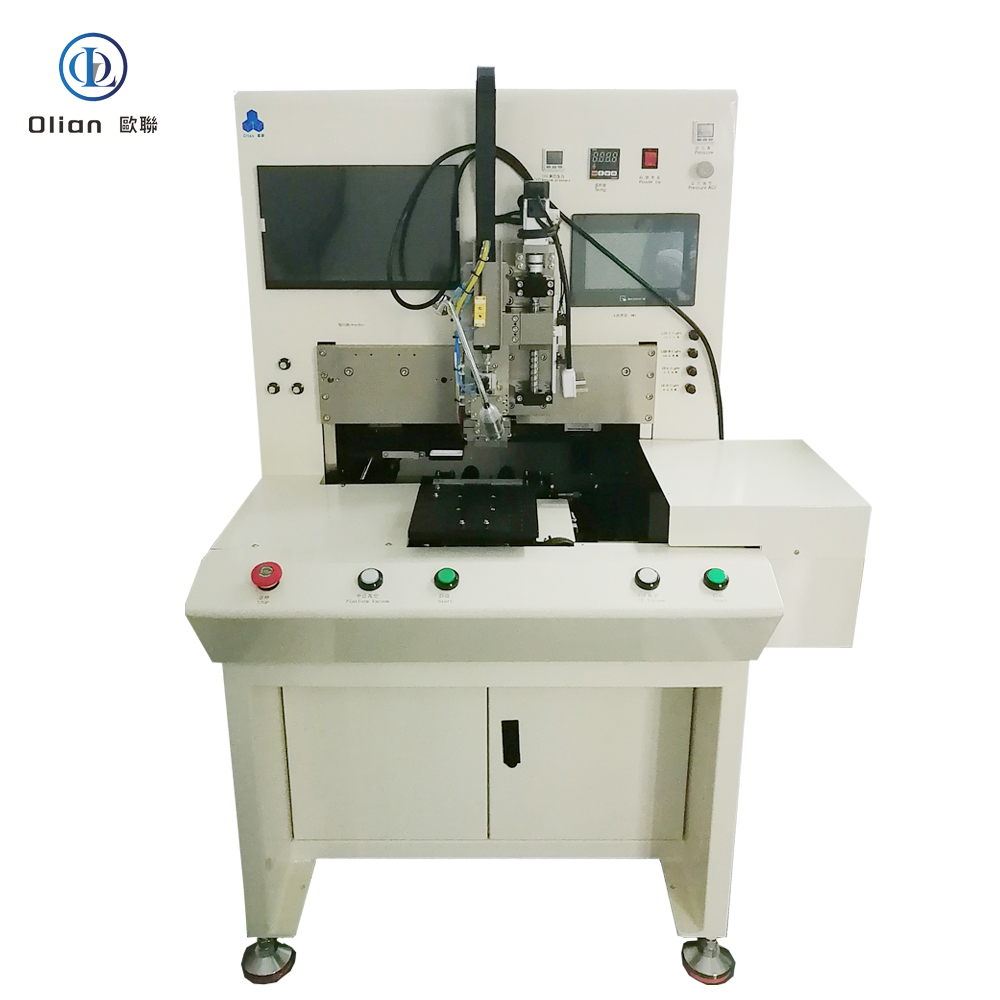
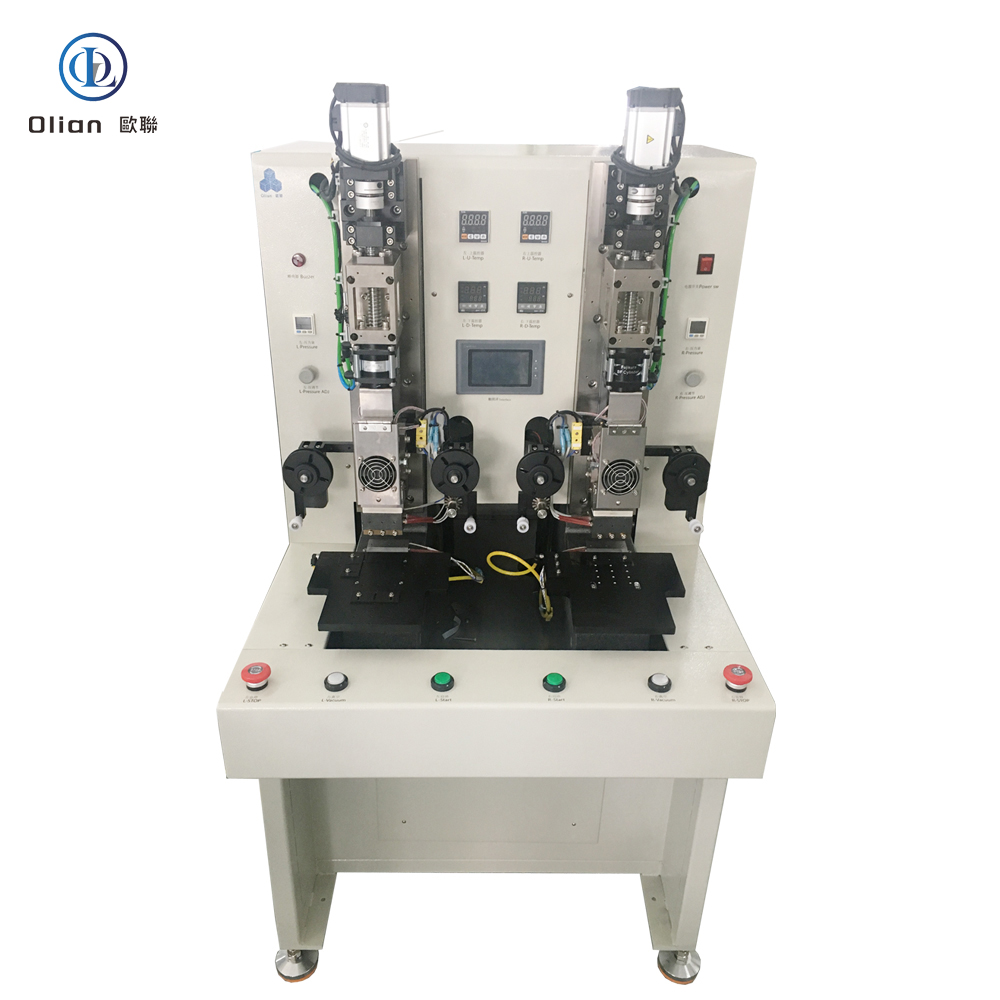
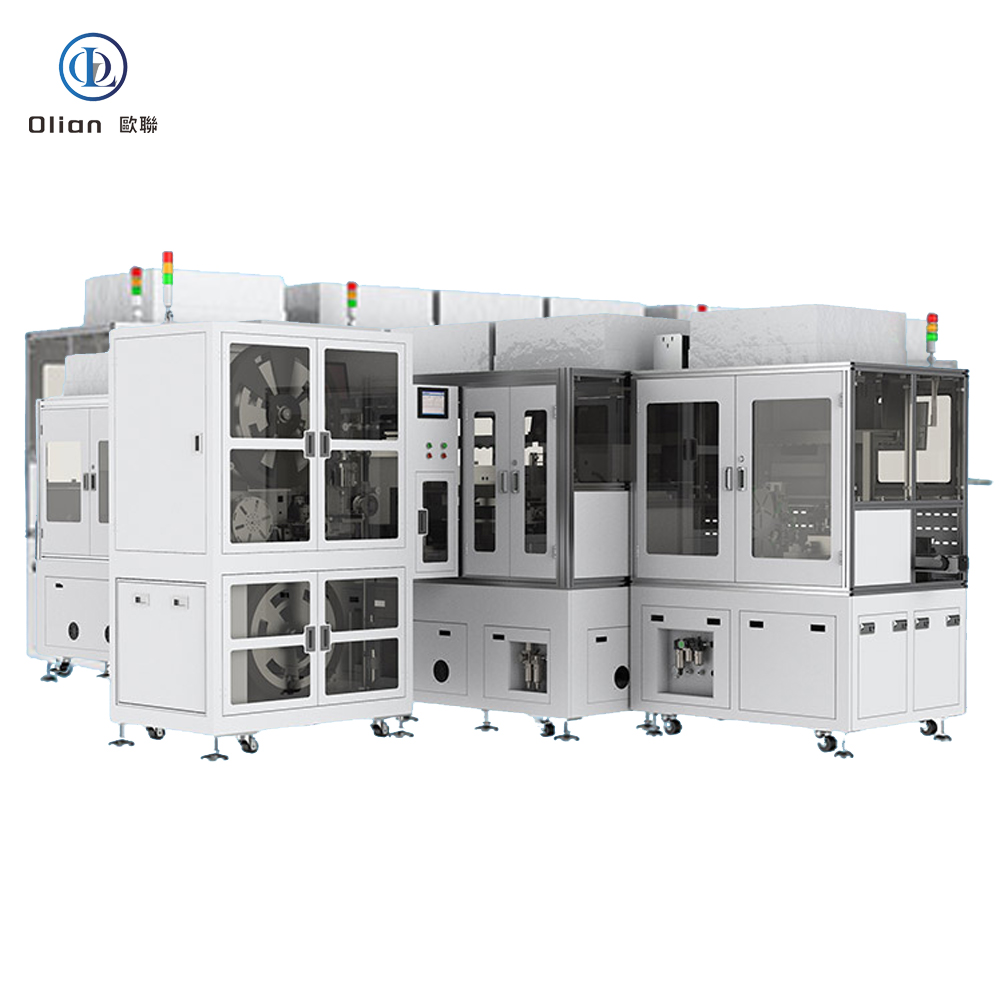
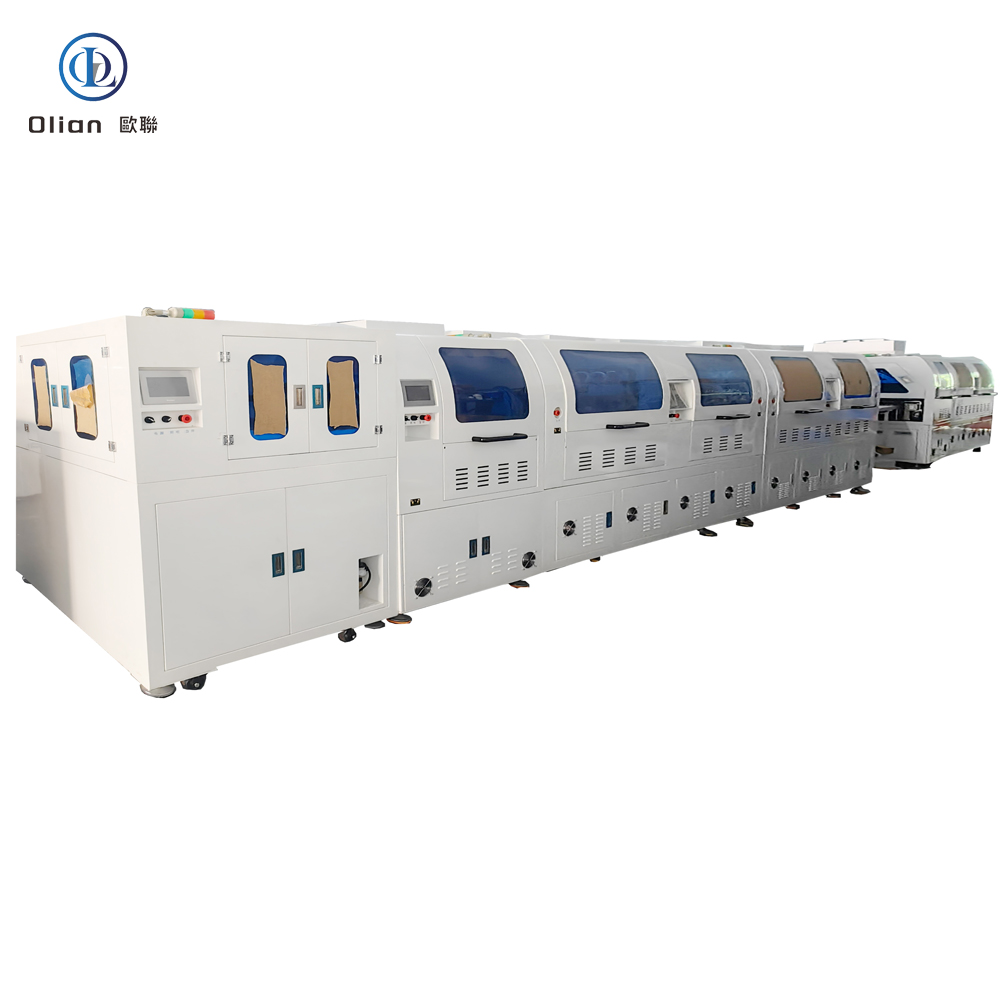
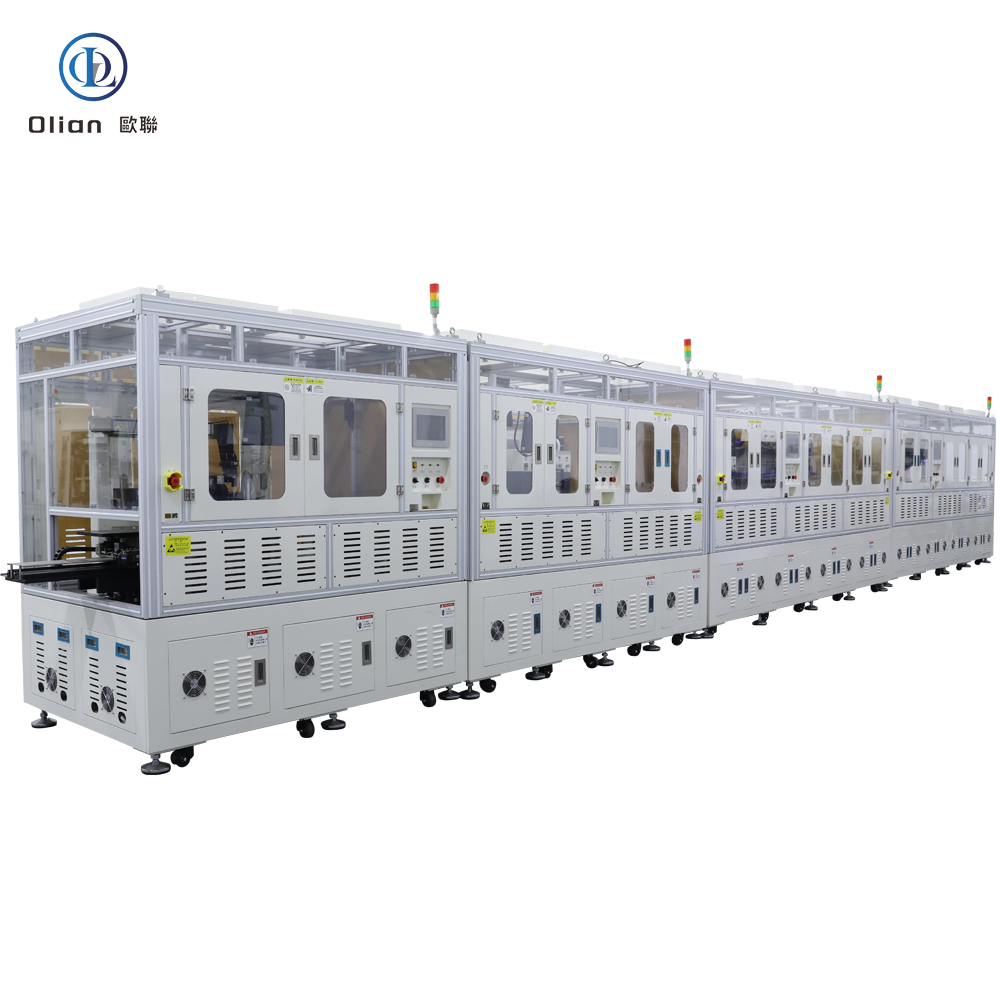
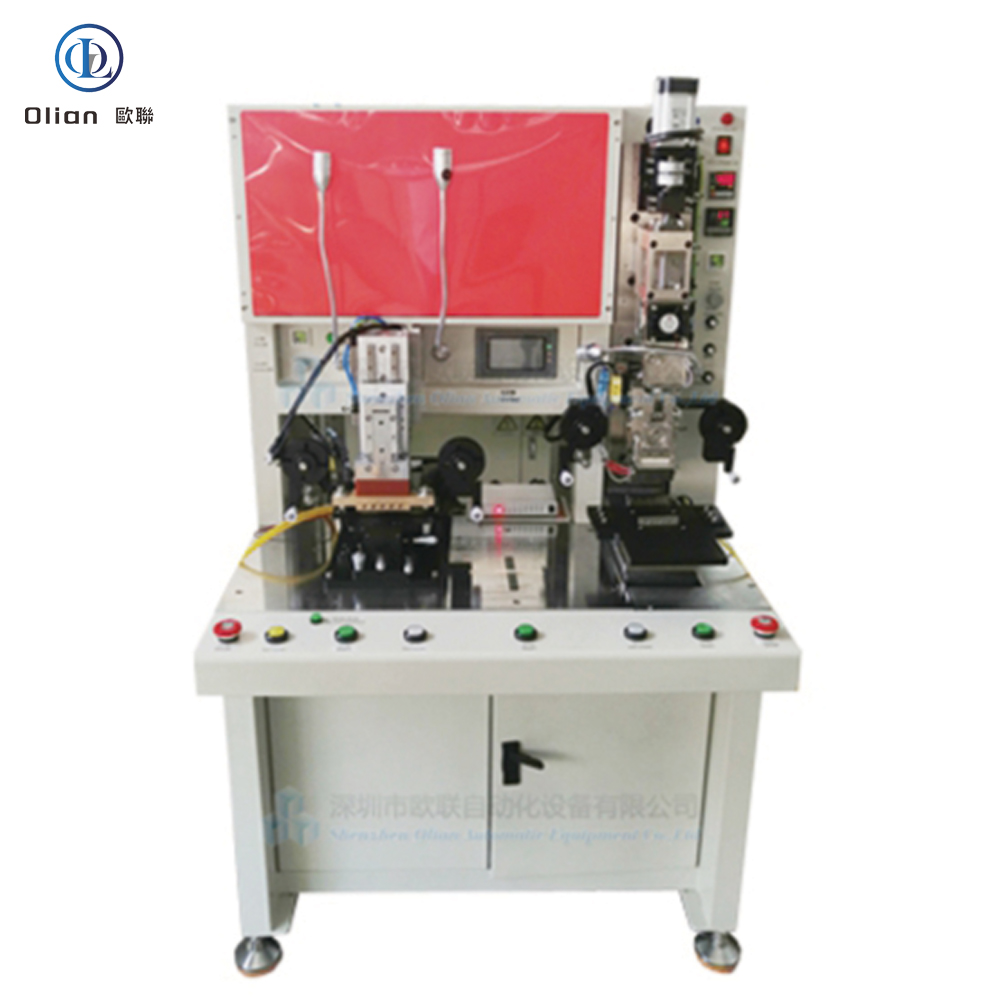
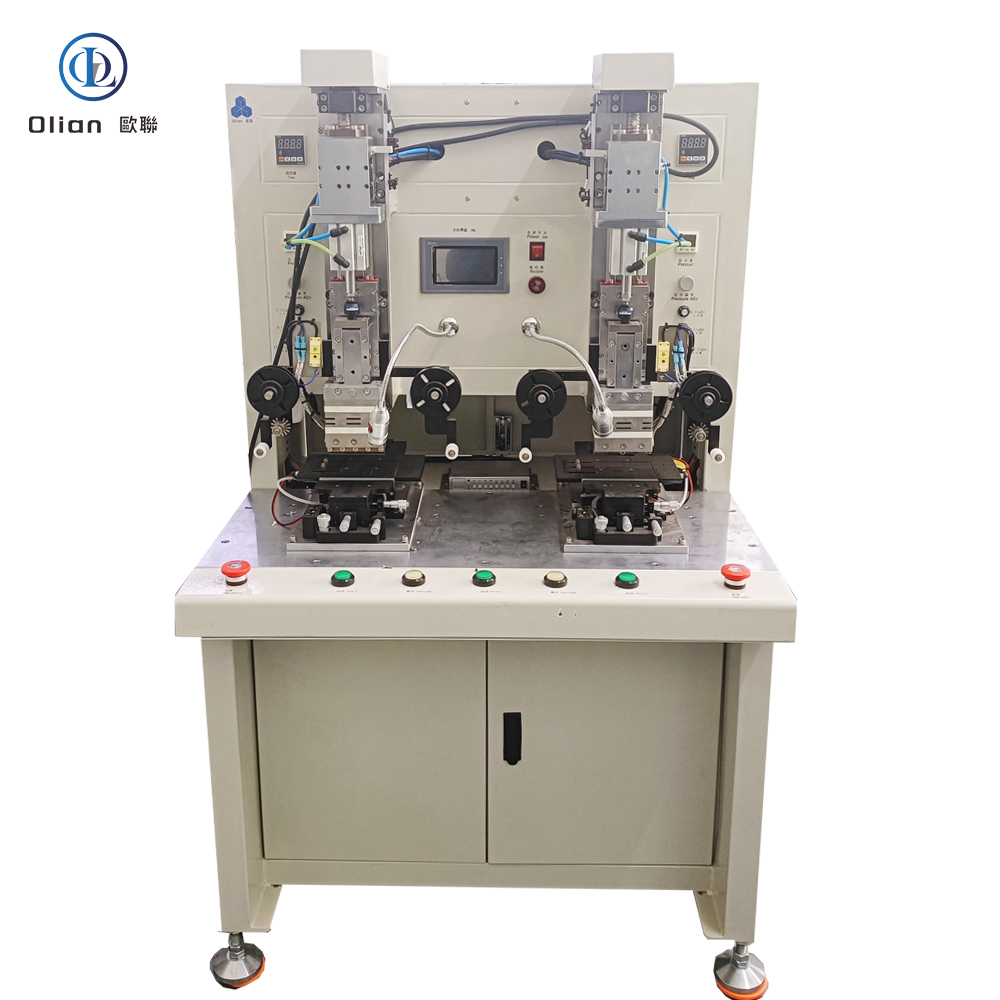
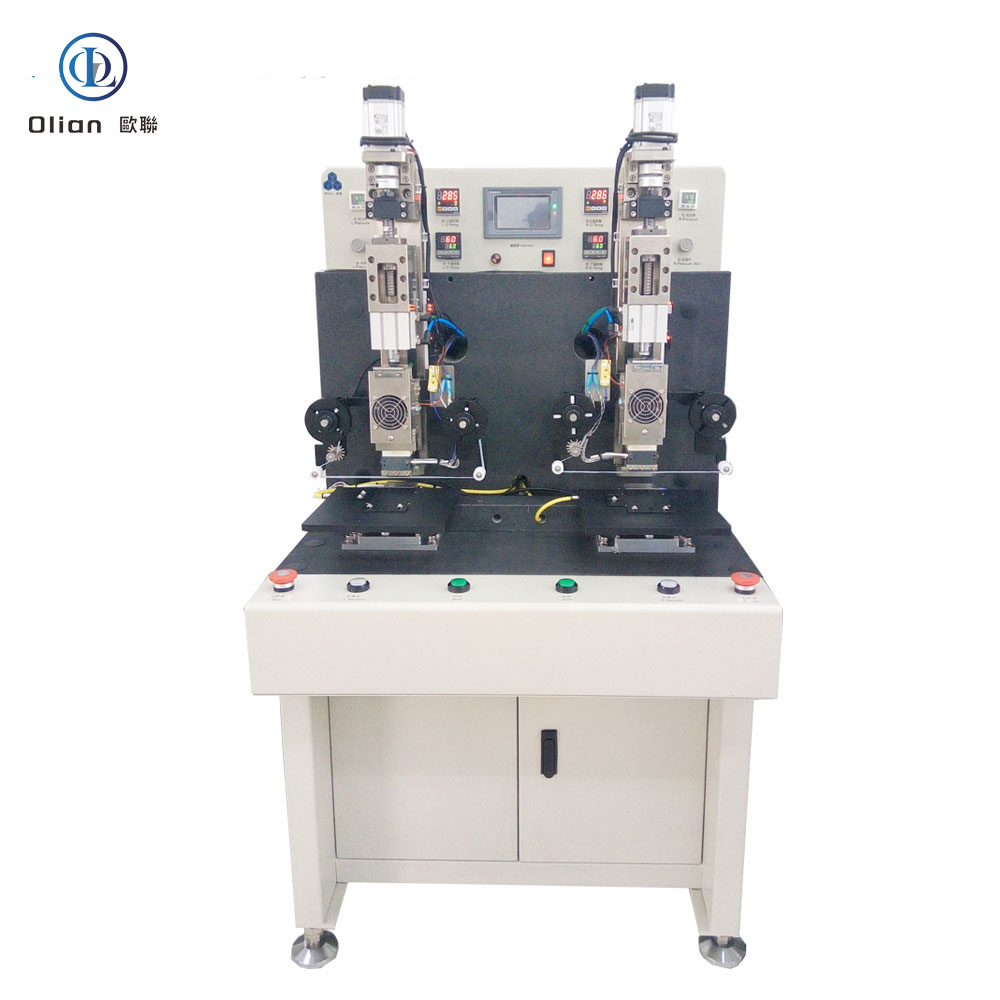
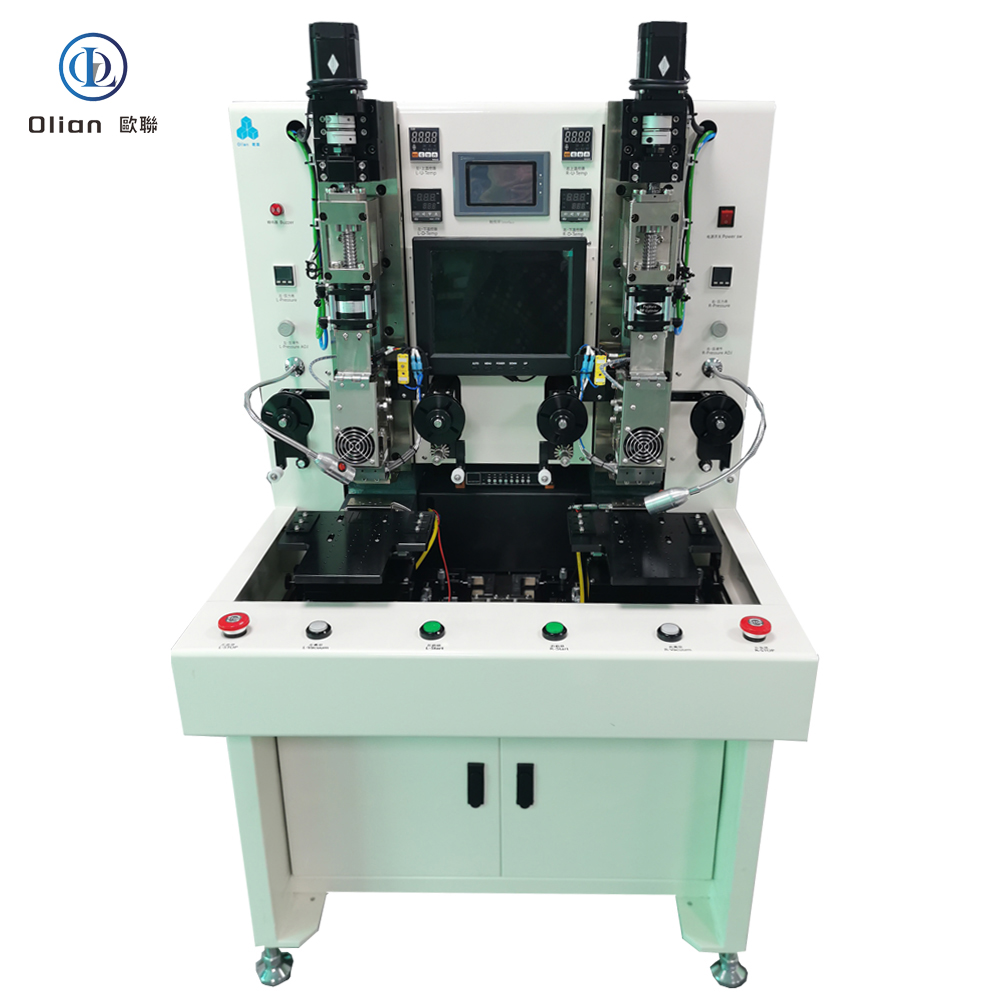
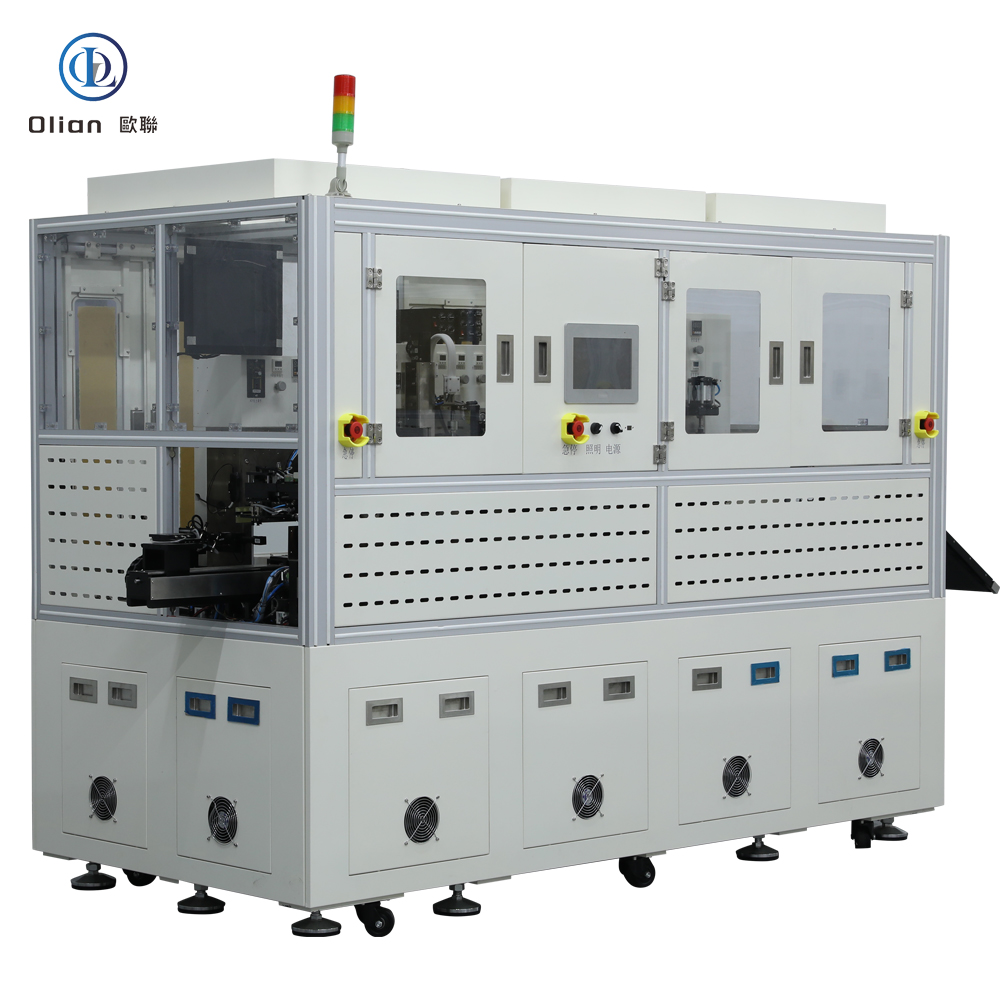
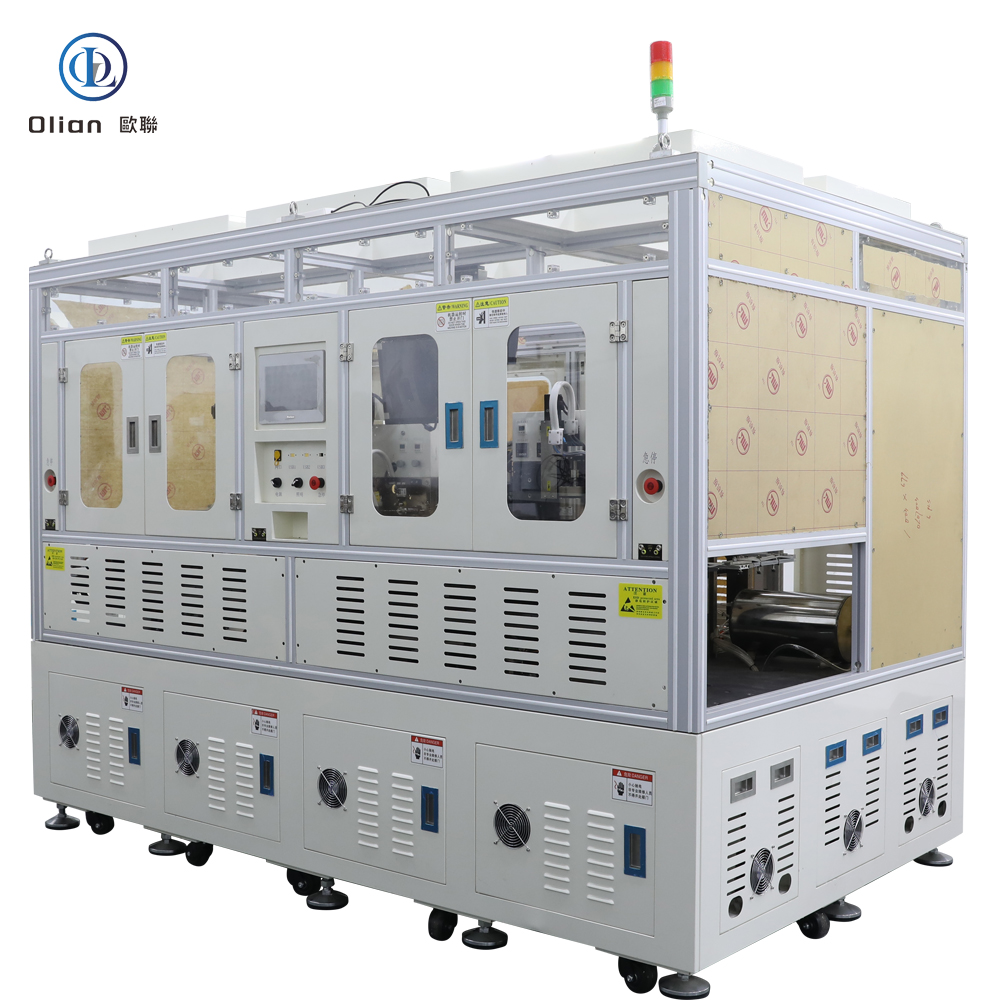
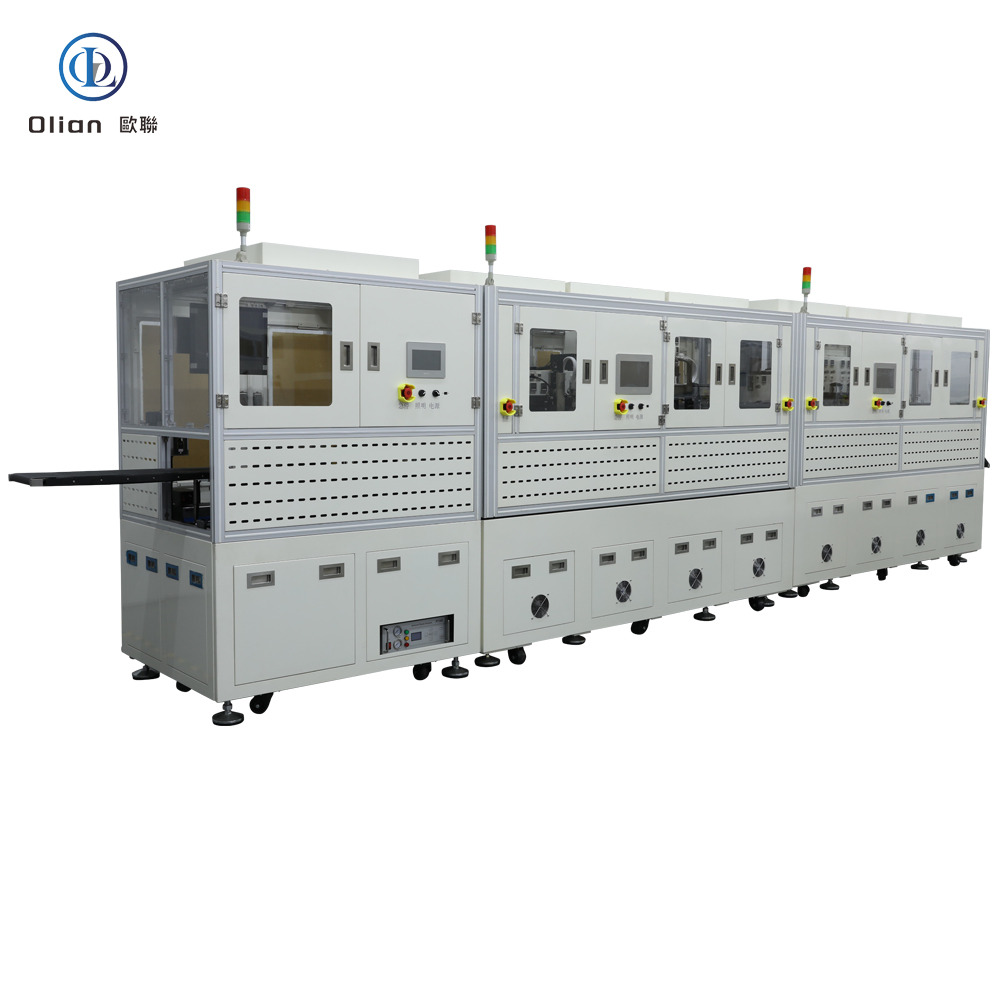
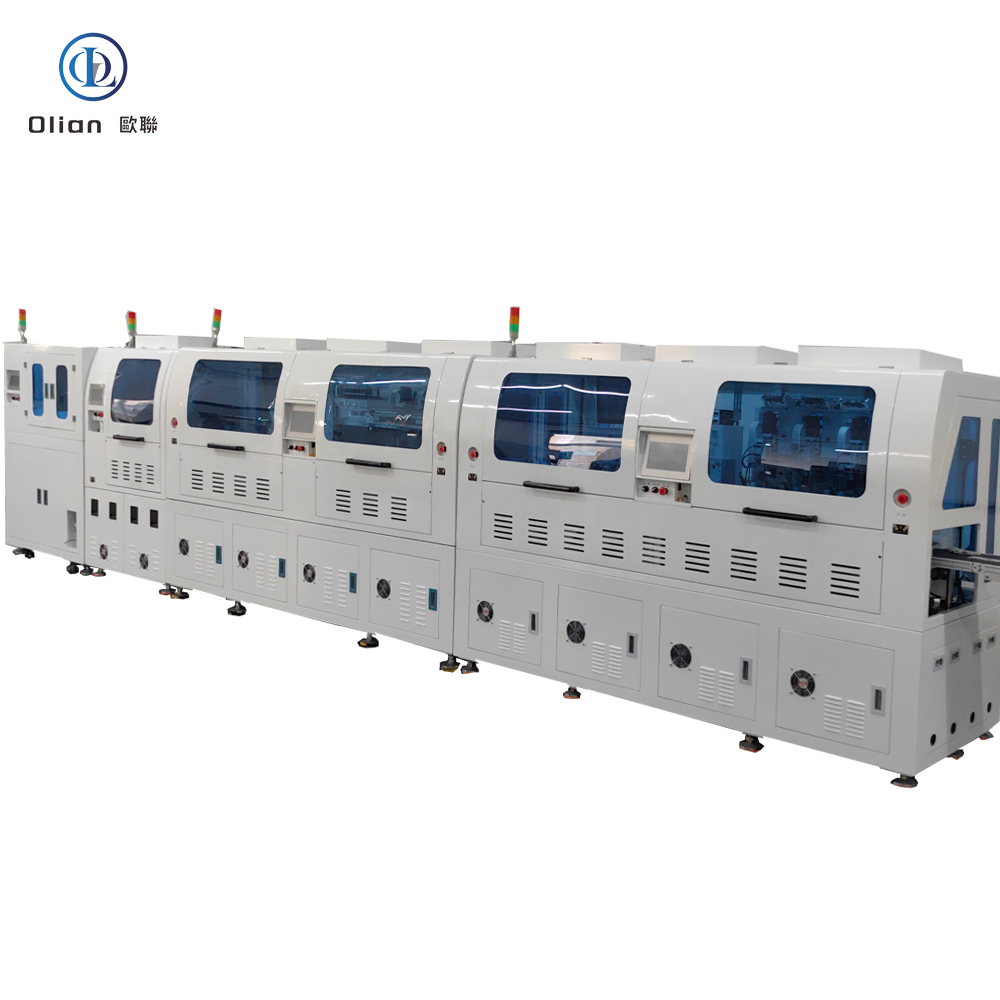
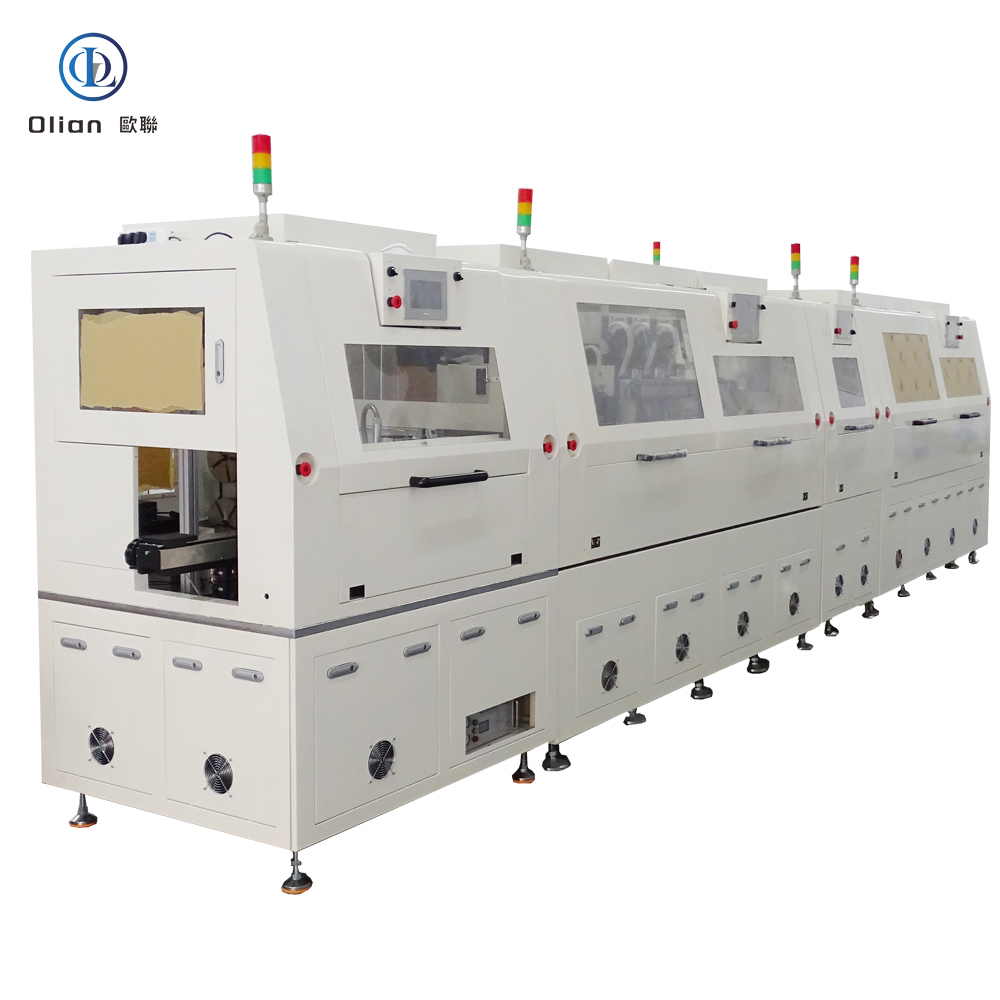
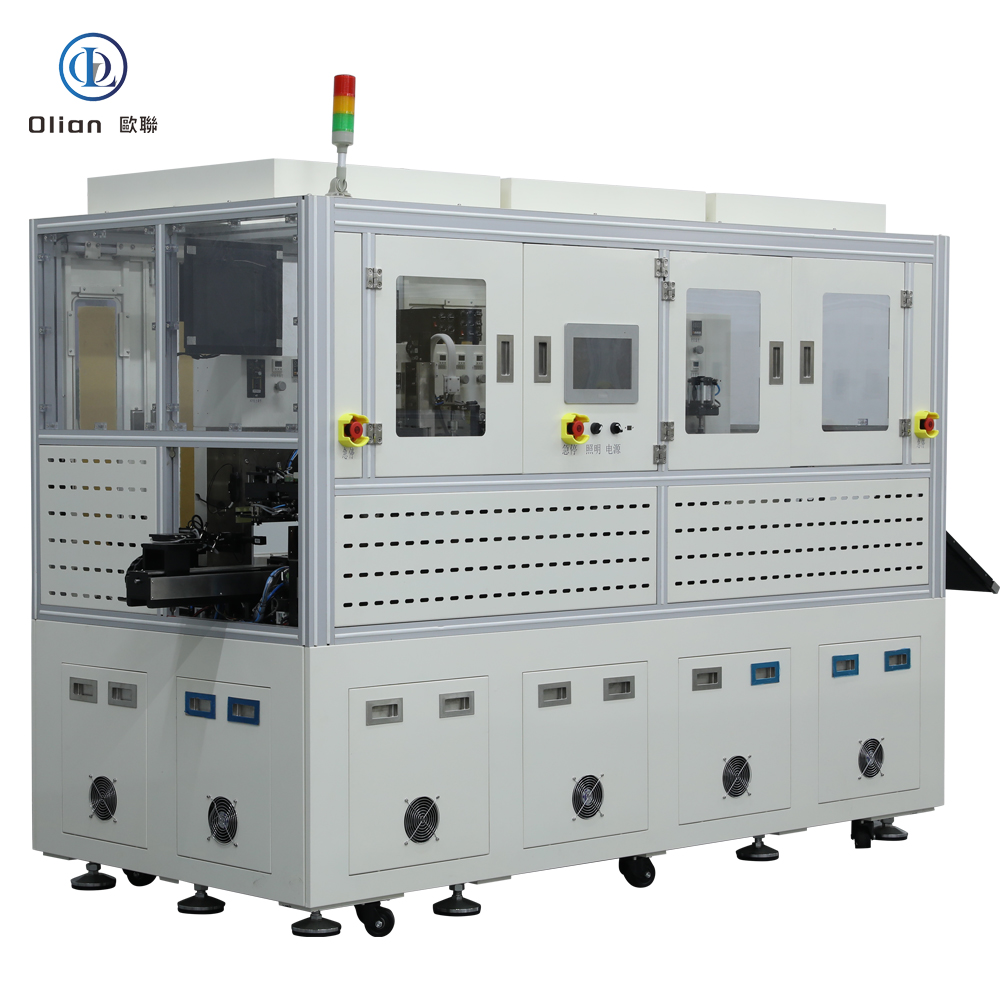
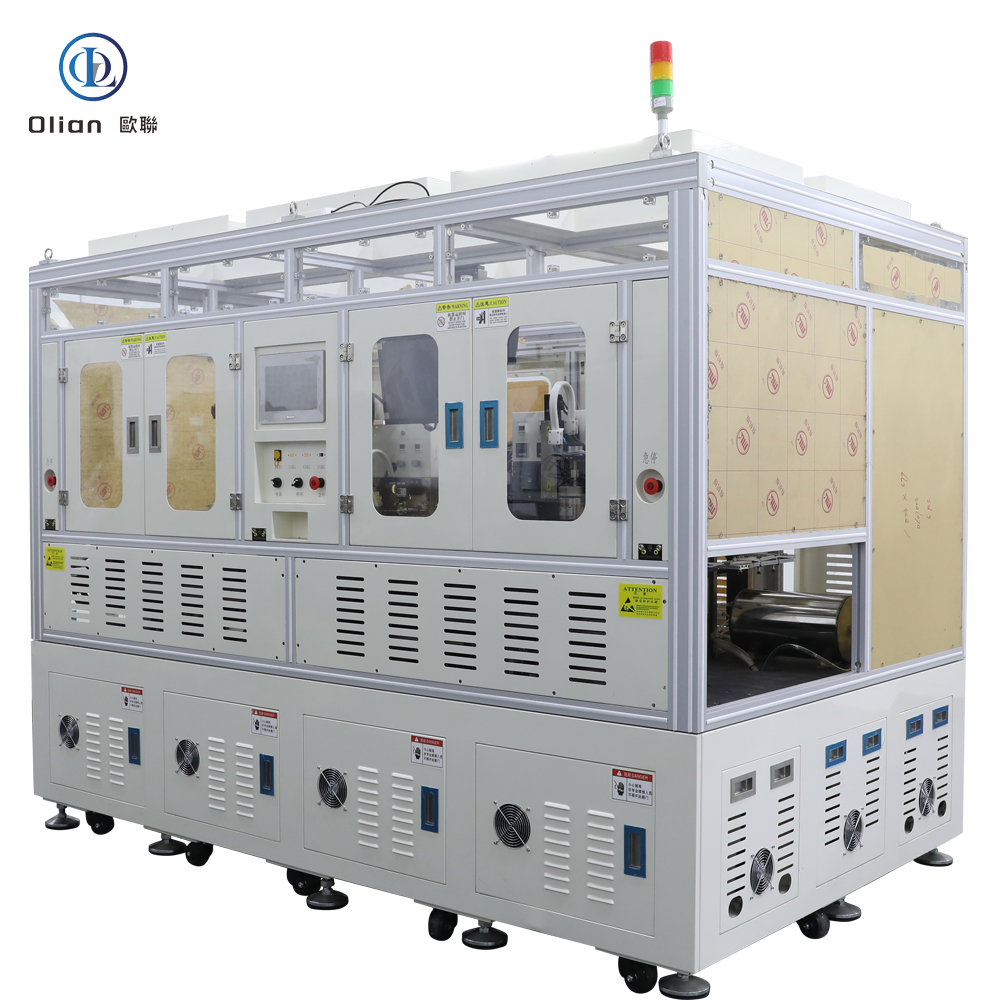
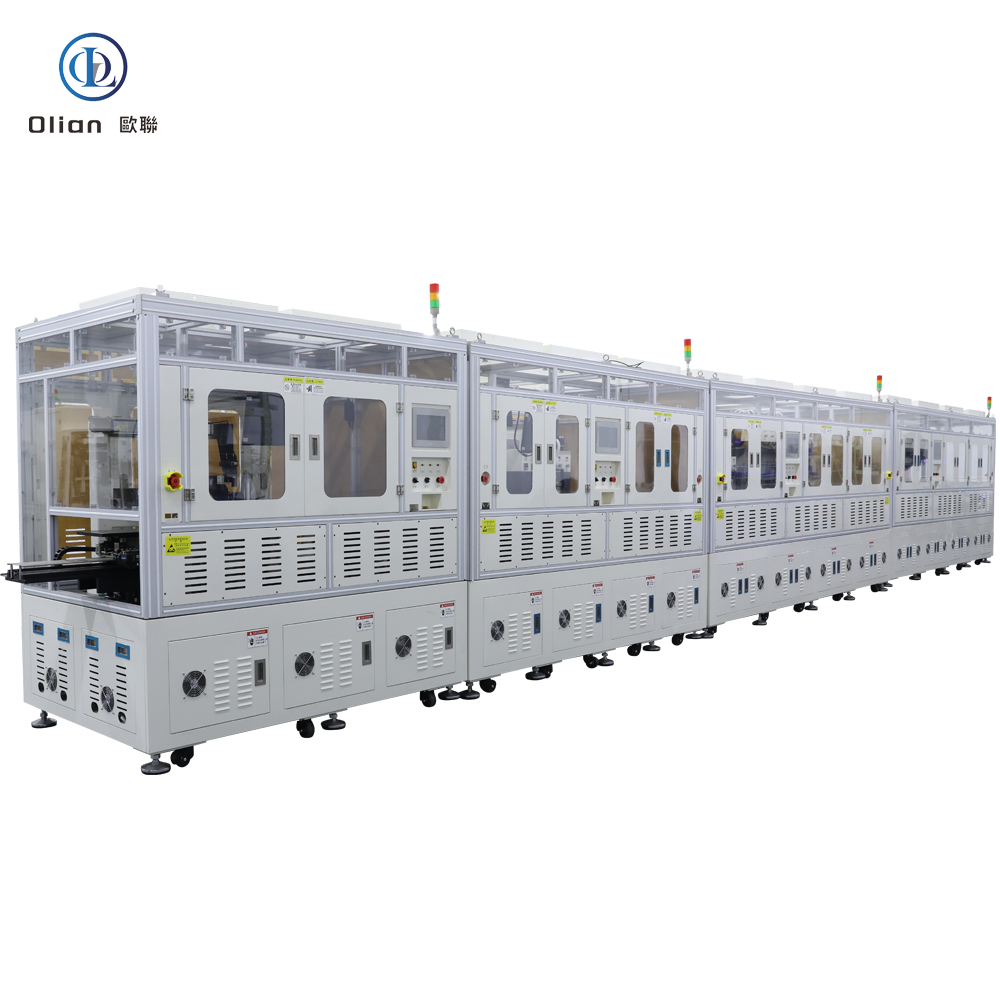
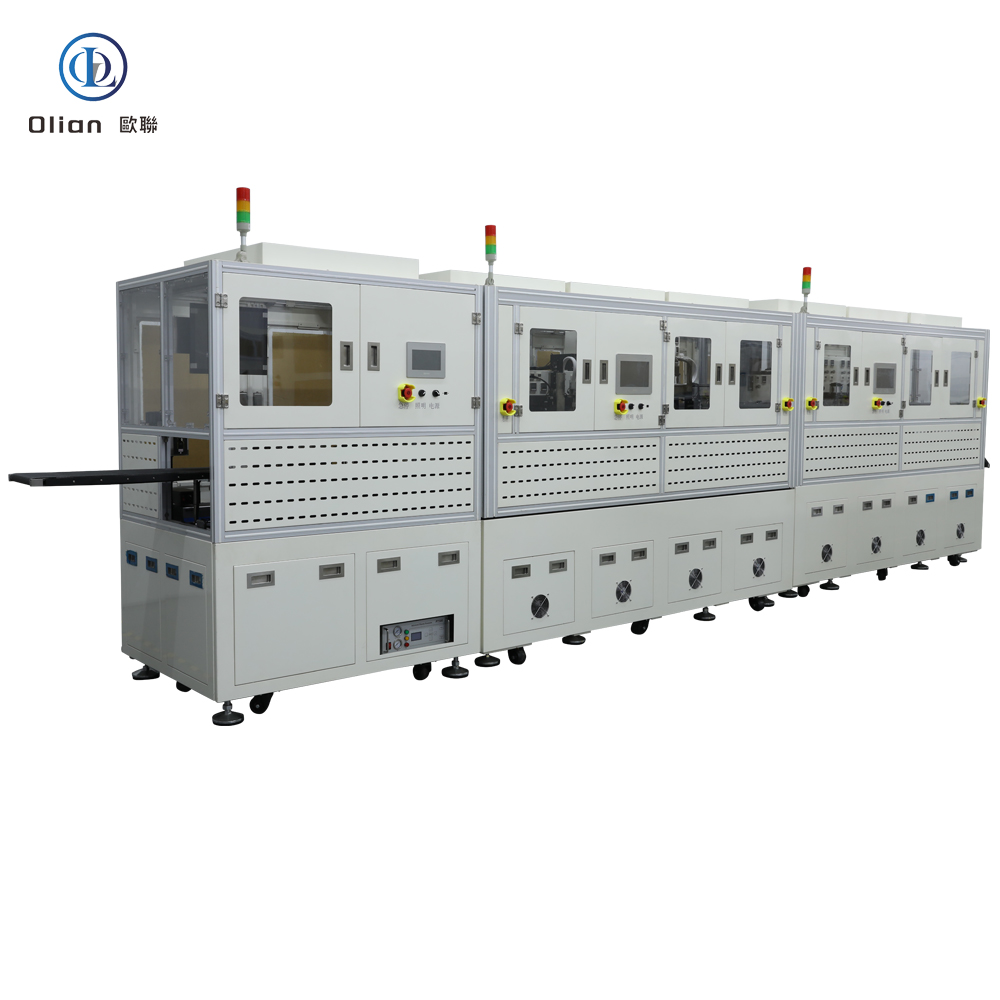
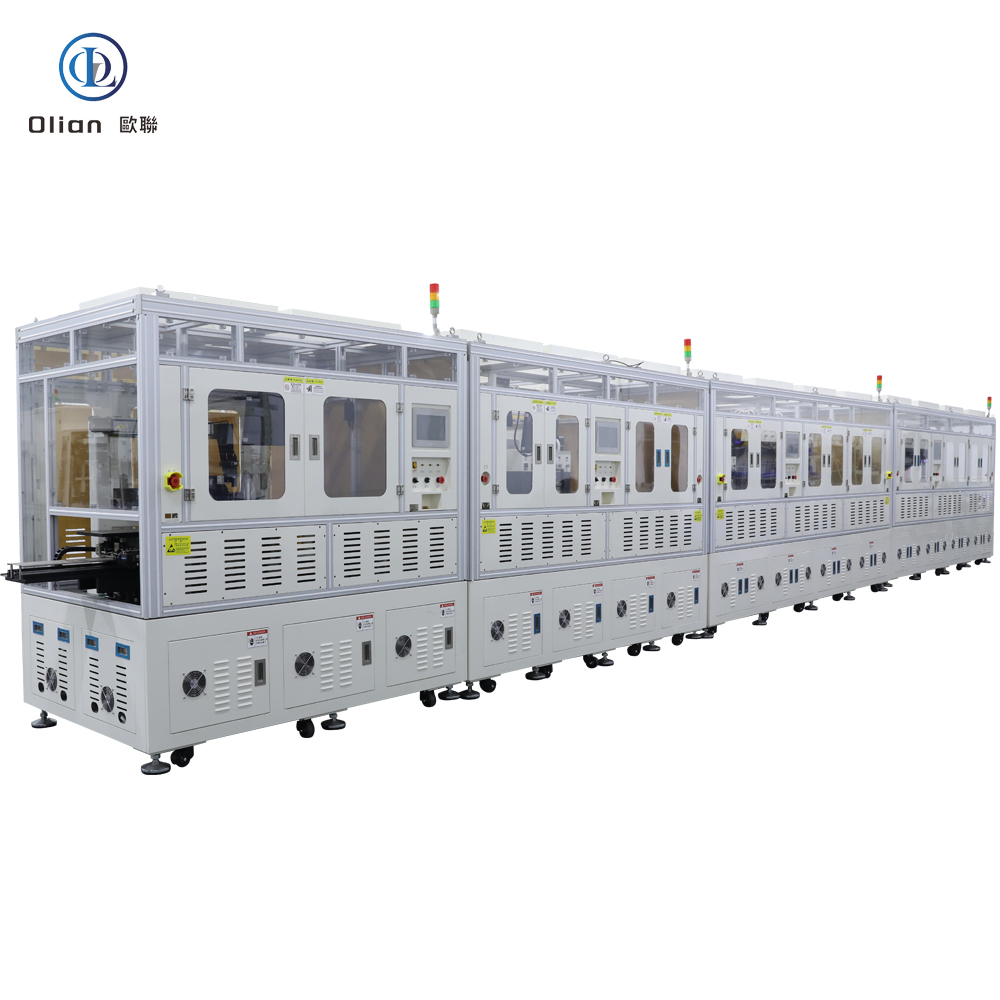
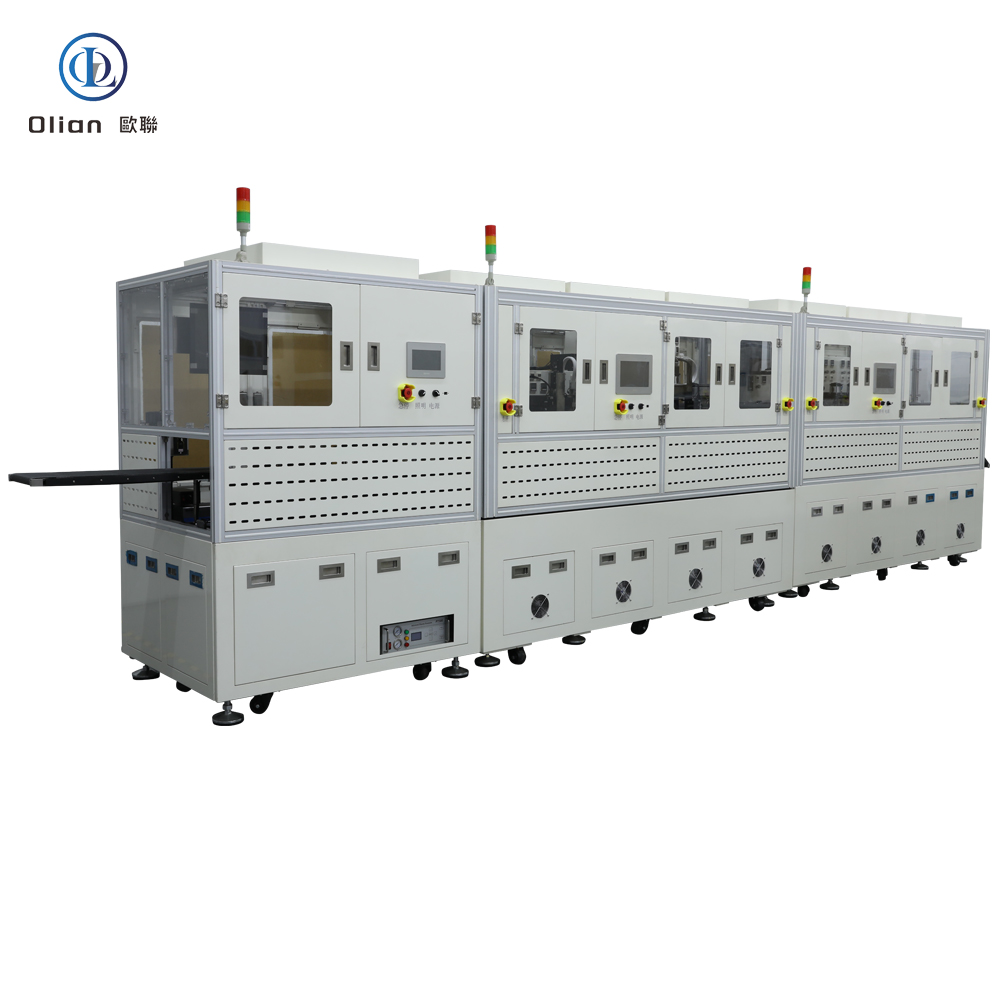
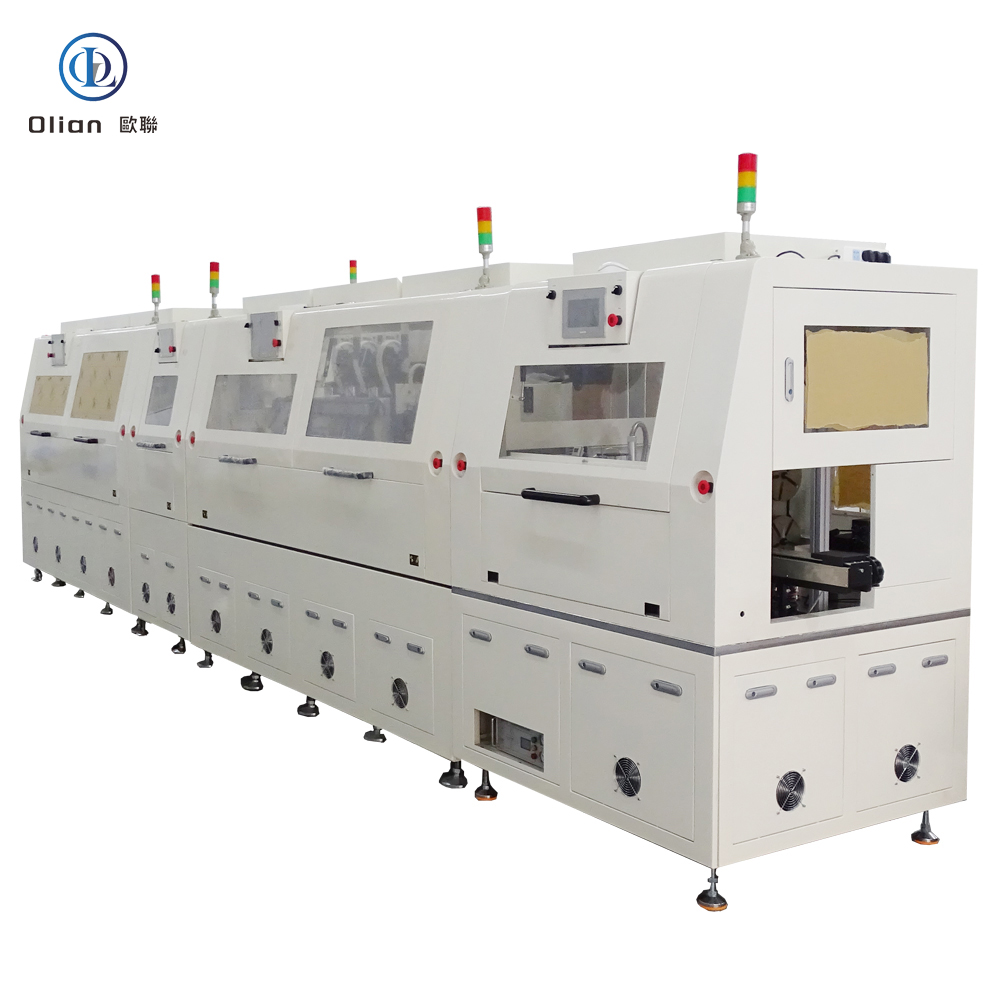
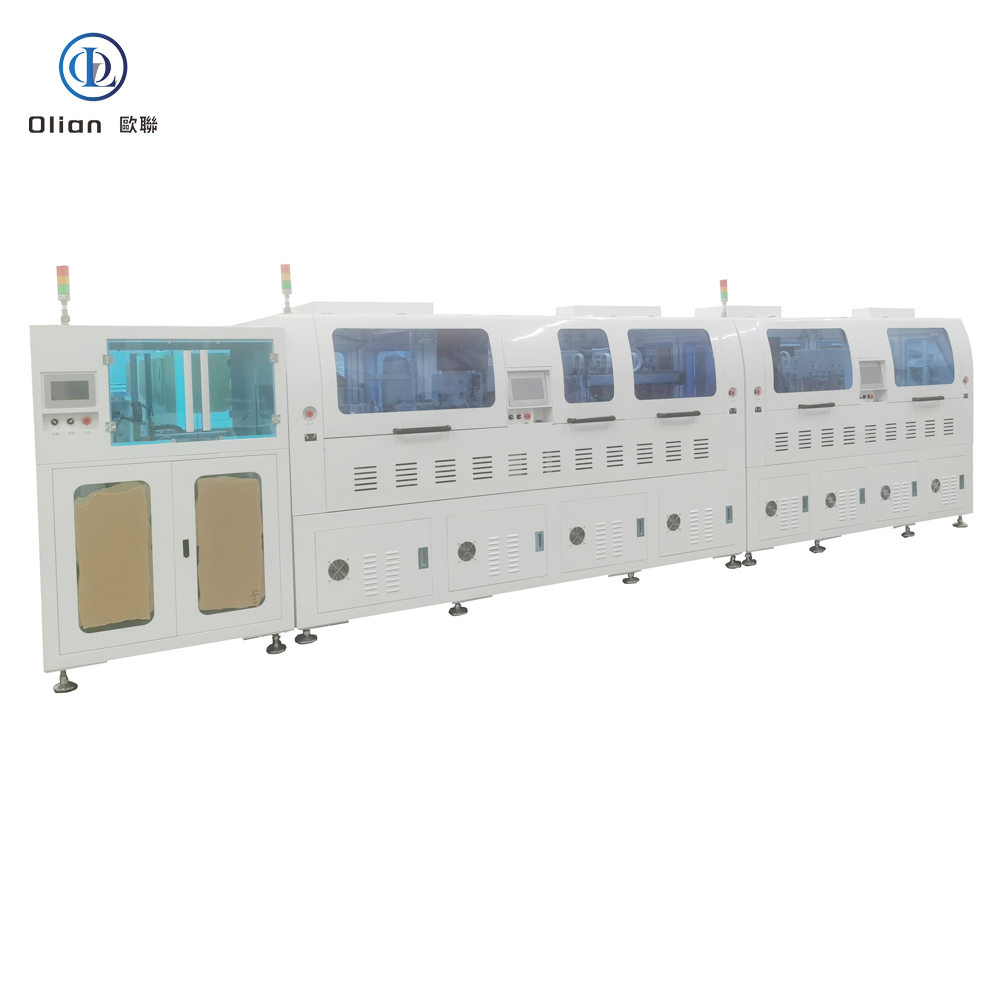
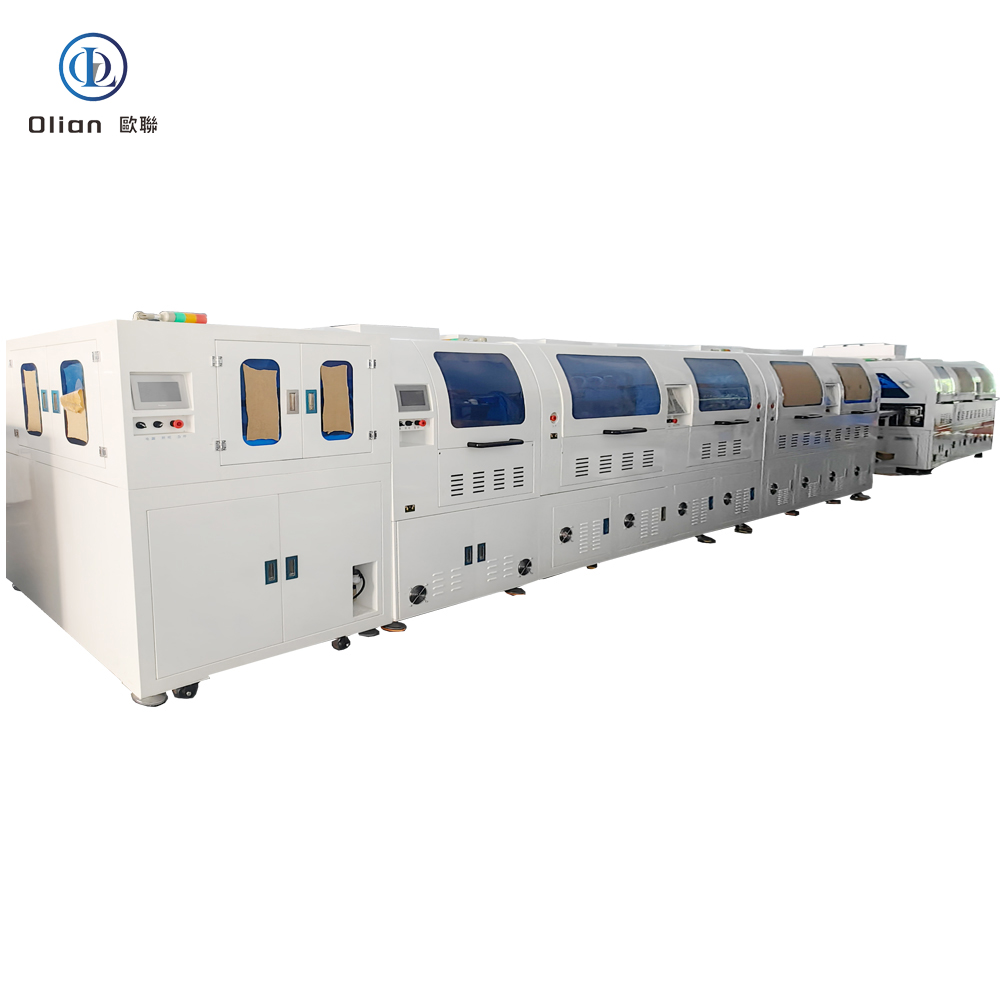
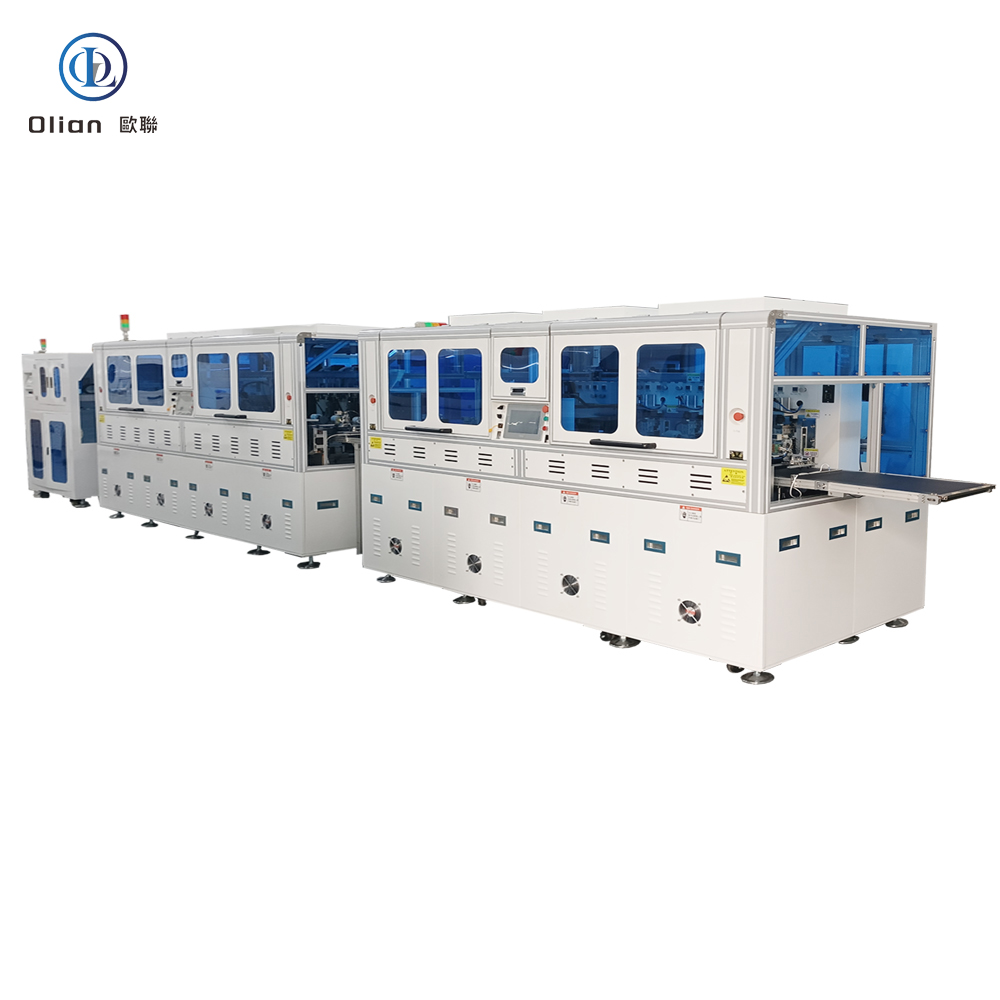
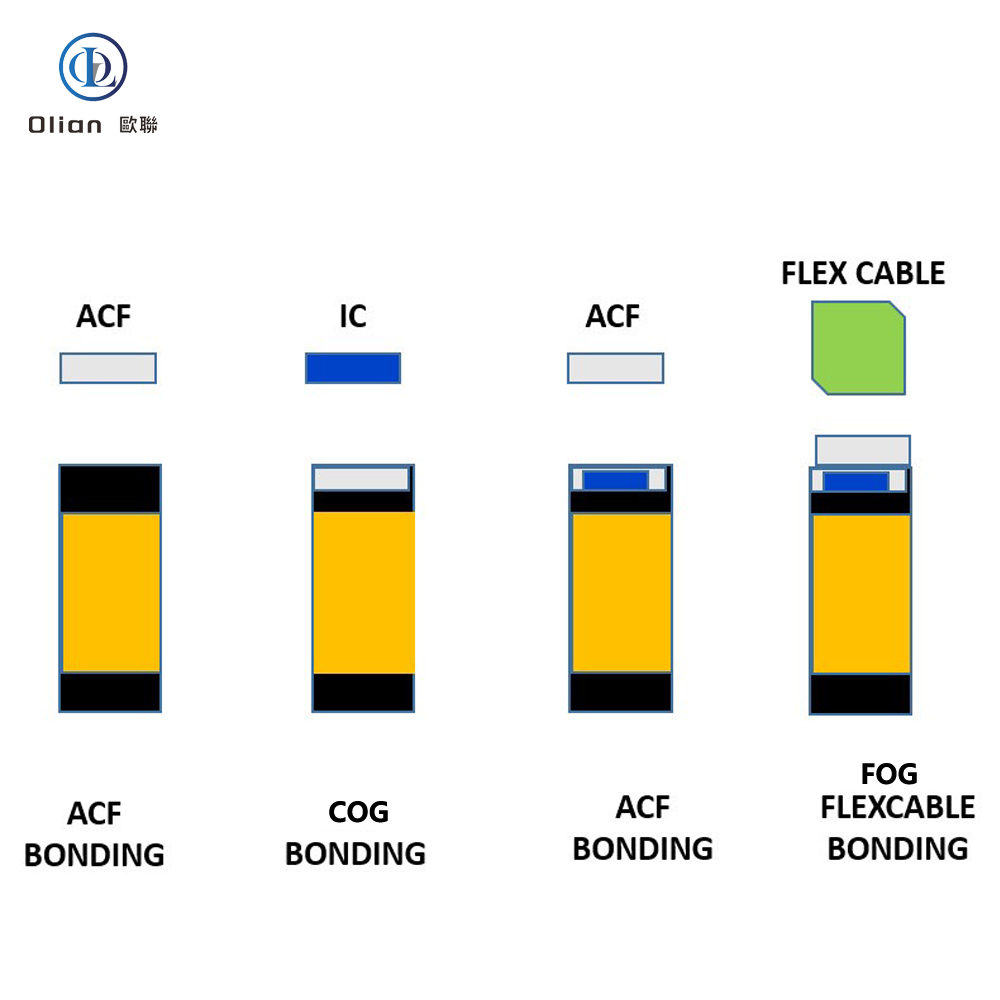
Anisotropic Conductive Film (ACF) is a specialized adhesive material. It contains conductive particles within an insulating resin. This unique structure allows vertical electrical conductivity. Simultaneously, it maintains horizontal insulation between circuits. ACF is essential for modern flat panel displays. It connects delicate components without short circuits. The film provides both adhesion and conduction. This dual function is critical for reliability. Olian Automatic utilizes this advanced material effectively. Our processes optimize the ACF performance. This ensures long-lasting display connections.
Core Bonding Processes Explained
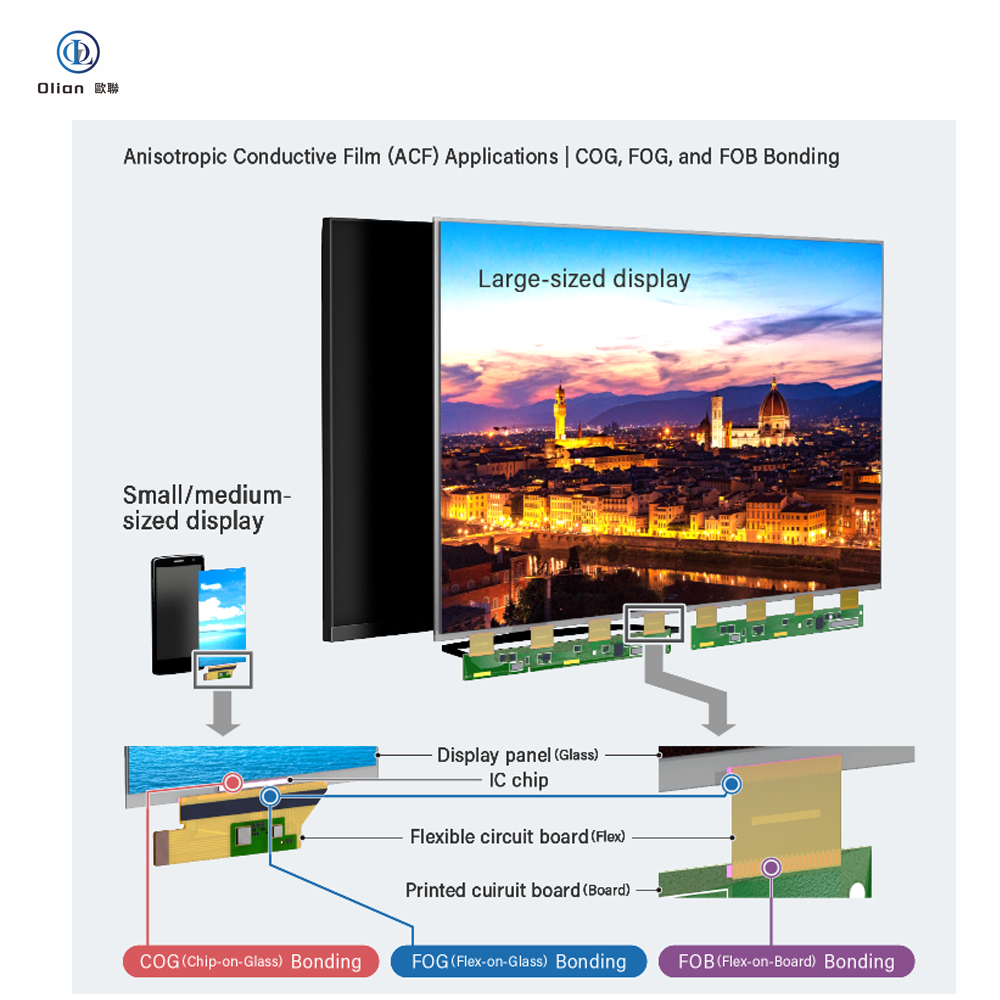
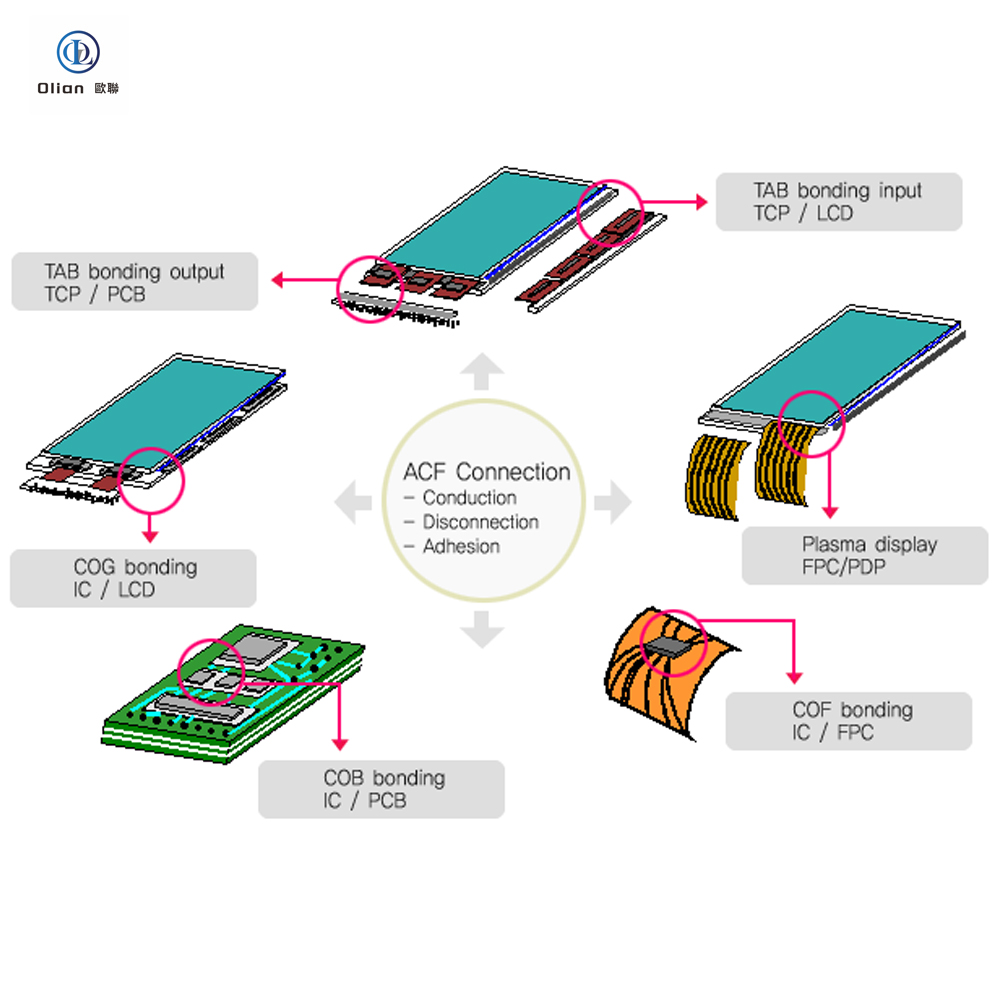
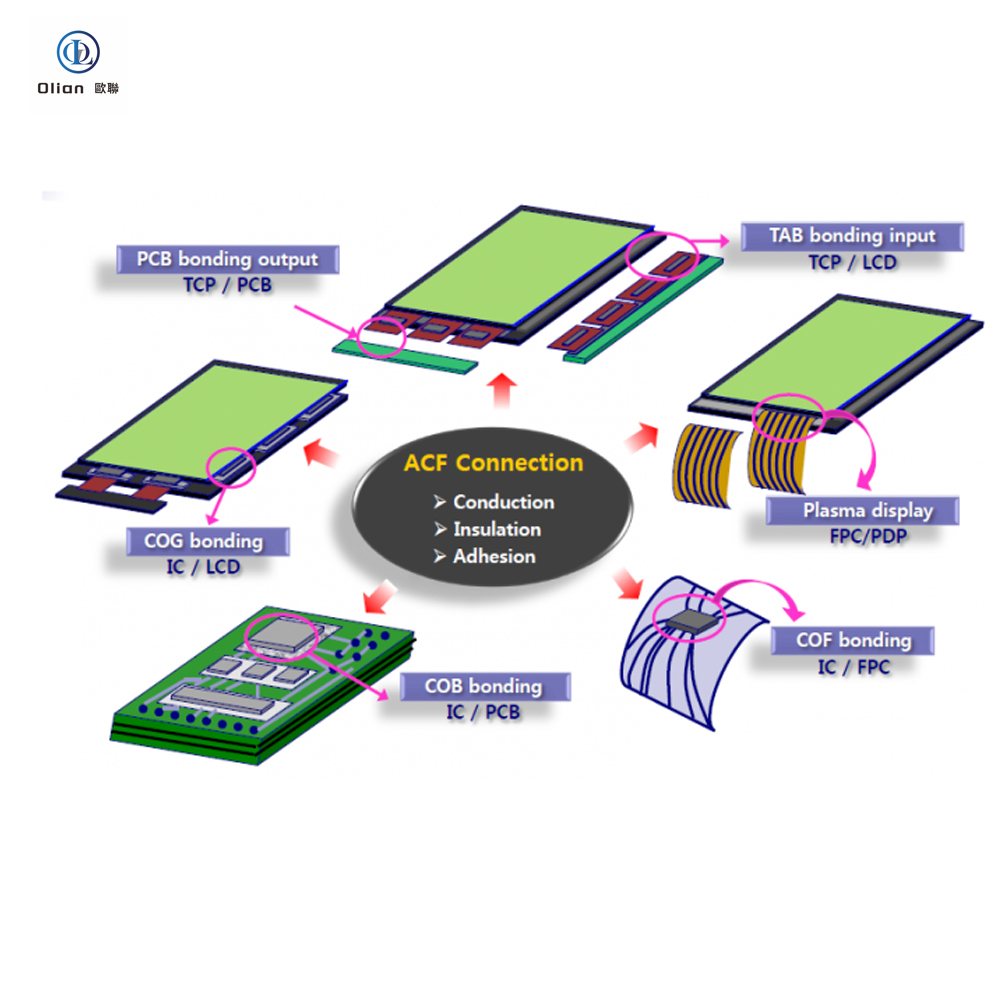
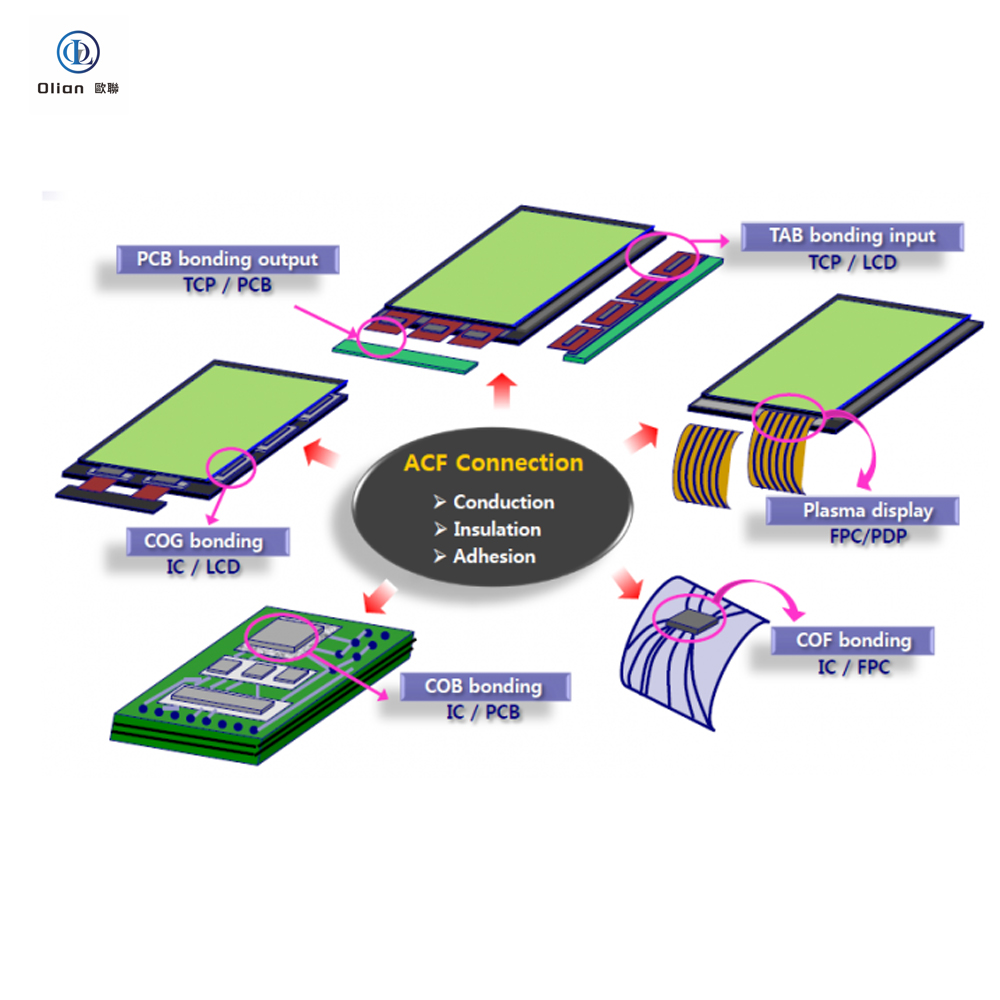
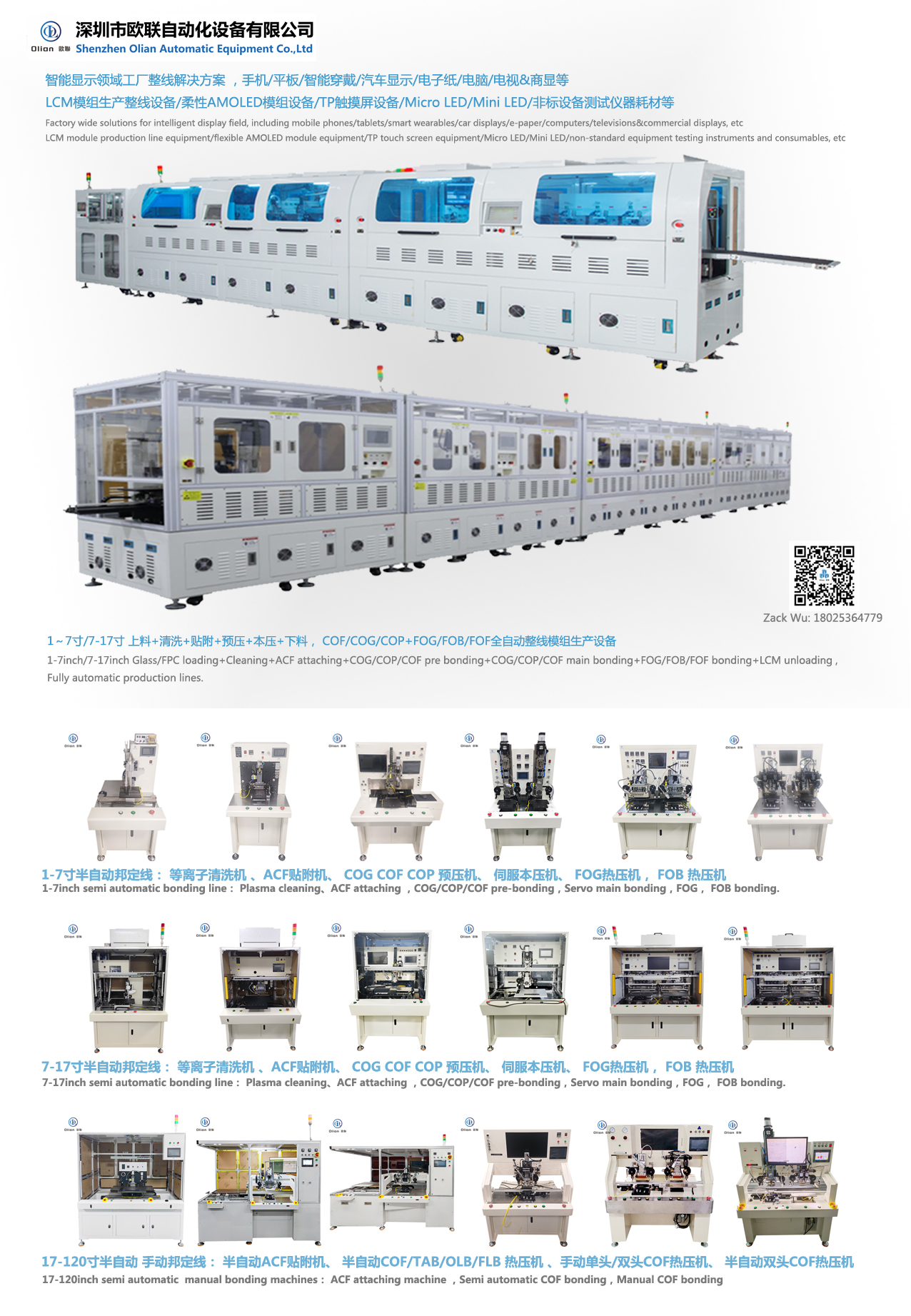
Several key bonding methods use ACF technology. Chip-on-Glass (COG) bonds IC chips directly to glass panels. This is common in LCD manufacturing. Chip-on-Film (COF) connects ICs to flexible circuits. This allows for thinner display bezels. Flex-on-Glass (FOG) attaches flexible boards to glass substrates. Flex-on-Board (FOB) connects flex circuits to rigid PCBs. Tape Automated Bonding (TAB) links TCP tapes to displays. Each process requires specific parameters. Olian Automatic masters all these techniques. We provide versatile solutions for various needs.
Glossary of ACF Bonding Terms
ACF (Anisotropic Conductive Film)
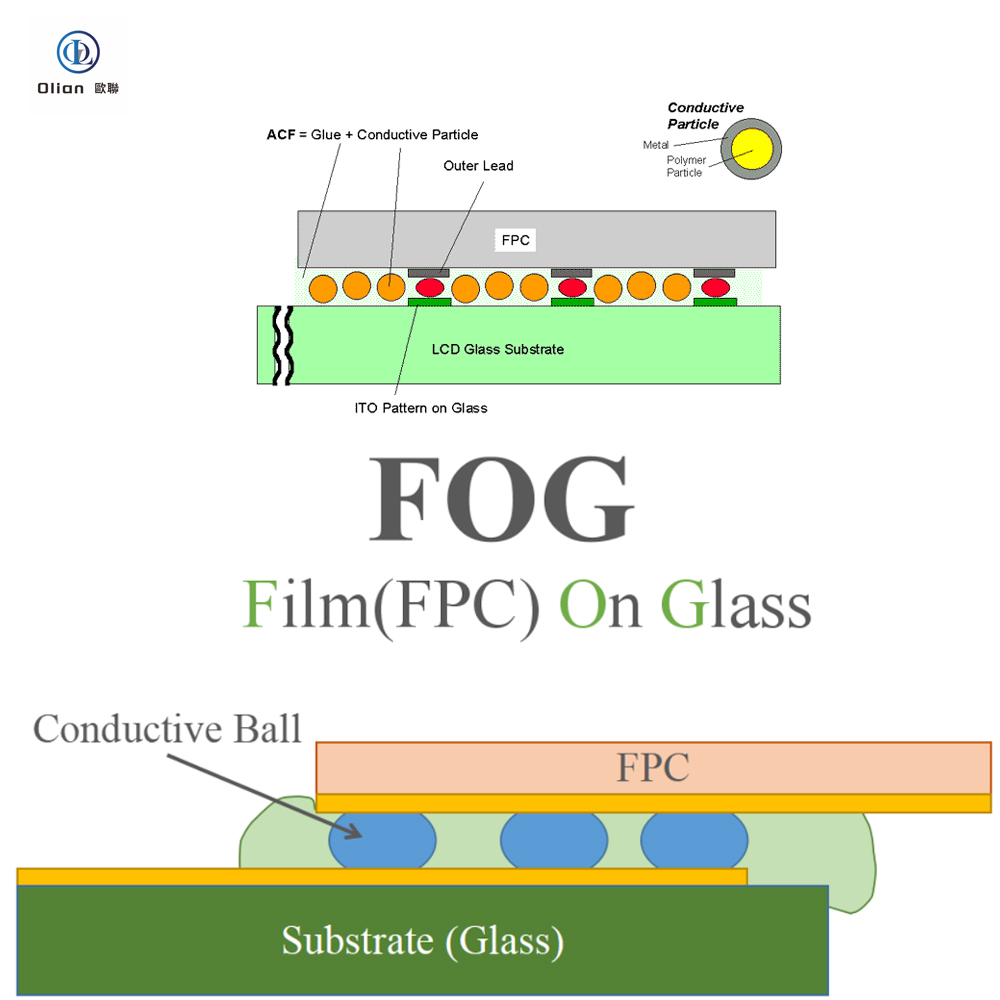
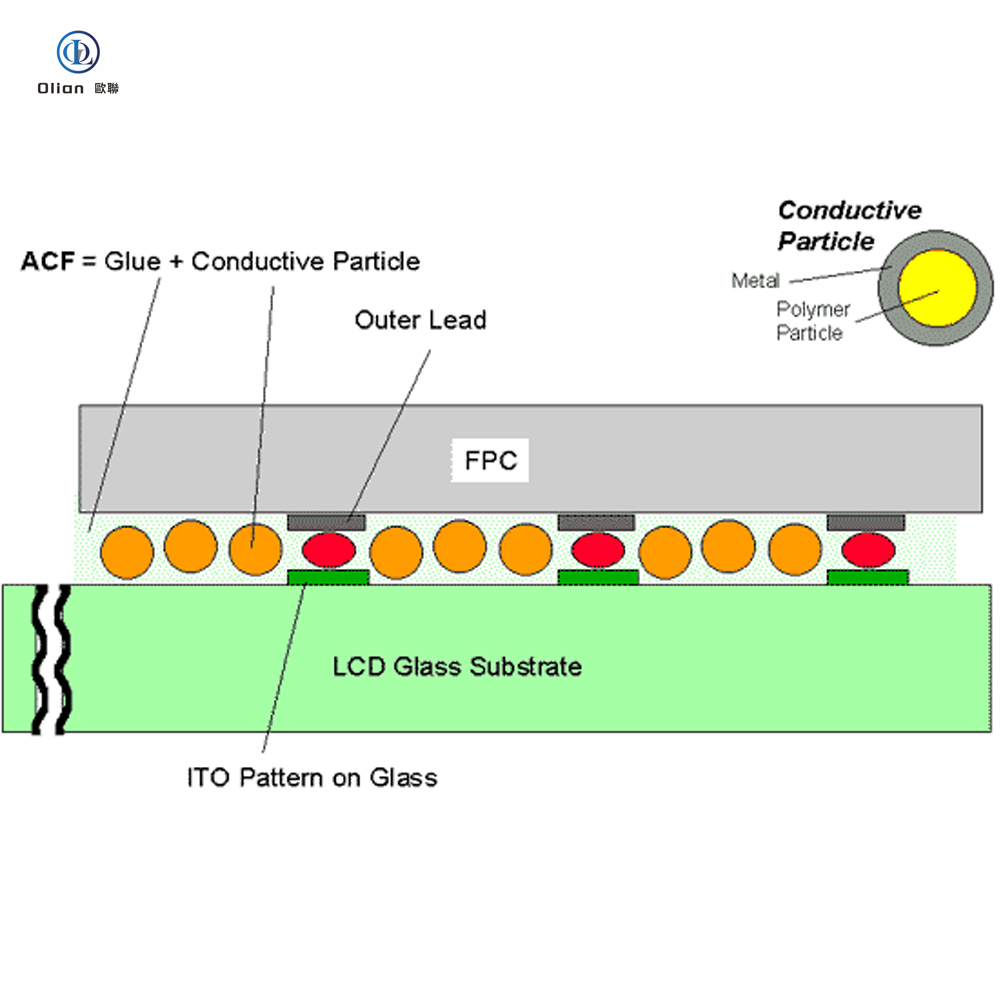
ACF stands for Anisotropic Conductive Film. It is a specialized adhesive material used in display assembly. The film contains conductive particles trapped in an insulating resin. It provides electrical conductivity in the vertical direction only. Simultaneously, it ensures electrical insulation in the horizontal direction. This unique property prevents short circuits between fine pitches. ACF also offers strong adhesion between components. It is the core material for COG, COF, and FOG bonding.
COG (Chip-on-Glass) Bonding
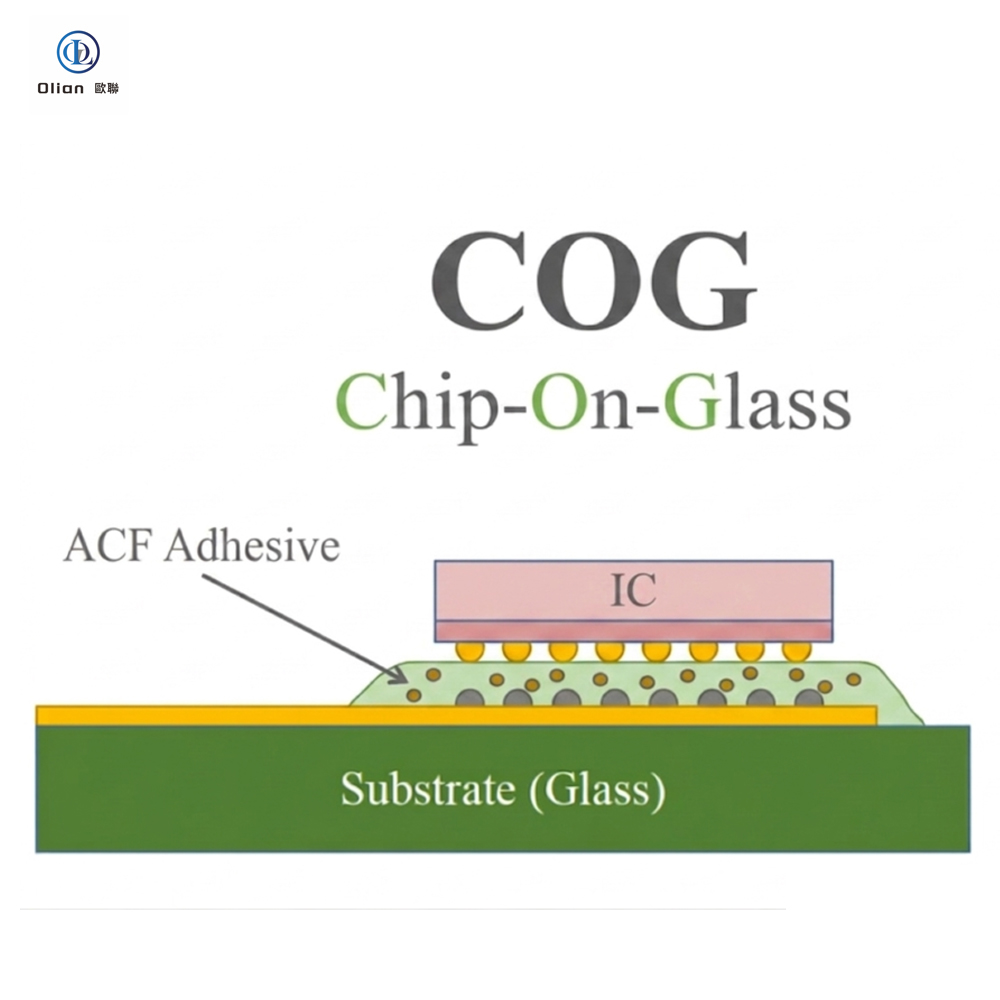
COG stands for Chip-on-Glass bonding. This process connects an IC chip directly onto a glass substrate. It is widely used in LCD and OLED panel manufacturing. The method eliminates the need for intermediate flexible tapes. COG bonding saves space and reduces module thickness. It requires precise alignment and controlled heat pressure. ACF is typically used as the interconnect material. This technique is common for source and gate driver ICs.
COF (Chip-on-Film) Bonding
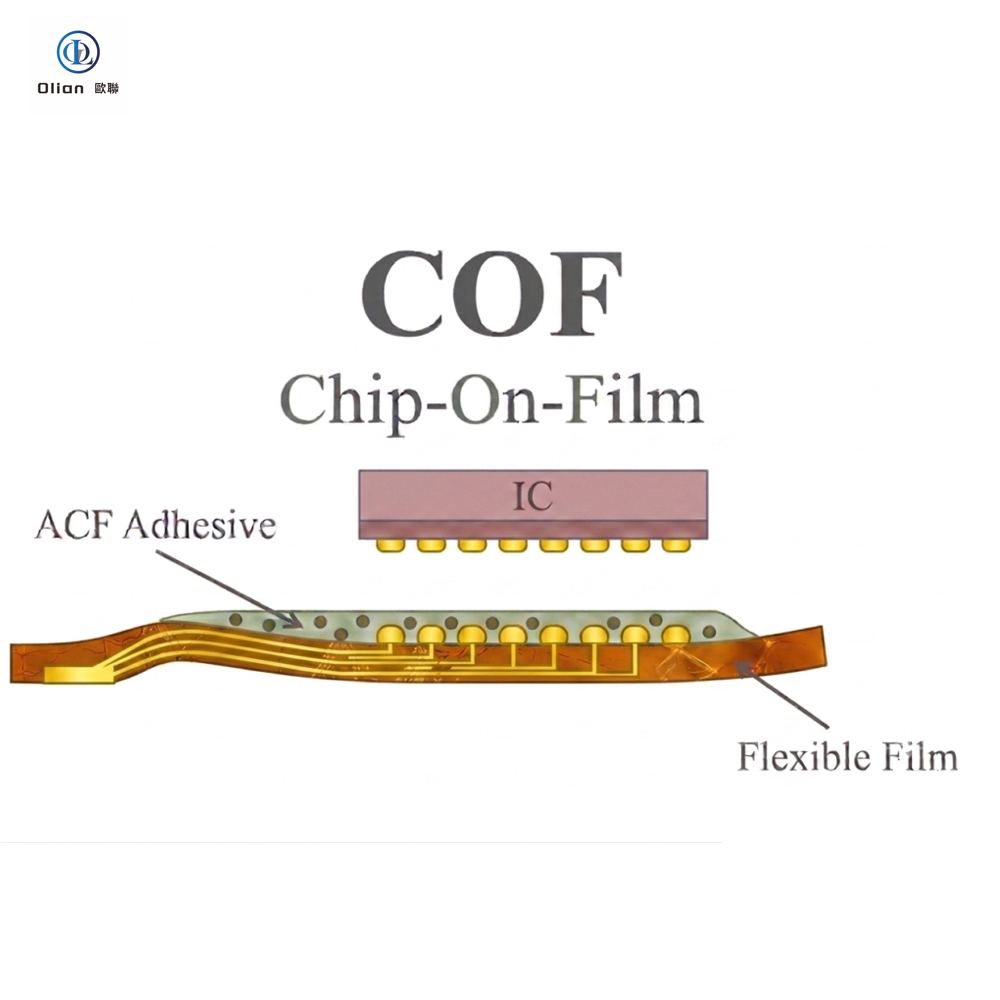
COF stands for Chip-on-Film bonding. This technique mounts IC chips directly onto a flexible film. The film is usually a Tape Carrier Package (TCP). COF allows for very narrow display bezels. It enables the bending of the film under the panel. This creates a “bottom bezel” free design. The flexible circuit connects the glass to the main PCB. It supports high-resolution displays with many signal lines.
FOG (Flex-on-Glass) Bonding
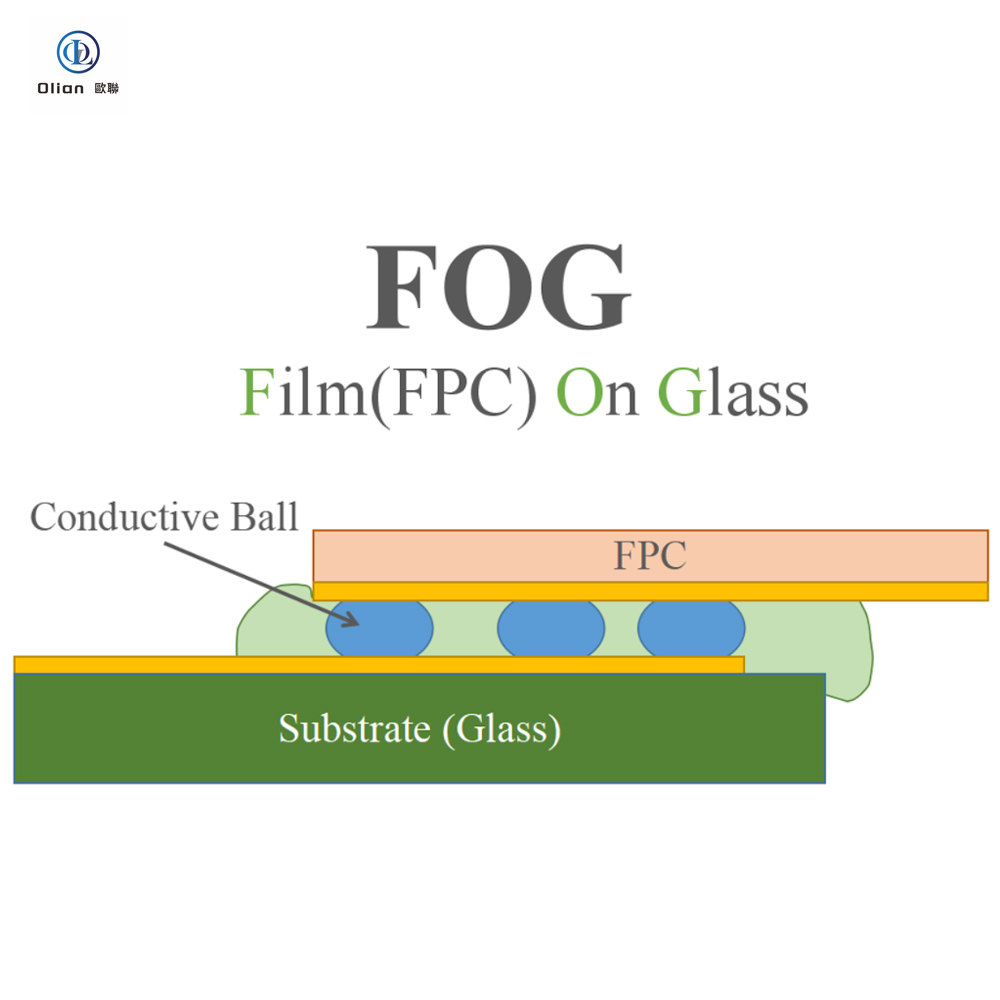
FOG stands for Flex-on-Glass bonding. This process attaches a Flexible Printed Circuit (FPC) to a glass panel. It serves as the interface between the rigid glass and external electronics. FOG bonding is essential for transmitting signals to the display. It uses ACF to ensure reliable electrical connection. The process requires high precision to align fine circuit traces. It is a standard step in LCD module assembly.
FOB (Flex-on-Board) Bonding
FOB stands for Flex-on-Board bonding. This method connects a flexible circuit (FPC) to a rigid Printed Wiring Board (PWB). It bridges the gap between flexible and rigid electronics. FOB is often used in the final assembly stage. It links the display module to the main system board. The connection must withstand mechanical stress and bending. ACF provides both electrical continuity and mechanical strength.
COP (Chip-on-Plastic) Bonding
COP stands for Chip-on-Plastic bonding. Although less prominent in the diagrams, it is listed in the text. This technology bonds IC chips directly onto plastic substrates. It is increasingly used in flexible OLED displays. COP allows the entire display to be bendable or foldable. It replaces glass with polyimide or similar plastics. The bonding process requires lower temperatures to protect the plastic.
TCP (Tape Carrier Package)
TCP refers to Tape Carrier Package. It is a type of flexible interconnect technology. TCP carries IC chips on a thin polymer tape. It is the primary component used in COF bonding. The tape has fine metal leads for electrical connections. TCP allows for high-density packaging of driver chips. It acts as the bridge between the glass and the PCB.
FPC (Flexible Printed Circuit)
FPC stands for Flexible Printed Circuit. It is a lightweight, bendable electronic circuit board. FPCs are used in FOG and FOB bonding processes. They replace rigid cables to save space and weight. The circuit pattern is etched onto a flexible substrate. FPCs can route signals through tight spaces in devices. They are crucial for connecting moving or folded parts.
PWB (Printed Wiring Board)
PWB stands for Printed Wiring Board. It is commonly known as a rigid PCB. PWBs serve as the main backbone for electronic components. In display modules, PWBs receive signals from the FPC. FOB bonding connects the flexible display output to this board. PWBs provide mechanical support and complex circuit routing. They are essential for the final electronic assembly.
IC Chip (Integrated Circuit Chip)
IC Chip stands for Integrated Circuit Chip. In display bonding, these are typically driver ICs. They control the pixels on the screen to create images. The chip contains thousands of microscopic connection points. These points must align perfectly with the substrate pads. The IC is the “brain” of the display panel. Proper bonding is critical for its functionality.
Glass (Panel/Substrate)
Glass refers to the display panel substrate. It is the base material for LCD and OLED screens. The glass surface holds the pixel matrix and electrodes. COG and FOG bonding happen directly on this surface. The glass is fragile and requires careful handling. Cleanliness is vital before applying ACF. It provides a flat, stable platform for components.
Conductivity
Conductivity refers to the flow of electrical current. In ACF bonding, this happens vertically through the film. Conductive particles create the path between the chip and substrate. This ensures the signal reaches the display pixels. High conductivity is necessary for clear image quality. The resistance must be low and stable.
Insulation
Insulation prevents unwanted electrical flow. In ACF, the resin insulates adjacent signal lines horizontally. This prevents short circuits between neighboring traces. High insulation resistance is critical for fine-pitch connections. It ensures that signals do not cross paths. Reliable insulation guarantees the display functions correctly.
Adhesion
Adhesion is the mechanical sticking force of the bond. The ACF resin cures to hold components together firmly. Strong adhesion protects against moisture and dust ingress. It withstands thermal expansion and mechanical shock. Good adhesion ensures the long-term reliability of the device. It prevents the chip or film from peeling off.
Temperature, Pressure, Time
These are the three critical process parameters. Temperature activates the chemical curing of the ACF. Pressure forces the conductive particles into contact. Time determines the duration of the heat application. All three must be precisely controlled for a good bond. Incorrect settings lead to open circuits or weak joints. Olian Automatic systems optimize these variables perfectly.
TAB (Tape Automated Bonding)
TAB stands for Tape Automated Bonding. It is an older term often associated with TCP input. It refers to bonding the tape carrier to the LCD glass. The process uses heat and pressure to connect leads. TAB enables high-speed automated manufacturing. It is the precursor to modern COF technology.
Plasma Display
Plasma Display refers to PDP (Plasma Display Panel) technology. The images show FPC bonding for plasma displays. This indicates ACF’s versatility across different display types. Plasma panels also require reliable flex-to-glass connections. The bonding principles remain similar to LCDs. It demonstrates the broad application of Olian’s technology.
The Precision Bonding Workflow
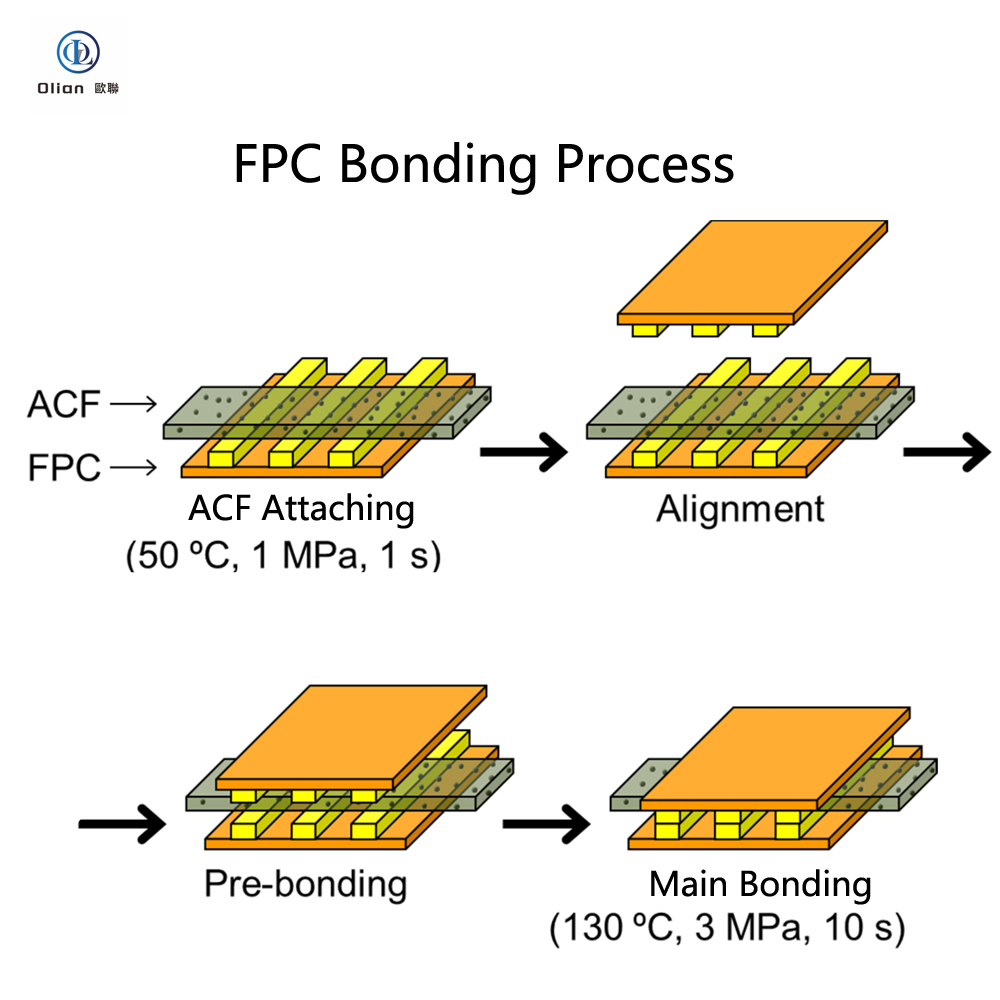
The ACF bonding process follows strict steps. First, technicians clean the glass substrate thoroughly. Next, they apply the ACF material carefully. Then, they peel off the protective release film. Precise alignment of the IC chip follows. Finally, heat and pressure are applied simultaneously. This activates the adhesive and conductive particles. The bonding tool ensures uniform pressure distribution. Temperature and time are strictly controlled. This five-step process guarantees perfect connections. Olian Automatic automates this workflow for consistency.
Applications Across Display Sizes
Our ACF bonding solutions serve diverse markets. Small and medium-sized displays utilize COG technology. Smartphones and tablets benefit from this method. Large-sized displays often require FOG and FOB bonding. Television screens use these robust connections. Plasma displays also rely on ACF technology. The flexibility of ACF supports curved screens. Olian Automatic adapts to all form factors. We support the entire display industry spectrum. Our equipment handles various panel sizes efficiently.
Why Choose Olian Automatic Solutions
Olian Automatic delivers superior bonding performance. Our systems ensure precise parameter control. Temperature, pressure, and time are optimized. This minimizes defects and maximizes yield. We understand the complexities of ACF materials. Our expertise prevents common bonding issues. Reliable connections reduce product failure rates. We support high-volume manufacturing environments. Our technology meets strict industry standards. Partner with us for display assembly success.
FAQ: ACF Bonding Technology
What is the primary function of ACF? ACF provides vertical electrical conductivity and horizontal insulation. It bonds components while preventing short circuits. This dual action is vital for displays.
Which displays use COG bonding? COG bonding is standard for LCD panels. It connects driver ICs directly to glass. This method is common in monitors and TVs.
How does heat affect the bonding process? Heat activates the thermosetting resin in ACF. It melts the adhesive for proper flow. Correct temperature ensures strong mechanical adhesion.
Can ACF connect flexible circuits? Yes, ACF is ideal for flexible connections. It supports COF and FOG applications. The film accommodates bending without breaking.
What parameters are critical for bonding? Temperature, pressure, and time are essential. Incorrect settings cause poor conductivity or adhesion. Olian Automatic controls these variables precisely.
ACF Bonding Machine Manufacturer for LCD Display Production
Discover how ACF bonding machines drive LCD/OLED/MINI LED/Microled/COP… display production — from COG/COF/COP/FOG/FOB/FOP/FOF/OLB bonding processes to choosing the right manufacturer. Explore bonding-machine.com for industry-leading solutions, technical specifications, and expert guidance on anisotropic conductive film bonding equipment.
ACF Bonding Machine Manufacturer for LCD Display Production: The Complete Guide to Choosing the Right Equipment
📌 Quick Navigation
What Is ACF Bonding and Why Does It Matter?
The Critical Role of ACF Bonding Machines in LCD Display Production
Types of ACF Bonding Processes: COG, COF, FOG Explained
Key Technical Specifications to Evaluate
How to Choose the Right ACF Bonding Machine Manufacturer
bonding-machine.com: Your Trusted ACF Bonding Equipment Partner
Industry Trends & Future Outlook
Frequently Asked Questions (FAQ)
What Is ACF Bonding and Why Does It Matter?
In the world of LCD and OLED display manufacturing, there’s a microscopic process that makes every screen you use possible — ACF bonding.
ACF stands for Anisotropic Conductive Film — a specialized adhesive material that conducts electricity vertically (through its thickness) while remaining electrically insulating horizontally (across its surface). Originally developed by Sony Chemical (now Dexerials) in 1977, ACF has become the indispensable “neural synapse” of modern display panels, enabling electrical connections between driver ICs, flexible printed circuits (FPCs), and glass substrates at pitches as fine as 30 micrometers or below.
Think of it this way: within an area roughly the size of a fingernail, hundreds of electrical contacts must be simultaneously connected with micron-level precision — that’s exactly what ACF bonding achieves. Without this technology, the smartphones, tablets, laptops, televisions, automotive displays, and industrial HMI screens we rely on every day simply couldn’t exist.
And the machine that makes this process happen? That’s the ACF bonding machine — the precision equipment that applies temperature, pressure, and alignment control to create reliable, repeatable electrical interconnections using ACF material.
The Critical Role of ACF Bonding Machines in LCD Display Production
LCD display production is a multi-stage manufacturing process where the bonding stage is arguably the most precision-demanding step. Here’s where ACF bonding machines fit in the production flow:
LCD Module Assembly Process Flow
Stage
Process
Equipment Category
1
Glass substrate cleaning
Cleaning equipment
2
ACF film lamination (attach ACF to glass)
ACF bonding machine (lamination unit)
3
Driver IC bonding (COG — Chip on Glass)
ACF bonding machine (COG bonder)
4
FPC bonding (FOG — Film/FPC on Glass)
ACF bonding machine (FOG bonder)
5
Protective sealing (silicone dispensing)
Dispensing equipment
6
Light-shielding tape application
Tape attaching equipment
7
Backlight unit (BLU) assembly
BLU assembly equipment
8
Final inspection & testing
Inspection equipment
As the table shows, ACF bonding machines are involved in at least 2–3 critical stages of LCD module assembly. The quality of bonding directly determines:
✅ Display image stability — no flickering, line defects, or dead pixels
✅ Signal transmission reliability — consistent electrical conductivity at every contact point
✅ Product lifespan — resistance to thermal cycling, mechanical stress, and environmental aging
✅ Yield rate — reducing rework and scrap directly improves production economics
A single bonding defect — a misaligned IC, insufficient ACF compression, or a trapped particle short — can render an entire display panel defective. This makes the choice of ACF bonding machine manufacturer a strategic production decision, not merely a procurement task.
Types of ACF Bonding Processes: COG, COF, FOG Explained
Understanding the different bonding configurations is essential when selecting equipment. Here’s a detailed breakdown:
1. COG (Chip on Glass) Bonding
COG bonding attaches a bare driver IC chip directly onto the ITO (Indium Tin Oxide) electrode pads on the LCD glass substrate using ACF as the interconnect medium.
Process Steps:
ACF film is laminated onto the glass bonding area
The driver IC is aligned to the glass electrode pads using a high-precision vision alignment system
Pre-bonding (temporary attach) with low pressure
Main bonding with controlled temperature (typically 180–220°C), pressure (typically 15–30 MPa), and time (typically 8–15 seconds)
ACF resin thermosets, conductive particles are compressed to form vertical electrical pathways
Key Challenges:
Pin pitch down to 30 μm or finer requires sub-micron alignment accuracy
Uneven pressure distribution causes connection reliability issues
Thermal management must prevent glass substrate stress
2. COF (Chip on Film/FPC) Bonding
COF bonding mounts the driver IC onto a flexible printed circuit (FPC) film first, then the COF package is bonded to the glass substrate. This configuration is increasingly preferred for:
High-resolution displays with narrow bezels
Foldable/flexible OLED displays
Displays requiring bendable interconnects
Advantages over COG:
The IC can be bent around the display edge → narrower bezel
Better thermal dissipation through the FPC substrate
Easier repair — the entire COF module can be replaced
3. FOG (FPC on Glass) Bonding
FOG bonding connects the flexible printed circuit board (FPC) to the glass substrate terminal area. This is the signal bridge between the display panel and the external system (motherboard, T-CON board, etc.).
Process Flow (after COG is completed):
Glass terminal area is cleaned
ACF is laminated onto the glass bonding pads
FPC is aligned to the glass pads
Pre-bond → Main bond (thermocompression)
FOG is often the final electrical interconnection step before the LCD module enters final assembly and testing.
Comparison Table: COG vs COF vs FOG
Parameter
COG
COF
FOG
Bonded Component
Bare IC chip
IC-on-FPC package
FPC alone
Bonded To
Glass substrate
Glass substrate
Glass substrate
Bezel Impact
Wider (IC on surface)
Narrower (IC bends around edge)
Minimal (FPC at edge)
Pin Pitch
Finest (down to ~30 μm)
Fine (~40–60 μm)
Moderate (~80–150 μm)
Alignment Accuracy Required
±2–5 μm
±2–5 μm
±15–30 μm
Typical Applications
Standard LCDs, TN/STN
High-res LCD, OLED, foldable
All LCD/OLED modules
Repairability
Difficult (direct on glass)
Moderate (replace COF module)
Moderate
Equipment Needed
COG bonding machine
COF bonding machine
FOG bonding machine
Key Technical Specifications to Evaluate
When comparing ACF bonding machines from different manufacturers, these are the non-negotiable specifications that determine production capability:
🔧 Alignment Accuracy
Grade
Alignment Accuracy
Suitable For
Standard
±15 μm
FOG bonding, moderate-pitch applications
High-Precision
±5 μm
COF bonding, fine-pitch LCD/OLED
Ultra-High-Precision
±2 μm or better
COG bonding, finest pitch ICs
Tip from bonding-machine.com: Always verify alignment accuracy under actual production conditions (not just laboratory specs). Request a live demonstration with your specific product dimensions.
🌡️ Temperature Control
Temperature range: Typically 100–280°C
Temperature uniformity across bonding head: ±2°C or better
Ramp-up speed: Fast heating reduces process time and ACF pre-curing risk
Temperature measurement: Thermocouple embedded in bonding tool vs. infrared sensing
Precision temperature control is critical because ACF’s conductive particles must be compressed at the exact thermosetting temperature — too hot causes ACF degradation, too cold means incomplete curing and unreliable connections.
💪 Pressure Control
Pressure range: 2–5 MPa (adjustable for different ACF types and substrates)
Pressure uniformity: ±5% or better across bonding area
Parallelism of bonding head: Critical for uniform particle compression
Force measurement: Load cell-based real-time monitoring preferred
⏱️ Process Time & throughput
Single bond cycle time: 6–20 seconds (main bond)
UPH (Units Per Hour): Ranges from 300 to 1,200+ depending on machine configuration
Pre-bond + Main-bond sequential time: Total cycle including alignment, pre-bond, main-bond, and cooling
👁️ Vision Alignment System
The vision system is the “eyes” of the bonding machine. Key parameters:
Camera resolution: Minimum 2 megapixels; 5+ MP for ultra-fine pitch
Magnification: Adjustable (typically 2x–10x)
Alignment mark recognition: Support for multiple mark types (cross, circle, L-shape, custom)
💡 A machine that costs 20% more but delivers 3% higher yield can save hundreds of thousands of dollars annually on a high-volume production line.
Shenzhen Olian(bonding-machine.com): Your Trusted ACF Bonding Equipment Partner
At Shenzhen olian (bonding-machine.com), we understand that ACF bonding isn’t just a mechanical process — it’s the heart of display manufacturing. Our commitment goes beyond selling machines; we deliver complete bonding solutions.
What Sets bonding-machine.com Apart
🎯 Comprehensive Product Line
We offer ACF bonding machines covering the full spectrum of display production needs:
±15 μm alignment, high throughput, multi-FPC bonding capability
ACF-L Series
ACF Lamination
Pre-bond ACF attachment, high accuracy film positioning
Multi Series
Multi-function
COG+FOG or COF+FOG combined, flexible production line configuration
🔬 Deep Process Expertise
We don’t just deliver hardware. Our team of process engineers provides:
ACF bonding recipe development — optimized temperature/pressure/time parameters for specific ACF materials (Dexerials, Resonac, Hitachi Chemicals, and Chinese domestic ACF brands)
New product introduction (NPI) support — from first article bonding through production qualification
Yield improvement consulting — systematic defect analysis and process optimization
🌍 Global Service Network
Fast response: 24/7 remote technical support
On-site service: Engineers available for installation, training, and troubleshooting
Regional offices: Service hubs in key display manufacturing regions
Spare parts: Local inventory for critical components
🏭 Proven Track Record
Our machines are running in production lines at display manufacturers serving:
Smartphone and tablet LCD/OLED panels
Automotive infotainment and instrument cluster displays
Industrial HMI and medical display modules
Television and large-format display panels
Wearable and IoT device displays
Industry Trends & Future Outlook
The ACF bonding equipment industry is evolving rapidly alongside display technology advances. Here are the key trends shaping the future:
1. Finer Pitch, Higher Precision
As display resolutions increase (4K, 8K, and beyond), driver IC pin pitches continue shrinking. The industry is moving from 40 μm pitch toward 20 μm and below, requiring bonding machines with:
Alignment accuracy of ±2 μm or better
Higher-resolution vision systems (8+ MP cameras)
More sophisticated alignment algorithms with AI-assisted pattern recognition
2. Foldable & Flexible Display Bonding
Foldable OLED displays (used in smartphones and emerging foldable laptops) demand:
COF bonding as the primary configuration
Bonding machines capable of handling ultra-thin flexible substrates
Specialized ACF materials with enhanced bend reliability
New process parameters for flexible substrate bonding (lower temperature to protect flexible materials)
3. Mini LED & Micro LED Backlight Bonding
Mini LED and Micro LED displays require mass transfer bonding — connecting thousands of tiny LED chips to the substrate. This creates demand for:
High-speed multi-head bonding machines
Gang bonding (simultaneous bonding of multiple chips)
Specialized ACF or alternative interconnect materials
4. Automation & Smart Manufacturing
Industry 4.0 integration in bonding equipment includes:
MES (Manufacturing Execution System) connectivity — real-time production data upload
SPC (Statistical Process Control) — automatic monitoring of bonding parameters
Predictive maintenance — AI-based analysis of machine health data
Digital twin — virtual machine models for process simulation and optimization
5. Domestic ACF Material Adoption
With China now the world’s largest LCD panel producer, domestic ACF material suppliers are rapidly gaining market share (domestic ACF adoption rate has risen to approximately 25%). Bonding machines must be compatible with:
Both Japanese premium ACF (Dexerials, Resonac) and Chinese domestic alternatives
Different ACF specifications (thickness, particle size, curing temperature)
Flexible recipe management for quick material changeover
Frequently Asked Questions (FAQ)
Q1: What is the difference between ACF bonding and soldering?
A: ACF bonding uses anisotropic conductive film adhesive to create electrical connections through thermocompression, while soldering uses molten metal alloy. ACF bonding offers several advantages for display production:
Lower processing temperature (180–220°C vs. 250+°C for soldering)
No flux residues that could contaminate the display
Simultaneous connection of hundreds of contacts in a single bonding cycle
Suitable for glass substrates that cannot tolerate soldering temperatures
Compatible with fine-pitch connections below 40 μm
Q2: How long does an ACF bonding machine typically last?
A: With proper maintenance, a quality ACF bonding machine has a service life of 8–10 years or more. Key longevity factors include:
Regular calibration (typically monthly)
Bonding head replacement schedule (every 6–12 months depending on usage)
Servo system maintenance
Software updates and alignment system recalibration
Q3: Can one machine handle both COG and FOG bonding?
A: Yes. Multi-function bonding machines(full automatic bonding line) can handle both COG and FOG bonding in a single platform, typically through:
Changeable bonding head tooling
Switchable vision system configurations
Adjustable pressure and temperature ranges
This is ideal for factories producing multiple product types with moderate throughput needs.
Q4: What ACF materials are compatible with bonding machines?
A: Modern ACF bonding machines from reputable manufacturers are designed to work with the full range of commercially available ACF films, including:
Dexerials (formerly Sony Chemical) — industry benchmark
Resonac (formerly Hitachi Chemical) — widely used in automotive and industrial displays
Chinese domestic brands — rapidly improving quality, cost-effective alternative
Compatibility depends on ACF thickness (typically 15–40 μm), particle type (nickel, gold-coated, solder), and curing temperature profile. At bonding-machine.com, we test and certify compatibility with major ACF suppliers.
Q5: What is the typical yield rate for ACF bonding?
A: With a properly calibrated machine and optimized process, ACF bonding yield rates typically reach 98–99.5% for standard products. Factors affecting yield include:
ACF material quality and storage conditions
Glass substrate cleanliness
Alignment accuracy and consistency
Pressure and temperature uniformity
Operator skill and process discipline
Our process engineers at bonding-machine.com routinely help customers achieve and maintain >99% yield.
Q6: How do I get a quotation for an ACF bonding machine?
A: Simply contact our team with your production requirements — we’ll provide a detailed quotation including:
Machine configuration recommendation
Process capability assessment for your specific product
Delivery timeline and installation plan
Training and after-sales support package
TCO analysis comparison
Conclusion: The Right Manufacturer Is Your Production Partner
Choosing an ACF bonding machine manufacturer for LCD display production isn’t a transactional purchase — it’s a strategic partnership that directly impacts your product quality, production yield, and competitive position in the display market.
The ideal manufacturer provides not just a machine, but a complete bonding solution: equipment designed for your specific process needs, deep technical expertise in ACF bonding chemistry and physics, responsive after-sales support, and continuous innovation to keep pace with display technology evolution.
At bonding-machine.com, that’s exactly what we deliver — from our comprehensive bonding machine lineup to our process engineering support and global service network.
The Ultimate Guide to Choosing the Right Bonding Machine for Your Display Production Line in 2026
In the fast-evolving world of consumer electronics, display quality can make or break your product. Whether you’re manufacturing smartphones, tablets, smartwatches, automotive dashboards, or large-format TVs, bonding machines are the unsung heroes ensuring precise, reliable connections between chips, films, and glass substrates.
At bonding-machine.com, we specialize in high-precision ACF, COF, COG, COP, FOG, FOB, and OLBbonding solutions that power modern display module assembly. If you’re looking to boost yield rates, reduce defects, and scale production efficiently, this guide will help you navigate the options.
What Is a Bonding Machine and Why Does It Matter?
Bonding machines use controlled heat, pressure, and anisotropic conductive film (ACF) to create electrical connections in LCD/OLED/Touch panel manufacturing. Key processes include: COG (Chip on Glass): Bonding driver ICs directly to glass substrates. COF (Chip on Film): Attaching chips to flexible circuits. FOG (Film on Glass): Connecting FPC to glass. FOB (Film on Board) and OLB (Outer Lead Bonding): Critical for larger panels and integrated modules.
These technologies are essential for high-resolution displays in mobile phones, wearables, laptops, and automotive applications. Poor bonding leads to defects like line mura, open circuits, or delamination—issues that hurt both quality and profitability.
Key Factors to Consider When Selecting a Bonding Machine
1.Panel Size Compatibility
Choose machines matched to your production needs: 1-7 inch for small wearables and phones, 7-17 inch for mid-size tablets and monitors, or larger formats up to 85-120 inches for TVs and commercial displays.
2.Automation Level
Manual or semi-automatic systems suit prototyping and low-volume runs. Fully automatic lines with servo motors, vision alignment, and plasma cleaning deliver higher throughput and consistency for mass production.
3.Precision and Process Control
Look for pulse heating, multi-station designs, AOI integration, and accurate temperature/pressure control. These features minimize ACF bonding failures and support fine-pitch applications.
4.Throughput and Yield
High-speed models with pre-bonding and main-bonding stations can significantly improve your line efficiency.
5.Reliability and Support
Partner with experienced manufacturers who offer full-line solutions, training, and after-sales service. Olian has supplied equipment to leading brands including Huawei, BOE, BYD, Foxconn, and more.
Popular Bonding Machine Solutions from Olian
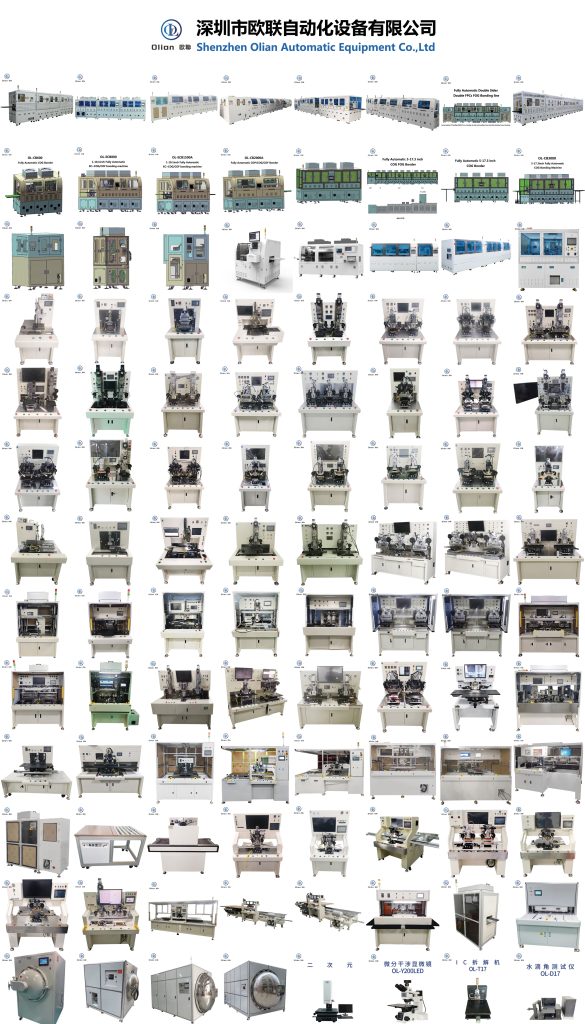
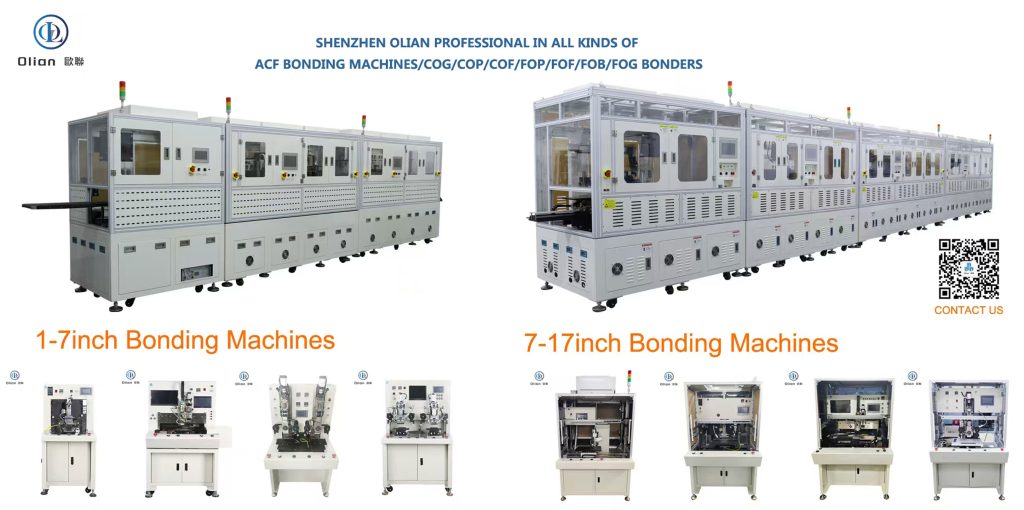
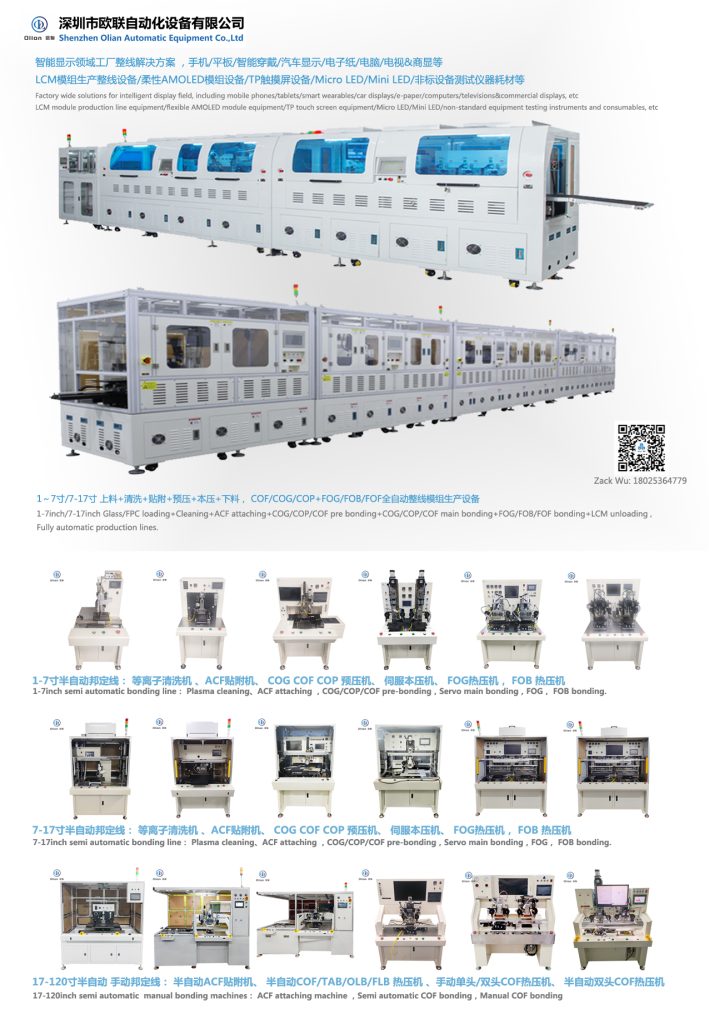
Small Size Series (1-7 inch): Ideal for smartphones and wearables. Models like the OL-F006 (dual station FOG) and OL-CB1000 (fully automatic COG/COF) deliver excellent precision in compact footprints.
Mid Size Series (7-17 inch): Versatile lines such as OL-3000 and OL-1100 support COG, COF, FOG, and FOB processes for tablets and automotive displays.
Large Format Solutions: 65-120 inch OLB and FOB bonders for TV and commercial panel production. Supporting Equipment: ACF attaching machines, plasma cleaners, AOI inspection systems, and full turnkey production lines.
All machines emphasize robust construction, easy maintenance, and integration into smart factory environments.
Benefits of Upgrading Your Bonding Equipment
–Higher first-pass yield and lower scrap rates –Faster cycle times and reduced labor costs –Better support for flexible and high-resolution displays (including foldables) –Compliance with stringent quality standards in automotive and medical electronics
Many manufacturers report significant ROI within months after switching to modern automated bonding systems.
Ready to Optimize Your Production?
Selecting the right bonding machine is a strategic investment in your display manufacturing future. Whether you’re scaling up a new line or upgrading existing equipment, expert guidance makes all the difference.
Visit bonding-machine.com today to explore our full product range, download specifications, or contact our engineering team for a customized solution. With years of expertise serving global display leaders, Olian is your trusted partner for precision bonding technology.
Automatic COF Bonding Machine for Display Panel Production
What Is an Automatic COF Bonding Machine?
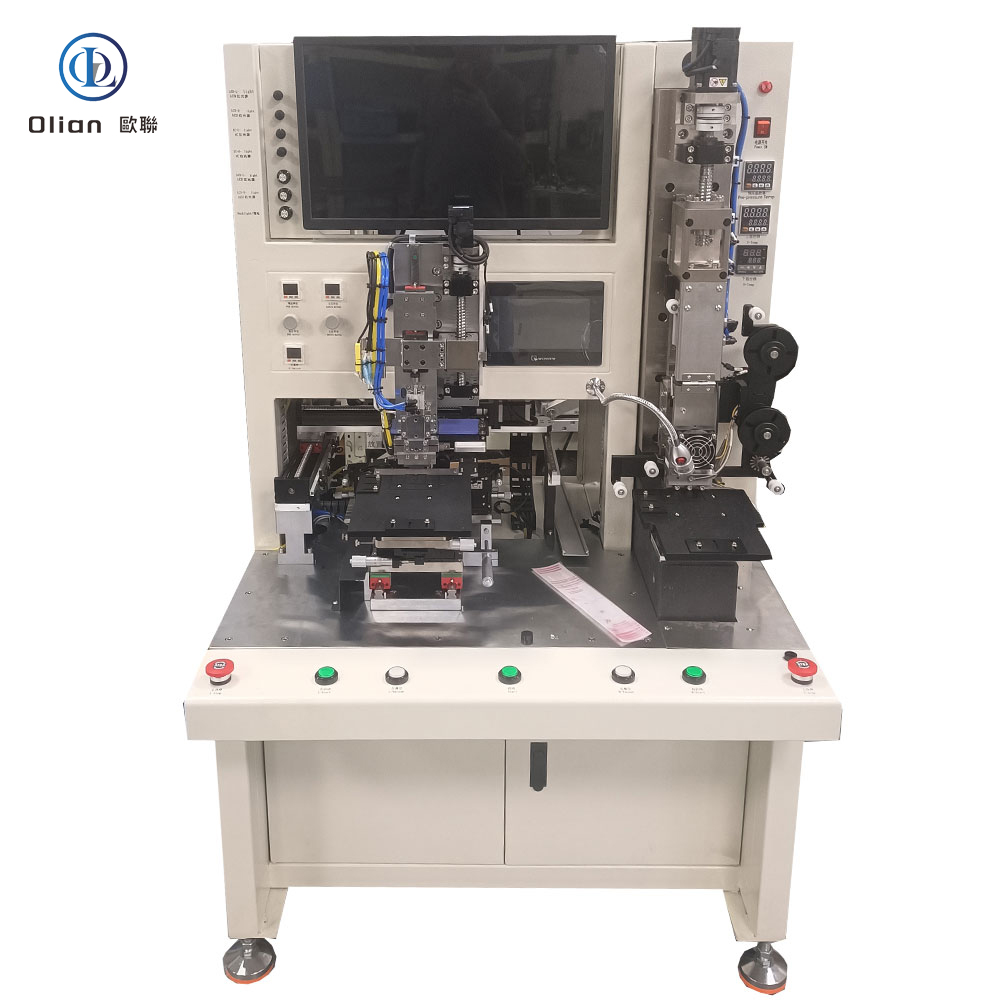
An automatic COF (Chip on Film/chip on FPC) bonding machine is a precision assembly system that mounts driver ICs onto flexible polyimide film substrates OR FPC using Anisotropic Conductive Film (ACF) technology OR gold to gold technology.
Sometimes,bond the COF on the glass or on the PCB,we also call it COF bonding technology. But in fact ,they are differnet processes..
In shenzhen olian, we can do these both technology (Chip on Film/chip on FPC) and (ACF bonding /Gold to Gold Bonding).
chip on fpc bonding
Unlike manual or semi-automatic systems,
fully automatic COF bonders handle the entire process—from ACF attachment and IC placement to thermocompression bonding—without operator intervention. This makes them essential for high-volume display panel production where consistency, speed, and micron-level accuracy determine manufacturing yield.
COF bonding differs from COG (Chip on Glass) and COB (Chip on Board) in that the chip is mounted on a flexible film carrier rather than directly on glass or a rigid PCB.
This flexibility enables ultra-thin bezels, curved displays, and foldable screen designs that are now standard in smartphones, tablets, automotive dashboards, and premium TVs.
Why Automatic COF Bonding Matters in Modern Display Manufacturing
The global display industry is pushing toward higher resolutions, larger panel sizes, and more complex form factors. As panels evolve from HD to 4K, 8K, and beyond, the pitch between bonding pads shrinks dramatically—often to sub-10 micrometer levels. Manual alignment simply cannot achieve the repeatability required at these scales.
Automatic COF bonding machines solve this by integrating advanced vision systems, servo-driven motion platforms, and closed-loop thermal control.
The result is bonding accuracy within ±5 to ±15 micrometers, temperature stability within ±5°C, and cycle times under 4.5 seconds per bond—parameters that directly impact production capacity and return on investment.
For display panel manufacturers, the shift to automation is not merely about speed. It is about eliminating the variables that cause defects: misalignment, uneven pressure distribution, thermal drift, and human inconsistency.
In an industry where a single bonding defect can scrap an entire panel worth hundreds of dollars, automatic COF bonding is a risk mitigation strategy as much as a production tool.
Key Technical Specifications to Evaluate
When sourcing an automatic COF bonding machine for display panel production, these specifications separate professional-grade equipment from basic alternatives:
Alignment Accuracy
Look for sub-micron precision systems using CCD cameras with pattern recognition algorithms. Industry-leading machines achieve ±3 µm accuracy, which is necessary for 4K and 8K panel production where pad pitches are extremely fine.
Thermal Control System
Pulse heating technology with PID auto-tuning ensures rapid temperature ramp-up (180°C in 2–3 seconds) and stability within ±0.5°C to ±1°C.
The hot press head should use titanium alloy or molybdenum with surface flatness of 0.001 mm to guarantee uniform heat transfer across the bonding zone.
Pressure Control
Closed-loop servo pressure systems with 0.1 N resolution and 2 ms response time allow precise force application.
The pressure range should span from 0.1 N for delicate components up to 50 N or more for larger driver ICs, with active gravity compensation to prevent substrate deformation.
Vision System
High-resolution CCD or CMOS cameras (12 MP or higher) with telecentric lenses, coaxial and side LED illumination, and AI edge detection enable repeatable alignment to 3 µm. Auto-focus and overlay comparison features further reduce operator dependency.
Cycle Time and Throughput
Automatic systems should achieve cycle times under 30 seconds per bond, with production rates of 100+ units per hour for TAB bonding and 2,500+ pieces per day for repair applications. Multi-station configurations can further increase throughput by processing multiple bonds simultaneously.
Software and Connectivity
Modern machines feature intuitive touch-screen HMIs with recipe storage, error logging, and SPC (Statistical Process Control) output. Ethernet, USB, and RS-232 connectivity enable remote monitoring, firmware updates, and MES integration—critical for Industry 4.0 environments.
Applications Across the Display Industry
Automatic COF bonding machines serve diverse segments of the display ecosystem:
Smartphone and Tablet Manufacturing
The demand for bezel-less designs and foldable screens makes COF bonding the preferred method for connecting driver ICs to OLED and flexible LCD panels. The flexible film substrate allows the IC to be bent behind the display, maximizing active screen area.
Large-Format TV and Monitor Production
Machines supporting panels from 7 inches up to 100 inches or more handle everything from laptop screens to massive TV open-cell repairs. High-precision bonding ensures uniform image quality across the entire display surface.
Automotive Display Modules
Vehicle displays require extreme reliability under harsh temperature and vibration conditions. Automatic COF bonding delivers the consistent joint quality needed for automotive-grade displays, including curved instrument clusters and center-console screens.
Industrial and Medical Displays
Ruggedized displays for industrial control panels and medical diagnostic equipment benefit from the precision and repeatability of automatic bonding, where failure is not an option.
Repair and Refurbishment Centers
Professional LCD/LED TV repair facilities use automatic COF bonders to fix vertical lines, horizontal bands, black screens, and other common panel defects caused by failed driver IC connections. A single machine can handle panels from 15 inches to 120 inches, making it a versatile investment for repair businesses.
Industry Trends Shaping COF Bonding Technology
Integration with AI and Machine Learning
Next-generation bonding machines incorporate AI-driven predictive maintenance that forecasts heater life up to 200 cycles in advance, scheduling maintenance before quality degradation occurs. Machine learning algorithms also optimize bonding parameters in real time based on feedback from vision systems and thermal sensors.
Support for Advanced Packaging
The rise of heterogeneous integration, wafer-level packaging (WLP), and system-in-package (SiP) solutions is driving demand for COF bonders capable of sub-10 µm pitch bonding. Manufacturers are developing “one-stop” machines that handle multiple materials in a single pass, reducing thermal deformation and improving overall yield.
Sustainability and Energy Efficiency
European and North American markets increasingly prioritize energy-efficient equipment that reduces cycle time and waste. Modern pulse heating systems minimize power consumption by delivering heat only during the bonding phase, with rapid cooling to prevent thermal stress on surrounding components.
Multi-Station and Fully Automatic Production Lines
The industry is moving beyond single-station machines toward fully automated production lines with multi-station processing. These systems perform simultaneous COB and COF operations, robotic substrate handling, and inline AOI (Automated Optical Inspection) to achieve throughput rates suitable for mass production environments.
Choosing the Right Automatic COF Bonding Machine
Selecting equipment for your display panel production line requires balancing technical capability, production volume, and total cost of ownership. Consider these factors:
Panel Size Range: Ensure the machine supports your current and projected panel sizes, from small wearable displays to large-format TV panels.
Bonding Accuracy Requirements: 4K and 8K production demands ±5 µm or better accuracy. HD and lower-resolution applications may tolerate slightly wider tolerances.
Production Volume: High-volume factories need fully automatic lines with robotic handling, while repair centers may prefer compact single-station units with manual platform adjustment.
After-Sales Support: Look for manufacturers offering comprehensive training, spare parts availability, remote diagnostics, and on-site technical support. A one-year warranty is standard, but lifetime technical support adds significant long-term value.
Integration Capability: Confirm compatibility with your existing MES, quality management systems, and cleanroom requirements (ISO 6 recommended for precision bonding).
Conclusion
Automatic COF bonding machines are the backbone of modern display panel production, enabling the precision, speed, and reliability required by today’s high-resolution screens and advanced form factors.
Whether you are scaling up smartphone OLED manufacturing, producing automotive display modules, or operating a professional TV repair center, investing in the right automatic COF bonding equipment directly impacts your yield rates, operational costs, and competitive position.
As the display industry continues its shift toward foldable devices, larger panels, and smarter manufacturing, partnering with an experienced bonding machine manufacturer ensures you stay ahead of technological curves rather than struggling to catch up.
Ready to upgrade your display panel production capabilities? Explore our full range of automatic COF bonding machines at bonding-machine.com and connect with our engineering team for a customized solution tailored to your specific requirements.
Precision bonding starts with the right partner. Shenzhen Olian welcome you .
Leading ACF Bonding Machine Manufacturer for LCD Displays
Leading ACF Bonding Machine Manufacturer for LCD Displays
What Is ACF Bonding and Why It Matters for LCD Displays
Anisotropic Conductive Film (ACF) bonding is a key process in assembling and repairing LCD, OLED, and other flat panel displays. It uses a specialized adhesive film containing conductive particles to create reliable electrical connections under controlled heat, pressure, and time—without short-circuiting adjacent traces.
This technology is essential for processes such as:
COG (Chip on Glass)
COF (Chip on Film)
FOG (Film on Glass)
FOB (Film on Board)
TAB/OLB and more
Manufacturers and repair professionals searching for reliable ACF bonding machines for LCD displays need equipment that offers precision alignment, stable temperature control, and high throughput for both production lines and after-sales service.
Why Choose Olian as Your ACF Bonding Machine Manufacturer?
With years of expertise, Olian stands out among global suppliers by offering a comprehensive range of bonding equipment tailored to LCD display production and repair. Their machines support screen sizes from 1 inch wearables to large-format panels (up to 120 inches), making them ideal for mobile phones, tablets, automotive displays, TVs, laptops, and industrial applications.
Precision Servo Control & Pulse Heating
Ensures uniform pressure and temperature for defect-free bonds.
Advanced Alignment Systems
Dual-lens or high-resolution cameras for accurate positioning.
Versatile Models
From compact single-station units (e.g., OL-C012, OL-F003) to fully automatic production lines (e.g., OL-1500, OL-3000 series) for 1-7 inch and 7-17 inch panels.
Supporting Equipment
Including ACF attaching machines (OL-A0156, OL-A003), plasma ITO cleaners, COF punching machines, and AOI inspection systems for complete LCM module lines.
Reliability & Efficiency
Designed for high-volume manufacturing with options for multi-station, servo-driven, and pulse-heat configurations.
Olian’s equipment is widely used by leading brands and has supported over 2,600 companies, including partnerships with industry giants like Huawei, BOE, CSOT, Foxconn, TCL, and more.
Applications Across Industries
Whether you operate a display module factory, a professional LCD/LED TV repair center, or an automotive display assembly line, Olian’s ACF bonding solutions for LCD displays deliver consistent results. Their machines handle everything from small smartwatch panels to large TV open-cell repairs, helping reduce defects, improve yield rates, and lower operational costs.
What Buyers Look For: Key Considerations
Professionals searching for “ACF bonding machine manufacturer for LCD displays,” “COF FOG bonding machine,” or “LCD panel repair bonder” often prioritize:
Reliable manufacturers with proven track records
Machines offering pulse heat technology and servo control
Full production line solutions rather than standalone units
Strong after-sales support and customization options
Olian addresses these needs directly through their dedicated platform at bonding-machine.com, where you can explore detailed product specifications, videos, and contact options.
Partner with a Proven Manufacturer Today
As the display industry shifts toward higher resolutions, flexible panels, and smarter integration, having a dependable ACF bonding machine manufacturer becomes a strategic advantage. Olian combines advanced engineering, extensive industry experience, and customer-focused innovation to support your success.
Contact Olian today for tailored recommendations on ACF bonding machines for your LCD display production or repair needs. Visit bonding-machine.com or reach out directly to discuss your requirements with their expert team.
COG Bonding Machine: The Core of High-Precision Display Assembly.
In the intricate world of display module manufacturing, the COG (Chip-on-Glass) Bonding Machine stands as a cornerstone technology. As consumer demand pushes for slimmer, higher-resolution, and more durable electronic devices—from smartwatches and foldable phones to automotive infotainment systems—precision at the micro-level becomes non-negotiable. At the heart of this precision lies the COG Bonding Machine, a critical system that enables reliable, high-yield interconnection between integrated circuits (ICs) and glass substrates.
What Is a COG Bonding Machine?
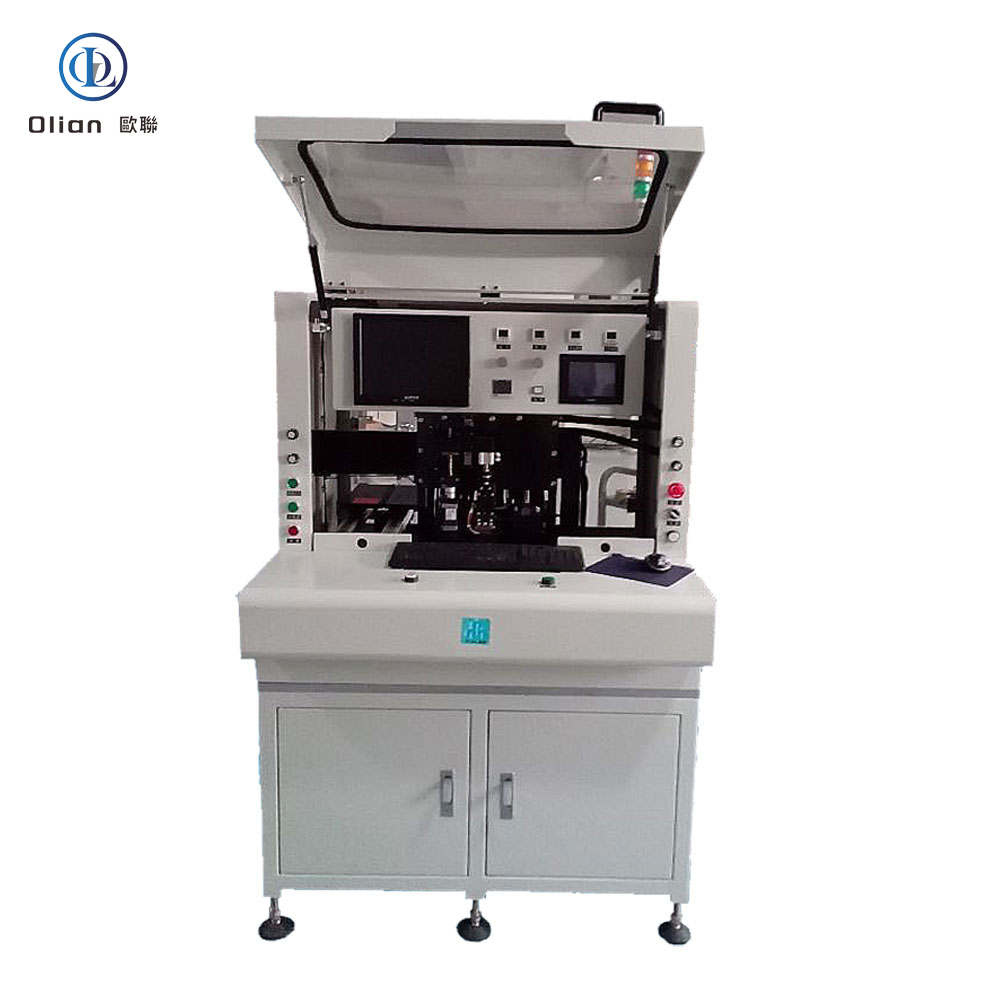
A COG Bonding Machine is a specialized automated system used in the assembly of liquid crystal modules (LCMs) and touch panels. It precisely mounts and bonds bare semiconductor chips directly onto glass substrates using Anisotropic Conductive Film (ACF). This process, known as Chip-on-Glass (COG), eliminates the need for printed circuit boards in compact displays, reducing thickness and improving signal integrity.
The machine integrates multiple advanced technologies:
● High-precision vision alignment
● Controlled thermocompression bonding
● Automated handling of fragile glass and ICs
● Real-time process monitoring and defect detection
Why COG Bonding Is Essential in Modern Electronics
As devices shrink and displays become more complex, traditional packaging methods fall short. The COG Bonding Machine addresses these challenges by:
● Minimizing module size – Ideal for wearables, medical devices, and ultra-narrow bezel displays
● Improving electrical performance – Shorter signal paths reduce resistance and noise
● Enhancing reliability – Direct bonding reduces failure points compared to flex-to-glass methods
● Supporting high-resolution displays – Capable of fine-pitch bonding (down to tens of microns)
This makes COG technology indispensable in smart wearables, automotive instrument clusters, industrial HMIs, and next-gen AR/VR displays.
Key Components and Working Process
1. Pre-Bonding Stage The glass substrate is cleaned and pre-heated. ACF film is precisely dispensed or laminated onto the bonding area.
2. IC Pickup and Alignment The machine uses a vacuum pickup head to retrieve the bare die (IC), then aligns it with sub-micron accuracy using a high-resolution vision system.
3. Thermocompression Bonding The IC is pressed onto the ACF-coated glass under controlled temperature (typically 150–200°C) and pressure (a few Newtons), activating the conductive particles in the ACF to form reliable Z-axis connections.
4. Post-Bonding Inspection Integrated AOI (Automated Optical Inspection) checks for misalignment, voids, or bonding defects, ensuring high yield.
Advantages of Advanced COG Bonding Machines
● Ultra-High Accuracy: ±5μm alignment precision ensures reliable connections even in high-density layouts
● Multi-Chip & Multi-Side Bonding: Supports complex modules requiring multiple ICs on one or more edges
● High Throughput: Up to 1,200 UPH (Units Per Hour) with robotic automation
● Low Defect Rate: Advanced pressure and temperature control minimize micro-cracks and open circuits
● Scalability: Modular design allows integration into full LCM turnkey lines, including dispensing, lamination, and aging stations
Applications Across Industries
● Wearable Technology: Smartwatches, fitness trackers with small, curved displays
● Automotive Displays: Digital dashboards and center consoles requiring durability and clarity
● Medical Devices: Portable monitors and diagnostic equipment with space-constrained designs
● Consumer Electronics: Smartphones, tablets, and AR glasses
For 7–120 inch modules, especially in wearable COG/COP solutions and automotive display manufacturing, COG bonding is often the preferred method for achieving both performance and miniaturization.
Olian Automatic: Your Partner in COG Bonding Solutions
At Olian Automatic, we specialize in designing and manufacturing high-performance COG Bonding Machines tailored to the evolving needs of the display industry. With years of R&D experience and a deep understanding of bonding, dispensing, and smart factory integration, our machines deliver:
● Stable, high-yield performance
● Custom configurations for unique product designs
● Seamless integration with FOG, COP, and OCA lamination processes
● Comprehensive after-sales support and technical training
Our COG bonding solutions are already deployed in production lines across Asia, Europe, and North America, serving leaders in wearables, automotive, and industrial display manufacturing.
The Future of COG Bonding
As displays evolve toward foldable, rollable, and transparent designs, COG bonding technology must adapt. Future advancements include:
● Lower bonding temperatures for sensitive flexible substrates
● AI-driven predictive maintenance and yield optimization
● Integration with digital twin systems for real-time process simulation
● Eco-friendly ACF materials and reduced energy consumption
The COG Bonding Machine is not just keeping pace with innovation—it’s helping to drive it.
Conclusion
In the high-stakes world of display manufacturing, precision, reliability, and scalability are everything. The COG Bonding Machine delivers on all fronts, serving as the backbone of modern LCM and touch panel production. Whether you’re building the next generation of smart wearables or revolutionizing automotive human-machine interfaces, investing in advanced COG bonding technology is a strategic imperative.
Choose Olian Automatic for cutting-edge COG Bonding Machines and complete turnkey solutions. Contact us today to optimize your production line for the future of display technology. wechat/whatsapp:+86 18025364779 zack wu
Meta Description: Explore the role of the COG Bonding Machine in high-precision display assembly. Learn how it enables miniaturization, reliability, and high yield in wearable, automotive, and consumer electronics manufacturing. Discover advanced solutions from Olian Automatic.
ACF Applicator: Precision Bonding Solution for Advanced LCM and Display Manufacturing
In the rapidly evolving world of display technology, precision, reliability, and efficiency are paramount. As devices become thinner, more flexible, and increasingly complex—from smartphones and wearables to automotive displays and e-paper modules—the for high-accuracy bonding processes has never been greater. At the heart of this precision lies the ACF Applicator, a critical piece of equipment in modern LCM (Liquid Crystal Module) and touch panel manufacturing.
What Is an ACF Applicator?
An ACF Applicator (Anisotropic Conductive Film Applicator) is a specialized machine designed to accurately dispense, align, and bond Anisotropic Conductive Film (ACF) onto flexible printed circuits (FPCs), glass substrates, or film-based displays. ACF is a smart adhesive material containing conductive particles that enable electrical connections in one direction (Z-axis) while insulating in others (X-Y axes), making it ideal for COG (Chip-on-Glass), COP (Chip-on-Film), and FOG (Film-on-Glass) packaging processes.
The ACF Applicator ensures:
● Ultra-precise film placement with micron-level accuracy
● Consistent pressure and temperature control during bonding
● Minimal material waste through optimized dispensing
● High throughput in automated production lines
Why ACF Applicator Matters in Modern Display Production
With the rise of foldable screens, wearable devices, and large-format automotive displays, traditional soldering methods are no longer sufficient. The ACF Applicator enables:
–Fine-pitch interconnects for high-resolution displays
–Reliable electrical connections on flexible and curved surfaces
–Improved yield and reliability by reducing defects such as open circuits or shorting
–Scalability for mass production in smart factories
It is a core component in turnkey LCM module lines, especially for wearable COG/COP solutions, automotive display bonding (15–120 inch), and electronic paper modules, where mechanical stress and thermal stability are critical.
Key Features of a High-Performance ACF Applicator
1. Vision Alignment System Equipped with high-resolution cameras and AI-assisted image processing, ensuring sub-micron alignment accuracy between ICs, FPCs, and substrates.
2. Multi-Zone Pressure & Temperature Control Enables uniform bonding across large or irregular surfaces, critical for G+G, F+G, and OCA lamination processes.
3. Automated ACF Feeding & Splicing Reduces downtime and material waste, supporting continuous production.
4. Integration with Factory Automation (FA) Compatible with MES systems, robotic handling, and inline AOI (Automated Optical Inspection), making it ideal for smart manufacturing environments.
5. Low-Defect Design Features dust-free chambers, ESD protection, and real-time process monitoring to maintain high yield rates.
Automotive: Digital dashboards, center consoles, AR-HUDs
Medical Devices: Portable monitors, diagnostic equipment
Industrial & IoT: HMI displays, control panels
Whether it’s a 7-inch wearable module or a 100-inch TV display, the ACF Applicator plays a vital role in ensuring durable, high-conductivity interconnections.
Choosing the Right ACF Applicator Partner
Not all ACF applicators are created equal. When selecting a solution, look for:
Proven experience in COG/COP/FOG bonding
Customization capability for multi-chip, multi-side bonding
Strong R&D and after-sales support
Compliance with international standards ( ISO)
Olian Automatic, a trusted name in display manufacturing equipment, offers advanced ACF Applicator solutions tailored for high-volume, high-reliability production environments. With deep expertise in bonding, dispensing, lamination, and inspection, we deliver turnkey lines that integrate seamlessly into your smart factory ecosystem.
Conclusion
The ACF Applicator is more than just a bonding machine—it’s a gateway to next-generation display manufacturing. As the industry moves toward thinner, more flexible, and higher-density displays, precision equipment like the ACF Applicator will continue to drive innovation, improve yields, and reduce costs.
Invest in the right technology today to stay ahead in the competitive world of display and touch solutions.
Explore our full range of ACF Applicators and LCM module turnkey lines at [bonding-machine.com]. Contact us for a customized solution. Wechat/whatsapp:+8618025364779. Zack Wu
Shenzhen Olian Automatic Equipment Co.,ltd .We are a leading high-tech enterprise dedicated to the research, development, and manufacturing of LCM (Liquid Crystal Module) and Touch Panel assembly equipment. Located in Shenzhen, the innovation capital of China, we provide comprehensive turnkey solutions that transform raw glass and flexible circuits into high-precision, ready-to-use display products.
Our mission is to empower the global display industry through intelligent automation, ensuring high yield rates and efficient production for our clients.
️ Core Competencies: Full-Process Engineering
We offer a complete suite of automated equipment designed to handle every critical stage of the LCM and Touch manufacturing process. Our “One-Stop” solution ensures seamless integration from incoming material to final packaging.
1. Precision Bonding & Interconnection
This is the core of display functionality. We utilize advanced ACF (Anisotropic Conductive Film) Applicators and Hot Press machines to precisely attach driver ICs and Flexible Printed Circuits (FPC) to the glass substrate.
ACF Handling: Our dedicated ACF application systems feature high-precision micro-adjustment and step-motor-driven feeding mechanisms. This ensures accurate ACF length control (1-100mm) and minimal waste, which is critical for COG (Chip-on-Glass) and COF (Chip-on-Film) processes.
Hot Press Technology: Our bonding machines utilize PID temperature control and precision pressure regulation (0.1-4.0Mpa). Whether it is the main IC bonding or FPC alignment, our equipment guarantees stable electrical connections and prevents defects like line deficiencies.
2. Touch Panel & Display Integration (Lamination)
To create “Display & Touch in one” (Integrated) products, we specialize in high-precision lamination technologies.
Process: We handle the full spectrum of lamination, including OCA (Optically Clear Adhesive) rigid-to-rigid lamination and UV Water Gel lamination processes.
Capability: Our lamination machines feature auto-dispensing, vacuum state pressing, and optical alignment systems. This ensures bubble-free, high-clarity bonding between cover glass (Cover Lens), touch sensors, and LCD panels, meeting the demands of modern smartphones, tablets, and automotive displays.
3. Precision Dispensing & Encapsulation
To protect delicate circuitry and enhance structural integrity, we utilize state-of-the-art dispensing technology.
Control: Utilizing servo-controlled dispensing arms and programmable logic controllers (PLC), we strictly manage the dispensing path, volume, and evenness of the glue. This prevents corrosion of ITO lines and strengthens the bond between the FPC and the LCD, ensuring long-term product reliability.
Assembly: This involves the precise stacking of optical films, frame assembly, and the application of hot-melt adhesives.
Packaging: We provide automated solutions for the final stages of production, including protective film application and automated boxing, ensuring the product is protected for shipment.
5. Automated Optical Inspection (AOI)
Quality is our DNA. We integrate AOI systems at critical junctures (post-bonding and post-lamination) to guarantee zero-defect delivery.
Detection: Our vision systems perform rigorous functional and cosmetic testing. They identify microscopic defects such as particles, scratches, bubbles, and Mura defects that are invisible to the naked eye, ensuring only flawless products proceed to the next stage.
Wide-Ranging Applications
Our robust and versatile equipment series is engineered to meet the manufacturing demands of diverse display markets. We support the production of:
Consumer Electronics: Smartphones, Tablets, Laptops, and Televisions.
Automotive Displays: Instrument clusters and infotainment systems.
IoT & Wearables: Smartwatches and AR/VR devices.
Commercial & Industrial: Electronic shelf labels, medical displays, and large-format signage.
Smart Factory & Future Vision
We go beyond selling individual machines. We are a pioneer in providing Smart Factory Holistic Solutions.
Integration: Our equipment is fully compatible with MES (Manufacturing Execution Systems) and CIM (Computer-Integrated Manufacturing), enabling digital traceability and data-driven decision making.
Automation: We support AGV (Automated Guided Vehicle) logistics integration and fully automated production lines, reducing human intervention and maximizing production line “uptime” (OEE).
R&D Focus: Drawing on deep expertise in ACF application and precision pressing, we continuously innovate to support the latest trends in flexible OLED packaging and under-screen fingerprint technology.
Join us in shaping the future of display manufacturing. With our “Advanced, Practical, Efficient, and User-Friendly” design philosophy, we are committed to helping our global partners reduce labor costs, improve yield rates, and accelerate their time to market.
Welcome you to be our parnter in your country to shaping the future of display manufacturing.