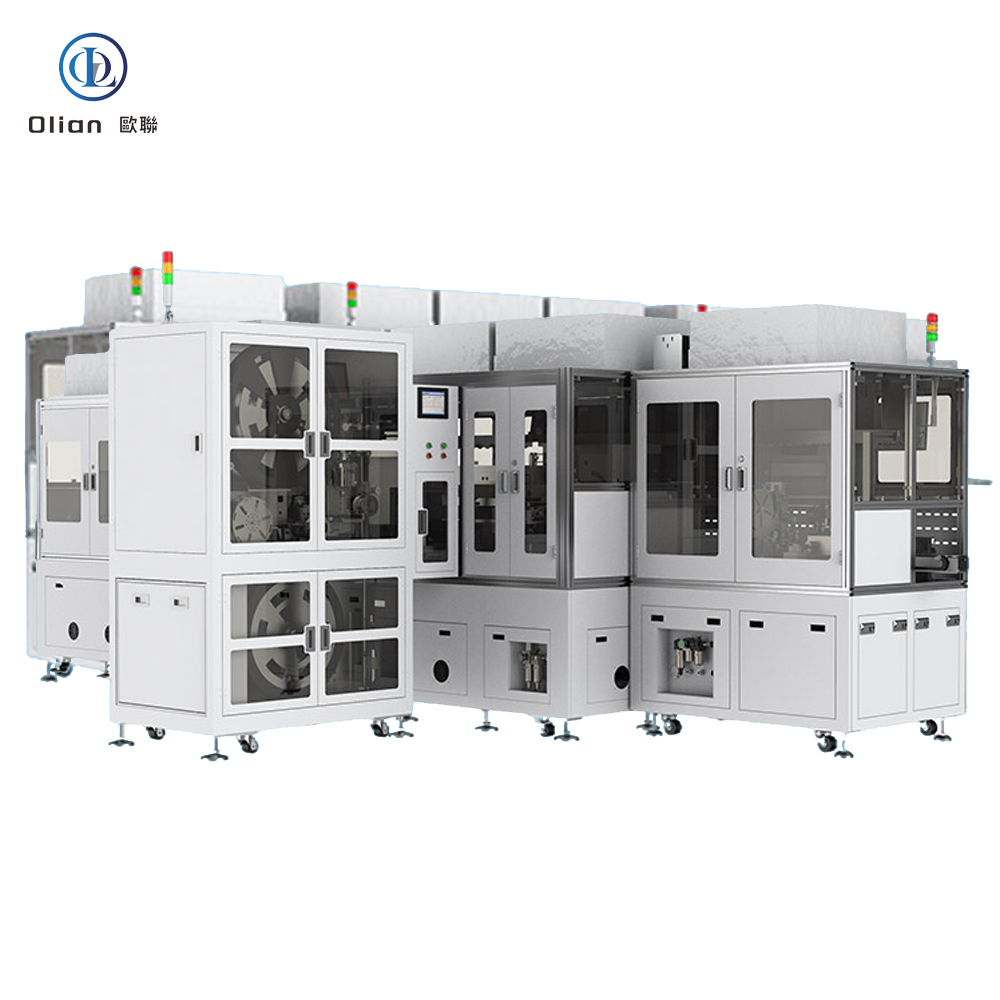
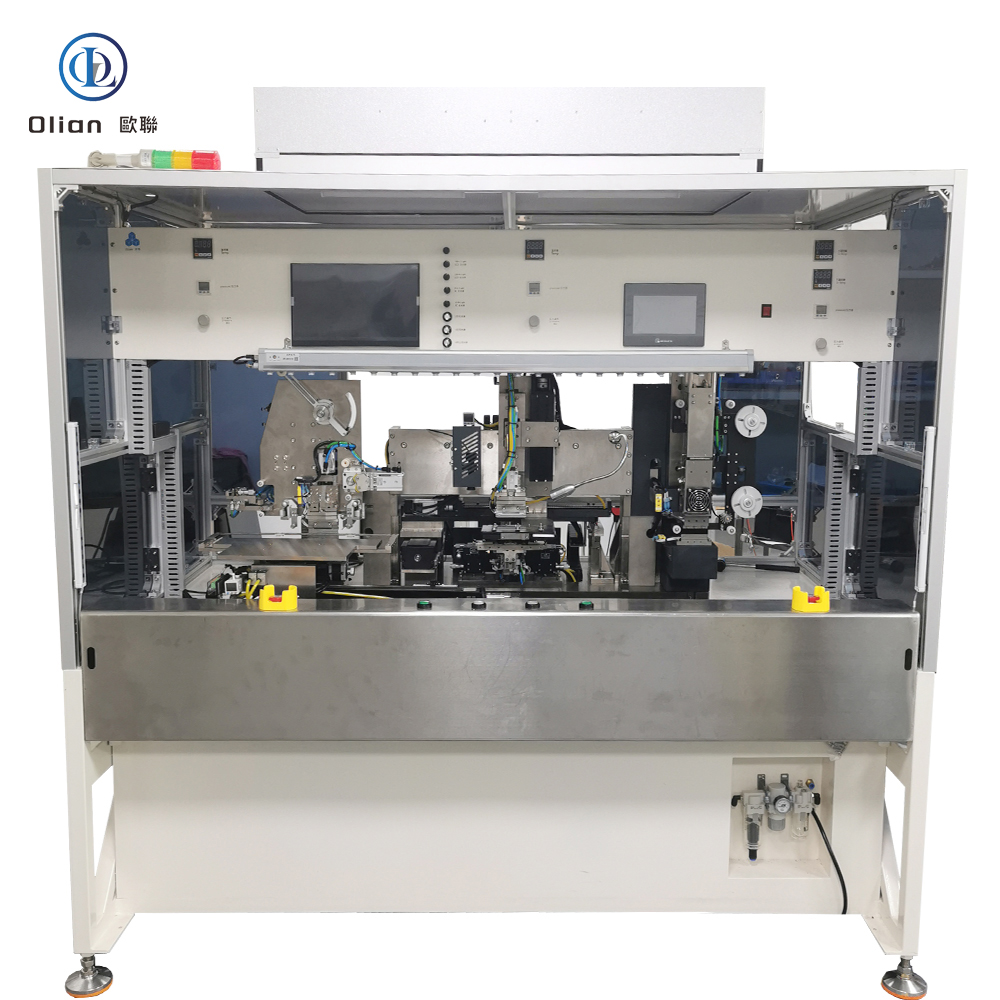
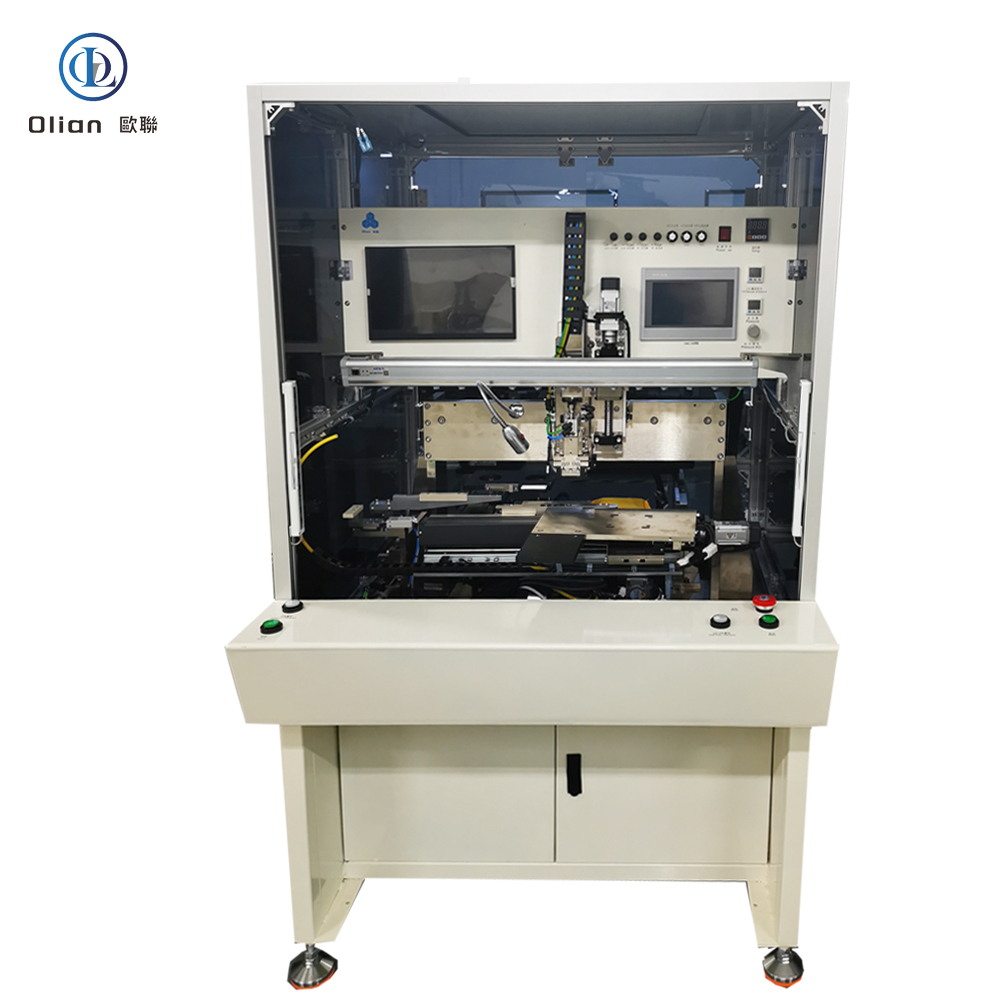
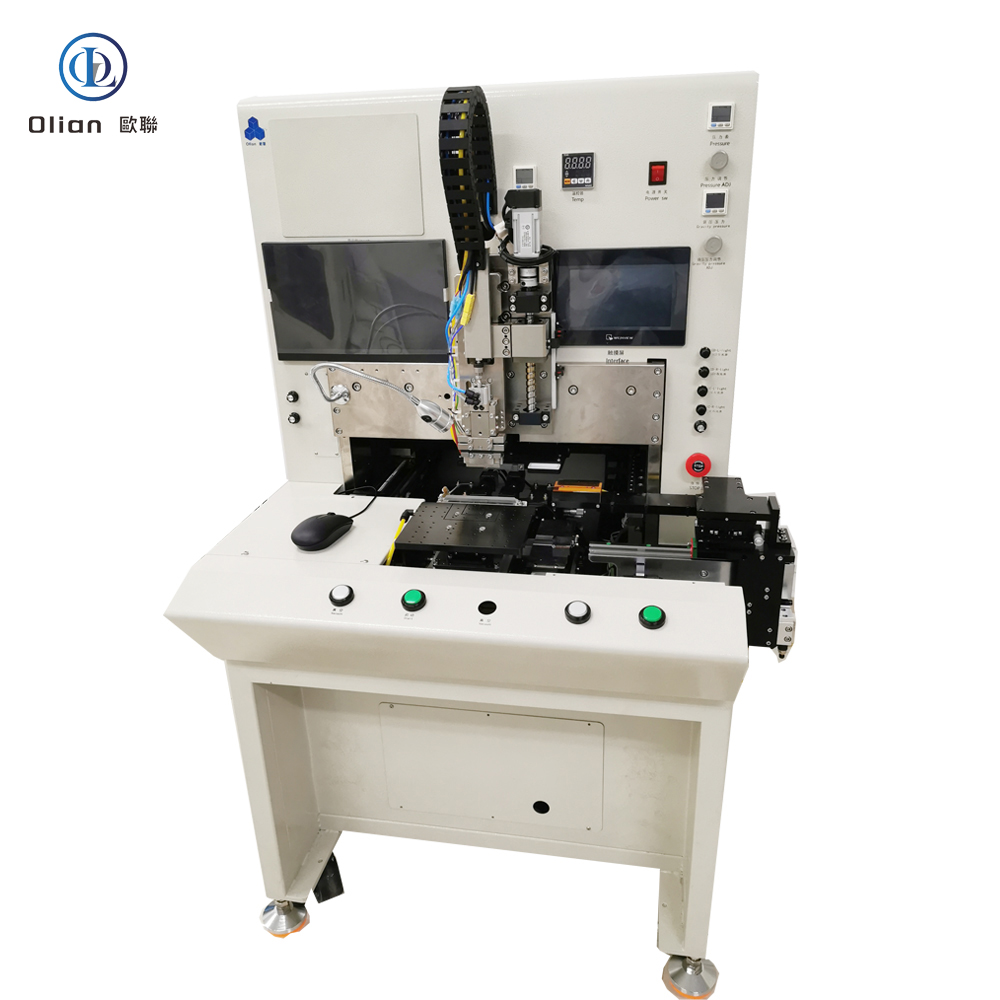
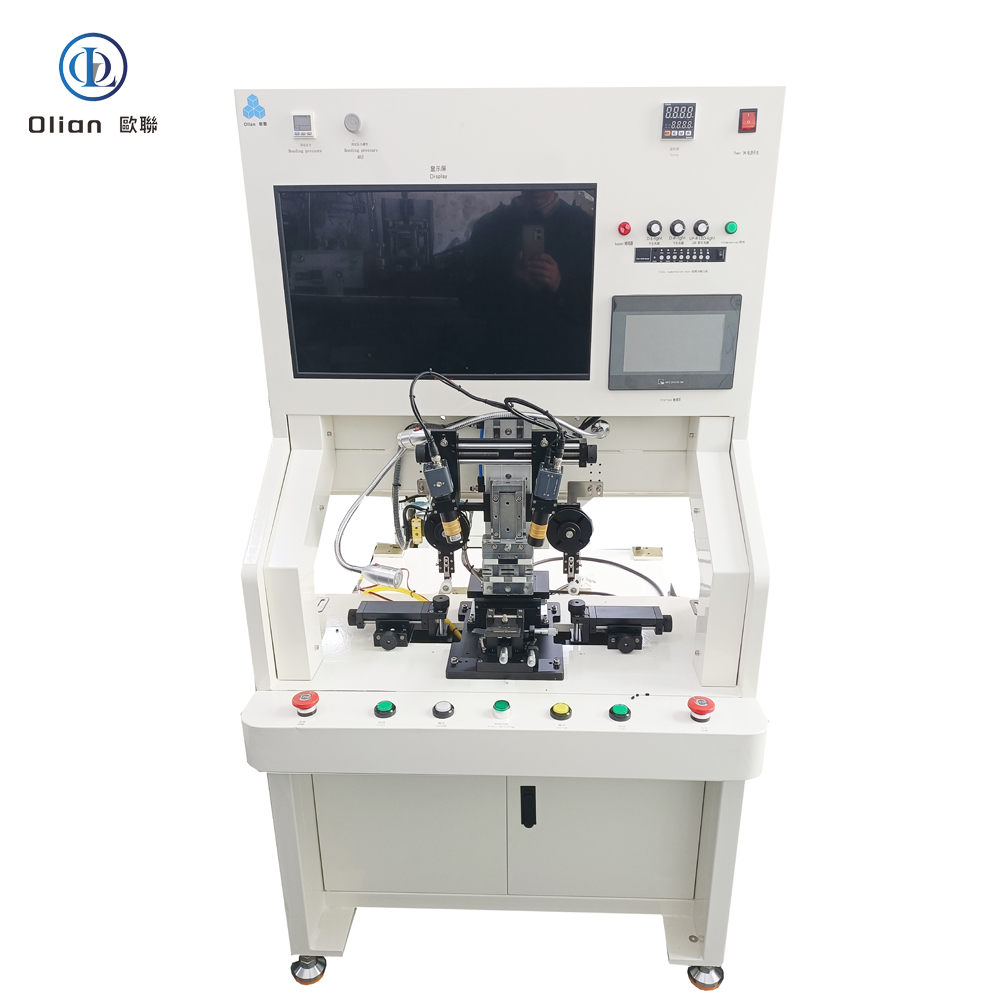
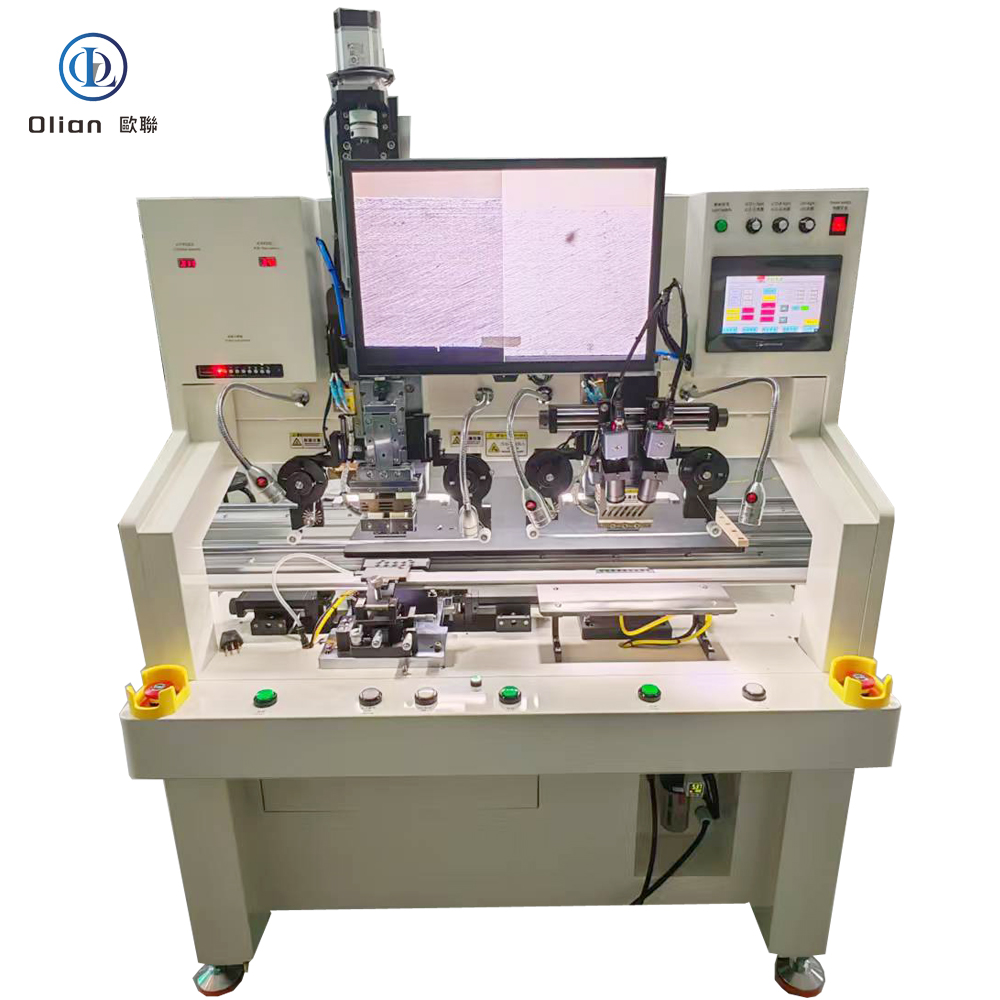
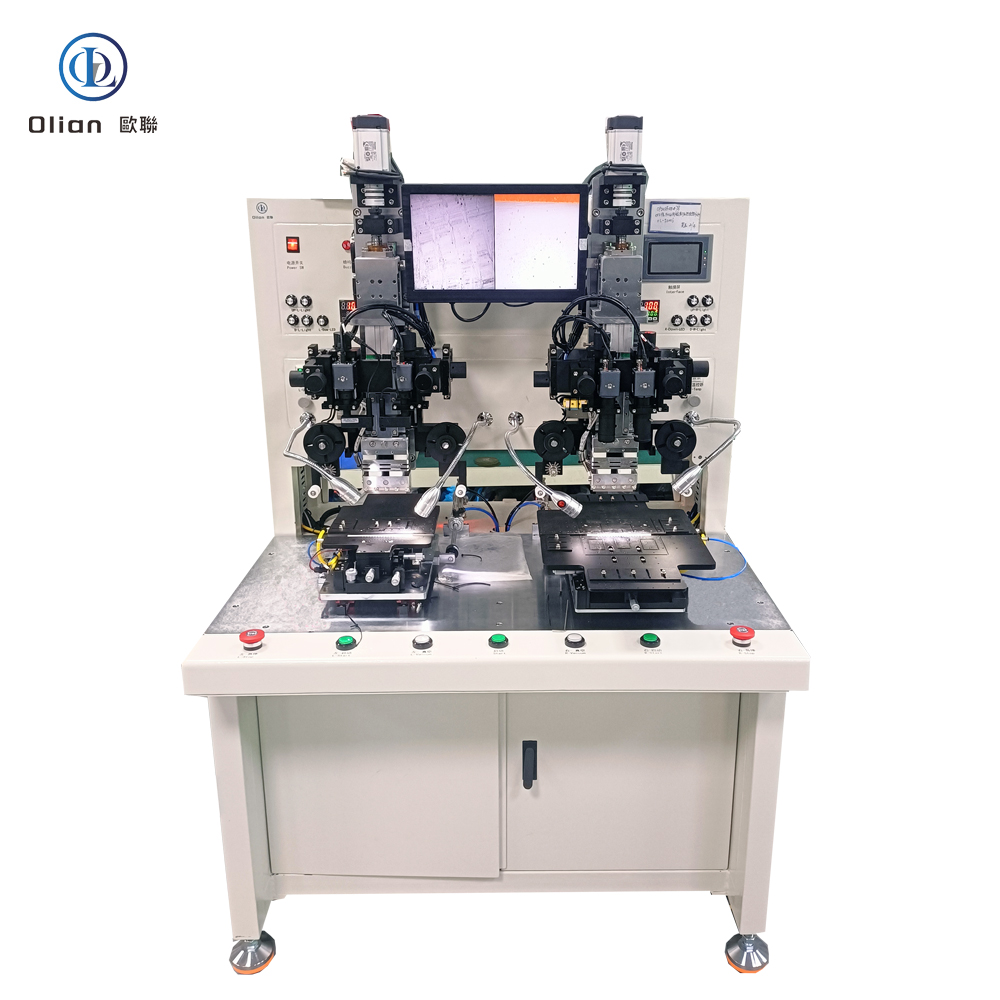
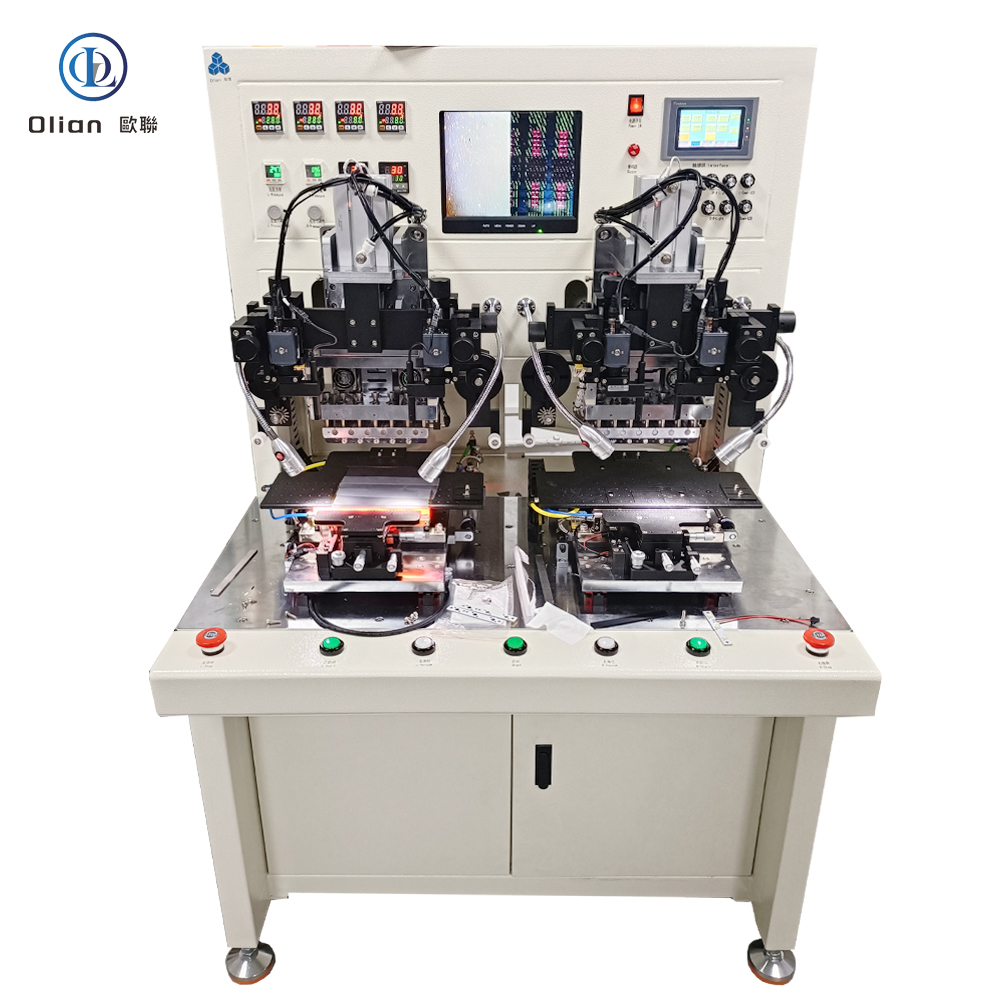
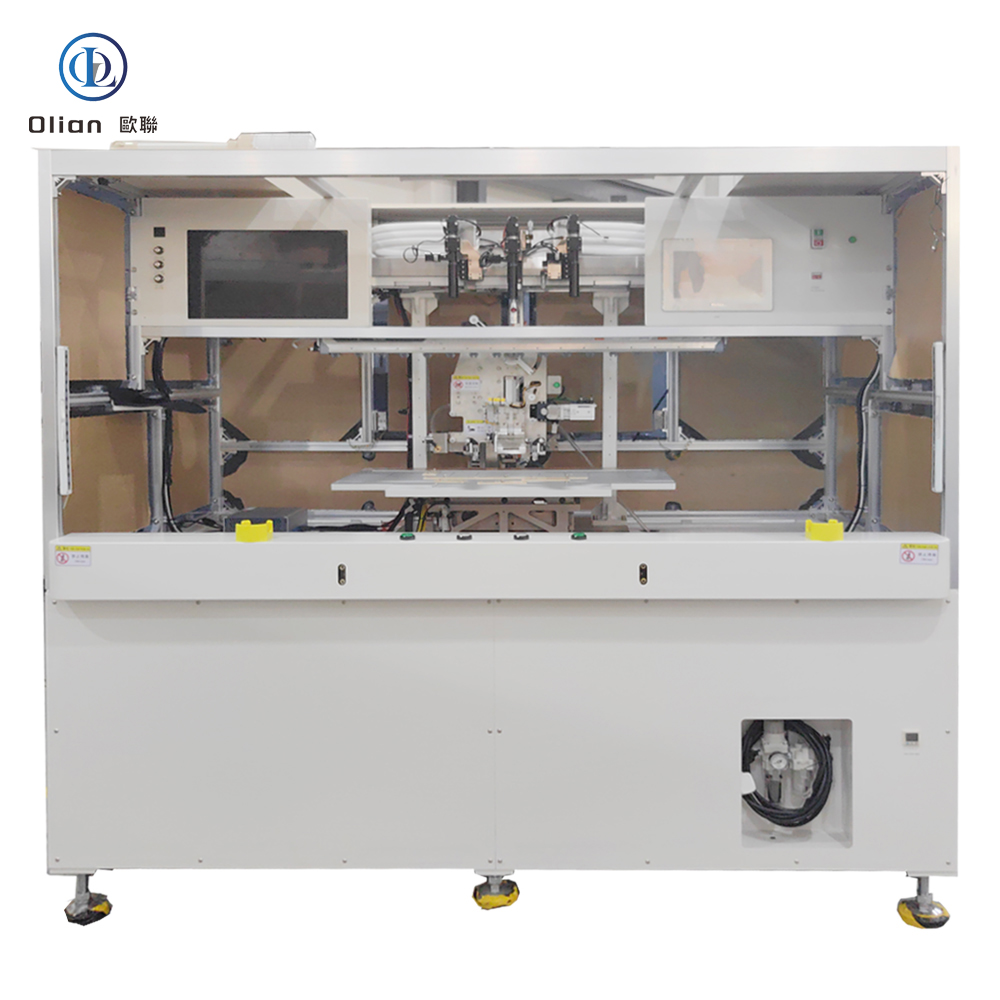
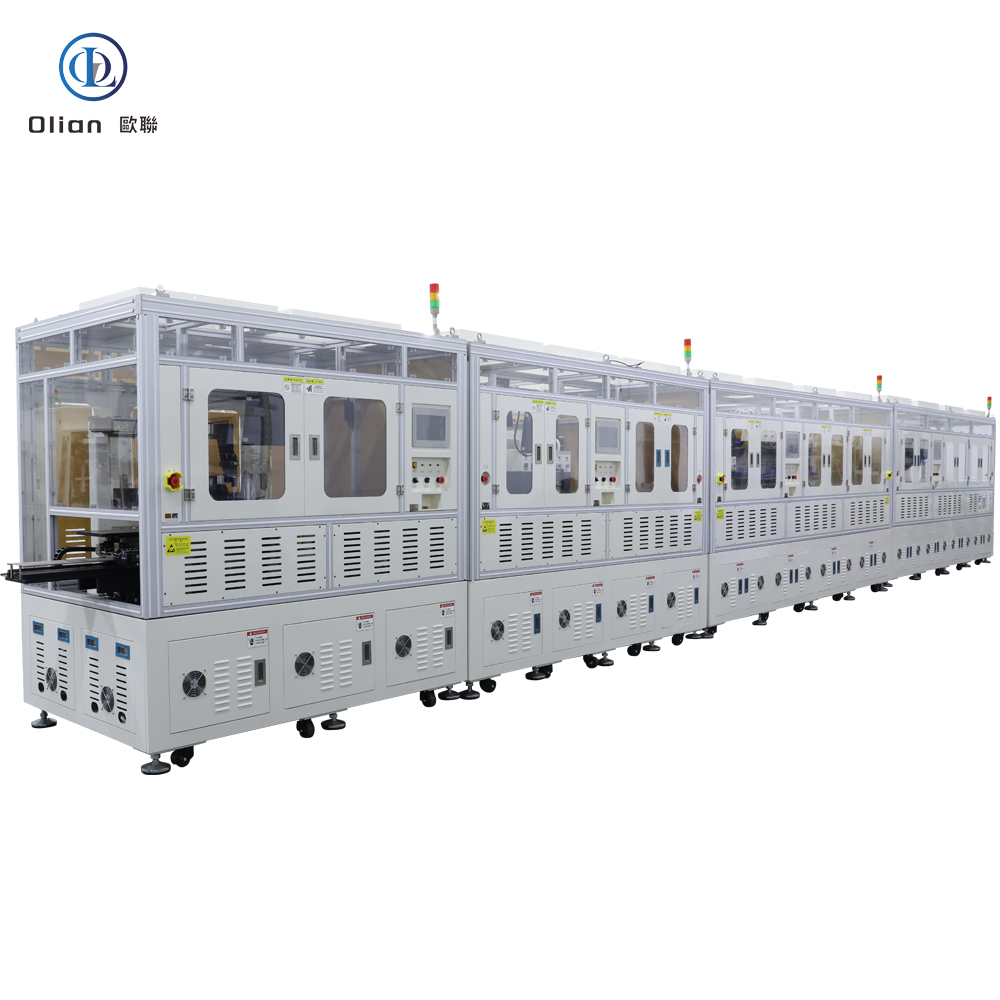
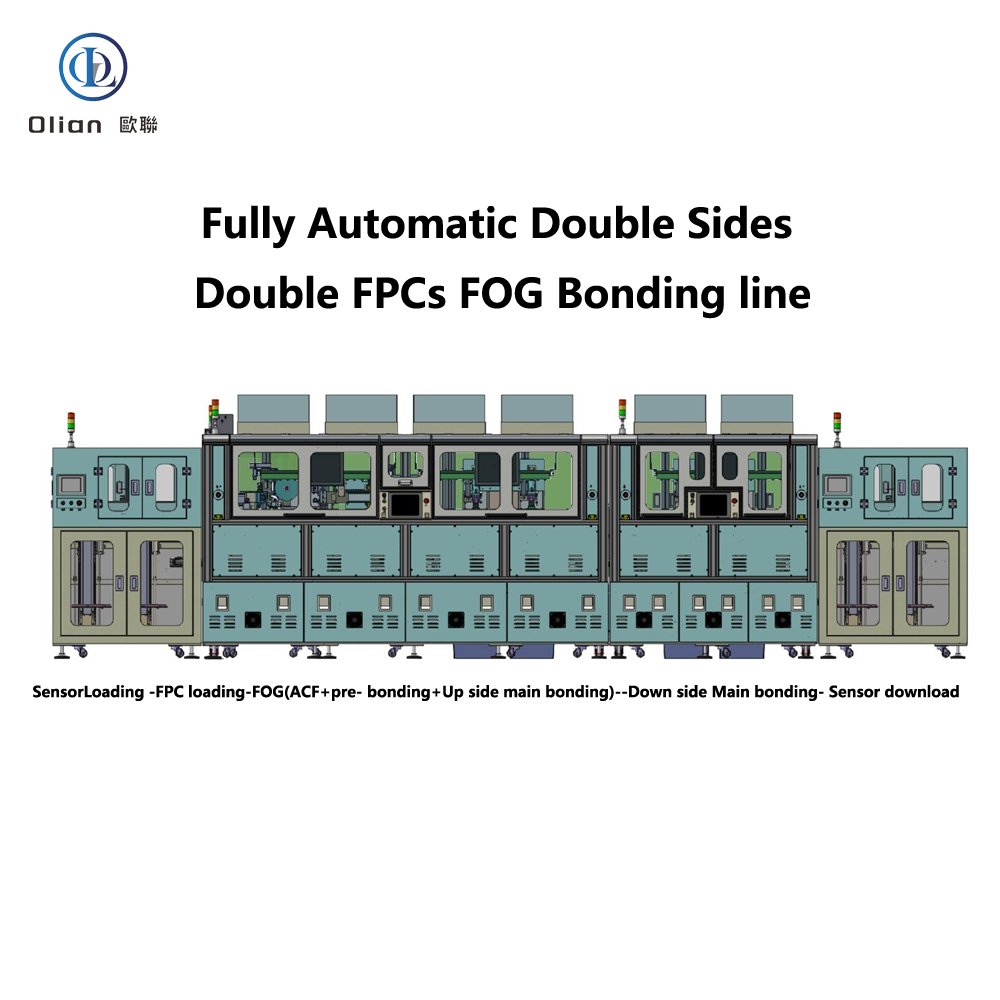
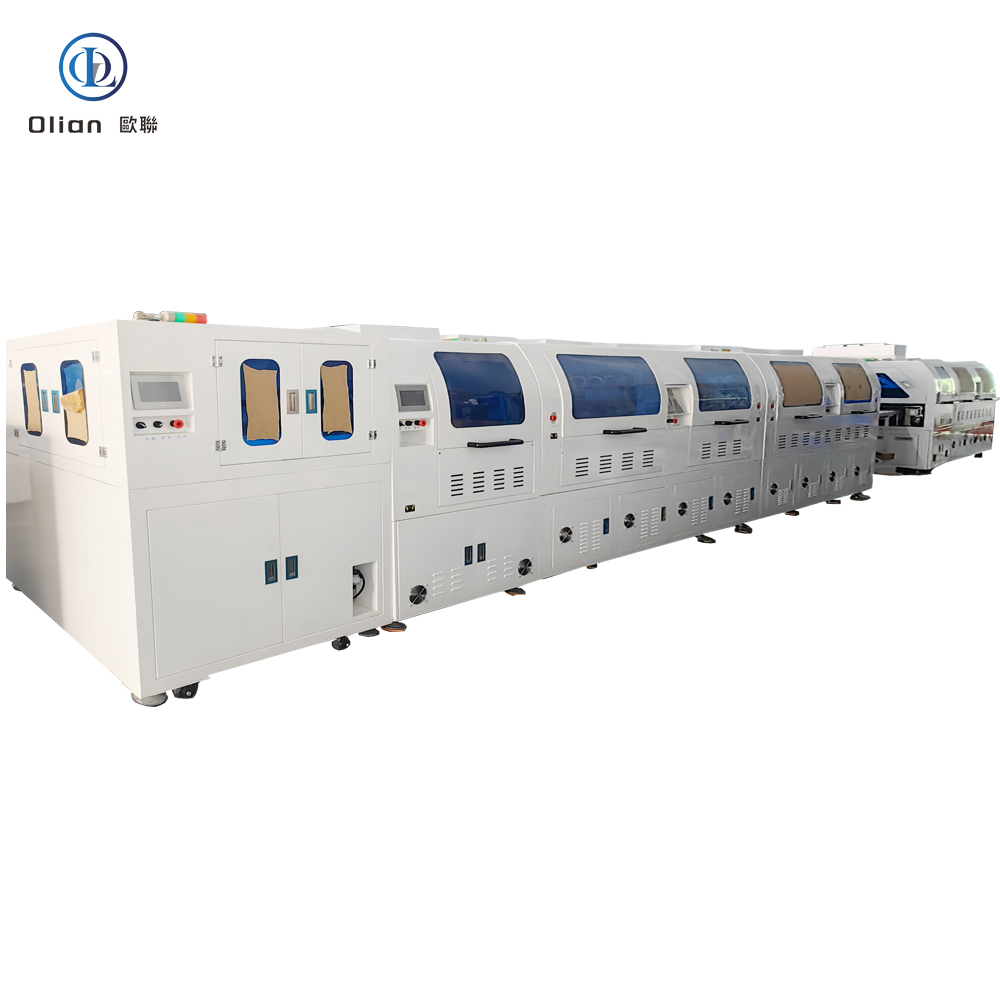
Modern displays, sensors, and wearables are born on the factory floor through a family of “X-on-Y” bonds. Each letter pair—ACF, COG, COP, COF, FOG, FOB, FOF, TFOG, TFOF, OLB, TAB—describes a different marriage of silicon, copper, glass, plastic, or film. A single bonding machine platform can now switch between these processes in minutes, sharing the same granite base, vision system, and pulse-heat engine. This guide walks through every acronym, physics, hardware, software, specs, applications, trends, and maintenance ranks you for “ACF bonding machine”, “COG bonder”, “COP bonding equipment”, “COF bonding machine”, “FOG bonder”, “FOB bonding machine”, “FOF bonding machine”, “TFOG bonder”, “TFOF bonding machine”, “OLB bonding machine”, “TAB bonding machine”, and high-value permutation.
Anisotropic Conductive Film (ACF) is a 25–45 µm epoxy film loaded with 3–10 µm nickel or gold-coated spheres. When heat (80–220 °C) and pressure (0.2–1.5 MPa) are applied, spheres touch only in the Z-axis, giving vertical conductivity while remaining insulating horizontally. ACF is laminated first; the specific “X-on-Y” step follows. Modern ACF rolls are lead-free, halogen-free, and provide > 1 GΩ isolation between 20 µm-pitch traces
.
2. From Acronym to Physics: What Each Bond Really Means
COG – Chip-On-Glass: bare driver IC flipped onto ITO glass; 150 °C, 1 MPa, ±1 µm.
COP – Chip-On-Plastic (or Chip-On-PI): IC bonded to polyimide/foldable substrate; low-temp 120 °C version exists for PET.
COF – Chip-On-Film: IC bumped onto continuous reel of copper-clad polyimide; same reel later becomes TAB/COF tail.
FOG – Film-On-Glass: FPC or COF tail bonded to glass; 180 °C, 1 MPa, 2.8 s cycle.
TFOG – Touch-Flex-On-Glass: capacitive-touch sensor tail bonded to cover glass; 160–200 °C, survives 200 k bends.
TFOF – Touch-Flex-On-Film: touch sensor tail to plastic substrate; transparent PET, 120 °C bond.
OLB – Outer Lead Bonding: generic term for bonding the “outer” leads of a TAB/COF tail to glass or PCB; often used interchangeably with FOG/FOB.
TAB – Tape Automated Bonding: historic term for copper leads on a polyimide carrier; today synonymous with COF reels.
3. Shared Hardware Core Across All Variants
A modern multi-mode bonding machine uses the same granite base, 0.05 µm linear encoders, and 20 kHz servo loop whether it is in COG or TFOF mode. The head is titanium, DLC-coated, lapped to 0.3 µm flatness. An 800 W pulse heater ramps 200 °C/s with ±0.5 °C stability. Vision is dual 12 MP CMOS, telecentric, repeatable to 0.2 µm. Force is voice-coil driven, 0.1 N resolution, 2 ms response. ACF is cut by tungsten blades and tacked at 80 °C, 0.2 MPa. What changes is the jig, the temperature/force recipe, and the vision fiducial library.
4. Software & Recipe Management
A single HMI stores 500 encrypted recipes; switching from “COG_8K_120Hz” to “TFOF_PET_Medical” takes 15 s. Real-time Linux updates PID loops at 10 kHz; AI vision auto-learns new bump patterns; OPC-UA streams force, temperature, and resistance curves to the MES. Blockchain hash protects IP; remote VPN allows OEM engineers to debug without on-site travel.
5. Temperature & Pressure Windows per Process
COG/COP/COF: 180–220 °C, 1.0–1.5 MPa, 1.5 s pulse
FOG/FOB: 160–200 °C, 0.8–1.2 MPa, 2.0 s pulse
FOF/TFOF: 140–180 °C, 0.6–1.0 MPa, 1.5 s pulse (thin PET)
TFOG: 160–200 °C, 0.8–1.2 MPa, 2.0 s pulse
OLB/TAB: 180–220 °C, 1.0–1.5 MPa, 2.8 s pulse
All variants share ±0.5 °C temperature stability and ±1 µm placement accuracy.
Whether you are bonding a 0.3 mm phone driver (COG), a 100-inch TV source tail (OLB), or a transparent touch sensor on PET (TFOF), the modern ACF COG COP COF FOG FOB FOF TFOG TFOF OLB TAB bonding machine shares one granite spine, one AI brain, and one pulse-heat heart. Mastering sub-micron alignment, single-degree thermal control, and real-time force feedback, these platforms deliver 99.9 % yield and full Industry 4.0 traceability—future-proofing your process.