Screen Decomposition Layers: Understanding the Structure of a Modern Smartphone Display
screen decomposition layers
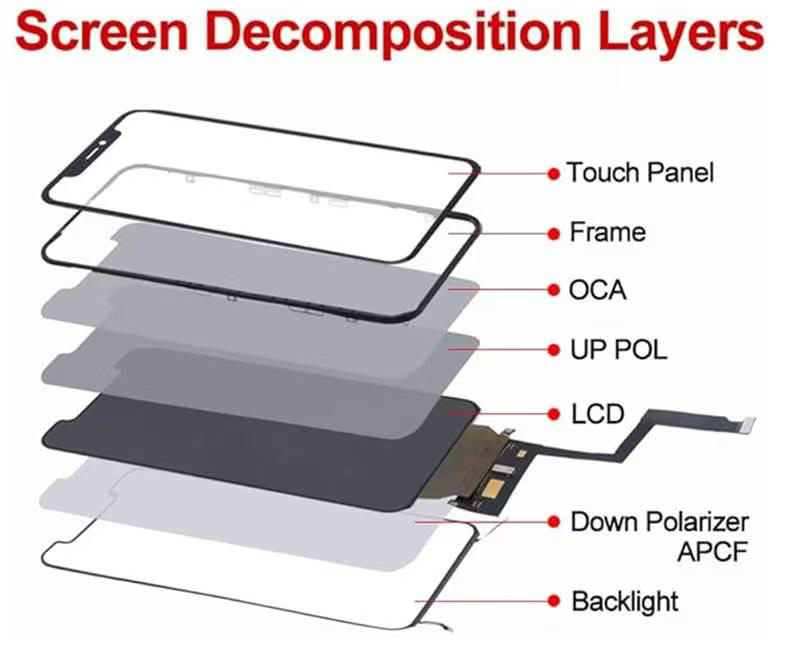
A smartphone screen is a sophisticated multilayered assembly that combines advanced materials and precision engineering to deliver vibrant visuals, responsive touch input, and durability. The diagram above illustrates the screen decomposition layers of a typical LCD-based smartphone display, showing how each component stacks together from top to bottom.
Touch Panel (Top Layer) The outermost layer is the Touch Panel, usually made of strengthened glass (such as Gorilla Glass). This layer detects finger touches using capacitive technology and protects the internal components from scratches, dust, and impacts. It is the surface users interact with daily.
Frame Directly beneath the touch panel is the Frame, which provides structural support and maintains the precise alignment of all layers. It helps keep the screen assembly rigid and ensures proper spacing between components.
OCA (Optically Clear Adhesive) OCA is a transparent adhesive layer that bonds the touch panel and frame to the layers below. It is optically clear to minimize light loss and prevent air gaps that could cause reflections or reduce image quality.
UP POL (Upper Polarizer) The Upper Polarizer (UP POL) is a thin optical film that controls the polarization of light passing through the LCD layer. It works together with the lower polarizer to regulate light transmission and enhance contrast and color accuracy.
LCD (Liquid Crystal Display) The LCD is the core imaging layer. It contains liquid crystals that twist or align when an electric current is applied, modulating light to create images and colors. Modern smartphone LCDs offer high resolution, excellent color reproduction, and fast refresh rates.
Down Polarizer (APCF) Below the LCD sits the Down Polarizer, also referred to as APCF (Advanced Polarizer Compensation Film). This layer further refines light polarization, improving viewing angles, reducing glare, and enhancing overall visual performance.
Backlight At the very bottom is the Backlight unit. Since LCD panels do not emit light themselves, the backlight provides the necessary illumination. It typically consists of LED lights and light-guiding plates that evenly distribute light across the entire screen, ensuring consistent brightness and clarity. Why Layered Design Matters Each layer in this decomposition serves a specific purpose: Protection and Interaction: The top layers handle user input and physical protection. Optical Performance: Polarizers and adhesives optimize light transmission and image quality. Image Formation: The LCD layer creates the actual picture. Illumination: The backlight ensures the screen is visible in all lighting conditions. Understanding these screen decomposition layers is particularly useful for technicians performing screen repairs or replacements, as damage to any single layer can affect the entire display’s performance. For example, a cracked touch panel can often be replaced separately, while damage to the LCD or backlight usually requires replacing the full assembly. This modular layered structure allows manufacturers to balance factors like thinness, durability, display quality, and production cost in modern smartphones. As display technology evolves toward OLED and foldable screens, similar layered principles continue to apply, though the specific materials and stacking order may differ.
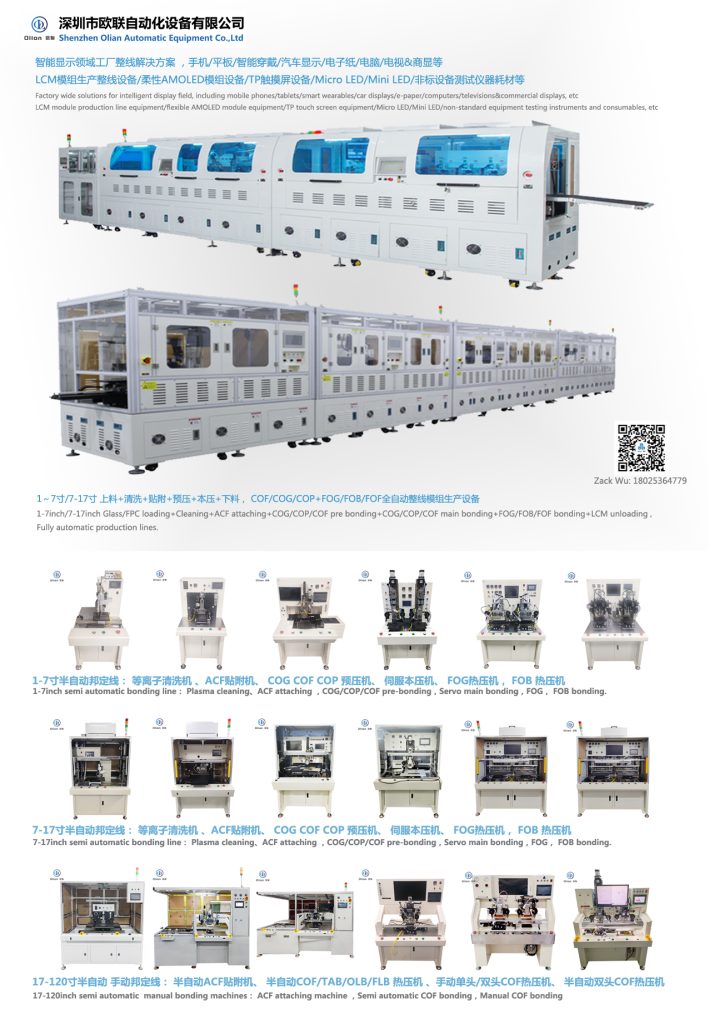
if you also in the field of displays, you can contact us for our bonding machines for your factory. wechat/whatsapp:wa.me/8618025364779 bonding-machine.com Zack wu Shenzhen Olian